Category
Manufacturer
Model
Filler Specialties
Filler Specialties focuses on filling equipment for the food and beverage sector, offering solutions for both liquid and dry products. Their machines are designed for versatility and efficiency, catering to a wide range of packaging needs.
FAQ:
What types of filling equipment does Filler Specialties manufacture?
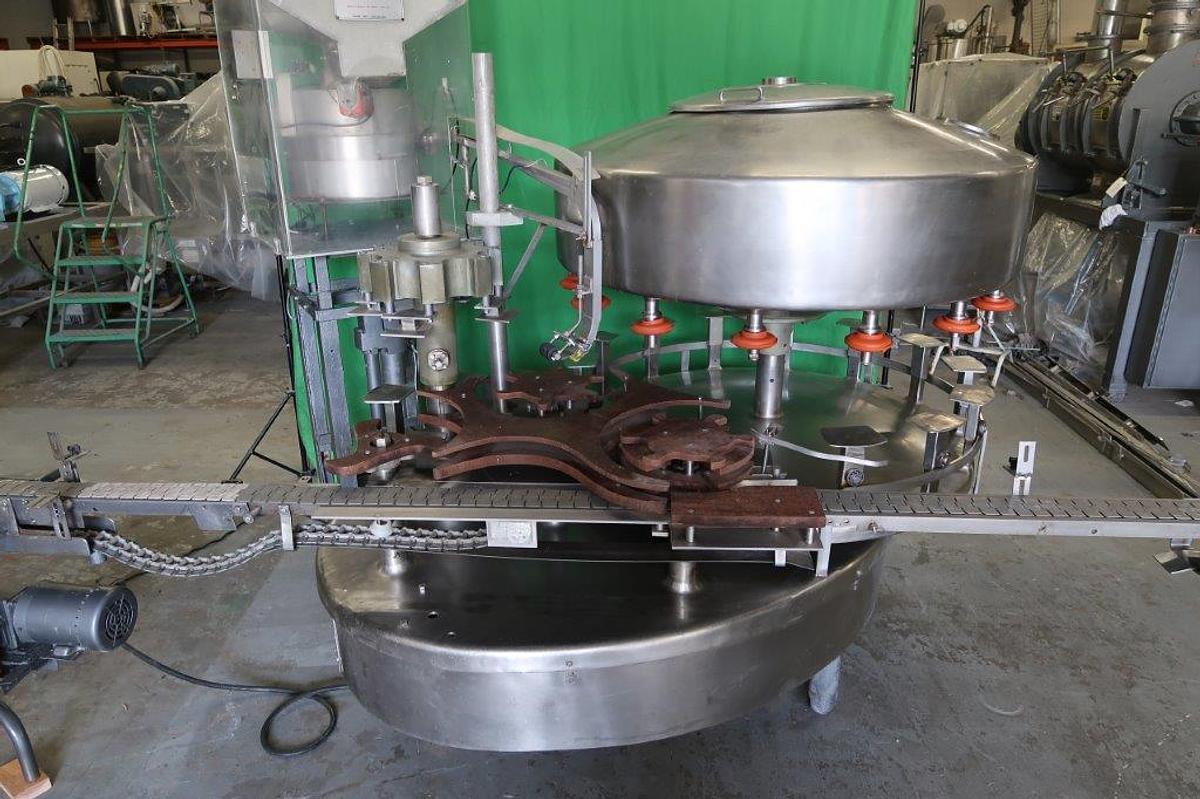
Filler Specialties produces a range of filling equipment designed to handle both liquid and dry products across multiple industries. Their lineup commonly includes piston fillers, pump fillers, and overflow fillers, with machines available in semi-automatic and fully automatic configurations. This variety makes their equipment suitable for operations ranging from small-batch production runs to high-volume manufacturing environments. One example of their equipment is a 14 Valve Rotary Filler with Snap Capper, which illustrates the brand's focus on integrated, multi-function filling solutions.
The machines are built with stainless steel construction, which supports sanitary production environments and resists corrosion over time. Filler Specialties has historically focused on versatility, engineering their fillers to accommodate a wide range of packaging formats and product types. Buyers shopping the used equipment market will find models that reflect the brand's emphasis on accuracy and repeatability, both of which are especially important in industries like pharmaceuticals, cosmetics, and food processing where fill tolerances are tight.
What industries use Filler Specialties filling machines?
Filler Specialties filling equipment is used across several industries where precise, repeatable filling is a core production requirement. The food and beverage sector is a primary market, with their machines handling everything from thin liquids like juices and sauces to thicker products like jams, dressings, and condiments. Beyond food and beverage, their equipment appears regularly in cosmetic, pharmaceutical, and chemical manufacturing environments, where sanitary construction and fill accuracy are non-negotiable.
The stainless steel builds common to Filler Specialties machines make them well-suited to any production setting that requires frequent washdowns or adherence to GMP (Good Manufacturing Practice) standards. Pharmaceutical and cosmetic producers in particular tend to favor this brand because the machines are engineered for high repeatability, meaning each container receives a consistent fill volume with minimal variance. Buyers sourcing used Filler Specialties equipment should consider which specific model and configuration best matches their product type, container format, and production volume requirements.
Can Filler Specialties machines handle both liquid and semi-liquid products?
Yes, Filler Specialties equipment is designed with product versatility in mind. Depending on the specific model and filler type, these machines can handle a broad spectrum of product consistencies, from free-flowing liquids like water, juice, and cleaning solutions to semi-liquids and thicker formulations like gels, pastes, creams, and sauces. Piston fillers in particular are well-suited to viscous and semi-viscous products because the piston mechanism can move thicker materials through the fill path without relying on gravity or low-viscosity flow.
Pump fillers offer another option for products that fall somewhere between thin liquids and heavy pastes, giving producers flexibility when their product line includes multiple viscosities. Overflow fillers, by contrast, are typically reserved for free-flowing liquids where a consistent fill level in the container is more important than a precise fill by volume. When evaluating used Filler Specialties equipment, buyers should confirm the filler type and any available tooling or nozzle configurations to make sure the machine matches their specific product characteristics.
What container types and sizes are compatible with Filler Specialties equipment?
Filler Specialties machines are generally built to accommodate a range of container formats, including bottles, jars, tubes, and cans, depending on the specific model. Container compatibility varies by machine configuration, but many models in their lineup are engineered with adjustable components that allow operators to switch between different container sizes and shapes without extensive retooling. This flexibility is a practical advantage in facilities that run multiple SKUs or package the same product in different container sizes.
Some Filler Specialties models feature tool-free changeover capabilities, which significantly reduces downtime between production runs. When buying used equipment, it is worth confirming what container size range a particular machine was set up for, and whether the necessary change parts for other container formats are included with the sale. Rotary fillers like the 14 Valve Rotary Filler with Snap Capper are typically designed for higher-speed, continuous production with a defined container format, so buyers should match the machine's specifications to their actual packaging line requirements before purchasing.
What should buyers know about purchasing used Filler Specialties equipment?
Buying used filling equipment requires more due diligence than purchasing from a manufacturer, because the machines come without manufacturer warranties and are sold in their current condition. Reputable used equipment dealers who specialize in packaging and filling machinery are the best source for used Filler Specialties machines, as they tend to have deeper knowledge of the equipment and can provide more accurate condition assessments than general industrial auction sites. A dealer's track record and industry specialization matter significantly when evaluating where to buy.
Buyers should request a thorough inspection before committing to a purchase. Most established dealers will accommodate in-person inspections, virtual walkthroughs, or video captures of the machine to give buyers an accurate picture of its current working condition. Keep in mind that dealers typically do not have the permitting required to run actual product through the machines during a demonstration, so inspections focus on mechanical condition, completeness of components, and visual assessment. Consulting the manufacturer directly about parts availability and support for a specific model and age of machine is also a smart step before finalizing any purchase.
How accurate are Filler Specialties filling machines in terms of fill volume consistency?
Fill accuracy is one of the defining characteristics of Filler Specialties equipment. Their machines are engineered for high repeatability, meaning the fill volume delivered to each container stays consistent across a production run. This level of precision is particularly important in pharmaceutical and cosmetic manufacturing, where regulatory standards and product integrity depend on each unit containing exactly the right amount of product. In food and beverage production, accurate fills also reduce product giveaway, which has a direct impact on profitability over time.
Piston fillers, which are common in the Filler Specialties lineup, achieve fill accuracy by using a fixed-volume cylinder and piston mechanism that draws in and dispenses a measured amount of product with each cycle. This mechanical approach to dosing tends to be more accurate with thicker or semi-viscous products than gravity or time-based filling methods. When evaluating a used Filler Specialties machine, buyers should ask about the machine's fill range and whether the piston or pump components have been serviced or replaced, as worn components can affect accuracy over time.
What is the typical production speed of Filler Specialties filling equipment?
Production speed for Filler Specialties machines varies considerably depending on the model type, number of fill heads or valves, the product being filled, and the container format. Semi-automatic models are designed for lower-volume or specialty production environments and typically require an operator to place and remove containers manually, which naturally limits throughput. Fully automatic models, including rotary fillers with multiple valves, can achieve significantly higher output rates and are built for continuous, high-speed production lines.
A rotary filler with 14 valves, for example, is capable of cycling through a high number of containers per minute compared to a single-head or inline filler, making it a better fit for operations with substantial daily volume requirements. The specific fill rate also depends on the viscosity of the product, the fill volume per container, and how the machine is integrated into the broader packaging line. Buyers should review the technical specifications for any used machine they are considering and, where possible, confirm the production speeds the machine was achieving in its previous application.
Do Filler Specialties machines meet sanitary or regulatory compliance standards?
Filler Specialties equipment is commonly built with stainless steel construction, which is a standard requirement for machinery used in food, beverage, pharmaceutical, and cosmetic production. Stainless steel resists corrosion, tolerates frequent washdowns, and does not harbor bacteria in the way that other materials can, making it a practical choice for environments that must meet GMP (Good Manufacturing Practice) or FDA sanitary guidelines. The specific compliance profile of any machine depends on its design, the materials used in product-contact components, and how it has been maintained over its service life.
For used equipment, buyers should assess the condition of all product-contact surfaces, seals, gaskets, and tubing, as these components can degrade over time and may need replacement before the machine meets current sanitary standards in a new facility. It is advisable to work with a qualified equipment technician or sanitation engineer to evaluate a used machine's compliance readiness before putting it into production. Consulting the manufacturer about approved replacement parts and any documentation still available for a specific model can also help buyers understand what will be needed to bring the machine up to their facility's standards.
What are the shipping and logistics considerations for buying used filling equipment?
Shipping used filling equipment involves more planning than standard freight because these machines are heavy, often contain precision components, and can be damaged if not properly secured for transit. Packaging requirements vary based on the size and weight of the machine. Smaller tabletop fillers may ship on a standard pallet, while larger rotary fillers or multi-head systems typically require custom crating to protect them during loading, transport, and unloading. The level of palletization or crating required will affect the total shipping cost, so buyers should ask for a detailed breakdown of packaging and freight charges before finalizing a purchase.
Larger machines may also require specialized rigging equipment for loading at the dealer's facility and unloading at the buyer's location. Rigging services are generally an added cost and should be factored into the total landed cost of the equipment. Buyers should clarify with the dealer exactly what is included in the quoted shipping price and what additional costs they should expect on their end. Getting a clear picture of the full landed cost, including packaging, freight, rigging, and any local delivery or installation handling, helps avoid surprises and makes it easier to compare the true cost of different machines.
What payment terms are typical when buying used filling equipment from a dealer?
Most used equipment dealers require full payment before a machine is released for shipping. This is standard practice in the industry and reflects the nature of used equipment transactions, where machines are sold in their current condition and the dealer needs to confirm cleared funds before transferring ownership and arranging logistics. Buyers who are working with a dealer for the first time should expect to pay in full upfront, typically by wire transfer or another agreed-upon method.
Some dealers may offer extended payment terms to established customers with a prior purchasing history, but this is generally handled on a case-by-case basis rather than as a standard policy. Buyers financing a used equipment purchase through a third-party lender should confirm the lender's disbursement timeline with the dealer to make sure payment can be completed before the machine needs to ship. Clarifying payment expectations early in the purchasing process helps avoid delays and ensures both parties are aligned before inspection and logistics planning begin.