Category
Manufacturer
Model
FAQ:
What types of feed systems equipment are commonly available on the used market?
Used feed systems equipment covers a wide range of machinery designed for moving, orienting, and delivering components or materials in automated production and packaging environments. The most common types include centrifugal bowl feeders, inclined cap elevators, vibratory feeders, linear feeders, and hopper systems. Each serves a distinct function: centrifugal bowl feeders use rotational force to sort and orient parts at high speed, while inclined elevators lift bulk materials from floor level to a discharge point on a conveyor or filling line. Vibratory feeders use controlled oscillation to move and align parts, and hopper systems act as bulk storage reservoirs that meter product into downstream equipment.
Stainless steel construction is common across most of these machine types, particularly in food, beverage, pharmaceutical, and nutraceutical applications where sanitation standards are strict. A stainless steel centrifugal bowl feeder, for example, can handle caps, closures, tablets, and similar components while meeting washdown requirements. When buying used, it pays to identify the specific machine type you need before searching, since feed systems is a broad category that spans packaging lines, bottling operations, and industrial assembly applications. Matching the machine type to your actual process requirements will narrow the field considerably and help avoid purchasing equipment that requires significant modification.
What should I look for when evaluating used feed systems equipment before buying?
Condition assessment is the most important step in any used feed systems purchase. Key areas to inspect include the bowl or track surface for wear, dents, or corrosion; the drive motor and controller for signs of overheating or electrical damage; and any tooling or changeover parts that may be worn or missing. For centrifugal bowl feeders, the bowl liner condition directly affects feed rate accuracy and part orientation, so confirming it is intact and undamaged matters. For inclined elevators, check the belt or chain for stretch, fraying, or missing cleats, and examine the frame for any structural deformation.
Buyers should also verify that the machine's rated capacity and speed align with their production requirements. A feeder sized for a low-volume operation will be a bottleneck on a high-speed line, while an oversized unit may create unnecessary complexity. Reputable used equipment dealers typically offer in-person inspections, video walkthroughs, or photo documentation so buyers can assess condition remotely before committing. Some machines may still be installed and running at a facility, which provides the opportunity to see the equipment operating under real production conditions. Because used equipment is sold as-is, thorough pre-purchase inspection is the buyer's primary protection, making the quality and transparency of the dealer's inspection process a critical factor in the buying decision.
How does a centrifugal bowl feeder work and what applications is it used for?
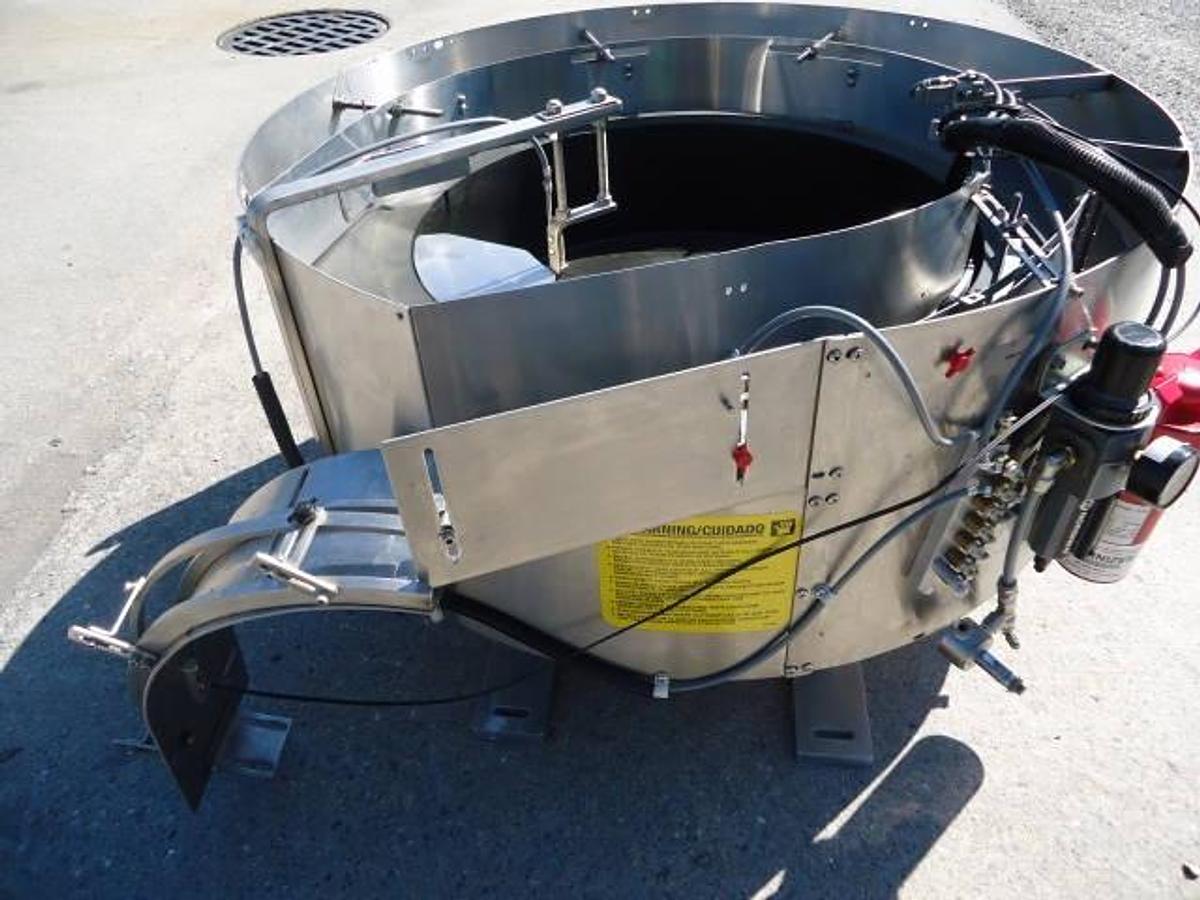
A centrifugal bowl feeder works by spinning a rotating disc inside a stationary bowl. Parts or components are fed from a hopper into the center of the spinning disc, and centrifugal force throws them outward toward the bowl wall. As parts travel up the bowl's inner wall, tooling and track geometry orient them into the correct position before they exit onto a downstream conveyor or chute. The process is continuous and can achieve significantly higher feed rates than traditional vibratory bowl feeders, making centrifugal designs well suited to high-speed packaging and assembly lines.
Common applications include cap feeding for bottling lines, closure handling in pharmaceutical packaging, tablet and capsule orientation in nutraceutical production, and small parts feeding in assembly automation. Stainless steel centrifugal bowl feeders are particularly valued in food-contact and cleanroom environments because the smooth surfaces are easy to sanitize and resist corrosion from cleaning agents. When buying a used centrifugal bowl feeder, confirm the bowl diameter and disc size match your part dimensions, and verify that any orientation tooling specific to your product is included with the machine or can be sourced separately, since custom tooling can add meaningful cost and lead time to a used equipment purchase.
What is an inclined cap elevator and how is it used in a production line?
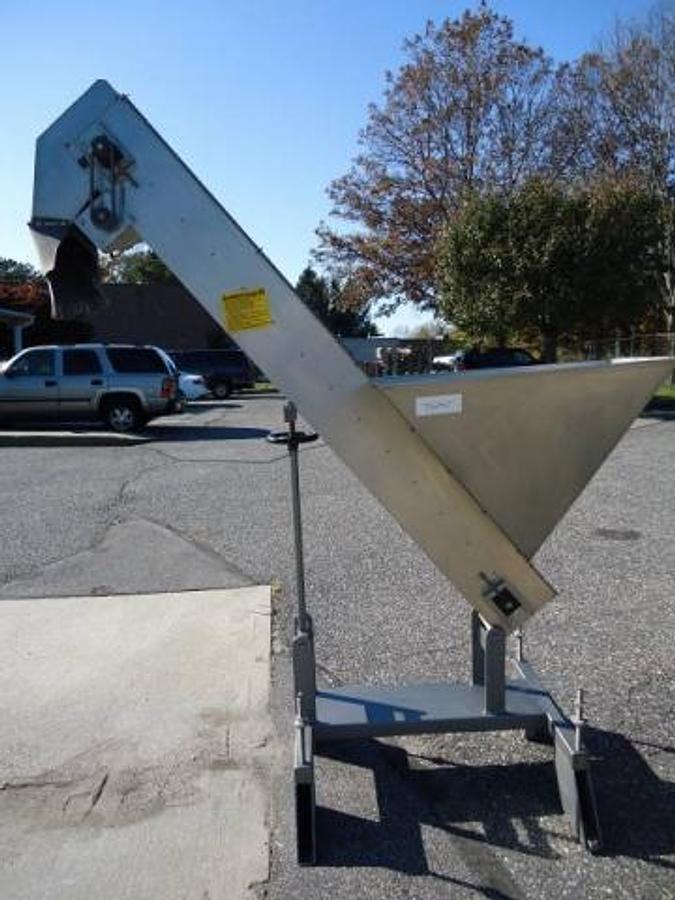
An inclined cap elevator, sometimes called an inclined feeder or cap elevator, is a machine designed to lift bulk closures, caps, or similar components from a floor-level hopper up to a discharge point at a height that feeds into a capper, sorter, or other downstream equipment. The inclined conveying section typically uses a cleated belt or a series of buckets to carry parts upward at an angle, depositing them into a bowl feeder, chute, or directly onto a conveyor at the required elevation. This eliminates the need for operators to manually load caps at height and allows for continuous, unattended feeding during a production run.
Inclined cap elevators are standard equipment on bottling and capping lines across the food, beverage, personal care, and pharmaceutical industries. Stainless steel construction is common in these environments due to sanitation requirements and the corrosive nature of some cleaning chemicals. When evaluating a used inclined cap elevator, pay attention to the belt or chain condition, the hopper capacity relative to your line speed, and whether the discharge height and angle are compatible with your existing equipment layout. Some units are adjustable, while others are built to fixed dimensions, so confirming the physical specifications before purchase avoids costly modifications after delivery.
What factors affect the price of used feed systems equipment?
Several variables drive pricing on the used feed systems market. Machine type and size are primary factors, with larger centrifugal bowl feeders or high-capacity inclined elevators commanding higher prices than smaller tabletop units. The manufacturer and model also matter significantly. Equipment from well-known manufacturers like Kaps-All and Feed Systems tends to hold its value better than generic or lesser-known brands because parts availability, technical documentation, and manufacturer support are more accessible. Overall condition, hours of use, and whether the machine includes original tooling and controls all factor into the asking price as well.
Material of construction plays a role too. Stainless steel units typically carry a premium over carbon steel or plastic alternatives because of their durability and suitability for regulated industries. Age affects price, but not always in a straightforward way. A well-maintained older machine from a reputable manufacturer may be priced higher than a newer unit from a less-supported brand, simply because parts and service support are more predictable. Buyers should also factor in the full landed cost, including freight, rigging, and any refurbishment needed, rather than comparing sticker prices alone. A lower-priced machine that requires significant reconditioning may end up costing more in total than a higher-priced unit in better condition.
How do I determine if a used feed system is compatible with my existing production line?
Compatibility comes down to a handful of measurable specifications. Start with the physical interface points: discharge height, discharge width, and the angle at which product exits the feeder all need to match or be adjustable to connect with your downstream equipment. For centrifugal bowl feeders, the bowl diameter and the exit track dimensions need to accommodate your specific part size and shape. If you are running multiple SKUs or closure sizes, confirm whether the feeder includes changeover tooling for each format or whether that tooling will need to be fabricated.
Electrical compatibility is another consideration that buyers sometimes overlook. Verify the machine's voltage, phase, and frequency requirements against your facility's power supply, and confirm that the control system is compatible with your line's PLC or operator interface if integration is required. Speed ratings matter too. A feeder rated for a maximum output of 200 parts per minute will be a bottleneck on a line running 400 bottles per minute. When inspecting used equipment, ask the dealer for the machine's original specifications and, where possible, request video of the machine running at speed. This gives you a realistic sense of its actual output capability rather than relying solely on nameplate data.
What maintenance does feed systems equipment typically require?
Routine maintenance on feed systems equipment generally falls into a few categories: lubrication, wear part inspection, and cleaning. Drive motors and gearboxes require periodic lubrication according to the manufacturer's specifications, and bearings should be inspected for noise or play at regular intervals. On centrifugal bowl feeders, the bowl liner and disc surface should be checked for wear that could affect orientation accuracy or damage parts. On inclined elevators, the belt or chain tension should be checked regularly, and cleats or buckets should be inspected for cracking or deformation.
Cleaning frequency depends heavily on the application. Machines running in food, pharmaceutical, or personal care environments typically require washdown cleaning at the end of each production run, which is why stainless steel construction is so prevalent in those industries. For used equipment, it is worth consulting the manufacturer's maintenance documentation if it is available, since older machines may have specific lubrication or adjustment procedures that differ from current models. Buyers should also contact the manufacturer directly to determine the level of technical support available for the specific model and age of machine they are considering, since parts availability and service documentation can vary significantly depending on how long a model has been out of production.
What should buyers understand about shipping and rigging costs for used feed systems equipment?
Shipping costs for used feed systems equipment are rarely a flat rate and depend on several factors that buyers should clarify before finalizing a purchase. Machine weight and dimensions determine the freight class and whether the shipment requires a standard LTL carrier or specialized heavy equipment transport. Smaller tabletop feeders may ship on a standard pallet, while larger centrifugal bowl feeders or inclined elevators may require custom crating to prevent damage in transit. The level of packaging directly affects shipping cost, and buyers should ask dealers specifically what packaging is included in the quoted price.
Rigging is a separate cost that covers the labor and equipment needed to safely load the machine at the origin and unload it at the destination. Heavy machines may require a forklift, crane, or other lifting equipment at both ends, and arranging that equipment is typically the buyer's responsibility unless otherwise negotiated. Buyers should request a fully itemized landed cost estimate that includes the machine price, packaging, freight, and any rigging charges before committing to a purchase. Surprises in shipping and rigging costs are one of the most common sources of frustration in used equipment transactions, and a transparent dealer will provide this information upfront rather than leaving it to be discovered after the sale.
What are the typical payment terms for purchasing used feed systems equipment?
Most used equipment dealers require payment in full before a machine is released for shipment. This is standard practice in the industry and reflects the nature of used equipment transactions, where machines are often sold to buyers who may be located across the country or internationally. Common payment methods include wire transfer, ACH, and in some cases credit card for smaller purchases, though dealers may charge a processing fee for card payments. Buyers should confirm accepted payment methods and any associated fees early in the negotiation process.
Some dealers extend payment terms to established customers with a prior purchase history, but this is the exception rather than the rule for first-time buyers. If financing is needed, buyers typically arrange that independently through equipment financing companies or their own banking relationships, since most used equipment dealers do not offer in-house financing programs. It is worth noting that payment terms and conditions should be clearly documented in a purchase agreement before any funds are transferred, including specifics about what happens if the machine is damaged in transit or if there is a material discrepancy between the machine's described condition and its actual condition upon arrival.
How does buying used feed systems equipment compare to buying new machinery?
The most obvious advantage of buying used feed systems equipment is cost. Used machines typically sell for a fraction of the price of comparable equipment purchased directly from a manufacturer, which can be a significant factor for operations trying to expand capacity without large capital outlays. For well-established machine types like centrifugal bowl feeders and inclined cap elevators, the core technology has been mature for decades, meaning a well-maintained used unit can perform comparably to a current-production machine for many applications. Lead times are also generally much shorter with used equipment, since the machine already exists and can often ship within days or weeks rather than the months-long lead times common with manufactured-to-order machinery.
The tradeoffs are real, though. Used machines are sold as-is, without the coverage that typically accompanies a direct manufacturer purchase. Buyers carry the responsibility of thoroughly inspecting the equipment and assessing its condition before purchase. Parts availability can also be a consideration for older models, so it is worth contacting the manufacturer before buying to understand what support, documentation, and spare parts are accessible for the specific model and vintage. Selecting a dealer who specializes in the relevant industry and has a long track record in the used equipment market reduces risk considerably, since experienced specialists are more likely to accurately represent machine condition and provide useful guidance on compatibility and sourcing.