Category
Manufacturer
Model
FAQ:
What is a ribbon blender and what is it used for?
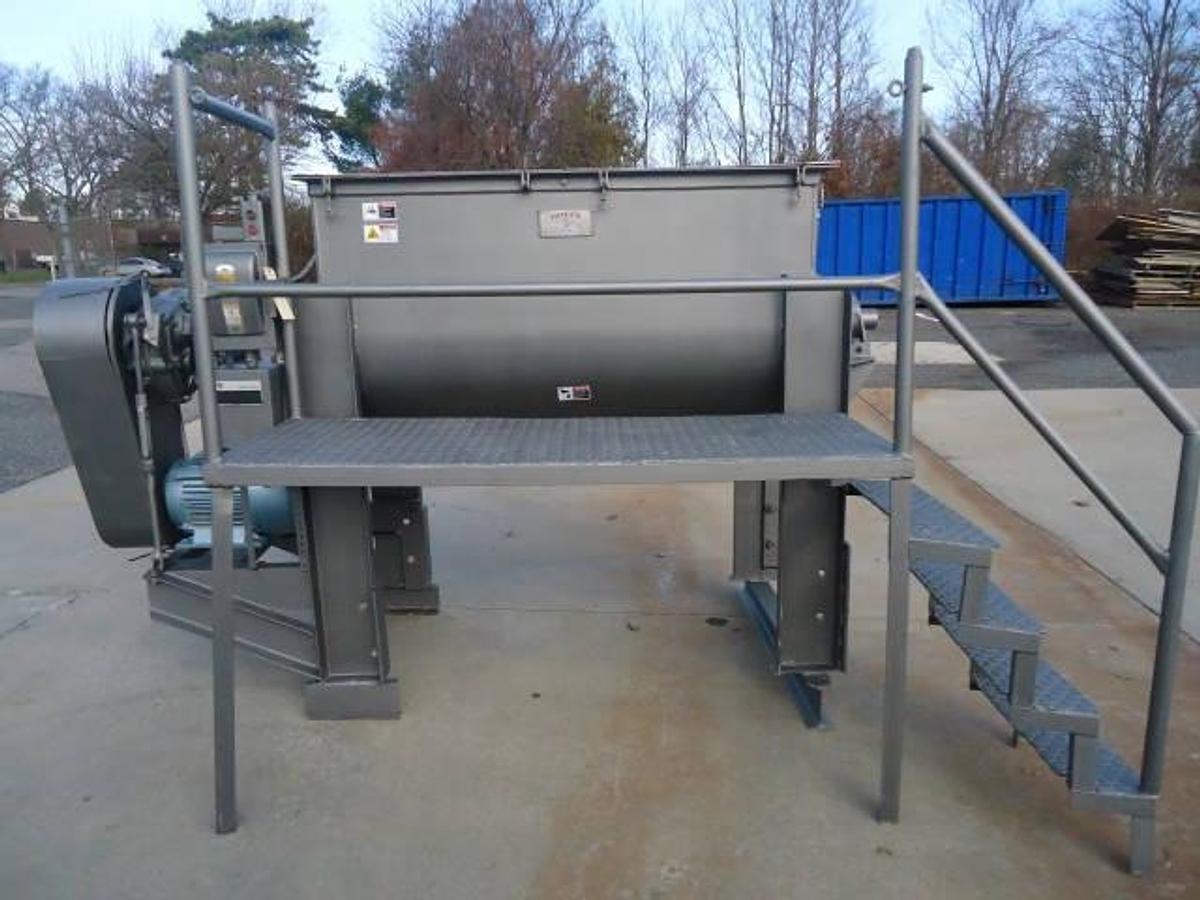
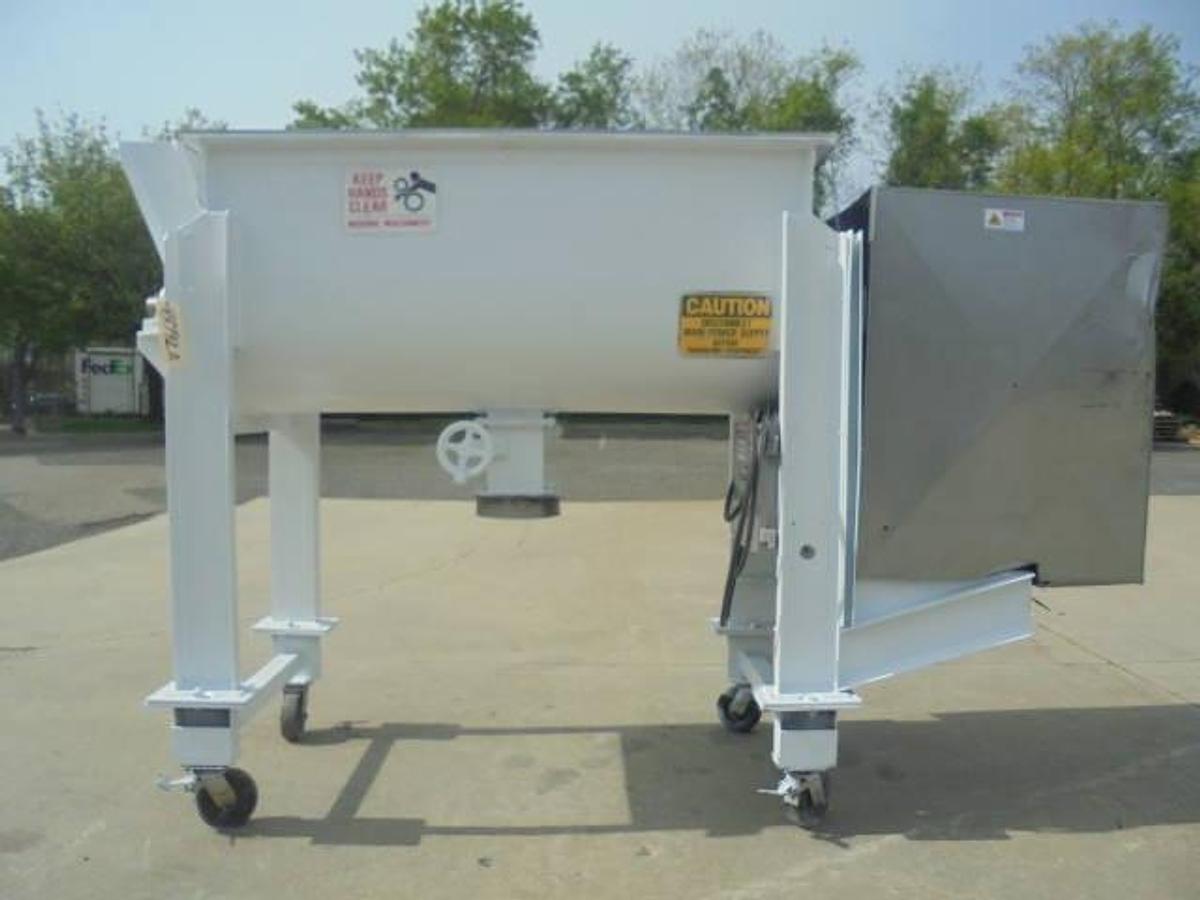
A ribbon blender is a horizontal mixing machine that uses a double helical ribbon agitator to move material simultaneously in opposing directions inside a trough-shaped vessel. The inner ribbon moves material toward the center of the trough while the outer ribbon moves it toward the ends, creating a consistent, thorough mix across the entire batch. This counter-directional flow is what gives ribbon blenders their reputation for achieving homogeneous blends, typically within 15 to 20 minutes depending on the material and batch size.
Ribbon blenders are workhorses across a wide range of industries. Food processors use them for spice blends, dry mixes, protein powders, and bakery ingredients. Pharmaceutical manufacturers rely on them for blending active ingredients with excipients. Chemical and agricultural operations use them for fertilizers, pesticides, and powdered coatings. Cosmetics manufacturers blend talcs, pigments, and dry personal care formulations in them as well. The design handles dry powders, granules, and semi-moist pastes, making it one of the more versatile pieces of blending equipment available for bulk solids processing.
What capacities are available for used Falcon ribbon blenders?
Falcon ribbon blenders have been manufactured across a fairly wide capacity range, from smaller pilot-scale units suited for product development and smaller batch production up to large industrial units capable of handling hundreds of cubic feet per batch. In the used equipment market, buyers commonly encounter Falcon units in the range of roughly 10 to 100 or more cubic feet, though availability at any given time depends on what has come off production lines and entered the secondary market.
As a concrete example of what is available, used Falcon stainless steel double ribbon blenders have been listed at capacities such as 17.5 cubic feet with 7.5 HP motors and 26.5 cubic feet with 10 HP motors. These mid-range capacities are well suited for small to medium production runs and are popular in food, nutraceutical, and specialty chemical operations. Buyers looking for a specific capacity should work with a used equipment dealer who specializes in mixing and blending machinery, as inventory turns over regularly and a dealer with deep industry connections is more likely to source the exact size needed.
What motor horsepower is typical for a Falcon ribbon blender?
Motor horsepower in a ribbon blender scales with the working volume of the vessel and the density of the materials being processed. Heavier, denser materials require more torque to move through the ribbon agitator, so the motor must be sized accordingly. For mid-range capacities in the 15 to 30 cubic foot range, motors in the 7.5 to 10 HP range are common and are well matched for typical food-grade powders, granules, and light chemical blends. Larger units processing denser or more viscous materials will require proportionally higher horsepower.
Used Falcon ribbon blenders available on the market reflect this scaling. A 17.5 cubic foot Falcon unit, for instance, is typically paired with a 7.5 HP motor, while a 26.5 cubic foot unit commonly carries a 10 HP motor. When evaluating a used machine, buyers should confirm that the motor is in good working order and that the horsepower rating is appropriate for the specific materials and batch densities they plan to run. A qualified used equipment dealer can help assess whether a particular unit is a practical fit for a buyer's production requirements.
Why are Falcon ribbon blenders built with stainless steel, and which grade is preferred?
Stainless steel construction is the standard choice for ribbon blenders destined for food, pharmaceutical, nutraceutical, and cosmetic applications because it resists corrosion, does not react with most processed materials, and can be cleaned and sanitized to the standards those industries require. The smooth surface finish of stainless steel also reduces product buildup on the trough walls and ribbon agitator, which matters both for product quality and for changeover time between batches. Carbon steel units exist and are used in certain chemical and agricultural applications where corrosion resistance is less critical and cost is a primary driver.
Within stainless steel construction, 304 grade is the most common specification and handles the majority of food and general industrial applications effectively. Grade 316 is specified when the process involves chlorides, acidic ingredients, or particularly aggressive cleaning agents, as the added molybdenum content provides greater corrosion resistance. Falcon ribbon blenders offered in the used market are frequently described as stainless steel construction, which is a meaningful selling point for buyers who need to meet food safety or pharmaceutical manufacturing standards. Buyers should verify the actual grade with the seller and, if possible, review any documentation that accompanied the machine during its service life.
What should a buyer inspect when evaluating a used Falcon ribbon blender?
A thorough inspection of a used ribbon blender covers several key areas. The trough and ribbon agitator should be examined for wear, pitting, cracks, or signs of corrosion, particularly at welds and along the bottom of the trough where abrasive materials tend to cause the most wear over time. The end plates and shaft seals deserve close attention because worn seals are a common maintenance issue that can allow product contamination or leakage. The drive components, including the motor, gearbox, and any belt or chain drives, should be checked for condition and smooth operation. Any damage to the discharge valve or its seating can affect both sealing during blending and cleanout between batches.
Used equipment dealers who specialize in mixing and blending machinery typically accommodate in-person inspections, virtual walkthroughs, or detailed video captures of the machine. Some equipment may still be installed at a production facility where it can be observed under operating conditions, while other units will have been decommissioned. It is worth noting that most used equipment dealers do not have the permitting or setup to run actual product through a machine, so a functional inspection is generally limited to observing mechanical operation rather than a full production trial. Buyers who want the most accurate picture of a machine's condition should take advantage of every inspection option available before committing to a purchase.
What is the typical price range for a used Falcon ribbon blender?
Pricing for used Falcon ribbon blenders varies based on capacity, construction material, motor size, overall condition, and current market supply. Smaller units in the 10 to 20 cubic foot range in good working condition tend to be priced more accessibly than larger industrial units, while stainless steel construction commands a premium over carbon steel regardless of size. Age and the availability of replacement parts for a specific model can also influence price, as buyers factor in the potential cost of future maintenance when evaluating the total value of a used machine.
Buyers should approach used ribbon blender pricing with an understanding that the purchase price is only part of the total landed cost. Rigging, crating or palletization, freight, and any refurbishment work needed after delivery all add to the final number. Getting a clear picture of those additional costs upfront from the seller is the best way to compare options accurately. A used Falcon ribbon blender in good condition typically represents meaningful savings compared to purchasing a comparable machine directly from a manufacturer, which is the primary reason buyers actively seek quality used blending equipment through reputable dealers.
How does a double ribbon agitator differ from a single ribbon design?
A single ribbon agitator uses one helical ribbon that moves material in a single direction along the length of the trough, which can result in material accumulating at one end and requiring longer blend times to achieve uniformity. A double ribbon design adds a second ribbon, typically running in the opposite direction and at a different pitch or diameter, so that material is simultaneously pushed inward and outward along the trough axis. This opposing flow creates a more active mixing zone throughout the entire vessel rather than just along one path, and it is the reason double ribbon blenders are the dominant design for applications where blend uniformity is critical.
The practical difference shows up in both blend time and blend quality. Double ribbon blenders routinely achieve homogeneous blends in 15 to 20 minutes for most dry powder and granule applications, while a single ribbon design working the same batch might require considerably more time to reach the same uniformity. For production environments where throughput matters and where consistent product quality is non-negotiable, the double ribbon configuration is the standard specification. Falcon ribbon blenders sold in the used market are commonly described as double ribbon units, which reflects the industry preference for that design in serious production settings.
Is a used Falcon ribbon blender suitable for food-grade or pharmaceutical applications?
A used Falcon ribbon blender with stainless steel construction can be a practical choice for food-grade and pharmaceutical blending, but suitability depends on the specific condition of the machine and how well it can be cleaned and validated for the intended application. Stainless steel trough construction, polished interior surfaces, and a properly functioning discharge valve with a clean seal are the baseline requirements for food-safe operation. Buyers should also assess whether the shaft seals are in good condition, since worn seals can be a source of contamination or lubricant ingress into the product zone.
For pharmaceutical applications specifically, the bar is higher. Buyers in that space often need to document equipment history, confirm surface finish specifications, and verify that the machine can be cleaned to validated standards. A used machine coming out of a similar regulated environment with maintenance records intact is a stronger candidate than one with an unknown history. Consulting with the equipment dealer about the machine's prior use, and if possible reviewing any available documentation, gives buyers a clearer picture of what qualification work may be needed before the machine goes into a regulated production line. In many cases, a well-maintained used Falcon stainless steel ribbon blender can be brought into compliance at a fraction of the cost of purchasing a comparable machine from a manufacturer.
What are the shipping and rigging considerations when buying a used ribbon blender?
Ribbon blenders are substantial pieces of equipment, and getting one from a seller's location to a buyer's facility requires careful planning. The trough, drive assembly, and support structure together create a machine that is both heavy and somewhat awkward to handle, so proper rigging at the point of origin is essential to prevent damage during loading. Sellers typically offer varying levels of packaging, from basic palletization to full crating, and the cost of that packaging will be reflected in the shipping quote. Buyers should ask specifically what level of protection is included and whether the machine will be shrink-wrapped, braced, or otherwise secured inside the crate.
At the receiving end, buyers need to be prepared for unloading. Larger ribbon blenders require a forklift with adequate capacity or a rigging crew, and the cost of that unloading is generally the buyer's responsibility unless otherwise negotiated. Freight costs for heavy industrial equipment vary significantly based on distance, carrier, and whether liftgate service is needed. Getting a full breakdown of packaging, loading, freight, and unloading costs before finalizing a purchase is the only reliable way to understand the true landed cost of the machine. Reputable used equipment dealers are accustomed to walking buyers through these logistics and can usually recommend freight carriers experienced with industrial machinery.
What payment terms should a buyer expect when purchasing used industrial blending equipment?
Used industrial equipment transactions generally follow a straightforward payment structure. Most used equipment dealers require full payment before the machine is released for shipping, which is standard practice in the industry and reflects the fact that used machinery transactions do not carry the same institutional credit infrastructure as new equipment purchases from large manufacturers. This means buyers should have financing or capital in place before committing to a purchase, since the timeline from agreement to shipment can move quickly once payment is confirmed.
Some dealers extend credit terms or deferred payment arrangements to established customers with a track record of repeat purchases, but first-time buyers should expect to pay in full upfront. Wire transfer is the most common payment method for transactions of this size, though dealers may accept other forms depending on the amount and the buyer's relationship with the company. Buyers who are unfamiliar with a particular dealer should take time to research the company's reputation, length of time in business, and specialization in the relevant equipment category before sending payment. Selecting a dealer who has been operating for many years and who specializes in mixing and blending equipment is one of the most practical ways to reduce risk in a used equipment transaction.