Category
Manufacturer
Model
FAQ:
What is a Facchini pasta machine and what types of pasta can it produce?
Facchini is an Italian manufacturer of commercial pasta-making equipment, known for producing specialized machines designed for high-volume food production environments. Unlike general-purpose pasta rollers, Facchini builds purpose-built machines for specific pasta types, including ravioli and gnocchi. Their equipment is built to handle the repetitive demands of commercial kitchens, pasta factories, and food processing facilities, where consistency and throughput matter far more than the flexibility of a home machine.
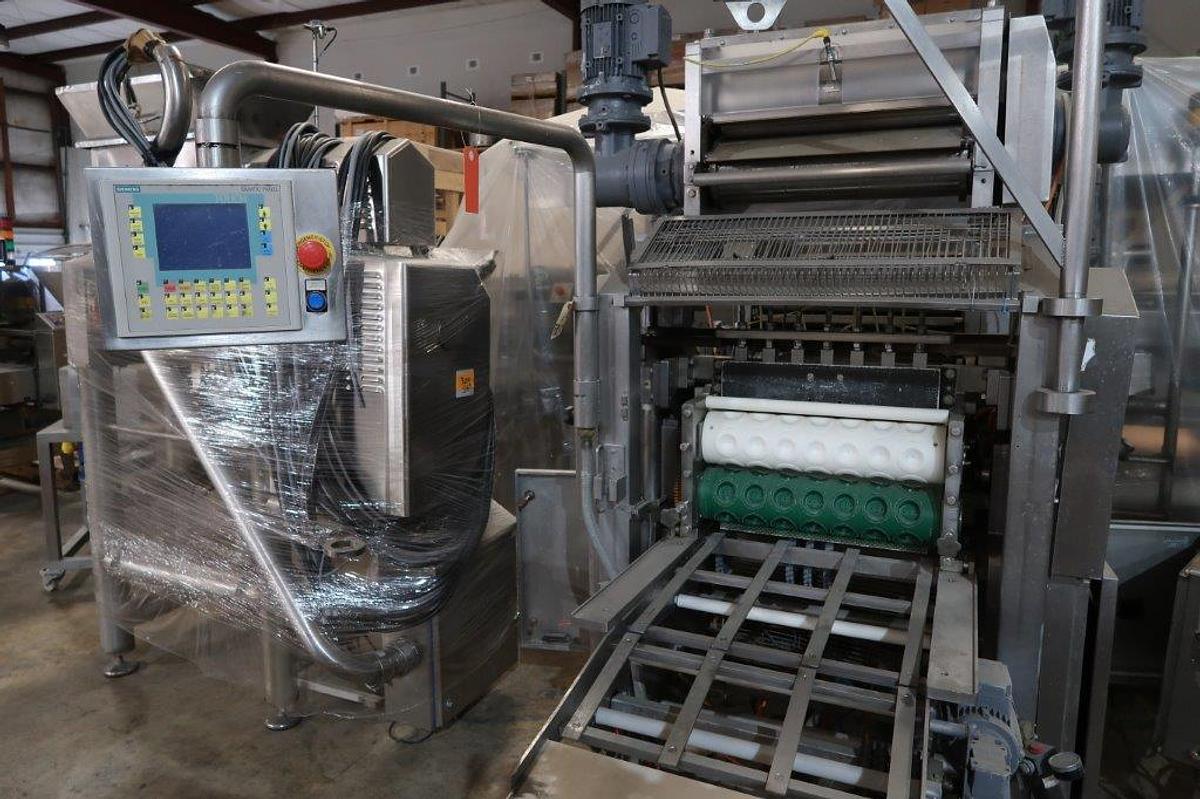
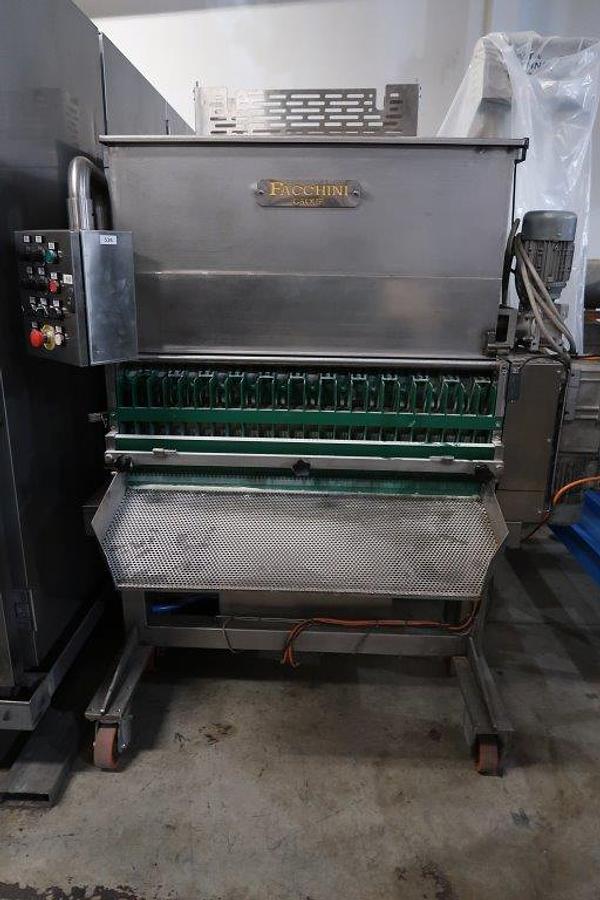
The product range covers distinct pasta categories rather than a single all-in-one machine. For example, the Facchini RV-540 is an automatic ravioli machine with a 540mm working width, designed to form, fill, and seal ravioli at production scale. Facchini also produces dedicated gnocchi makers, which shape and cut gnocchi at a pace no manual process can match. Each machine is engineered for its specific pasta type, which means the output quality and consistency tend to be significantly higher than what a multipurpose machine can deliver.
What does the '540mm' specification mean on the Facchini RV-540 ravioli machine?
The 540mm figure on the Facchini RV-540 refers to the working width of the machine, specifically the width of the pasta sheet that the machine processes during production. A wider working width means more ravioli can be formed across a single sheet in each pass, which directly increases the machine's output capacity. For commercial operations, this is one of the most important specs to evaluate because it determines how many finished pieces the machine can produce per hour.
When comparing used ravioli machines, working width is a key benchmark alongside sheet thickness range, filling capacity, and motor power. A 540mm width positions the RV-540 as a mid-to-large commercial unit, suitable for pasta manufacturers, restaurant commissaries, and specialty food producers with meaningful daily production targets. Buyers sourcing a used RV-540 should verify that the forming dies and sealing components are intact, since these parts directly affect finished ravioli shape and seal integrity.
Are Facchini pasta machines suitable for home use?
Facchini machines are commercial-grade equipment, not designed or sized for home kitchens. They are built for continuous production in professional food manufacturing environments, which means they require adequate floor space, proper electrical connections (often three-phase power), and regular maintenance that goes beyond what a home user would typically manage. The machines are also priced and scaled for businesses, not individual consumers.
Home pasta enthusiasts looking for a ravioli maker or gnocchi machine would be better served by consumer-grade tabletop equipment from brands that specifically target that market. Facchini equipment sold through used machinery channels is directed at food manufacturers, restaurant groups, catering operations, and pasta production facilities that need reliable, high-output machines. If a small artisan producer or specialty food startup is considering a used Facchini machine, the key questions are whether their production volume justifies the footprint and whether they have the technical capability to operate and maintain commercial pasta equipment.
Where can I find used Facchini pasta machines for sale?
Used Facchini pasta machines are available through specialized used food processing equipment dealers. These dealers source decommissioned or surplus commercial machinery from food manufacturers, restaurant groups, and pasta producers, then resell it to buyers looking for capable equipment at a lower cost than purchasing from a manufacturer. Because Facchini is a niche Italian commercial brand, availability on the used market tends to be limited at any given time, and specific models like the RV-540 ravioli machine or gnocchi makers may not always be in stock.
The best approach is to work with a used equipment dealer that specializes in food processing or pasta manufacturing machinery, since they are more likely to understand the technical specifications, have sourced the machine from a verifiable production environment, and be able to facilitate an inspection. General auction platforms and aggregation sites carry food equipment listings, but they rarely offer the product knowledge or inspection support that a specialized dealer provides. When a specific Facchini model is available, acting quickly is advisable given how infrequently these machines appear on the secondary market.
What should I inspect before buying a used Facchini pasta machine?
Buying used commercial pasta equipment requires a thorough inspection process because the condition of specific components directly affects production quality and the cost of getting the machine operational. For a ravioli machine like the Facchini RV-540, the critical areas to examine include the forming dies and molds (which determine ravioli shape and must be free of cracks or excessive wear), the sealing rollers, the dough sheeting rollers, and the filling hopper and pump system. Electrical components, drive motors, and gearboxes should also be checked for signs of wear, overheating, or prior repairs.
Reputable used equipment dealers typically accommodate in-person inspections at their facility or at the location where the machine is currently housed, which may still be an active production plant. Video inspections are also common when travel is not practical. Keep in mind that most used equipment dealers do not have the production permits required to run a full pasta-making operation during a demonstration, so testing with actual dough and filling may not be possible. Buyers should also contact Facchini or their regional representatives to understand parts availability and technical support for the specific model and age of machine they are considering, since older models may have limited spare parts supply.
Do used Facchini pasta machines come with a warranty?
Warranties on used commercial pasta machinery are generally not offered by equipment dealers. Used machinery is typically sold on an as-is basis, which places the responsibility for assessing the machine's condition squarely on the buyer before the sale is completed. This is standard practice across the used food processing equipment industry, not specific to any one brand or dealer. The absence of a warranty is precisely why thorough pre-purchase inspection matters so much.
To manage risk effectively, buyers should prioritize dealers with a verifiable track record in food processing equipment, request detailed photos or video of the machine, and arrange an inspection (in person or virtual) before committing. It is also worth reaching out directly to Facchini or their service network to understand what technical support, replacement parts, and service documentation are available for the specific model being considered. Age and production history can significantly affect parts availability, so this step is worth doing before finalizing any purchase decision.
What are typical shipping and logistics considerations for a used Facchini pasta machine?
Commercial pasta machines like those made by Facchini are heavy industrial equipment, and shipping them requires more planning than standard freight. The machine must be properly secured to a pallet or enclosed in a crate to prevent damage during transit. The level of packaging required depends on the machine's size, weight, and how far it is traveling. Crating costs can vary significantly and should be factored into the total purchase budget from the start.
Larger machines may require rigging equipment for loading at the origin and unloading at the destination, particularly if the buyer's facility does not have a loading dock or forklift access. These rigging services carry additional costs that are separate from the freight charge itself. Buyers should ask the dealer for a full breakdown of packaging, rigging, and freight costs before finalizing the purchase so there are no surprises on delivery day. International shipping adds customs documentation and import duties to the equation, which is worth investigating early if the machine is crossing borders.
What payment terms are typical when purchasing a used Facchini pasta machine?
Used commercial equipment dealers generally require full payment before the machine is released for shipping. This is the standard arrangement in the industry and applies to most used pasta machinery transactions. Some dealers may extend payment terms to established customers with a prior purchasing history, but first-time buyers should expect to pay in full upfront. Wire transfer is the most common payment method for transactions of this size.
Buyers should treat the payment process as part of their overall due diligence. Confirming that the dealer is an established, reputable business before sending funds is important. Reviewing the dealer's history, verifying their contact information, and getting all sale terms in writing (including machine description, condition notes, and what is included with the machine) protects both parties. For larger purchases, some buyers choose to work with a freight inspection service or third-party agent to confirm the machine matches its description before payment clears.
How does a commercial ravioli machine like the Facchini RV-540 differ from a manual ravioli mold or attachment?
A manual ravioli mold or pasta machine attachment is designed for small-batch production, typically handling a few dozen pieces at a time through a process that requires significant hands-on labor. The operator rolls dough by hand, places filling manually, and presses or cuts each piece individually. Output is limited by the speed of the person operating it, and consistency across pieces depends heavily on skill and attention.
An automatic commercial ravioli machine like the Facchini RV-540 operates on an entirely different scale. It continuously sheets dough, deposits filling at controlled intervals, seals the pasta, and cuts finished ravioli in a single automated process. A machine with a 540mm working width can produce hundreds or thousands of ravioli per hour, with consistent size, weight, and seal quality across every piece. For any operation producing ravioli at commercial volume, whether a pasta factory, a large restaurant commissary, or a specialty food brand, the difference in labor cost and output consistency between manual and automated production is substantial. The used market for machines like the RV-540 exists precisely because smaller operations can acquire this capability at a fraction of the cost of sourcing directly from a manufacturer.
What should buyers know about parts and technical support for used Facchini machines?
Parts availability and technical support are among the most practical concerns when buying any used commercial pasta machine, and Facchini is no exception. Because Facchini equipment is produced in Italy and distributed through a relatively limited network, sourcing replacement parts for older models can require working directly with the manufacturer or their regional distributors. The age and production run of a specific machine affects how readily parts are available, and buyers should investigate this before committing to a purchase.
The recommended approach is to contact Facchini or their authorized service contacts with the machine's model number and serial number to ask specifically about parts availability, service documentation, and whether any technical support is offered for that model. Some older machines may have limited or discontinued parts support, while more recent models are likely better covered. A used equipment dealer specializing in pasta machinery may also have contacts within the manufacturer's network or access to compatible parts suppliers, which can be a meaningful advantage when evaluating where to buy.