Category
Manufacturer
Model
Evapco
Evapco manufactures cooling towers and heat transfer equipment, primarily serving the HVAC and industrial sectors. Their products are designed for energy efficiency and reliability, making them essential for various manufacturing processes. Evapco’s focus on sustainability and innovation positions them as a leader in thermal management solutions.
FAQ:
What types of Evapco cooling equipment are commonly available on the used market?
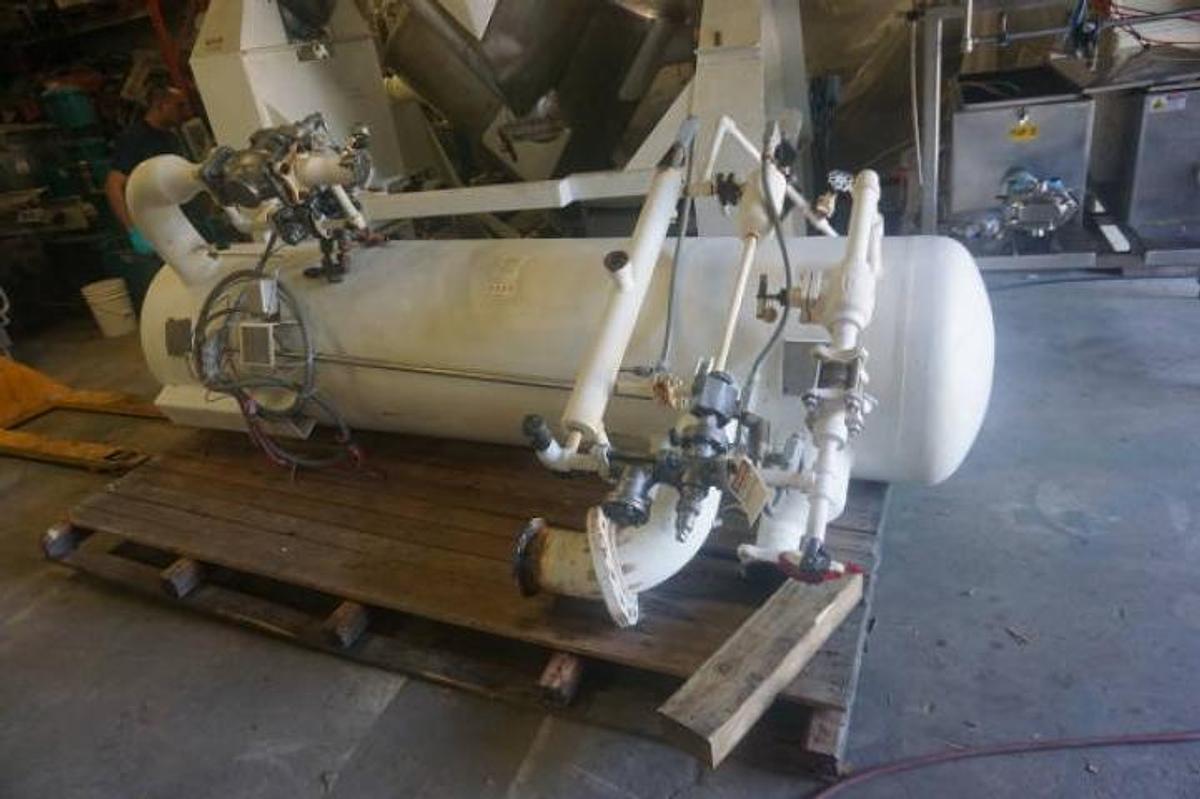
Evapco produces a broad range of thermal management equipment, and most of it shows up regularly in the used equipment market. The most common categories include cooling towers, evaporative condensers, closed-circuit coolers, and industrial refrigeration systems. Within those categories, buyers will encounter specific product lines such as the AT, ATC, LSTE, and UTC series, each engineered for different load capacities and operating environments. Evapco also manufactures high-pressure tanks and heat transfer components that support larger process cooling systems.
On the used market specifically, availability depends on what facilities are decommissioning or upgrading their systems. Industrial plants, food and beverage processors, data centers, and HVAC contractors are among the most common sources of used Evapco equipment. Because Evapco builds to a high construction standard, using heavy-gauge galvanized steel, stainless steel, or fiber-reinforced polymer depending on the model, their equipment tends to hold up well over time and remains functional and serviceable long after leaving the original installation. Buyers searching for used Evapco cooling equipment should look for dealers who specialize in industrial process equipment and carry a documented history of the machines they list.
What industries use Evapco cooling equipment?
Evapco cooling equipment serves a wide range of industries where heat rejection and thermal management are critical to operations. The HVAC sector relies heavily on Evapco cooling towers and evaporative condensers for commercial building climate control. Industrial refrigeration applications, including cold storage warehouses and food and beverage processing plants, are among the largest end users of Evapco evaporative condensers and closed-circuit coolers. Data centers use Evapco equipment to manage the substantial heat loads generated by server infrastructure, and power generation facilities depend on their heat transfer systems for process cooling.
Beyond those core markets, Evapco equipment appears in chemical processing, pharmaceutical manufacturing, and general industrial production environments where precise temperature control directly affects product quality and process efficiency. This broad applicability is one reason used Evapco equipment retains strong demand. A cooling tower or evaporative condenser that was originally installed in a food processing plant may be perfectly suited for a new application in a different industry, provided the capacity and configuration align with the buyer's requirements. Buyers sourcing used equipment for specialized environments should review the original equipment specifications carefully and, when possible, consult with an engineer familiar with their specific process cooling needs.
How energy-efficient is Evapco cooling equipment compared to other brands?
Evapco has built a strong reputation for energy efficiency across its product lines. Many of their cooling towers and evaporative condensers are engineered with low fan horsepower requirements relative to their cooling capacity, which translates directly into lower operating costs over the life of the equipment. Evapco has also incorporated water conservation technology into a number of their designs, reducing drift losses and makeup water consumption, which matters both for operating cost and environmental compliance in water-restricted regions. Their closed-circuit coolers, in particular, are designed to minimize water use while maintaining effective heat transfer.
For buyers purchasing used Evapco equipment, the energy efficiency of a specific unit will depend on the model, its age, and its current mechanical condition. Older units may predate some of the more advanced efficiency features found in later production runs, and components like fan motors, drift eliminators, and fill media can degrade over time and affect performance. A thorough inspection before purchase is the best way to assess the actual operating condition of a used unit. Buyers should also check whether the fan motors and drive components have been maintained or replaced, since those elements have the most direct impact on energy consumption in day-to-day operation.
What should buyers inspect before purchasing used Evapco cooling equipment?
Buying used cooling equipment requires a more hands-on evaluation than purchasing off a spec sheet. For Evapco cooling towers and evaporative condensers, the key areas to inspect include the condition of the basin and casing for corrosion or structural damage, the integrity of the fill media or coil bundle, the fan blades and drive components, the condition of the drift eliminators, and the overall state of the water distribution system. Corrosion is the most common issue in used evaporative cooling equipment because these machines operate in a continuously wet environment. Heavy-gauge galvanized or stainless steel construction, which Evapco uses depending on the model, holds up better than lighter materials, but even well-built equipment can show corrosion in areas with poor water treatment history.
Reputable used equipment dealers will typically accommodate in-person inspections, video walkthroughs, or photo documentation of the machine's current condition. Some equipment may still be installed and operating at the seller's facility, which allows buyers to observe it running. Keep in mind that most dealers do not have the permitting or infrastructure to run full production tests, so inspections are generally visual and mechanical rather than load-tested. Buyers with specific performance requirements should factor this into their due diligence process and consider hiring a qualified technician to review inspection materials before committing to a purchase.
What is the typical price range for used Evapco cooling equipment?
Pricing for used Evapco cooling equipment varies considerably based on the type of equipment, its size and capacity, the model series, age, and overall condition. A smaller cooling tower or evaporative condenser in good working condition might sell for a fraction of its original list price, while a large industrial-grade unit with significant remaining service life can still command a substantial price relative to comparable used alternatives. High-pressure tanks and specialized heat transfer components are priced based on their rated capacity and material construction. Stainless steel or fiber-reinforced polymer units typically carry a higher resale value than standard galvanized steel configurations.
Buyers should also account for costs beyond the equipment price itself. Rigging, crating or palletization, freight, and any site-specific installation requirements all contribute to the total landed cost of a used cooling unit. Larger equipment may require crane services or specialized rigging for loading and unloading, which can add meaningfully to the overall budget. The best approach is to get a clear breakdown of all associated costs from the dealer before finalizing a purchase, so there are no surprises once the equipment arrives. Comparing landed cost against the cost of a comparable used unit from a different source, or against a refurbished unit, gives buyers the most accurate picture of the value they are getting.
Does used Evapco cooling equipment come with a warranty?
Warranties on used industrial equipment work differently than on equipment purchased directly from a manufacturer. Manufacturer warranties are generally tied to the original sale and do not transfer to subsequent buyers in most cases. Used equipment dealers typically sell machinery on an as-is basis, which means the buyer takes on responsibility for assessing the condition of the equipment prior to purchase. This is standard practice across the used industrial equipment market, and it underscores why thorough pre-purchase inspections are so important.
Buyers concerned about post-purchase support have a few practical options. First, selecting a dealer with a long track record in industrial equipment sales reduces the risk of misrepresented condition or undisclosed problems. Second, contacting Evapco directly before purchasing a specific used unit is worthwhile, as the manufacturer can provide guidance on parts availability, service support, and whether a particular model is still supported in terms of replacement components. Older or discontinued models may have limited parts availability, which is a relevant factor in the long-term cost of ownership. Understanding those details before buying protects buyers from investing in equipment that becomes difficult or expensive to maintain.
How are used Evapco cooling towers and condensers shipped?
Shipping used cooling equipment requires careful planning because these are large, heavy machines with components that can be damaged in transit if not properly secured. Dealers will typically palletize or crate equipment depending on its size and fragility, and the level of packaging directly affects shipping costs. Smaller components or partial units may ship on standard pallets, while larger cooling towers or evaporative condensers often require custom crating or skidding to prevent structural damage during loading, transit, and unloading. Buyers should ask dealers specifically what packaging is included in the quoted price and what additional packaging options are available.
For large Evapco cooling units, rigging is a significant consideration. Loading a substantial cooling tower or condenser onto a flatbed truck requires crane or forklift capacity, and unloading at the destination site requires the same. If the buyer's facility is not equipped for heavy rigging, arranging third-party rigging services is an added cost that needs to be factored into the overall budget. Most reputable dealers can provide guidance on rigging requirements and may be able to recommend logistics partners experienced with industrial cooling equipment. Getting a complete picture of packaging, rigging, and freight costs upfront ensures the buyer understands the true cost of acquiring the equipment before the purchase is finalized.
What maintenance does Evapco cooling equipment require?
Evapco cooling towers and evaporative condensers require regular maintenance to operate efficiently and extend their service life. The most critical maintenance tasks involve water treatment, since scale buildup, biological growth, and corrosion are the primary causes of performance degradation and premature failure in evaporative cooling equipment. A proper water treatment program controls mineral deposits, prevents Legionella and algae growth, and protects metal surfaces from corrosion. The specific treatment protocol depends on local water quality and the type of equipment, but it is not optional in any operating environment.
Beyond water treatment, routine maintenance includes inspecting and cleaning the basin and distribution system, checking fan blades and drive components for wear or imbalance, inspecting fill media for fouling or damage, and verifying that drift eliminators are intact and properly seated. Motors, bearings, and belts or gear drives should be inspected on a schedule consistent with the manufacturer's recommendations for the specific model. For buyers acquiring used equipment, it is worth establishing a baseline by having a qualified technician perform a full inspection and service immediately after installation, before the unit goes into regular operation. This identifies any wear items that need attention and gives the new owner a clear starting point for their ongoing maintenance program.
What payment terms should buyers expect when purchasing used Evapco equipment from a dealer?
Payment practices in the used industrial equipment market are fairly consistent across dealers. Most require payment in full before the equipment is released for shipping or pickup. This protects the dealer against non-payment and is standard practice given the nature of large-dollar, one-off transactions that characterize used machinery sales. Buyers who are unfamiliar with a dealer should expect to pay in full upfront and treat any deviation from that as something to verify carefully.
Some dealers will extend payment terms to established customers with a history of repeat purchases, but this is the exception rather than the rule for first-time buyers. Accepted payment methods vary by dealer but commonly include wire transfer, ACH, and in some cases credit arrangements for qualified buyers. Buyers should clarify payment terms, accepted methods, and the timeline between payment and shipment before committing to a purchase. Understanding when payment is due relative to when the equipment ships, and what documentation the buyer receives upon payment, helps avoid misunderstandings and ensures the transaction proceeds smoothly.
How do I know if a used Evapco cooling unit is the right size for my application?
Sizing a cooling tower or evaporative condenser correctly is one of the most important steps in the procurement process, and it requires more than just matching a unit's physical dimensions to available space. Evapco equipment is rated by cooling capacity, typically expressed in tons of refrigeration or BTUs per hour depending on the application, along with design wet-bulb temperature, flow rate, and entering and leaving water temperatures. These parameters need to match the thermal load of the specific process or HVAC system the equipment will serve. Using an undersized unit results in inadequate heat rejection, while an oversized unit wastes capital and may create operational inefficiencies.
For used equipment, the nameplate data and original specification sheets are the starting point for sizing verification. Buyers should compare those figures against their actual system requirements, ideally with input from a mechanical engineer or a cooling system specialist who understands the application. It is also worth noting that a used unit's actual performance capacity may differ from its nameplate rating if components like fill media, fan blades, or motors have been replaced with non-standard parts over the years. Requesting detailed photos of the nameplate, internal components, and any available service history gives buyers the information they need to make an accurate assessment before purchase.