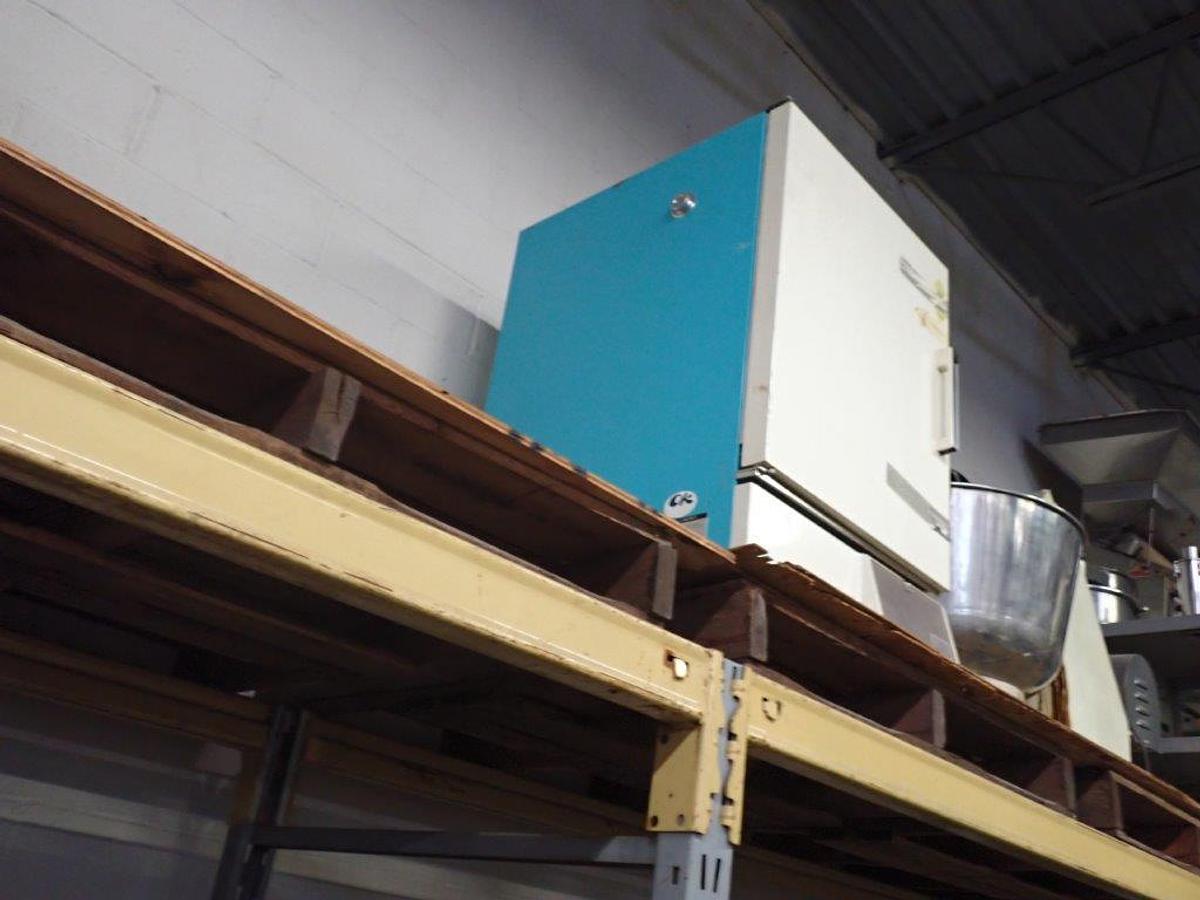
Category
Manufacturer
Model
Espec
Espec is known for its environmental testing chambers, which are essential for quality assurance in manufacturing processes. Their equipment is widely used in electronics, automotive, and materials testing industries to simulate various environmental conditions. Espec’s focus on precision and reliability makes it a preferred choice for manufacturers seeking to ensure product durability.
FAQ:
What types of Espec environmental test chambers are available on the used market?
Espec produces a broad lineup of environmental test chambers, and many of these models circulate regularly on the used equipment market. The most commonly available types include temperature-only chambers, combined temperature and humidity chambers, thermal shock chambers, HALT/HASS (Highly Accelerated Life Testing and Stress Screening) chambers, and humidity-only cabinets. Each type serves a distinct testing purpose, so buyers typically start by identifying their specific test requirements before searching for a particular model.
Used Espec chambers show up across a range of sizes and configurations. Smaller benchtop humidity cabinets are common finds, as are larger walk-in or reach-in temperature/humidity units designed for high-volume production testing. Because Espec has been manufacturing chambers for decades, the used market includes a wide variety of generations and models, giving buyers flexibility in matching capacity, temperature range, and control system sophistication to their budget and application.
What temperature and humidity ranges do Espec environmental test chambers typically support?
Espec chambers are known for covering a wide spectrum of environmental conditions. Temperature ranges on most standard models span from approximately -70°C on the low end to +180°C on the high end, though some specialized models push beyond these limits in either direction. Temperature accuracy is a notable strength of Espec equipment, with many models maintaining control within ±0.3°C to ±1°C depending on the specific chamber and its calibration history.
For humidity, most Espec combined temperature/humidity chambers operate across a range of roughly 10% RH to 98% RH. This breadth makes them well-suited for a wide variety of climate simulation tests, from dry desert conditions to tropical high-humidity environments. When evaluating a used Espec chamber, buyers should confirm the specific model's rated ranges and, where possible, verify that the humidity generation system (typically a water-fed humidifier) is in working order, since this component can degrade over time and affect accuracy.
What industries use Espec environmental test chambers?
Espec chambers are found in a wide range of industries where product reliability under environmental stress is a core quality requirement. Electronics manufacturing is one of the largest use cases, where chambers are used to test circuit boards, semiconductors, and consumer devices for thermal cycling endurance, moisture resistance, and condensation effects. Automotive suppliers rely on Espec equipment to validate components that must perform across extreme temperature swings, from cold-start conditions to under-hood heat exposure.
Aerospace, defense, pharmaceutical, and materials science are also significant sectors. Aerospace applications often require thermal shock testing to simulate rapid altitude-related temperature changes. Pharmaceutical companies use humidity chambers to study drug stability and packaging integrity under accelerated aging conditions. Because Espec builds chambers to precise, repeatable standards, their equipment tends to hold up well in regulated environments where test documentation and chamber calibration records are required for compliance purposes.
Are used Espec environmental test chambers a reliable choice for production testing?
Used Espec chambers have a strong reputation for reliability on the secondary market, largely because Espec builds their equipment to tight tolerances and uses durable components. Many facilities that purchase used Espec units find them capable of delivering consistent, repeatable results for years after their initial production run, provided the chambers have been properly maintained. The key variables are the chamber's service history, the condition of consumable components like compressors, heaters, and humidity generators, and whether the control system is still supported.
That said, used equipment is sold as-is, so the burden of evaluating condition falls on the buyer. Prospective purchasers should take advantage of inspection opportunities, whether in person, via video walkthrough, or through detailed photo documentation provided by the dealer. It is also worth contacting Espec directly to determine what level of technical support, replacement parts, and calibration service is available for the specific model under consideration, since older or discontinued models may have limited parts availability.
What should buyers inspect when evaluating a used Espec environmental test chamber?
A thorough inspection of a used Espec chamber should cover both mechanical and electronic systems. On the mechanical side, the refrigeration compressor is the most critical component to assess, as compressor replacement is expensive and a failing compressor is the most common reason chambers are decommissioned. The chamber's door seals, interior liner condition, and any visible corrosion or water damage inside the test space are also important checkpoints. For humidity chambers, the water supply system, humidifier element, and drainage lines should be examined for scale buildup or deterioration.
On the controls side, buyers should verify that the programmable controller is functional and that any required software or data logging interfaces are intact. Reputable used equipment dealers typically offer in-person inspections, video inspections, or recorded video walkthroughs so buyers can assess the chamber's condition before committing. Some chambers may still be in active use at a facility, in which case the dealer can often arrange an inspection at the production site. Keep in mind that dealers generally cannot run full product test cycles, but they can power up the chamber, demonstrate temperature ramp performance, and document the current state of all major systems.
What is the typical price range for used Espec environmental test chambers?
Pricing for used Espec chambers varies considerably based on chamber size, type, age, condition, and included accessories. Small benchtop humidity cabinets or compact temperature chambers at the lower end of the market can be found for a few thousand dollars. Mid-range reach-in temperature/humidity chambers in good working condition typically fall somewhere between $5,000 and $20,000 depending on capacity and model generation. Larger or more specialized units, such as walk-in chambers or HALT/HASS systems, can command significantly higher prices.
Beyond the purchase price, buyers should factor in shipping, rigging, and any reconditioning costs when calculating total acquisition expense. Large chambers often require specialized rigging equipment for loading and unloading, which adds to the landed cost. Buyers should ask dealers for a full breakdown of packaging, freight, and any applicable rigging charges before finalizing a purchase so there are no surprises. Getting a calibration service performed after installation is also a common added cost that buyers in regulated industries should budget for.
How does Espec compare to other environmental test chamber manufacturers?
Espec is a Japanese manufacturer with a long history in the environmental testing industry and is widely regarded as one of the higher-quality brands in the space. Competing manufacturers include Thermotron, Cincinnati Sub-Zero (CSZ), Tenney, Angelantoni, and Weiss Technik, among others. Espec differentiates itself through tight temperature uniformity specifications, a broad product range, and a reputation for building chambers that hold calibration well over time. These qualities make Espec equipment particularly sought after in industries where test data accuracy has direct regulatory or engineering consequences.
On the used market, Espec chambers tend to hold their value reasonably well compared to lesser-known brands, which can be a consideration for buyers who may eventually resell the equipment. The availability of Espec service documentation, calibration standards, and parts through the manufacturer's support network (subject to model age) also makes them easier to maintain than some competing brands. Buyers comparing used Espec units against other brands should weigh the total cost of ownership, including likely maintenance needs and parts availability, rather than focusing solely on the purchase price.
What is a thermal shock chamber, and how does it differ from a standard temperature/humidity chamber?
A thermal shock chamber is designed to expose a test specimen to rapid, extreme temperature transitions within a very short time window, typically moving from a high temperature zone to a low temperature zone in a matter of seconds. This simulates the kind of stress a component might experience during real-world events like rapid altitude changes, sudden power cycling, or exposure to cold environments immediately after operating at high temperatures. Espec produces thermal shock chambers that can achieve these transitions far faster than a conventional temperature chamber, which ramps temperature gradually.
A standard temperature or temperature/humidity chamber, by contrast, is designed for slower, controlled ramps and steady-state soak conditions. These chambers are used for burn-in testing, accelerated aging, and humidity exposure studies where the rate of temperature change is not itself the stress being applied. The two chamber types are complementary rather than interchangeable, and many test programs require both. On the used market, thermal shock chambers tend to be less common than standard temperature/humidity units and often command a premium due to their more complex dual-zone refrigeration and transfer mechanism systems.
How is shipping and delivery handled for used Espec environmental test chambers?
Shipping a used environmental test chamber requires careful planning because these are heavy, precision instruments that can be damaged by vibration, tipping, or improper handling during transit. Most used equipment dealers will crate or palletize chambers before shipment, and the level of packaging required will affect freight costs. Smaller benchtop units may ship on a standard pallet via LTL freight, while larger chambers typically require custom crating and full truckload shipping. Buyers should ask the dealer specifically what packaging method will be used and confirm that it is appropriate for the size and weight of the unit.
For large chambers, specialized rigging is usually required both at the point of origin for loading and at the buyer's facility for unloading and placement. This can include forklifts, overhead cranes, or hydraulic lift equipment, depending on the chamber's dimensions and weight. Rigging costs are generally an added expense beyond the base freight charge. Buyers should request a complete landed cost estimate from the dealer, covering packaging, freight, and rigging, before finalizing the purchase. Transit times vary based on distance and carrier availability, so buyers with time-sensitive needs should discuss lead times with the dealer upfront.
What payment terms are typical when purchasing a used Espec environmental test chamber?
Used equipment dealers in this space generally require payment in full prior to releasing a chamber for shipment. This is standard practice across the used industrial equipment industry and reflects the nature of selling pre-owned machinery without the credit infrastructure that large manufacturers or distributors might offer. Payment is typically accepted by wire transfer, and buyers should confirm accepted payment methods with the dealer before proceeding. Some dealers may extend terms to repeat customers with an established purchasing history, but first-time buyers should plan for full prepayment.
Because payment is required before shipping, buyers are strongly encouraged to complete any desired inspections, whether in person or via video, before submitting payment. This is the primary opportunity to verify the chamber's condition and confirm it matches the listing description. Selecting a dealer with a long track record in the environmental test equipment space adds an important layer of confidence when making a prepayment, as established dealers have reputations to protect and are more likely to represent equipment accurately and handle any post-sale questions professionally.