Category
Manufacturer
Model
Enerquip
Enerquip is known for its heat exchangers and thermal processing equipment, primarily serving the food and beverage industries. Their products are designed for energy efficiency and are essential for processes such as pasteurization and sterilization. Enerquip’s focus on quality and performance makes them a preferred choice for manufacturers seeking reliable thermal solutions.
FAQ:
What is Enerquip best known for in the heat exchanger industry?
Enerquip has built its reputation primarily around sanitary shell and tube heat exchangers designed for industries where cleanliness and process integrity are non-negotiable. Their equipment is closely associated with food and beverage processing, dairy, pharmaceutical manufacturing, and biotech applications. The brand is particularly well regarded for producing thermal processing equipment that meets strict hygiene standards, making it a go-to choice for facilities that run pasteurization, sterilization, and other temperature-sensitive processes.
Beyond sanitary design, Enerquip is recognized for building equipment to comply with 3-A Sanitary Standards, ASME pressure vessel codes, and FDA-compatible materials. These certifications matter a great deal in regulated production environments, where documentation and traceability are part of daily operations. Manufacturers in these sectors tend to specify Enerquip by name because the equipment has a track record of holding up under continuous production demands while remaining cleanable to sanitary standards.
What industries use Enerquip heat exchangers?
Enerquip heat exchangers are used across a fairly specific set of industries, all of which share a need for sanitary thermal processing. Food and beverage processing is the most common application, covering everything from juice and dairy pasteurization to brewing and sauce production. Pharmaceutical and biotech manufacturers also rely on Enerquip equipment for processes that require precise temperature control alongside full compliance with sanitary and regulatory requirements.
Dairy processing facilities in particular have long used Enerquip shell and tube heat exchangers because the design allows for thorough cleaning-in-place (CIP) procedures without disassembly. Nutraceutical producers, cosmetics manufacturers, and specialty chemical processors also use this type of equipment when their processes involve heat-sensitive fluids that cannot tolerate contamination. The common thread across all these industries is the need for equipment that can handle elevated temperatures and pressures while remaining fully compliant with food safety and pharmaceutical regulations.
What are the key design features of Enerquip shell and tube heat exchangers?
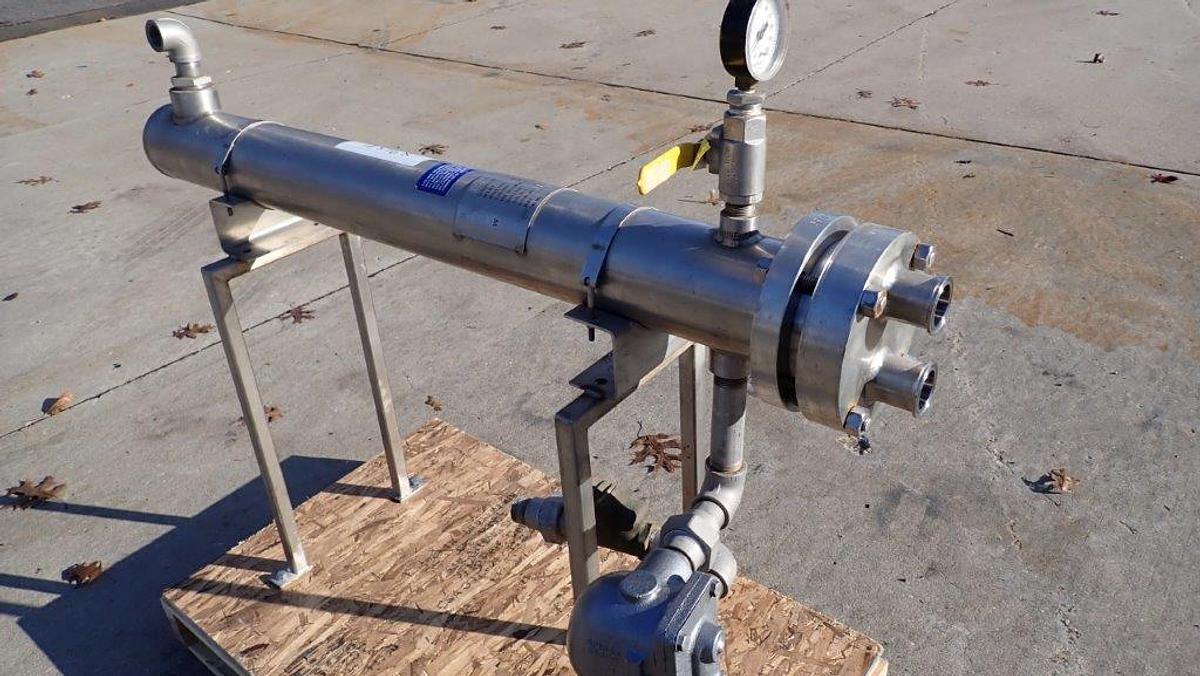
Enerquip shell and tube heat exchangers are built around a design where one fluid flows through a bundle of tubes while a second fluid flows around the outside of those tubes within a larger shell. This configuration allows efficient heat transfer between two process streams without them ever coming into direct contact. The shell and tube design is particularly well suited to high-pressure and high-temperature applications, and it scales well from small pilot plant units to full production-scale equipment.
On the sanitary side, Enerquip units are typically constructed with stainless steel contact surfaces, polished tube interiors, and connections designed to meet 3-A standards. The tube bundle can often be removed for inspection and cleaning, which is a practical advantage in food and pharmaceutical facilities. Pilot plant versions of these exchangers are also available, which allow smaller-scale production or process development teams to work with the same equipment design before scaling up to full production.
What materials are used in Enerquip heat exchanger construction?
Stainless steel is the dominant material in Enerquip heat exchanger construction, which is a direct result of the sanitary industries these units are designed to serve. Stainless steel, particularly 304 and 316L grades, offers corrosion resistance, ease of cleaning, and compatibility with FDA regulations for food contact surfaces. The tube interiors and any surfaces that contact process fluids are typically polished to a specified surface finish to reduce the risk of bacterial adhesion and to facilitate effective CIP cleaning.
The shell, tube sheets, and end caps are also generally stainless steel in sanitary models, though the specific alloy and finish can vary depending on the application. Gasket and seal materials are selected to be compatible with the process fluids and cleaning chemicals involved, with options ranging from EPDM to Buna-N depending on temperature range and chemical exposure. Buyers evaluating used Enerquip equipment should pay close attention to the condition of these surfaces and seals, as wear or pitting on stainless steel contact surfaces can affect both sanitary performance and long-term serviceability.
Do Enerquip heat exchangers meet 3-A sanitary standards and ASME codes?
Enerquip heat exchangers are built to comply with 3-A Sanitary Standards, which are the benchmark requirements for equipment used in dairy, food, and beverage processing in the United States. The 3-A symbol on a piece of equipment indicates that it has been designed and fabricated to meet specific criteria for cleanability, material compatibility, and surface finish. This certification is often a procurement requirement for regulated food facilities and dairy processors, and it carries significant weight with state and federal inspectors.
In addition to 3-A compliance, Enerquip heat exchangers are generally designed and stamped to ASME Section VIII standards for unfired pressure vessels. The ASME stamp confirms that the unit has been fabricated according to a recognized engineering code and that the design has been reviewed for safe operation at rated pressures and temperatures. For buyers considering used Enerquip equipment, it is worth confirming whether the unit retains its ASME documentation and whether the 3-A compliance status is still valid, as modifications or repairs performed outside the original fabrication process can affect certification status.
What sizes and configurations of Enerquip heat exchangers are typically available?
Enerquip produces shell and tube heat exchangers across a wide range of sizes, from compact pilot plant units suitable for laboratory or small-batch production all the way up to large-diameter shells designed for high-volume continuous processing. Pilot plant models are particularly useful for product development teams or facilities that need to test thermal processes before committing to full-scale production equipment. Larger production units can handle significantly higher flow rates and are built to match the throughput demands of commercial food, dairy, or pharmaceutical facilities.
Configuration options typically include variations in tube count, tube length, shell diameter, number of passes, and connection size and type. Enerquip has historically offered custom-engineered solutions, meaning units can be specified to match particular flow rates, operating pressures, inlet and outlet temperatures, and connection styles such as tri-clamp fittings common in sanitary applications. In the used equipment market, available configurations will depend on what has been decommissioned from production facilities, so buyers may find a narrower selection than what a manufacturer's catalog would show. Reviewing the nameplate data and any available documentation on a used unit is the best way to confirm the exact specifications.
What should buyers look for when evaluating used Enerquip heat exchangers?
Evaluating a used Enerquip heat exchanger requires a close look at several factors that directly affect whether the unit will perform reliably in its next application. The condition of the stainless steel surfaces is a primary concern, particularly the tube interiors and any product-contact areas. Pitting, discoloration, or mechanical damage to polished surfaces can compromise sanitary performance and may require remediation before the unit can be placed back into a regulated production environment. Buyers should also check the condition of gaskets and seals, as these are wear items that typically need replacement after extended service.
Documentation is another important consideration. If the unit carries an ASME stamp or 3-A compliance documentation, confirming that those records are available and that the unit has not been modified in ways that would void those certifications adds meaningful assurance. Reputable used equipment dealers will typically accommodate in-person or video inspections so buyers can assess the physical condition of the equipment before committing to a purchase. Keep in mind that most used equipment dealers do not have the production permitting required to run actual process fluids through the equipment during an inspection, so the evaluation will be visual and dimensional rather than a full operational test.
How does the buying process work when purchasing used industrial heat exchangers?
Purchasing used industrial heat exchangers generally starts with identifying a unit that matches the required specifications, including shell diameter, tube count, operating pressure rating, connection sizes, and material of construction. Once a candidate unit is identified, buyers typically request detailed photographs, nameplate data, and any available documentation such as ASME data reports or prior maintenance records. Most reputable dealers will arrange an in-person inspection at their facility, or provide a video walkthrough of the equipment if travel is not practical.
Payment terms for used equipment purchases typically require full payment prior to shipment, which is standard practice across the industry. Some dealers extend terms to established repeat customers, but buyers should expect to pay in full before the equipment ships. Shipping costs can vary considerably depending on the size and weight of the heat exchanger, the level of packaging or crating required to protect the unit in transit, and whether specialized rigging is needed for loading and unloading. Buyers should request a full breakdown of packaging, freight, and rigging costs upfront to understand the complete landed cost before finalizing the purchase.
What is the typical price range for used Enerquip heat exchangers?
Pricing for used Enerquip heat exchangers varies considerably depending on the size of the unit, its configuration, the condition of the equipment, and current market availability. Smaller pilot plant shell and tube units can sell for a few thousand dollars, while larger production-scale exchangers with higher pressure ratings and more complex configurations can run into the tens of thousands. The stainless steel construction that makes Enerquip equipment desirable for sanitary applications also retains value well in the secondary market, so used units often command a meaningful percentage of what comparable equipment would cost if sourced through a fabricator.
Buyers should factor in costs beyond the purchase price when budgeting for used heat exchanger acquisition. Freight, rigging, and crating can add a significant amount to the total cost, particularly for larger and heavier units. If the unit requires gasket replacement, surface refinishing, or re-certification work before it can be placed into a regulated production environment, those costs should also be estimated before finalizing a purchase decision. Getting a clear picture of the full landed and ready-to-run cost helps avoid surprises after the equipment arrives.
How should used heat exchangers be inspected before purchase?
The inspection process for used heat exchangers is an important step that buyers should not skip, even when purchasing from an established dealer. In-person inspections give buyers the opportunity to examine the physical condition of the equipment directly, check for visible corrosion, mechanical damage, or prior repairs, and confirm that the nameplate specifications match what was advertised. For buyers who cannot travel to the dealer's location, video inspections or detailed photo documentation are a practical alternative that most reputable dealers will accommodate.
It is worth understanding what an inspection at a used equipment dealer can and cannot reveal. Dealers typically do not have the production permitting required to run process fluids through the equipment, so inspections are visual and dimensional rather than full operational tests. In some cases, equipment may still be installed and running at the facility where it originated, which can allow for a more informative inspection under actual operating conditions arranged between the dealer and the facility owner. Buyers should also consult with Enerquip or qualified service technicians about the age and model of the unit to understand what level of parts availability and manufacturer support to expect, since older models may have limited spare parts in circulation.