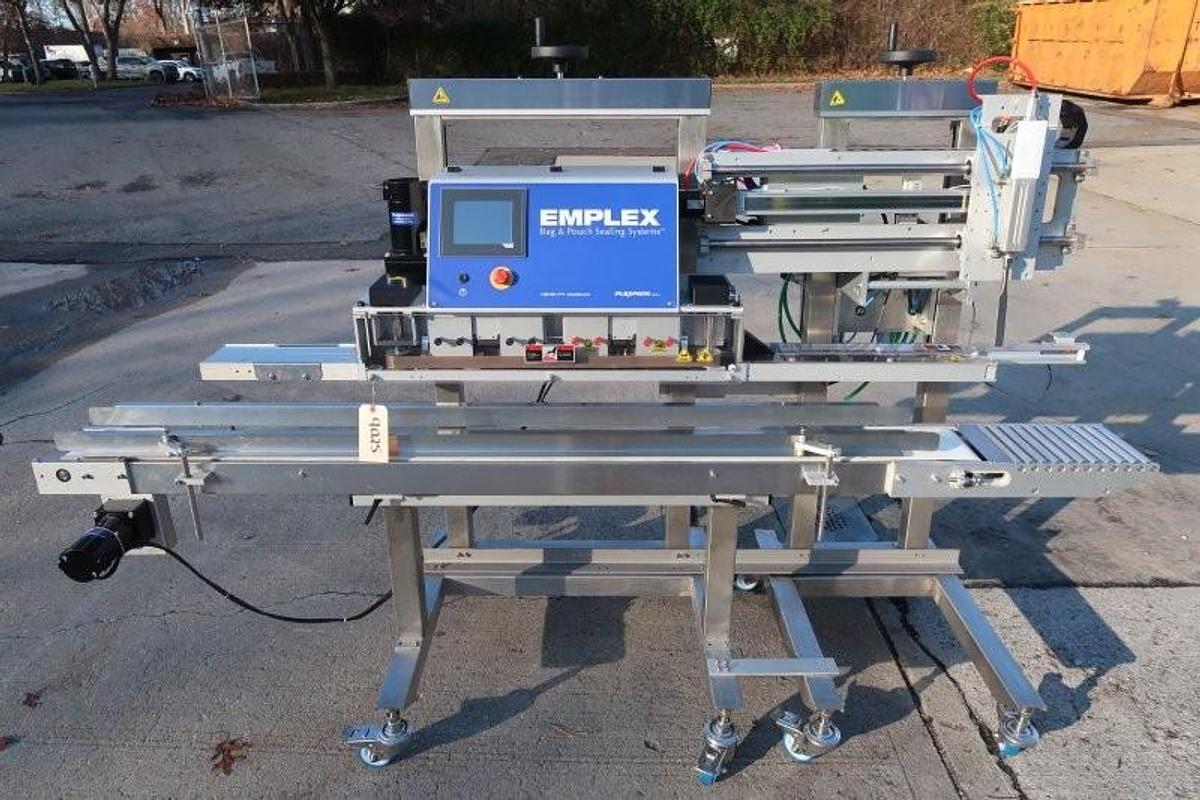
Category
Manufacturer
Model
Emplex
FAQ:
What is an Emplex band sealer and what is it used for?
An Emplex band sealer is a continuous heat-sealing machine designed to create consistent, hermetic seals on flexible packaging materials. Manufactured by Fischbein-Saxon, Emplex band sealers are widely used across food processing, pharmaceutical, medical device, and industrial packaging operations. The machine works by feeding a bag or pouch through two continuously moving heated bands, which apply controlled heat and pressure to fuse the material together into a clean, uniform seal. Because the sealing process is continuous rather than batch-based, these machines are well-suited for production lines that require steady throughput without stopping between each bag.
Emplex band sealers are found in facilities ranging from small packaging operations to large-scale manufacturing plants. Common applications include sealing bags of snack foods, frozen products, medical supplies, hardware components, and chemical packaging. The machines are compatible with a wide range of bag styles and can be configured for horizontal or vertical sealing depending on the product being packaged. Their reputation for consistent seal quality in demanding environments has made Emplex one of the more recognized names in the continuous band sealer category.
What Emplex band sealer models are commonly available on the used equipment market?
The most frequently encountered Emplex band sealer models on the used equipment market come from the MPS7000, MPS7500, and MPS8000 series. Each series is built around a similar continuous band sealing mechanism but differs in sealing width, speed capabilities, and available options. The MPS7500 series, for example, includes variants like the MPS7503S, which incorporates a vacuum and gas flush system for modified atmosphere packaging. This makes it particularly useful for food products where extended shelf life is a priority. The MPS8000 series tends to be a heavier-duty option suited for higher-volume production environments.
Within each series, buyers will encounter different configurations depending on how the machine was originally specified. Some units include integrated date or lot code printers, while others are set up for nitrogen gas flushing or have been adapted for specific bag widths. When shopping for a used Emplex band sealer, it pays to clarify the exact model number and any installed options, since two machines from the same series can differ meaningfully in capability. Reputable used equipment dealers who specialize in packaging machinery will typically have this information documented and available before purchase.
What bag materials can Emplex band sealers handle?
Emplex band sealers are designed to work with a broad range of flexible packaging materials, which is one reason they appear across so many different industries. Compatible materials include polyethylene (PE), polypropylene (PP), laminated films, foil-lined pouches, and most standard thermoplastic packaging substrates. The machines apply heat and pressure through a controlled sealing zone, so they can accommodate materials of varying thickness as long as the heat and speed settings are adjusted appropriately for the specific film being used.
Material compatibility does depend on the specific model and how it has been configured. Some Emplex models are better suited for thicker or multi-layer laminated films, while others are optimized for lighter polyethylene bags. Buyers purchasing a used Emplex band sealer should confirm that the machine's sealing width and temperature range match the materials they intend to run. Consulting with the equipment dealer about the machine's prior use and any known material limitations is a practical step before committing to a purchase, particularly if the application involves specialty films or foil structures that require precise heat control.
What is the difference between horizontal and vertical Emplex band sealer configurations?
The orientation of an Emplex band sealer determines how bags are fed through the machine and which types of products it can handle effectively. Horizontal band sealers feed bags through the machine lying flat, making them the standard choice for most dry goods, powders, and products that can be laid on their side without damage. The bag moves along a conveyor belt through the sealing bands, and the finished seal is made across the top of the bag as it exits. This configuration is common in food packaging, hardware, and general industrial applications.
Vertical band sealers are designed for products that need to remain upright during sealing, such as liquids, granular materials, or anything that would spill or shift if tipped horizontally. In a vertical setup, the bag is fed through the sealing bands while standing upright, which keeps the contents settled at the bottom of the package. Some Emplex models can be adapted or repositioned to run in either orientation, though most are configured at the factory for one primary direction. When evaluating a used Emplex band sealer, confirming the machine's sealing orientation and whether it matches the intended production process is an important step before purchase.
What is the sealing speed of Emplex band sealers, and can they handle high-volume production?
Emplex band sealers are built for continuous operation, and sealing speed varies by model, material, and the heat settings required for a given application. Across the MPS7000 through MPS8000 series, sealing speeds typically range from around 20 to over 60 feet per minute depending on configuration. In practical terms, this translates to hundreds or even thousands of bags per hour in a well-organized production line, making these machines a viable option for mid-to-high volume packaging operations. The continuous band design means there is no dwell time between bags, unlike impulse sealers that require a brief cooling cycle after each seal.
That said, actual throughput depends on more than just the machine's rated speed. Bag size, film thickness, required seal strength, and operator efficiency all affect how many finished packages come off the line per shift. For operations running modified atmosphere packaging with gas flushing, as seen on models like the MPS7503S, the gas flush cycle can influence the overall pace of production. Buyers evaluating a used Emplex band sealer for high-volume use should ask the dealer about the machine's production history and whether it was previously used in a comparable application, as this can provide a realistic sense of what to expect.
What is a vacuum and gas flush band sealer, and which Emplex models include this feature?
A vacuum and gas flush band sealer removes air from a package before sealing it and then replaces that air with an inert gas, typically nitrogen or a nitrogen and carbon dioxide mixture. This process is known as modified atmosphere packaging (MAP) and is used primarily in food packaging to slow oxidation and extend shelf life without the use of preservatives. The machine evacuates the bag, introduces the replacement gas, and then seals the package in a single continuous pass, making it practical for production lines where speed and seal consistency both matter.
Among Emplex band sealers, the MPS7503S is a notable example of a model built with an integrated vacuum and gas flush system. This type of machine is commonly found in meat, cheese, coffee, snack food, and specialty food packaging operations. On the used equipment market, gas flush-capable band sealers tend to carry a higher price point than standard heat-only models because of the added mechanical complexity and the specialized applications they serve. Buyers interested in this feature should verify that all vacuum and gas system components are present and functional when inspecting a used unit, as replacement parts for these subsystems can add to the total cost of putting the machine back into service.
Are used Emplex band sealers a reliable option for packaging operations?
Emplex band sealers have a reputation for being durably built, which is one reason used units continue to circulate on the secondary equipment market long after their initial production use. The machines are designed for demanding, continuous-duty environments, and many units have logged significant production hours before being decommissioned or replaced as part of a facility upgrade. Because the core sealing mechanism relies on relatively straightforward mechanical and electrical components, a well-maintained used Emplex band sealer can deliver consistent performance if it has been properly cared for and inspected before sale.
That said, reliability on the used market depends heavily on the condition of the specific machine and the reputation of the dealer selling it. Buyers should prioritize dealers who specialize in packaging machinery and have a documented history of selling industrial equipment. Requesting a thorough inspection, whether in person, via video, or through detailed photographs, is an important step before purchasing any used band sealer. It is also worth contacting Emplex or Fischbein-Saxon directly to ask about parts availability and technical support for the specific model under consideration, since older or discontinued models may have more limited support options than current production units.
What should buyers inspect when evaluating a used Emplex band sealer?
A thorough inspection of a used Emplex band sealer should cover both the mechanical and electrical components of the machine. On the mechanical side, the sealing bands themselves are a wear item and should be checked for fraying, uneven wear, or damage. The drive rollers, pressure rollers, and conveyor belt should move smoothly without unusual resistance or noise. The sealing temperature control system, including the heating elements and thermostat, should be verified to reach and hold the correct temperature range for the materials the buyer intends to run. On machines with gas flush or vacuum systems, all hoses, fittings, and valves should be inspected for leaks or deterioration.
Electrical components including the control panel, speed adjustment, and any integrated printing or coding systems should be tested if possible. Most reputable used equipment dealers will accommodate in-person inspections or provide video demonstrations of the machine running under power. Keep in mind that dealers typically do not have production permits that would allow them to run actual product through the machine, so functional testing is usually limited to confirming that the machine powers on, heats up, and runs mechanically. Buyers should factor in the cost of any replacement parts, cleaning, or recalibration that may be needed before the machine is ready for production use, and build those estimates into the overall acquisition cost.
What are typical shipping and logistics considerations when buying a used Emplex band sealer?
Emplex band sealers are industrial machines with substantial weight and dimensions, so shipping logistics require more planning than a standard freight shipment. The machine should be properly secured to a pallet and crated or wrapped to prevent damage during transit. Depending on the size and weight of the specific model, a standard pallet jack may be sufficient for loading and unloading, but larger or heavier configurations may require a forklift or other rigging equipment at both the origin and destination. Buyers should ask the dealer specifically about how the machine will be packaged and what rigging, if any, will be needed at delivery.
Shipping costs for used band sealers vary based on the weight of the machine, the distance being shipped, the level of packaging required, and whether any special handling or liftgate service is needed at the delivery location. Buyers should request a detailed breakdown of all shipping-related costs from the dealer before finalizing a purchase, including packaging, freight, and any rigging fees, so there are no surprises in the total landed cost. For buyers who want to inspect the machine before it ships, many dealers can arrange in-person visits or coordinate video inspections, which is worth doing before the machine is packaged for transit.
What are the typical payment terms when purchasing a used Emplex band sealer from a dealer?
Most used industrial equipment dealers require full payment before a machine is released for shipment. This is standard practice in the used machinery industry and applies to band sealers and most other categories of packaging equipment. Payment is typically accepted by wire transfer, though some dealers may also accept certified checks or other forms of guaranteed funds. Credit card payments are less common for transactions of this size, and buyers should confirm accepted payment methods directly with the dealer before proceeding.
Some dealers may offer payment terms to buyers with whom they have an established purchasing history, but this is the exception rather than the rule for first-time transactions. Buyers who are unfamiliar with a particular dealer should take time to research the company's track record, look for references or reviews from past customers, and confirm that the dealer specializes in packaging or industrial machinery rather than being a general resale operation. Paying in full before shipment puts the burden of trust on the buyer, which is why selecting a dealer with a long, verifiable history in the industry matters considerably when making a purchase of this kind.