Category
Manufacturer
Model
FAQ:
What types of Ekato mixing and agitation equipment are commonly available on the used market?
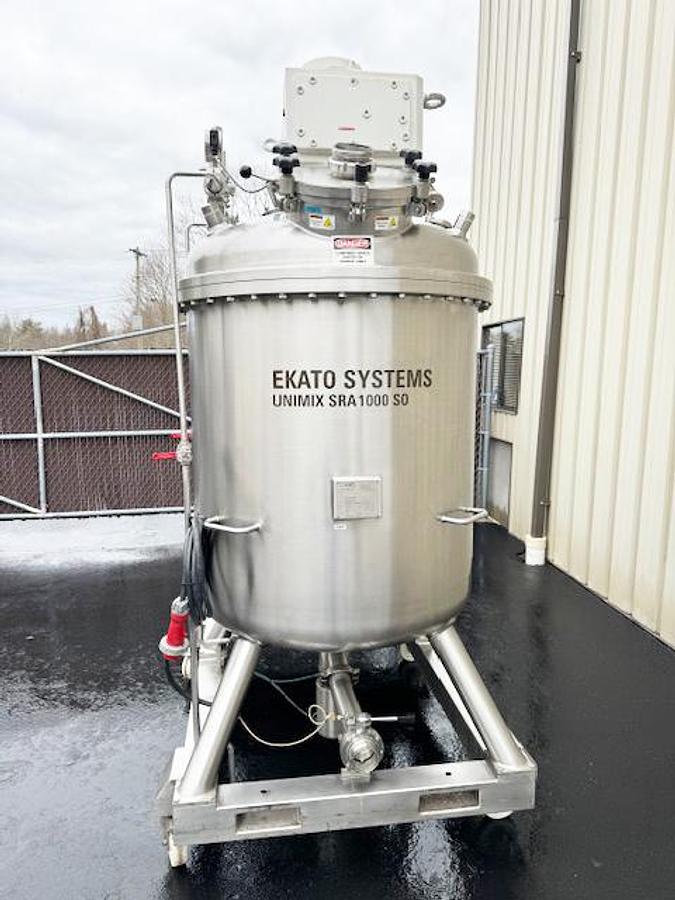
Ekato produces a wide range of industrial mixing and agitation equipment, and most of these product types appear regularly in the used equipment market. The most frequently available units include top-entry agitators, side-entry mixers, bottom-entry mixers, inline mixers, and complete turnkey mixing systems. Vacuum kettles and reactors are also commonly listed, including stainless steel configurations such as 316L vessels designed for sanitary or corrosive process environments. Sizes range from small laboratory-scale units to large-capacity industrial systems handling thousands of liters.
Beyond standalone agitators, the used market occasionally surfaces full mixing skids, drive assemblies, and specialized reactor vessels with integrated agitation. Ekato's engineering is known for precision construction and long operational lifespans, which means even older units tend to retain meaningful functional value. Buyers sourcing used Ekato equipment should pay close attention to the agitator type, impeller configuration, motor horsepower, shaft length, and vessel compatibility to ensure the unit fits their specific process requirements.
What industries use Ekato equipment?
Ekato equipment is used across a broad range of process industries, largely because the company has spent decades engineering mixing solutions for demanding chemical and physical environments. The most common industries include chemical processing, pharmaceutical manufacturing, food and beverage production, cosmetics and personal care, polymer and resin production, and water and wastewater treatment. In pharmaceutical applications, Ekato agitators are often specified for their hygienic design and compatibility with clean-in-place (CIP) and steam-in-place (SIP) protocols.
In chemical processing, Ekato equipment handles everything from simple blending to complex reaction processes involving heat transfer, gas dispersion, and solid suspension. The food and beverage sector relies on Ekato mixers for emulsification, homogenization, and fermentation applications. Because the equipment is engineered for such a wide variety of process conditions, used Ekato units are in demand across multiple sectors, and buyers from one industry will sometimes find that equipment originally built for another application can be adapted to suit their needs with the right configuration adjustments.
What is the typical price range for used Ekato equipment?
Pricing for used Ekato equipment varies considerably depending on the type of unit, its capacity, age, configuration, and overall condition. Smaller agitator assemblies or drive units may be priced in the low thousands of dollars, while large-capacity mixing systems, reactors, or complete mixing skids can reach tens of thousands of dollars or more. Vacuum kettles and reactors with integrated agitation, particularly those built from 316L stainless steel, tend to command higher prices due to the material cost and engineering complexity involved in their construction.
Because Ekato is regarded as a premium manufacturer, used units generally hold their value better than comparable equipment from lesser-known brands. Buyers should factor in not just the purchase price but also the total landed cost, which includes packaging, rigging, freight, and any reconditioning work that may be needed after delivery. Getting a clear picture of all those costs upfront helps avoid surprises and allows for a more accurate comparison between available listings.
How do I inspect used Ekato equipment before buying?
Inspecting used industrial equipment before purchase is one of the most important steps a buyer can take, and reputable dealers will typically accommodate several inspection formats. In-person inspections allow a buyer or their technical representative to physically examine the equipment, check for wear, corrosion, mechanical damage, and verify that key components such as the shaft, impeller, seals, and drive assembly are intact. Some equipment may still be installed and operating at a production facility, in which case the dealer can often arrange an inspection at the plant where the machine is currently in use.
For buyers who cannot travel, video inspections and detailed photo documentation are commonly offered as alternatives. These should cover the motor nameplate, drive housing, shaft condition, impeller blades, mounting flanges, and any visible seals or bearings. Keep in mind that most used equipment dealers are not set up to run full production tests, as that would require permitting and process materials that a dealer facility typically does not have. The goal of any inspection is to get an accurate, honest picture of the machine's current mechanical condition so the buyer can make an informed decision.
Does used Ekato equipment come with a warranty?
Warranties on used industrial equipment are handled very differently than they are for factory purchases. Manufacturers like Ekato provide warranties on equipment sold through their direct channels, but when a machine enters the secondary market, it is typically sold on an as-is basis. This is standard practice across the used machinery industry, and it places the responsibility of due diligence squarely on the buyer. That is why thorough inspection, either in person or via video, is so critical before committing to a purchase.
Buyers should focus on selecting dealers with a long track record in their specific industry, as experienced dealers are more likely to represent equipment accurately and provide reliable documentation. It is also worth contacting Ekato directly to understand what level of technical support, parts availability, and service documentation they can provide for the specific model and age of equipment being considered. The manufacturer's ability to support an older unit varies by model, so getting that information early in the process helps set realistic expectations for ongoing maintenance and repairs.
Are spare parts and replacement components available for used Ekato agitators and mixers?
Parts availability is a practical concern for any buyer of used industrial equipment, and it is worth researching before finalizing a purchase. Ekato, as an established manufacturer with a global service network, generally supports its installed base with spare parts, though the availability of specific components will depend on the age and model of the equipment. Older or discontinued models may have limited factory parts support, which can make sourcing items like mechanical seals, impellers, bearings, and gearbox components more challenging.
Buyers have a few options for managing parts risk. Contacting Ekato directly before purchase is the most straightforward way to gauge what is available for a particular unit. Third-party industrial parts suppliers and aftermarket seal and bearing manufacturers can also be viable sources for common wear components. Some buyers choose to purchase a second unit of the same model as a parts machine, which is a practical strategy for critical applications. Asking the selling dealer whether any spare parts or documentation come with the equipment is also worth doing, as some listings include maintenance records, original manuals, or a small inventory of spares.
How do I determine the right Ekato agitator size and specification for my application?
Selecting the correct agitator involves more than just matching a vessel size to a motor horsepower rating. Key parameters include the volume and geometry of the tank or vessel, the viscosity and density of the process fluid, the type of mixing operation required (blending, suspension, emulsification, gas dispersion, heat transfer, etc.), and the process temperature and pressure conditions. Ekato equipment is engineered with specific impeller types for different flow patterns, so the impeller geometry is just as important as the drive power when evaluating a used unit for a new application.
For buyers sourcing used equipment, the best starting point is to document your process requirements in as much detail as possible and then compare those requirements against the specifications of the available unit. Shaft length, impeller diameter, rotational speed range, and seal type all need to align with the intended vessel and process. If there is any uncertainty, consulting with a process engineer or reaching out to Ekato's technical team for guidance on whether a specific used unit is suitable for your application is a sensible step. Dealers with industry-specific experience can also help buyers evaluate fit based on what they know about the equipment's history and design.
What should I know about shipping and rigging used Ekato equipment?
Ekato mixing equipment ranges from relatively compact agitator assemblies to large, heavy reactor and kettle systems, and the logistics of moving this equipment safely require careful planning. Smaller units may ship on standard pallets with appropriate blocking and bracing, while larger systems typically require custom crating to protect shafts, impellers, and drive components from damage in transit. The level of packaging required directly affects shipping costs, so buyers should ask the dealer for a detailed breakdown of crating, rigging, and freight charges before agreeing to a purchase price.
Large or heavy equipment often requires specialized rigging for loading at the dealer's facility and unloading at the buyer's site. This can involve cranes, forklifts with sufficient capacity, and riggers experienced with industrial machinery. These services add to the total landed cost and should be budgeted for in advance. Buyers should also confirm whether the dealer handles export documentation if the equipment is crossing international borders, as Ekato equipment frequently moves between countries given its global user base. Getting all of these logistics details sorted out early prevents delays and unexpected expenses after the sale is complete.
What are the advantages of buying used Ekato equipment compared to purchasing a comparable unit from a different manufacturer?
Ekato has built a reputation over decades as one of the most technically rigorous mixing equipment manufacturers in the world. The engineering standards applied to their agitators, reactors, and mixing systems translate into long service lives and consistent performance, which is exactly why used Ekato equipment holds its value and remains in demand on the secondary market. Buyers who purchase a used Ekato unit are often getting a machine that was built to a higher specification than a comparable unit from a less established manufacturer, even accounting for age and prior use.
From a practical standpoint, the availability of technical documentation, manufacturer support, and a global installed base also works in the buyer's favor. Because Ekato equipment is widely used across industries, there is a larger pool of engineers and technicians familiar with the equipment, which can simplify maintenance and troubleshooting. For applications in pharmaceutical, chemical, or food processing environments where process consistency and equipment reliability are critical, the track record of a well-maintained used Ekato unit often makes it a more sensible choice than a lower-cost alternative with an unknown performance history.
What payment terms should buyers expect when purchasing used Ekato equipment?
Payment practices in the used industrial equipment market are fairly consistent across reputable dealers. The standard expectation is full payment prior to shipment, which protects the seller and ensures the transaction is complete before the equipment leaves their facility. This is the norm rather than the exception, and buyers should plan their purchasing process accordingly, including securing any internal approvals or financing before committing to a purchase.
Some dealers may offer extended payment terms or credit arrangements to established customers with a history of prior transactions, but these arrangements are typically negotiated on a case-by-case basis and are not a standard offering for first-time buyers. Wire transfer is the most common payment method for transactions of this size, though other arrangements may be available depending on the dealer. Buyers should clarify payment expectations early in the negotiation process, along with shipping timelines and any conditions related to inspection, so that all parties have a clear understanding of how the transaction will proceed from agreement to delivery.