Category
Manufacturer
Model
Eillert/Kronen
Eillert/Kronen offers a comprehensive range of food processing equipment, particularly in the vegetable and fruit processing sectors. They are renowned for their cutting and washing machines that enhance food safety and quality. Their technology is widely adopted in food production facilities across the globe.
FAQ:
Are Eillert and Kronen the same company?
Eillert and Kronen are two separate European manufacturers that happen to share significant overlap in their product categories, which is why they are frequently searched together and sometimes grouped by used equipment dealers. Eillert is a Dutch manufacturer with a long history in industrial vegetable processing equipment, particularly cutting and slicing machines designed for high-volume food production. Kronen GmbH is a German manufacturer specializing in cutting, washing, and processing machinery for fresh-cut produce, with a strong reputation across European and global markets.
Despite being distinct companies with their own engineering lineages and product lines, both brands serve similar customer profiles: commercial food processors, fresh-cut produce operations, catering companies, and large-scale food production facilities. Their machines often appear side by side in the used equipment market because buyers sourcing one brand are frequently in the market for the other. When evaluating used machines from either manufacturer, it is worth researching each brand independently, as parts availability, service support, and machine specifications can differ considerably between them.
What types of food processing equipment do Eillert and Kronen manufacture?
Both Eillert and Kronen produce machinery focused on the vegetable and fruit processing sectors, covering the core stages of fresh-cut produce preparation. Typical product categories from these manufacturers include vegetable cutters, dicers, slicers, shredders, washing systems, and centrifugal dryers (also called basket centrifuges). Kronen GmbH in particular is well known for its cutting and washing machines that are designed to meet food safety and quality standards in commercial production environments. Eillert has built its reputation around industrial-grade slicing and cutting equipment suited to high-throughput operations.
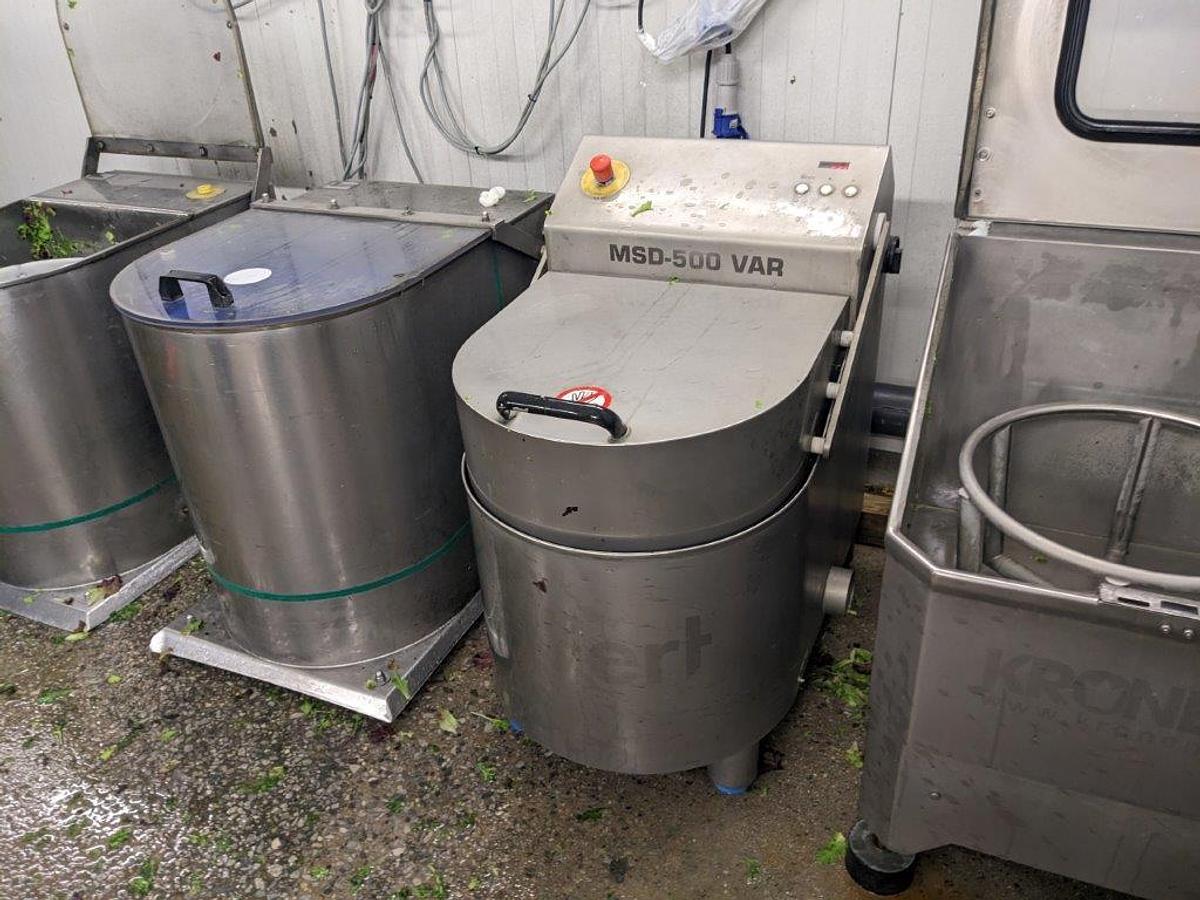
Basket centrifuges are one of the more commonly traded used items from these brands, as they are a standard piece of equipment in fresh-cut produce lines for removing excess moisture after washing. Used equipment inventories may include individual machines or groups of units, such as multiple centrifuges from the same decommissioned production line. Buyers should clarify the specific model, age, and configuration of any machine they are considering, since product lines from both manufacturers have evolved over the years and specifications can vary significantly from one generation to the next.
What vegetables and fruits can Eillert and Kronen cutting machines process?
Eillert and Kronen cutting machines are built for the demands of commercial fresh-cut produce operations, which means they are designed to handle a wide range of vegetables and fruits at production scale. Common applications include leafy greens such as lettuce, spinach, and cabbage; root vegetables like carrots, beets, and potatoes; brassicas such as broccoli and cauliflower; and softer produce including tomatoes, peppers, and cucumbers. Many machines in these product lines can be configured with different blade sets or cutting heads to produce various cut styles, including shreds, slices, dice, and julienne cuts.
The specific capabilities of any individual used machine will depend on its model, the cutting attachments included with the sale, and the condition of the blades and mechanical components. Buyers sourcing used Eillert or Kronen equipment should confirm which cutting accessories are included and whether replacement blades or alternative cutting sets are still available for that particular model. Consulting the manufacturer directly about parts and tooling support for older machines is a practical step before committing to a purchase, since the range of supported configurations can narrow as equipment ages.
What is a basket centrifuge and how is it used in food processing?
A basket centrifuge in food processing is a machine that uses centrifugal force to spin washed produce at high speed, removing surface moisture before packaging or further processing. The produce is loaded into a perforated basket or drum, which rotates rapidly so that water is flung outward through the perforations and drained away. This step is critical in fresh-cut produce lines because excess moisture accelerates spoilage, shortens shelf life, and can affect the texture and appearance of the final product. Basket centrifuges are standard equipment in operations producing bagged salads, prepared vegetables, and ready-to-eat produce.
Eillert and Kronen basket centrifuges are among the types of machines that appear in the used food processing equipment market, sometimes available as individual units or in groups from decommissioned production lines. When evaluating a used centrifuge, buyers should pay close attention to the condition of the basket or drum, the drive components, and any seals or gaskets that contact food product, as these are the areas most subject to wear in high-cycle production environments. Capacity, cycle time, and basket diameter are key specifications to match against the buyer's production requirements.
Where can I find used Eillert or Kronen food processing equipment for sale?
Used Eillert and Kronen food processing equipment is sold through specialized used industrial machinery dealers who focus on the food processing sector. Buying from a dealer that specializes in food processing equipment is generally preferable to general industrial surplus sources, because food processing specialists are more likely to accurately identify models, understand the machine's application, and provide meaningful information about its condition and history. Dealers with a long track record in this specific segment tend to have better access to equipment coming out of food production facilities, which is where most used Eillert and Kronen machines originate.
When searching for available inventory, it is worth contacting dealers directly rather than relying solely on online listings, since used equipment inventories change frequently and some machines may not yet be listed publicly. Buyers should ask about the machine's production history, how long it has been out of service, and what inspection options are available. Given that both Eillert and Kronen serve commercial and industrial customers, the machines are built for durability, but the condition of any specific used unit depends heavily on how it was maintained and operated during its working life.
What should I inspect before buying used Eillert or Kronen food processing equipment?
Inspecting a used food processing machine thoroughly before purchase is one of the most important steps a buyer can take, since used equipment is sold as-is and the responsibility for assessing condition falls on the buyer. For cutting machines such as slicers, dicers, and shredders, key areas to examine include the condition of blades and cutting components, the integrity of food-contact surfaces, the state of conveyor belts or feed systems, and whether the machine runs smoothly without unusual vibration or noise. For washing systems and centrifuges, buyers should look closely at the drum or basket, pump components, seals, and drainage systems.
Most reputable used equipment dealers will accommodate inspections, either in person at their facility or through video walkthroughs and detailed photo documentation. In some cases, the machine may still be installed at the food production facility where it was used, and an in-person inspection can be arranged at that location. Keep in mind that most dealers do not have the permitting or production infrastructure to run actual food product through a machine during inspection, so testing is typically limited to confirming that the machine powers on, moves correctly, and shows no obvious mechanical defects. Buyers with specific technical concerns should consider bringing a qualified technician or engineer to the inspection.
Do warranties apply to used Eillert or Kronen machines?
Warranties from the original equipment manufacturer are generally tied to the initial purchase of a machine and do not transfer to subsequent buyers in the used equipment market. Used food processing equipment is typically sold as-is, meaning the seller makes no guarantee about the machine's condition, performance, or fitness for a particular purpose. This is standard practice across the used industrial machinery industry, and buyers should approach any purchase with that expectation clearly understood.
Because there is no warranty safety net, the quality of the inspection process and the reputation of the dealer become especially important. Selecting a dealer with a demonstrated history in food processing equipment, rather than a general surplus liquidator, reduces the risk of misrepresented machines. Buyers should also contact Eillert or Kronen directly to understand what level of technical support, parts availability, and service documentation they can expect for the specific model and age of machine being considered, as older models may have limited manufacturer support regardless of who sells them.
What is the typical price range for used Eillert and Kronen food processing machines?
Both Eillert and Kronen are positioned in the mid-to-high tier of food processing equipment, meaning their machines carry meaningful price tags even in the used market. Smaller individual units such as a single basket centrifuge or a compact vegetable cutter might be available in the range of a few thousand to tens of thousands of dollars depending on size, model, age, and condition. Larger or more complex systems, such as complete washing and drying lines or high-capacity cutting systems, can run considerably higher. Pricing in the used equipment market is not standardized, so the same model can vary in price depending on condition, included accessories, and the dealer.
Buyers should factor in costs beyond the listed equipment price when budgeting for a purchase. Rigging, crating, freight, and any site preparation or installation costs can add substantially to the total landed cost of the machine. Asking the dealer for a clear breakdown of all costs before committing to a purchase is a practical step. For buyers comparing multiple machines, the lowest asking price is not always the best value if the machine requires significant reconditioning or if critical spare parts are difficult to source.
How does shipping work for large food processing equipment like Eillert or Kronen machines?
Shipping industrial food processing equipment requires more planning than standard freight because of the size, weight, and sensitivity of the machinery involved. Machines need to be properly palletized or crated before transport to prevent damage in transit, and the level of packaging required will influence the shipping cost. Larger machines such as complete washing systems or high-capacity centrifuges may require specialized rigging equipment for loading and unloading, which is typically an additional cost on top of freight charges. Buyers should ask the dealer specifically about how the machine will be packaged and what rigging services will be needed at the destination.
International shipments add another layer of complexity, including customs documentation, import duties, and compliance with food equipment regulations in the destination country. Since both Eillert and Kronen are European manufacturers, buyers outside Europe sourcing these machines should account for these additional costs and logistics steps. Getting a full landed cost estimate, which includes the machine price, packaging, rigging, freight, and any applicable duties, before finalizing a purchase helps avoid budget surprises. Dealers experienced in shipping food processing equipment internationally can often provide guidance on freight options and documentation requirements.
Are spare parts and replacement blades available for used Eillert and Kronen machines?
Parts availability is one of the most practical considerations when purchasing used food processing equipment, and it varies depending on the manufacturer, the specific model, and how old the machine is. For Kronen GmbH, which is an active German manufacturer with an established global presence, parts and technical support tend to be more accessible for machines that are not too far outside the current product range. Eillert, as a Dutch manufacturer, similarly maintains parts programs for its equipment lines, though availability for older or discontinued models can be more limited. Contacting each manufacturer directly with the machine's model number and serial number is the most reliable way to get a clear answer about what is currently available.
Replacement cutting blades and cutting sets are among the most frequently needed consumables for slicers, dicers, and shredders, so confirming their availability before purchase is especially important. Some dealers may include spare blades or additional cutting accessories with the sale of a used machine, which can add meaningful value. Third-party blade suppliers also serve the food processing equipment market and may offer compatible cutting components for certain machine types. Buyers should also ask the manufacturer about service documentation and technical manuals for the specific model, as having access to proper maintenance information extends the useful life of used equipment considerably.