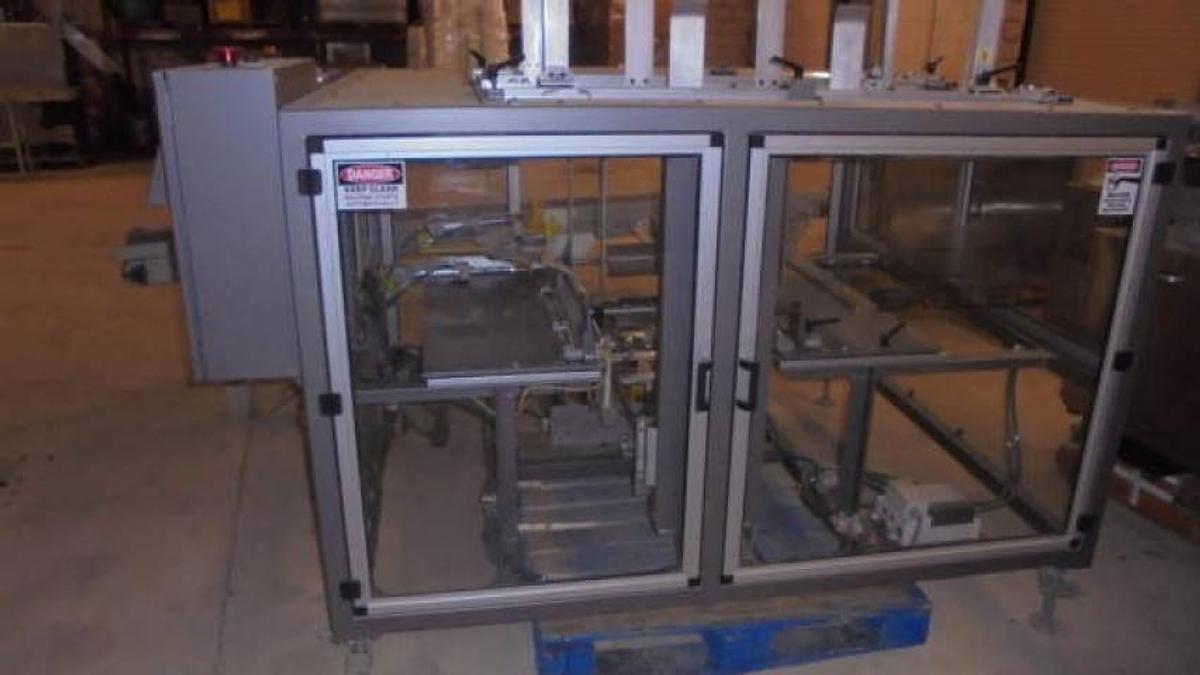
Category
Manufacturer
Model
FAQ:
What types of packaging machinery does Eagle manufacture?
Eagle is best known for producing inspection and detection equipment used across food, beverage, pharmaceutical, and industrial packaging lines. Their core product categories include X-ray inspection systems, checkweighers, and metal detectors. X-ray systems are particularly well regarded in the industry for their ability to identify foreign contaminants such as metal fragments, bone, glass, stone, and dense plastics inside packaged products, even when those products are sealed or in opaque packaging. Beyond inspection equipment, Eagle also produces tray and box forming machinery, which automates the erection and forming of cartons and trays on high-speed production lines.
The breadth of Eagle's product line makes their machines relevant to a wide range of production environments. A food manufacturer might run an Eagle X-ray system inline after a fill-and-seal station, while a contract packager might rely on an Eagle tray former to handle secondary packaging at the end of a line. Because Eagle builds equipment for regulated industries where compliance and uptime matter, their machines tend to be engineered for durability, which is one reason used Eagle equipment holds its value and remains functional well into its service life.
What industries use Eagle packaging machinery?
Eagle packaging and inspection machinery is used most heavily in the food and beverage sector, where foreign body detection is a regulatory and liability priority. Processors handling meat, poultry, seafood, dairy, baked goods, and packaged snacks commonly run Eagle X-ray systems as a critical control point in their HACCP plans. The pharmaceutical and nutraceutical industries also rely on Eagle equipment, particularly for checkweighing and contamination detection, where product integrity and dosage accuracy are non-negotiable.
Industrial and consumer goods manufacturers represent a smaller but meaningful share of Eagle's installed base. Any production environment where packaged products need to be checked for fill level, weight accuracy, or physical contamination can benefit from Eagle's inspection platforms. This cross-industry applicability is part of why used Eagle machines surface across such a variety of facilities when they come to market. A machine that spent years in a poultry plant may be perfectly suited for a pet food operation or a contract packaging facility, provided it has been properly maintained and is compatible with the buyer's product specifications.
How do Eagle X-ray inspection systems detect contaminants?
Eagle X-ray inspection systems work by passing packaged products through a beam of X-ray energy and measuring how much of that energy is absorbed by the product and its contents. Dense foreign materials, including metal, bone fragments, glass, stone, and certain hard plastics, absorb X-ray energy differently than food or packaging material. The system's imaging software interprets these density differences in real time and flags or automatically rejects any product that contains an anomaly above the detection threshold.
What distinguishes X-ray inspection from metal detection is the ability to find non-metallic contaminants that a metal detector would miss entirely. Glass shards, calcified bone, and dense rubber or plastic pieces are all detectable by X-ray systems but are invisible to standard metal detectors. Eagle's systems are also capable of performing secondary functions simultaneously, such as measuring fill levels, counting components inside a package, or verifying that a product's mass distribution looks correct. This multi-function capability makes a single Eagle X-ray unit a meaningful quality control asset, which is one reason these machines retain strong resale value on the used equipment market.
What food safety standards are Eagle inspection machines designed to support?
Eagle inspection equipment is designed with compliance in mind for the major food safety and quality frameworks that manufacturers face globally. Their systems are commonly referenced in the context of HACCP (Hazard Analysis and Critical Control Points) plans, where an X-ray or metal detection system serves as a documented critical control point. Beyond HACCP, Eagle machines are built to support compliance with FDA requirements, as well as retailer-driven audit standards including BRC (British Retail Consortium), IFS (International Featured Standards), and SQF (Safe Quality Food).
For buyers purchasing used Eagle equipment, it is worth understanding that the machine's ability to support these standards depends on its condition, calibration, and configuration at the time of installation. A used Eagle system that has been properly maintained and can be validated to the required detection thresholds can absolutely serve as a compliant CCP in a food safety plan. Buyers should work with their quality assurance teams and, where appropriate, consult with Eagle's manufacturer support channels to confirm that the specific model and age of equipment they are considering can be validated to their facility's standards.
Why does used Eagle packaging machinery hold its resale value?
Eagle equipment has a reputation for being built to last. The company designs its inspection and packaging systems for demanding production environments where downtime is costly, which means the underlying engineering tends to be conservative and durable. Machines that were installed in food processing or pharmaceutical facilities and maintained under regular sanitation and preventive maintenance schedules often remain mechanically sound well beyond what a buyer might expect from the age of the unit alone.
The secondary market for Eagle machinery also benefits from consistent demand. Because Eagle X-ray systems, checkweighers, and metal detectors are required in so many regulated production environments, there is always a pool of buyers looking for these machines at a price point below what a comparable current-production unit would cost. That demand pressure, combined with the machines' physical durability, keeps resale prices relatively firm. For a buyer, this means that a used Eagle machine purchased thoughtfully can often be resold again if production needs change, making it a more liquid capital asset than some other equipment categories.
Can a used Eagle inspection system be integrated into an existing packaging line?
Integration capability is one of the practical strengths of Eagle inspection equipment. Eagle designs its systems to work inline with standard conveyor configurations, and the machines are built around common industrial communication protocols and physical footprints that make them adaptable to a variety of line layouts. A used Eagle X-ray system or checkweigher can typically be positioned between existing conveyor sections with mechanical modifications that are well within the capability of most in-house maintenance teams or a qualified systems integrator.
That said, buyers should do their homework before assuming a specific used unit will drop seamlessly into their line. Key considerations include conveyor height and belt width compatibility, the machine's throughput speed relative to the line's production rate, and whether the unit's reject mechanism is suited to the buyer's product format. It is also worth contacting Eagle's manufacturer support to understand what level of technical assistance is available for the model in question, since older models may have more limited support resources than current-generation equipment. A thorough inspection of the machine before purchase, including a review of its configuration and any available service history, will give buyers the clearest picture of what integration will actually require.
What should a buyer inspect before purchasing used Eagle packaging machinery?
Buying used packaging machinery requires more due diligence than purchasing equipment directly from a manufacturer, and Eagle machines are no exception. Before committing to a purchase, buyers should request a detailed inspection of the unit, either in person, via live video walkthrough, or through a thorough video capture of the machine's condition. The inspection should cover the physical condition of the frame and enclosures, the state of the conveyor belts and drive components, the condition of any electrical panels or control systems, and visible wear on mechanical parts like reject flaps, rollers, and sensors. For X-ray systems specifically, buyers should ask about the condition of the X-ray generator and detector array, as these are the most costly components to replace.
It is also worth asking whether the machine is still in production at the seller's facility or has been decommissioned. A machine that can be observed running product provides a much clearer picture of its operating condition than one sitting idle in a warehouse. Keep in mind that most used equipment dealers are not set up to run actual production, so live product testing is typically not possible in a dealer's facility. Consulting with Eagle's manufacturer support team about the specific model's age, available spare parts, and expected service life can also help buyers make a more informed decision before finalizing a purchase.
What does a tray or box former do in a packaging line?
A tray former, sometimes called a box former or tray erector, is a machine that automatically takes flat, pre-cut cardboard blanks and folds and glues them into formed trays or boxes ready to receive product. In a production line context, the tray former sits upstream of the loading or filling station, feeding erected trays at a rate that matches the line's throughput. This eliminates the need for operators to hand-erect trays, which is labor-intensive and inconsistent at high production speeds.
Eagle produces tray and box forming equipment that fits into this role in secondary packaging lines. These machines are used across food manufacturing, produce packing, bakery, and consumer goods production, anywhere that products are loaded into a tray or box before being case-packed or palletized. On the used equipment market, tray formers are a practical purchase for operations that are scaling up production or replacing aging equipment, since the mechanical principles of tray forming have not changed dramatically over the years and a well-maintained used machine can perform comparably to a current-production unit for many standard carton formats.
What are the typical shipping and logistics considerations when buying used Eagle machinery?
Used packaging machinery, including Eagle inspection systems and tray formers, requires careful handling during transport to avoid damage to sensitive components like X-ray generators, control panels, and precision conveyor assemblies. Shipping costs and requirements will vary depending on the size and weight of the machine, the distance it needs to travel, and the level of packaging or crating the dealer provides. Smaller benchtop or inline inspection units may ship on a standard pallet, while larger floor-standing systems will typically require custom crating or skidding to protect them adequately in transit.
For heavier or larger Eagle machines, rigging is often required for both loading at the origin and unloading at the destination. Rigging involves the use of forklifts, cranes, or specialized lifting equipment to move machinery safely, and this service carries its own cost that buyers should factor into the total landed price of the equipment. Buyers should ask the dealer for a clear breakdown of packaging, rigging, freight, and any other handling charges before agreeing to a purchase, so there are no surprises when the machine arrives. For international shipments, customs documentation, import duties, and compliance with destination-country electrical standards are additional considerations that need to be addressed in advance.
What payment terms should buyers expect when purchasing used Eagle packaging machinery?
The used industrial machinery market operates differently from retail purchasing, and payment expectations reflect that. Most used equipment dealers require payment in full before a machine is released for shipping. This is standard practice across the industry and is not specific to any one dealer or equipment category. Buyers who are working with a dealer for the first time should expect to pay the full purchase price, including any agreed-upon shipping and handling costs, before the machine leaves the seller's facility.
Some dealers extend credit terms or deferred payment arrangements to customers with whom they have an established purchasing history, but this is the exception rather than the rule. For buyers financing the purchase through a third-party equipment lender or leasing company, the financing institution will typically wire funds directly to the dealer upon approval, which effectively satisfies the payment-in-full requirement. Buyers should clarify payment methods accepted, such as wire transfer, ACH, or other instruments, early in the purchasing conversation to avoid delays once a deal is agreed upon.