Category
Manufacturer
Model
Eagle
FAQ:
What types of used Eagle X-Ray machines are typically available for sale?
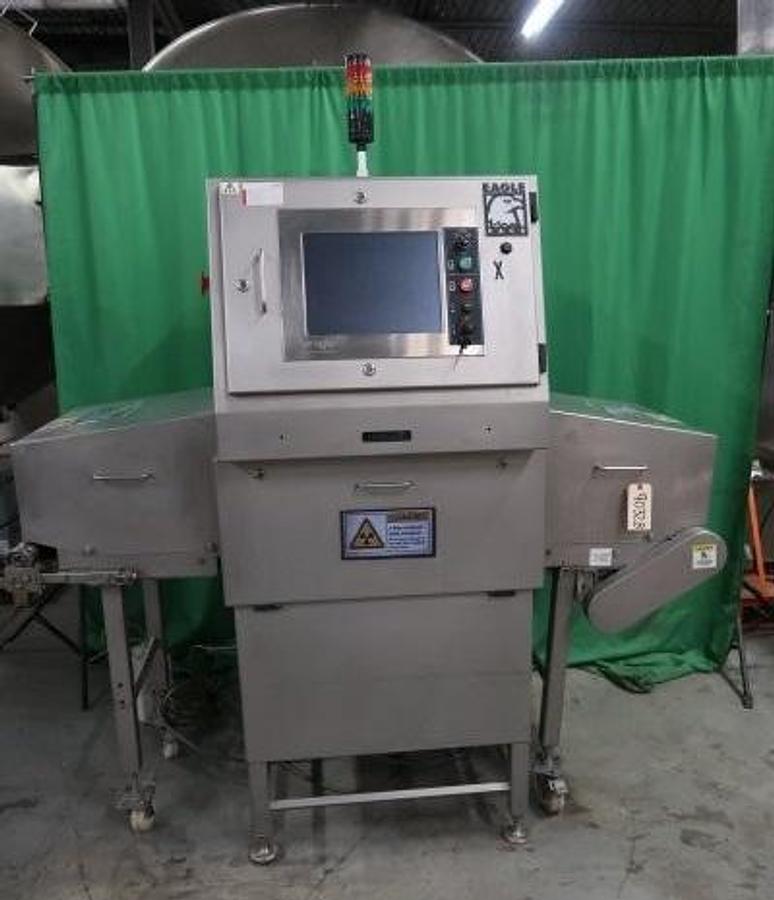
Eagle Product Inspection, part of the Mettler-Toledo group, produces several distinct product lines, and used units from across that range appear on the secondary market with some regularity. Common models include the Eagle Pack 320, Pack 430, RMI series, FA series, and Tall series. Each was designed for a specific application: the Pack series handles packaged goods on flat conveyor lines, the RMI series is built around bulk and pipeline inspection, and the Tall series accommodates upright containers like bottles and cans. The Pack 430, for example, is a stainless steel unit suited for environments that require frequent washdowns, which makes it a popular choice in food processing facilities.
Buyers shopping the used market will find that available inventory shifts based on what facilities are decommissioning or upgrading at any given time. It pays to work with a dealer who specializes in food and pharmaceutical inspection equipment, since they are more likely to have accurate specifications on hand and understand the functional differences between Eagle's various configurations. Checking with the dealer about the specific model's inspection aperture, conveyor speed, and software version is worthwhile before committing to a purchase, as these details directly affect whether a machine fits a given production line.
What contaminants can Eagle X-Ray inspection machines detect?
Eagle X-Ray systems are designed to identify a broad range of foreign bodies that other inspection technologies, such as metal detectors, can miss. Detectable contaminants typically include ferrous and non-ferrous metals, stainless steel, glass fragments, stones, calcified bone, high-density rubber, and certain rigid plastics. The detection threshold depends on the contaminant's density relative to the surrounding product, the X-Ray beam energy level, and the resolution of the imaging sensor. Under favorable conditions, some Eagle systems can flag metallic fragments as small as 0.4 mm in diameter, though real-world performance varies by product type and machine configuration.
Beyond contamination detection, Eagle machines are also used for secondary quality checks on the same pass through the system. These include verifying fill levels, measuring product mass, checking for missing or broken components, and inspecting seal integrity. This multi-inspection capability is one reason Eagle equipment is prevalent in food, pharmaceutical, and industrial manufacturing lines where a single inspection point needs to satisfy several quality control requirements simultaneously. When evaluating a used Eagle unit, buyers should confirm which software modules are active and whether the machine's detector array is still performing within specification, as sensor degradation can reduce detection sensitivity over time.
Which industries use Eagle X-Ray machines most commonly?
Eagle X-Ray inspection systems are most heavily concentrated in food processing and packaging, where regulatory pressure and retailer audit requirements make contamination detection a non-negotiable part of the production process. Meat, poultry, seafood, baked goods, dairy, confectionery, and ready-meal lines all represent common applications. The machines are also used extensively in pharmaceutical manufacturing, where detecting particulate contamination in blister packs, bottles, and pouches is critical to product safety and regulatory compliance. Industrial manufacturing sectors, including automotive parts and consumer goods packaging, represent a smaller but still meaningful share of Eagle's installed base.
Food manufacturers in particular rely on Eagle systems to meet standards such as HACCP, BRC, SQF, IFS, and FDA 21 CFR Part 11. These certifications and compliance frameworks are often required by major grocery retailers and food service buyers as a condition of doing business. A used Eagle machine that was previously validated for one of these standards can be re-validated for a new facility, though that process requires working with a qualified service technician and, in some cases, consulting with the manufacturer about software and firmware support for older models. Buyers should factor re-validation time and cost into their total acquisition budget.
What food safety compliance standards do Eagle X-Ray systems support?
Eagle X-Ray machines are engineered to help manufacturers meet several major food safety and quality assurance frameworks. These include HACCP (Hazard Analysis and Critical Control Points), BRC (British Retail Consortium), SQF (Safe Quality Food), and IFS (International Featured Standards). On the pharmaceutical and regulated food side, Eagle systems can be configured to comply with FDA 21 CFR Part 11, which governs electronic records and electronic signatures in regulated industries. Having a machine that supports these standards is often a prerequisite for supplying to large retail chains or contract manufacturing clients who conduct their own facility audits.
When purchasing a used Eagle X-Ray machine, buyers should verify which compliance features were active on the specific unit and whether the software version installed still supports current audit requirements. Compliance configurations are often tied to software modules, and older firmware versions may not generate the data logs or reports that modern auditors expect. Consulting with the manufacturer directly about the level of support available for a particular model and software version is a practical step before finalizing a purchase, especially if the machine needs to be operational for a facility that is scheduled for a third-party audit in the near term.
How does an Eagle X-Ray machine differ from a metal detector for product inspection?
Metal detectors work by sensing disturbances in an electromagnetic field caused by conductive materials passing through the detection zone. This makes them effective at finding ferrous metals and, to a lesser degree, non-ferrous metals and stainless steel, but they struggle with products that are themselves electrically conductive, such as high-moisture foods or items packaged in metallized film. X-Ray inspection operates on a completely different principle: it measures the density of materials passing through the beam, which allows it to detect not only metals but also glass, stone, bone, rubber, and high-density plastics that a metal detector would miss entirely. X-Ray systems also perform better with metallized packaging that would otherwise blind a metal detector.
The trade-off is cost and complexity. Used X-Ray inspection systems generally carry a higher price point than comparable used metal detectors, and they require more careful handling during installation and maintenance. That said, the multi-inspection capabilities of Eagle X-Ray machines, covering fill level, mass estimation, seal integrity, and component verification in a single pass, often justify the investment for higher-volume production lines. For facilities currently running only metal detection, upgrading to a used Eagle X-Ray system can consolidate several inspection steps and reduce overall line complexity, which is worth modeling out before making a decision.
What should buyers inspect when evaluating a used Eagle X-Ray machine?
A thorough evaluation of a used Eagle X-Ray machine should cover both the mechanical and electronic condition of the unit. On the mechanical side, buyers should examine the conveyor belt and drive system for wear, check the stainless steel housing for corrosion or structural damage, and inspect the X-Ray shielding curtains and lead-lined enclosure for integrity. Any compromise in the shielding is a safety issue that must be addressed before the machine goes into service. The condition of the detector array is equally important: degraded detectors reduce sensitivity and can produce false rejects or, worse, missed contaminants.
On the software and electronics side, buyers should ask the dealer to demonstrate the machine running, confirm which software version is installed, and verify that the user interface and rejection system are functioning correctly. Most reputable dealers will accommodate in-person or video inspections, and some machines may still be in production at the seller's facility, allowing a live demonstration with actual product. Keep in mind that dealers typically do not have the production permits required to run food or pharmaceutical products through the machine during an inspection, so testing is usually limited to functional checks with substitute materials. Buyers should also contact Eagle's parent company, Mettler-Toledo, to understand what service, spare parts, and software support remain available for the specific model and production year they are considering.
What is the typical price range for used Eagle X-Ray inspection machines?
Pricing for used Eagle X-Ray machines varies considerably depending on the model, age, condition, configuration, and included software modules. Entry-level or older Eagle units in basic configurations can be found in the range of roughly $10,000 to $30,000, while mid-range models with more advanced detectors, higher conveyor speeds, or specialized configurations for pharmaceutical or bulk applications tend to fall in the $30,000 to $80,000 range. High-specification or more recently decommissioned Eagle systems, particularly those with active compliance software and well-maintained detector arrays, can exceed $100,000 on the secondary market.
These figures represent the equipment price alone and do not include shipping, rigging, installation, re-validation, or any refurbishment work that may be needed to bring the machine up to production-ready condition. Buyers should request a fully itemized landed cost from the dealer before comparing quotes, since a lower sticker price on a machine that requires significant freight rigging or technical servicing may end up costing more than a slightly higher-priced unit in better condition. Getting clarity on what the dealer has inspected, tested, or serviced on the machine prior to sale is also useful context for evaluating whether the asking price reflects the actual condition of the equipment.
How does shipping and logistics work for a used Eagle X-Ray machine?
Eagle X-Ray machines range from relatively compact conveyor-mounted units to larger, heavier systems that require industrial rigging for loading and unloading. Smaller models may be palletized and shipped via standard freight carriers, while larger configurations typically need to be crated and may require a flatbed truck or specialized freight service. The level of packaging, whether a basic pallet wrap or a full custom wooden crate, directly affects both the cost and the risk of transit damage, so buyers should ask the dealer specifically how the machine will be prepared for shipment before agreeing to terms.
For heavier Eagle systems, a forklift or crane is often needed at both the origin and destination, and that rigging cost is usually billed separately from the freight charge. Buyers should request a complete breakdown of packaging, rigging, and shipping costs to understand the true landed cost of the equipment before making a final decision. If the machine is being shipped internationally, additional considerations include customs documentation, import duties, and compliance with radiation-emitting equipment regulations in the destination country, since X-Ray machines are subject to specific import controls in many jurisdictions. Coordinating with a freight forwarder experienced in industrial equipment is advisable for cross-border shipments.
What are the payment terms for purchasing a used Eagle X-Ray machine?
Used equipment dealers generally require payment in full before a machine is released for shipment. This is standard practice in the secondary machinery market and reflects the fact that used equipment transactions do not carry the same financing infrastructure as purchases from a manufacturer. Wire transfer is the most common payment method for transactions of this size, though some dealers may accept other forms depending on the buyer's relationship with them. Buyers who have an established purchasing history with a particular dealer may occasionally be offered extended terms, but this is the exception rather than the rule for first-time transactions.
For buyers who need financing, third-party equipment financing companies and leasing firms do work with used industrial equipment, including X-Ray inspection systems, though the terms will depend on the buyer's creditworthiness and the appraised value of the specific machine. It is worth exploring financing options before beginning negotiations with a dealer, since having pre-approval in place can speed up the transaction once a suitable machine is identified. Buyers should also clarify with the dealer whether a deposit is required to hold a machine while financing is being arranged, and what the refund policy is on that deposit if financing falls through.
What support and parts availability should buyers expect for a used Eagle X-Ray machine?
Support and parts availability for used Eagle X-Ray machines depends significantly on the age and model of the unit. Eagle Product Inspection, operating under Mettler-Toledo, maintains service capabilities for many of its product lines, but older models may have limited or discontinued support. Before purchasing a used Eagle machine, buyers are strongly encouraged to contact Mettler-Toledo directly to ask about parts availability, software updates, and whether factory-trained technicians are still available to service that specific model. The answer to those questions can materially affect the long-term cost of ownership and the machine's viability for a regulated production environment.
Used equipment is sold on an as-is basis, which places the responsibility for due diligence squarely on the buyer. This makes pre-purchase inspection especially important for X-Ray systems, where key components like the X-Ray tube and detector array have finite service lives and can be expensive to replace. Buyers should ask the dealer for any available service history, maintenance records, or documentation of prior repairs. Even partial records can provide useful insight into how the machine was operated and whether critical components are approaching end of life. Partnering with an independent service company that specializes in food inspection equipment is another option for buyers who want ongoing technical support outside of the manufacturer's service network.