Category
Manufacturer
Model
E-Pack
E-Pack focuses on offering eco-friendly packaging machinery primarily for the food and beverage industry. Their equipment highlights sustainability by encouraging reduced packaging waste and energy consumption while maintaining high production standards.
FAQ:
What types of packaging machinery does E-Pack manufacture?
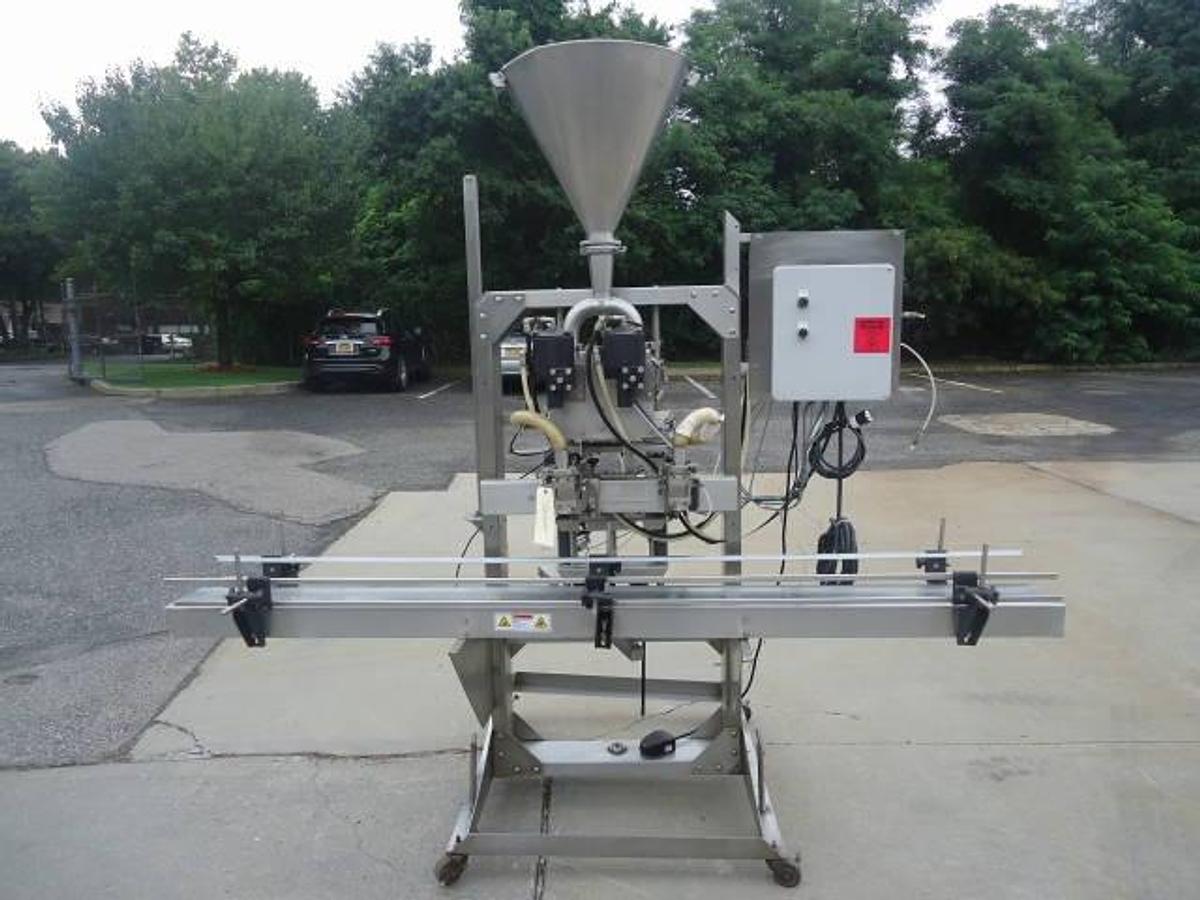
E-Pack produces a range of packaging equipment with a focus on eco-friendly design, primarily serving the food and beverage industry. Their lineup includes filling machines such as pneumatic piston fillers, along with sealing machines, labeling machines, wrapping machines, and complete packaging line configurations. The pneumatic two-head piston filler is one of the more commonly available models on the used equipment market, suited for liquid and semi-liquid products that require consistent fill volumes.
A core part of E-Pack's identity as a manufacturer is the emphasis on sustainability. Their machines are designed to reduce packaging waste and lower energy consumption without sacrificing production throughput. This makes them a practical choice for food and beverage operations that want to meet environmental targets while keeping output high. Both semi-automatic and fully automatic configurations have been produced under the E-Pack brand, giving buyers at different production scales options to consider.
What should buyers know about purchasing used E-Pack packaging machinery?
Buying used packaging machinery is fundamentally different from buying directly from a manufacturer. Used machines are sold as-is, meaning the buyer takes on the responsibility of thoroughly evaluating the equipment's condition before committing to a purchase. This makes the inspection process critical. Reputable used equipment dealers with a long track record in the packaging machinery sector are far more reliable sources than general auction platforms or unfamiliar resellers, because they tend to have industry-specific knowledge and can speak to the machine's history and current condition.
Buyers should also consult the E-Pack manufacturer directly to understand what level of support, parts availability, and technical documentation exists for the specific model and production year they are considering. Older models may have limited parts availability, which affects long-term serviceability. Before finalizing any purchase, it is worth factoring in not just the machine price but also the costs of shipping, installation, operator training, and any refurbishment that may be needed to bring the equipment up to production standards.
How should buyers inspect a used E-Pack machine before purchasing?
Inspections are one of the most important steps in buying used packaging equipment, and reputable dealers typically offer several options to accommodate buyers who cannot travel. In-person inspections are the most thorough, allowing a buyer or their technician to physically examine the machine, check for wear on seals and mechanical components, review electrical panels, and assess overall condition. Some machines may still be installed and running at the facility where they were used, making it possible to observe them in an operational state.
For buyers who cannot visit in person, video inspections and detailed photo documentation are common alternatives. A dealer should be willing to walk through the machine on a live video call, demonstrating key components and answering questions in real time. Keep in mind that most used equipment dealers are not set up for full production runs during inspections, as that requires different permitting and operational infrastructure. The goal of any inspection is simply to get an accurate, honest picture of the machine's mechanical condition and completeness before money changes hands.
What industries are E-Pack packaging machines best suited for?
E-Pack machinery is designed with the food and beverage industry as its primary market. Their filling and packaging equipment handles products like sauces, juices, dairy products, condiments, and other liquid or semi-liquid goods that require precise, repeatable fill volumes. The machines are built to meet the hygiene and sanitation standards expected in food production environments, which typically means stainless steel contact surfaces and designs that allow for easy cleaning.
Beyond food and beverage, E-Pack equipment has found use in adjacent industries such as personal care, cosmetics, and household chemical packaging, where similar filling and sealing requirements apply. The eco-friendly design philosophy behind their machinery also appeals to manufacturers with sustainability mandates, regardless of the specific product category. Buyers from small-to-medium production operations as well as larger industrial facilities have sourced E-Pack equipment, given that the brand has offered both entry-level semi-automatic machines and higher-capacity fully automatic configurations.
What is the typical price range for used E-Pack packaging machines?
Pricing for used E-Pack packaging machinery varies considerably depending on the machine type, model, age, condition, and level of automation. A used semi-automatic piston filler from E-Pack might be priced anywhere from a few thousand dollars up to the mid-five-figure range for more capable or better-maintained units. Fully automatic filling lines or complete packaging systems command higher prices, often reflecting the complexity and capacity of the equipment.
Buyers should think beyond the sticker price and calculate the full landed cost of ownership. This includes freight and rigging, any refurbishment or parts replacement needed before the machine goes into production, installation labor, and operator training. A machine listed at a lower price may require significant investment to bring it to working condition, while a higher-priced unit from a reputable dealer that has been inspected and reconditioned may represent better overall value. Requesting a detailed condition report from the seller before negotiating price is a practical first step.
What are the power and space requirements for E-Pack packaging machinery?
Power and footprint requirements for E-Pack machines depend on the specific model and its level of automation. Smaller semi-automatic units, such as tabletop or floor-standing piston fillers, typically operate on standard single-phase power and have a compact footprint that fits within modest production spaces. Fully automatic systems with integrated conveyors, capping heads, or labeling stations require more floor space and often run on three-phase power, which needs to be confirmed against the buyer's facility capabilities before purchase.
Pneumatic E-Pack machines, including the pneumatic two-head piston filler, also require a compressed air supply at adequate pressure and volume, which is an infrastructure consideration that buyers sometimes overlook. Before finalizing a purchase, it is worth obtaining the machine's technical specification sheet from the dealer and reviewing it with a facility or maintenance engineer. Matching the machine's requirements to the production environment ahead of delivery prevents costly surprises during installation.
How does the shipping and delivery process work for used packaging machinery?
Shipping used packaging equipment involves more complexity than standard freight. Machines need to be properly secured, palletized, or crated to prevent damage in transit, and the level of packaging required directly affects shipping costs. Smaller tabletop machines may ship on a standard pallet with shrink wrap, while larger floor-standing or multi-component systems often require custom wooden crating and internal bracing to protect sensitive components during transport.
For heavier machinery, rigging is typically required for both loading at the dealer's facility and unloading at the buyer's location. Rigging services, which involve forklifts, cranes, or specialized lifting equipment, are usually charged separately and should be discussed with the dealer upfront. Buyers should ask for a complete breakdown of packaging, rigging, and freight costs before agreeing to a purchase so they understand the full landed cost of the equipment. Freight carriers experienced in industrial machinery are generally preferable to standard LTL carriers for equipment of this type.
What payment terms are typical when buying used packaging machinery?
Used equipment transactions in the packaging machinery sector generally require full payment before the machine is released for shipping. This is standard practice across the industry and reflects the as-is nature of used equipment sales, where the dealer needs to confirm funds before transferring ownership and arranging logistics. Wire transfer is the most common payment method for transactions of this size, though some dealers may accept other forms depending on the arrangement.
Some dealers extend payment terms to repeat customers or long-standing clients with an established purchase history, but this is not the norm for first-time buyers. Buyers who are concerned about payment risk should prioritize working with dealers who have a verifiable track record and positive references in the packaging machinery space. Thorough due diligence on the dealer's reputation is one of the best protections available in a market where standard buyer protections like manufacturer warranties do not apply.
Can used E-Pack packaging machines be integrated into an existing production line?
Integration compatibility is a practical concern for any buyer adding a used machine to an established production environment. E-Pack filling and packaging equipment is generally designed for use in food and beverage production lines, and many models can be positioned as standalone units or incorporated into a larger line with conveyors, capping equipment, or labeling systems. The key variables are the machine's footprint, infeed and outfeed configuration, speed (measured in units per minute or cycles per hour), and whether the controls can interface with any upstream or downstream automation.
Buyers planning to integrate a used E-Pack machine into an existing line should share production line specifications with the dealer during the evaluation process. It is also advisable to have a qualified packaging engineer or the machine's manufacturer review the integration plan before purchase, particularly for fully automatic systems where timing and synchronization between stations are critical. Older machines may require updated controls or minor mechanical modifications to work smoothly within a modern production environment, and understanding that scope of work beforehand helps avoid delays after delivery.
What should buyers look for when choosing a used packaging machinery dealer?
The dealer's specialization and track record are the two most important factors to evaluate. A dealer who focuses specifically on packaging machinery will have deeper knowledge of E-Pack equipment, better access to technical documentation, and more meaningful insight into a machine's condition than a general industrial equipment reseller. Years in business, customer references, and the quality of their listings (including photos, specifications, and condition descriptions) are all useful signals of credibility.
Buyers should also assess how responsive and transparent the dealer is during the inquiry process. A trustworthy dealer will answer technical questions directly, facilitate inspection requests without hesitation, and provide honest information about any known issues with the equipment. Dealers who are reluctant to share condition details, resist inspection requests, or pressure buyers into quick decisions are worth approaching with caution. Because used machinery is sold as-is, the relationship with the dealer and their willingness to provide accurate information is essentially the buyer's primary protection in the transaction.