Category
Manufacturer
Model
Duriron Company
Duriron Company continues the legacy of Duriron in delivering reliable industrial solutions, particularly focusing on process pumps and valve technology. Their products are engineered for efficiency and longevity, maintaining operations in challenging settings.
FAQ:
What types of Duriron industrial pumps are available on the used equipment market?
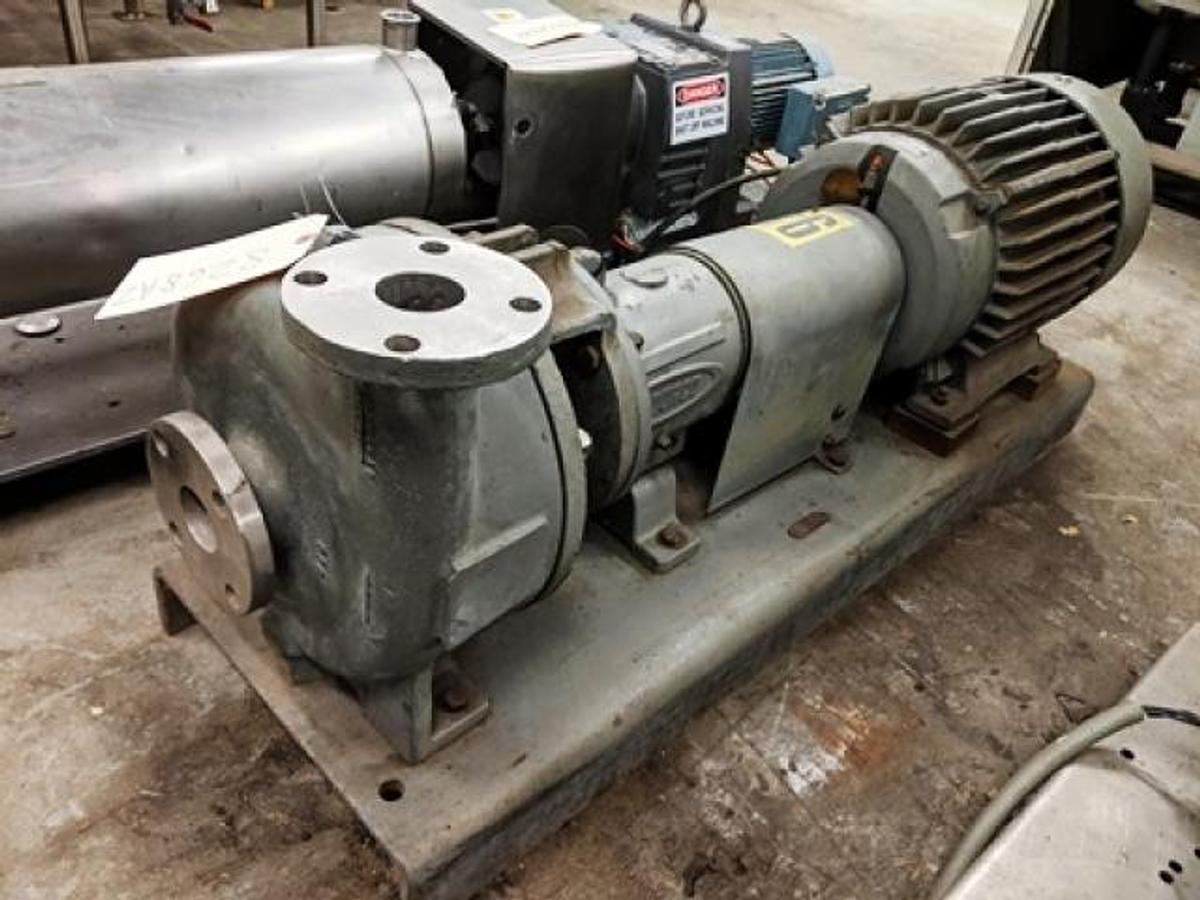
The most commonly traded Duriron pumps on the secondary market are centrifugal process pumps, particularly the Durco Mark series, which includes the Mark I, Mark II, and Mark III models. These pumps were built to ANSI B73.1 standards, which means they follow a standardized dimensional footprint that makes them relatively straightforward to integrate into existing piping systems. Beyond the Mark series, used Duriron inventory often includes vertical sump pumps, slurry pumps, and specialty process pumps designed for corrosive or high-temperature service. Horsepower ratings vary widely across available stock, with units ranging from small fractional-horsepower configurations up to larger 30 HP and above centrifugal pumps used in demanding process environments.
Because Duriron was acquired by Flowserve in 1997, the brand name on used equipment may appear as either "Duriron," "Durco," or "Flowserve Duriron" depending on the era of manufacture. Buyers searching for specific models should check both the Duriron and Durco designations when researching available inventory, as listings may use either name. Used dealers typically carry individual pump units that have been decommissioned from chemical plants, refineries, or pharmaceutical facilities, so the selection at any given time reflects what has recently come off the market rather than a fixed catalog.
What materials are Duriron pumps made from, and why does that matter for industrial buyers?
Duriron built its reputation specifically around corrosion-resistant materials of construction, which is the primary reason these pumps command attention on the used market decades after manufacture. Common materials include high-silicon iron (the proprietary alloy the company was named after), Alloy 20, Hastelloy C, titanium, and various grades of stainless steel. Each material was selected for specific chemical compatibility profiles. High-silicon iron, for example, handles sulfuric acid exceptionally well, while Hastelloy variants perform in hydrochloric acid and other highly aggressive media. This range of metallurgy made Duriron pumps a go-to choice for chemical processing, petrochemical, pharmaceutical, and mining applications where standard cast iron or bronze pumps would fail quickly.
For buyers purchasing used Duriron equipment, the material of construction is one of the most critical specifications to verify before purchase. A pump built in Alloy 20 and one built in 316 stainless steel may look nearly identical externally but have very different chemical resistance profiles. Reputable used equipment dealers should be able to provide the original model number and any available documentation so buyers can cross-reference the material code within the Duriron or Flowserve model designation system. Consulting Flowserve's published chemical resistance data for legacy Duriron models is a practical step before committing to a purchase, especially if the pump will handle aggressive media.
Are used Duriron pumps reliable enough for active industrial service?
Duriron pumps were engineered for longevity in harsh chemical environments, and many units manufactured decades ago are still mechanically sound when properly maintained. The durability of the exotic alloys used in their construction means that the wetted components often outlast the mechanical seals, bearings, and other wear parts that are more routine to replace. When sourcing a used Duriron pump, the key question is not whether the design is capable, but rather what condition the specific unit is in and what service history it has. A pump that was regularly maintained and properly decommissioned from a controlled process environment is a fundamentally different purchase than one that was run to failure or stored improperly for years.
Buyers should take advantage of inspection opportunities before finalizing any used pump purchase. Reputable dealers typically offer in-person inspections, video walkthroughs, or detailed photo documentation of the equipment. Some units may still be installed and operating at the facility where they are being sold, allowing for a more thorough assessment of current condition. Keep in mind that most used equipment dealers do not have the permitting or infrastructure to conduct live fluid testing, so inspections focus on mechanical condition, visible wear, and completeness of components. Engaging a qualified millwright or pump technician to assess the unit during inspection is a sound practice, particularly for higher-value or high-pressure applications.
What industries are Duriron pumps best suited for?
Duriron pumps were designed from the ground up for industries that handle corrosive, abrasive, or chemically aggressive fluids. Chemical processing is the most prominent application, where pumps must resist acids, caustics, solvents, and other reactive compounds that would quickly degrade standard pump materials. Petrochemical refining, pharmaceutical manufacturing, pulp and paper production, and mining operations are other sectors where Duriron equipment has a long track record. The ANSI B73.1 compliance of the Durco Mark series made these pumps especially practical for chemical plants, since the standardized dimensions allowed facilities to swap units in and out without modifying piping infrastructure.
On the used market, buyers from these same industries frequently seek out Duriron equipment precisely because the material specifications match what their processes require. A pharmaceutical plant handling aggressive solvents or a mining operation dealing with acidic slurries may find that a used Duriron pump in good condition is a cost-effective alternative to purchasing new process pumps. The key is matching the pump's material of construction and pressure/temperature ratings to the specific service conditions. Buyers outside the traditional chemical industries should also evaluate whether the corrosion-resistant alloys are necessary for their application, since the value proposition of Duriron equipment is most compelling when the exotic metallurgy is actually required by the process.
Are Duriron pumps still manufactured, or are they only available as used equipment?
Duriron as an independent company no longer exists. The company merged with BW/IP International in 1997 to form Flowserve Corporation, one of the largest industrial pump manufacturers in the world. Under Flowserve, many of the legacy Duriron product lines, including the Durco Mark series centrifugal pumps, continued to be manufactured and are still available through Flowserve's current product catalog. So technically, the pump designs live on, though they are now sold under the Flowserve brand rather than the Duriron name.
For buyers specifically looking at the used equipment market, the Duriron-branded units in circulation are machines that were manufactured prior to or shortly after the 1997 merger, making them anywhere from roughly 25 to 60 or more years old depending on the model. The good news for serviceability is that Flowserve continues to supply replacement parts for many legacy Duriron models, which means buyers are not necessarily acquiring an orphaned product with no parts support. That said, parts availability can vary by model and age, so it is worth consulting Flowserve directly to confirm what support exists for a specific pump before purchasing it on the used market.
What does the Duriron model number tell me about a pump's specifications?
Duriron model numbers are information-dense and follow a structured coding system that communicates key specifications about the pump's configuration, size, and materials of construction. For centrifugal process pumps in the Durco Mark series, the model designation typically includes the pump size expressed as suction and discharge port diameters (for example, a 2-inch by 2-inch configuration), the series designation (Mark I, II, or III), and a material code that identifies the alloy used for the casing and impeller. Understanding these codes is essential when sourcing used equipment, because two pumps with nearly identical model numbers but different material codes can have dramatically different chemical compatibility profiles and price points.
Buyers who are not familiar with the Duriron model numbering system should request the full model and serial number from the dealer and then cross-reference it against Flowserve's published documentation for legacy Duriron products. Flowserve maintains technical resources for many of the older Durco pump lines, and their engineering support teams can often help decode older model numbers. This step is particularly important when purchasing a used pump for a specific chemical service, since buying the wrong alloy variant could result in a pump that is mechanically sound but chemically incompatible with the intended application.
How do I find the correct replacement parts for a used Duriron pump?
Because Flowserve acquired Duriron in 1997, they are the primary source for genuine replacement parts on legacy Duriron pump models. Flowserve maintains parts support for many of the Durco Mark series pumps and other Duriron product lines, though the level of support can vary depending on the age and specific model of the pump. The first step is to gather the complete model number and serial number from the pump nameplate, then contact Flowserve directly or through an authorized distributor to confirm parts availability. Flowserve's legacy pump support teams are accustomed to handling inquiries about older Duriron equipment and can identify current part numbers that correspond to the legacy designations.
For some older or less common Duriron models, buyers may also find aftermarket parts suppliers that manufacture replacement components to the original dimensional and material specifications. Mechanical seals, bearings, and impellers are the most frequently replaced components and tend to have the broadest aftermarket support. When purchasing a used Duriron pump, it is worth factoring in the cost and availability of wear parts as part of the total cost of ownership evaluation. A pump that is priced attractively on the used market but requires a hard-to-source seal or a discontinued bearing configuration may end up being more expensive to keep running than a more common model with readily available parts.
What should I inspect when buying a used Duriron centrifugal pump?
A thorough inspection of a used Duriron pump should cover both the mechanical and metallurgical condition of the unit. On the mechanical side, key areas to assess include the condition of the shaft and bearings, the state of the mechanical seal or packing, any visible signs of cavitation damage on the impeller, and the integrity of the casing. Corrosion-resistant alloys like Hastelloy and Alloy 20 are durable, but they can still suffer from localized corrosion, erosion from abrasive media, or physical damage from improper handling. The pump's nameplate should be legible and match any documentation provided by the seller, since the material code on the nameplate is the definitive reference for what alloy was used in construction.
Reputable used equipment dealers will accommodate in-person inspections, video calls, or detailed photo and video documentation of the equipment. Some pumps may still be installed at the facility where they are being sold, which can allow for a more complete assessment. Keep in mind that most dealers cannot perform live fluid tests, so the inspection will focus on visual and mechanical condition rather than performance testing under load. Bringing in an independent pump technician or millwright for the inspection is a practical safeguard, particularly for larger or higher-value units. Asking the dealer about the pump's service history, the media it handled, and the reason for decommissioning can also provide useful context about what to look for during the inspection.
What is the typical price range for used Duriron industrial pumps?
Pricing for used Duriron pumps varies considerably based on pump size, horsepower, material of construction, condition, and the specific model. Smaller centrifugal process pumps in standard stainless steel construction might sell for a few hundred to a few thousand dollars, while larger units or those built from exotic alloys like Hastelloy or titanium can command significantly higher prices, sometimes reaching tens of thousands of dollars depending on size and condition. The material of construction is often the single biggest driver of price on the used market, since exotic alloys carry high intrinsic value even as scrap, which sets a floor on pricing regardless of the pump's operational condition.
Buyers should also account for total landed cost when evaluating pricing, not just the purchase price. Shipping costs for industrial pumps can be substantial, particularly for larger units that require specialized rigging for loading and unloading. Crating and packaging requirements add to the cost as well. Most used equipment dealers require full payment prior to shipping, so understanding the complete cost picture before committing to a purchase is important. Getting a detailed quote that breaks out the equipment price, packaging, rigging, and freight separately allows for an accurate comparison between sellers and helps avoid surprises when the invoice arrives.
How does the used equipment buying process work for industrial pumps like Duriron models?
Purchasing a used industrial pump typically starts with identifying the specific model, size, and material of construction needed for the application, then searching available inventory through specialized used equipment dealers. Once a suitable unit is located, buyers should request detailed photos, the full nameplate information, and any available documentation such as drawings or service records. Most reputable dealers will arrange an inspection, either in person at their facility, at the plant where the equipment is currently located, or via a video walkthrough. The inspection phase is critical because used equipment is sold as-is, meaning the buyer takes on the responsibility of verifying the condition of the machine before purchase. There are no manufacturer warranties on used equipment, so due diligence during inspection is the primary protection a buyer has.
Once the inspection is complete and both parties agree on price, payment is typically required in full before the equipment ships. Some dealers extend terms to established repeat customers, but full payment upfront is the norm for first-time transactions. After payment, the dealer handles packaging and arranges freight, with costs varying based on the size of the pump and the level of crating or rigging required. Larger pumps may need heavy-duty rigging equipment for loading and unloading, which adds to the total cost. Buyers should confirm all shipping and handling details with the dealer before finalizing the transaction to ensure there are no unexpected costs on delivery.