Category
Manufacturer
Model
Durable Packaging
Durable Packaging specializes in aluminum packaging solutions for the food service and retail industries. Known for their high-quality disposable containers and foil products, they cater to a wide range of applications from food storage to baking.
FAQ:
What types of used Durable Packaging equipment are typically available for sale?
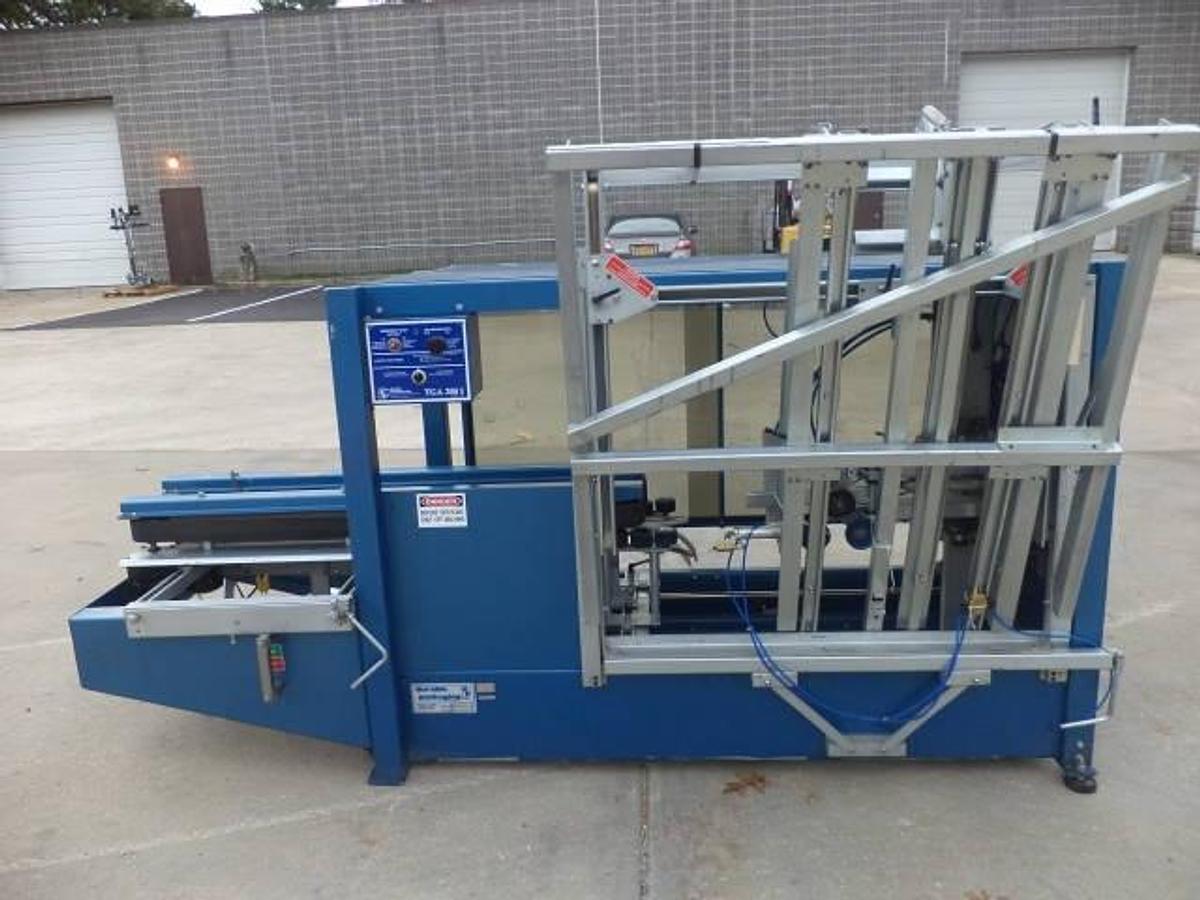
Durable Packaging is best known for its aluminum packaging solutions serving the food service and retail industries. Their equipment lineup supports the production of disposable foil containers, baking pans, and similar aluminum packaging products used across commercial kitchens, grocery chains, and food manufacturing facilities. A common example of equipment that surfaces on the used market is the Durable Packaging TGA-200IL Carton Erector, which runs at approximately 20 cartons per minute and supports downstream packaging operations for foil container products.
Beyond carton erectors, used Durable Packaging machinery can include forming presses, container stamping equipment, and automated line components tied to foil and aluminum packaging production. Because these machines are purpose-built for high-output food service applications, they tend to be well-suited for buyers in food manufacturing, contract packaging, or retail distribution who need reliable, industry-specific equipment. Purchasing used equipment from this manufacturer is a practical way to access commercial-grade machinery at a fraction of the cost of sourcing comparable equipment through other channels.
What should buyers know about purchasing used packaging equipment versus sourcing it through other channels?
Used packaging equipment gives buyers access to commercial-grade machinery that has already proven itself in real production environments. For smaller operations or facilities expanding capacity on a budget, this can be a significant advantage. Machines from established manufacturers like Durable Packaging were built for demanding, high-volume food service applications, so even older units often retain substantial functional value when they have been properly maintained during their service life.
The main consideration with used equipment is that it is sold as-is, meaning the buyer takes on the responsibility of evaluating the machine's current condition before committing to a purchase. This makes the inspection process critical. Reputable used equipment dealers will typically offer in-person inspections, video walkthroughs, or photo documentation to help buyers assess condition accurately. Buyers should also contact the manufacturer directly to understand what level of technical support, spare parts availability, and service documentation they can expect for a specific model and age of machine, since older units may have more limited manufacturer support than more recent ones.
How long does packaging equipment typically last, and what affects its lifespan?
Well-maintained commercial packaging equipment commonly operates for 10 to 20 years, and in some cases longer. The actual lifespan depends heavily on the intensity of use, the operating environment, and how consistently the machine was serviced. Equipment running in a dry, temperature-controlled facility with a disciplined preventive maintenance program will generally outlast the same model running in a humid or chemically active environment without regular upkeep.
For buyers considering used machinery, the age of the unit is only one part of the picture. A 15-year-old machine that ran one shift per day and received regular servicing may be in considerably better condition than a 7-year-old machine that ran three shifts with minimal maintenance. Reviewing service records, inspecting wear components like belts, bearings, and seals, and asking about the production history of the machine all give a clearer sense of remaining useful life than the build date alone. Buyers should also factor in parts availability for older models, since some manufacturers phase out support for discontinued equipment after a certain number of years.
What maintenance does packaging equipment require to stay in good working condition?
Routine maintenance on packaging equipment generally covers lubrication of moving parts, inspection and replacement of wear items like belts, chains, and seals, cleaning of product contact surfaces, and calibration checks to ensure the machine is operating within spec. For equipment used in food service applications, sanitation requirements add another layer of maintenance, since food residue and humidity can accelerate corrosion and mechanical wear if not addressed consistently.
Electrical components, sensors, and pneumatic systems also need periodic attention. Loose connections, worn solenoids, and pressure inconsistencies in pneumatic lines are common sources of downtime on older machines. When buying used packaging equipment, it is worth asking the dealer whether the machine was recently serviced and whether any components were replaced. Some dealers will perform basic reconditioning before listing a machine, while others sell strictly as-is. Understanding the current state of the machine before purchase helps buyers plan for any immediate maintenance costs that should be factored into the total acquisition budget.
Is used packaging equipment suitable for high-volume production environments?
Used packaging equipment can absolutely support high-volume production, provided the machine's rated capacity matches the buyer's throughput requirements. Commercial-grade equipment from established manufacturers is designed for sustained, high-cycle operation, and many used units have already demonstrated that capability during their prior service life. A carton erector rated at 20 cartons per minute, for example, is a production-level machine, not a light-duty unit, regardless of whether it is purchased used.
The key for high-volume applications is matching the machine's rated speed and duty cycle to the demands of the production line, and then verifying through inspection that the machine is actually capable of meeting those specs in its current condition. Buyers running continuous or multi-shift operations should pay particular attention to the condition of drive components, control systems, and any high-wear parts that would be under sustained stress. Sourcing from a dealer who specializes in packaging equipment and understands the specific application is valuable here, since they can help identify whether a particular used unit is a realistic fit for the intended production environment.
What materials are used to construct commercial packaging equipment, and why does it matter?
Commercial packaging equipment is most commonly built from stainless steel, heavy-duty aluminum, or reinforced polymers, each chosen for specific performance characteristics. Stainless steel is the dominant material in food-contact and washdown environments because of its corrosion resistance and ease of sanitation. Aluminum is frequently used for structural frames and components where weight reduction matters without sacrificing strength. Reinforced polymers appear in guards, housings, and non-load-bearing components where impact resistance and chemical compatibility are priorities.
For buyers evaluating used equipment, the construction materials are relevant to both durability assessment and ongoing maintenance. Stainless steel frames and food-contact surfaces should be inspected for pitting, corrosion, or weld failures, particularly on machines that processed acidic or salty food products. Aluminum components should be checked for stress cracks or oxidation that could indicate prior overloading or improper storage. Understanding what the machine is made of helps buyers ask the right questions during inspection and gives a clearer picture of what refurbishment, if any, might be needed before the equipment goes back into production.
Can packaging equipment handle multiple types of packaging materials, or is it application-specific?
This depends entirely on the type of machine. Some packaging equipment is highly application-specific, designed around a particular material, container format, or production process. Foil container forming equipment, for instance, is purpose-built for aluminum substrates and cannot simply be converted to run paperboard or plastic. Carton erectors, on the other hand, can often be adjusted to accommodate different carton sizes and styles within a defined range, making them more flexible across product lines.
When evaluating used packaging equipment for versatility, buyers should review the machine's specifications for adjustable parameters like container dimensions, material thickness ranges, and changeover capabilities. Some machines come with multiple tooling sets or die configurations that expand the range of formats they can run. Asking the dealer about what tooling or accessories are included with the machine is important, since a unit sold without its full complement of changeover parts may be limited to a single format. For operations running diverse product lines, confirming flexibility upfront prevents costly surprises after the equipment arrives.
How does the inspection process work when buying used packaging equipment?
Reputable used equipment dealers typically offer several inspection options: in-person visits to the dealer's facility, virtual walkthroughs conducted via video call, or detailed video and photo documentation of the machine. The goal in all cases is to give the buyer an accurate picture of the machine's current condition, including its mechanical state, visible wear, and any known issues. Some machines are still installed and running at the facility where they were originally used, in which case the dealer can often arrange for the buyer to observe the equipment in operation or at least inspect it on-site before it is decommissioned and moved.
One important limitation to understand is that most used equipment dealers are not set up to run full production tests with actual product. Running a machine through a complete production cycle requires the appropriate facility, raw materials, and in some cases food-handling permits that a machinery dealer would not typically hold. This means the inspection is generally focused on mechanical function, electrical systems, and physical condition rather than full production output verification. Buyers should use the inspection to check all accessible mechanical components, request that the machine be powered on if possible, and ask specific questions about the production history and any repairs or modifications made during the machine's service life.
What are typical payment terms when purchasing used packaging equipment?
Most used equipment dealers require payment in full before a machine is released for shipping. This is standard practice in the industry and reflects the nature of used machinery transactions, where the equipment is often a one-of-a-kind item that cannot be easily resold to another buyer once it has been held or prepared for shipment. Wire transfer is the most common payment method for larger transactions, though dealers may also accept other forms of verified payment depending on the purchase amount.
Some dealers will extend payment terms to established buyers with a prior transaction history, but this is not the norm for first-time purchases. Buyers should clarify payment expectations early in the process, before investing significant time in inspections or logistics planning. It is also worth asking whether a deposit is required to hold a machine while financing or internal purchase approvals are being arranged, since popular equipment can sell quickly and a verbal hold without a deposit is rarely guaranteed.
What should buyers understand about shipping and rigging costs for used packaging equipment?
Shipping costs for used packaging equipment vary considerably based on the size and weight of the machine, the distance it needs to travel, and the level of packaging or crating required to protect it in transit. Smaller tabletop units may ship on a standard pallet with minimal preparation, while larger production machines often require custom crating, blocking, and bracing to prevent damage during handling. The cost of that preparation work is typically passed on to the buyer and should be factored into the total landed cost of the equipment.
Larger machines frequently require specialized rigging for loading and unloading, which means a forklift or crane crew at both the origin and destination. These rigging services are an added cost beyond standard freight charges and can be substantial for heavy or awkwardly sized equipment. Buyers should ask the dealer for a detailed breakdown of packaging, rigging, and freight costs before finalizing a purchase, so there are no surprises when the invoice arrives. Getting a clear picture of the full landed cost, including all handling and delivery charges, is just as important as negotiating the purchase price of the machine itself.