Category
Manufacturer
Model
FAQ:
What types of industrial washers does Douglas manufacture?
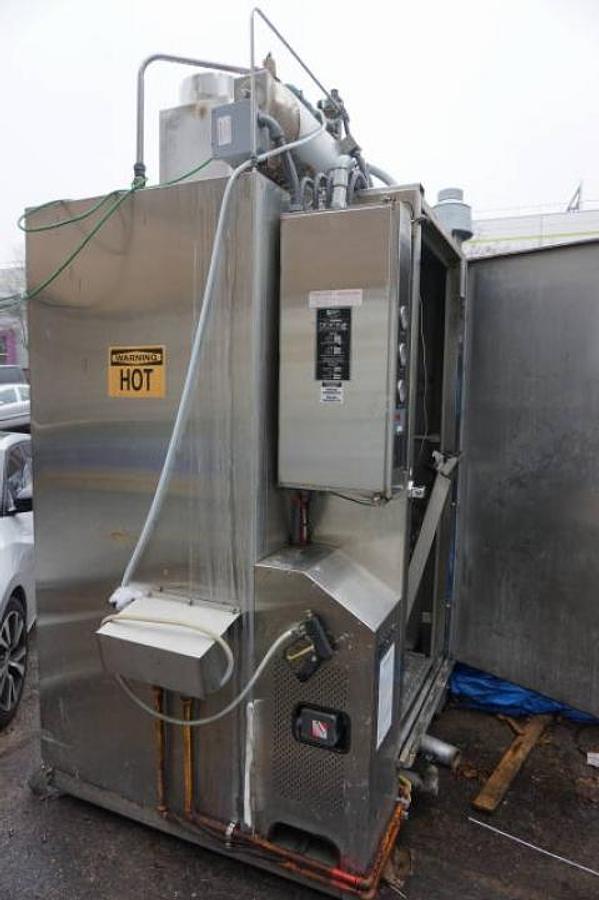
Douglas produces a range of industrial washing equipment designed for demanding commercial and institutional environments. Their lineup includes rack washers, pan washers, and container washers, such as the Douglas 1536-N, which is built to handle the cleaning of racks, sheet pans, trays, and large containers in high-volume food service, food processing, and industrial settings. These machines are engineered for throughput-heavy operations where consistent, repeatable cleaning results are required across shifts.
Beyond the rack and pan washer category, Douglas equipment is recognized for its heavy-duty construction, typically featuring stainless steel interiors and reinforced frames that hold up under continuous daily use. The machines are designed to work with commercial-grade detergents and sanitizing agents, making them well-suited for environments with strict sanitation requirements, such as commercial kitchens, food production facilities, and institutional food service operations.
What is a Douglas rack/pan/container washer and how does it work?
A Douglas rack/pan/container washer is a pass-through or cabinet-style industrial washing machine designed to clean large items that standard dishwashers cannot accommodate. Racks, sheet pans, speed racks, bus tubs, and similar containers are loaded into the machine, where high-pressure spray arms deliver hot water and detergent across all surfaces. The wash cycle typically runs through pre-rinse, wash, and sanitizing rinse stages before the items exit clean and ready for use.
These machines are built for volume. In a busy food production or food service environment, throughput matters as much as cleaning quality, so Douglas washers are engineered to cycle quickly without sacrificing sanitation performance. The stainless steel construction resists corrosion from repeated exposure to hot water, cleaning chemicals, and steam, which extends the working life of the equipment considerably compared to lighter-duty alternatives.
What should buyers know about purchasing a used Douglas industrial washer?
Used Douglas industrial washers represent a practical option for buyers who need heavy-duty cleaning capacity without the cost of purchasing unused equipment. Because Douglas machines are built for high-volume, continuous-use environments, well-maintained units can retain strong functional performance for many years. That said, buyers should approach any used machinery purchase with careful due diligence. The condition of internal spray components, pump systems, heating elements, and door seals should all be evaluated before committing to a purchase.
Reputable used equipment dealers will typically accommodate in-person inspections or virtual walkthroughs via video so buyers can assess the machine's current condition. Some units may still be in active production at a facility, which can allow for a live operational inspection. Buyers should also contact Douglas directly to understand parts availability and manufacturer support for the specific model and age of the machine they are considering, since older models may have more limited support options than more recent ones.
How do you inspect a used Douglas industrial washer before buying?
A thorough inspection of a used Douglas industrial washer should cover both the mechanical and structural condition of the unit. Key areas to examine include the spray arms and nozzles for clogging or damage, the pump and motor assembly for signs of wear or leaks, the heating elements or steam connections, door gaskets and seals, and the overall condition of the stainless steel interior and exterior. Rust, heavy scale buildup, or significant denting can indicate either poor maintenance history or a machine that has been pushed beyond its design limits.
Most used equipment dealers can arrange an in-person inspection or provide a detailed video walkthrough of the machine. Keep in mind that dealers generally do not have the permits or production infrastructure to run actual product through the washer during a demonstration, so the inspection will typically focus on visual condition and mechanical function rather than a full production test. Buyers who cannot visit in person should request detailed photos of all major components and ask specific questions about the machine's service history and any known issues before finalizing a purchase.
What is the typical price range for used Douglas industrial washers?
Pricing for used Douglas industrial washers varies considerably depending on the model, age, size, and overall condition of the unit. Smaller or older models in average condition may be available at lower price points, while larger, more capable units in good working order can command significantly higher prices. The Douglas 1536-N and similar rack/pan/container washers tend to attract buyers in food service, food processing, and institutional settings where the cleaning capacity justifies the investment.
Buyers should factor in more than just the purchase price when evaluating total cost. Shipping, rigging, installation, and any refurbishment or parts replacement needed to bring the machine to full working order should all be included in the budget. Getting a clear picture of landed cost, meaning the total amount spent to have the machine operational at the buyer's facility, is the right way to compare options across different dealers and listings.
Are replacement parts readily available for Douglas industrial washers?
Parts availability for Douglas industrial washers depends largely on the model and the age of the machine. Douglas has an established presence in the commercial food service equipment market, and many common wear components such as spray nozzles, pump seals, door gaskets, and heating elements have historically been available through the manufacturer and authorized parts distributors. However, availability can vary for older or discontinued models, so buyers should verify parts support before purchasing a specific unit.
The best approach is to contact Douglas directly with the model number and serial number of the machine in question and ask specifically about parts availability and technical support. A reputable used equipment dealer should be able to provide the model details needed to make that inquiry. Buyers who plan to operate a machine in a high-volume environment should also consider having critical wear parts on hand before putting the machine into production, since downtime in a busy kitchen or food processing facility can be costly.
What industries commonly use Douglas industrial washers?
Douglas rack, pan, and container washers are most commonly found in food service and food processing environments where large volumes of cooking equipment, trays, pans, and containers need to be cleaned quickly and consistently. Commercial kitchens, institutional cafeterias, hospital food service operations, school lunch programs, hotel banquet facilities, and contract food manufacturers are among the most frequent users of this type of equipment. The machines are designed to handle the scale of cleaning that manual washing or standard dishwashers simply cannot keep up with.
Beyond food service, Douglas washers also appear in food production plants and processing facilities where containers, totes, and production equipment require regular sanitation as part of compliance with food safety standards. The stainless steel construction and compatibility with commercial sanitizing agents make these machines well-suited for environments where hygiene documentation and consistent cleaning protocols are required. Used units from decommissioned food service or food processing operations are a common source of supply in the secondary market.
What are the installation requirements for a Douglas industrial washer?
Douglas industrial washers typically require dedicated utility connections that go beyond what a standard commercial kitchen might already have in place. Most units need a hot water supply line, a drain connection sized for the machine's output, and an electrical connection that matches the machine's voltage and amperage specifications, which are often 208V or 480V three-phase depending on the model. Some units also require a steam connection or a booster heater to reach the high rinse temperatures needed for sanitation compliance. Buyers should review the machine's specification sheet carefully before installation planning begins.
Floor space and clearance requirements are also a practical consideration. Rack and pan washers are large pieces of equipment, and the surrounding area needs to accommodate loading and unloading workflow as well as service access to the machine's panels and components. For used equipment, buyers should verify that the machine's utility requirements match what is available at their facility, or budget for any electrical, plumbing, or structural modifications needed before the machine can be put into service.
How does shipping work for a used Douglas industrial washer?
Shipping a used Douglas industrial washer involves more logistics than standard freight because of the size and weight of the equipment. The machine will typically need to be palletized or crated before transport, and the level of packaging required directly affects the shipping cost. Heavier or larger units may require specialized rigging equipment for loading at the origin and unloading at the destination, which adds to the overall cost. Buyers should ask the dealer for a detailed breakdown of packaging, rigging, and freight charges before agreeing to a purchase so there are no surprises on the landed cost.
For receiving, buyers need to confirm that their facility has the equipment and dock access needed to unload a heavy industrial machine. A forklift or pallet jack rated for the machine's weight is typically required, and some installations may need a rigging crew if the machine needs to be moved into a tight space or positioned on a specific floor. Coordinating these logistics in advance prevents delays and potential damage during delivery.
What payment terms are typical when buying a used Douglas industrial washer?
Used industrial equipment dealers generally require full payment before a machine ships. This is standard practice in the secondary equipment market and reflects the logistical and financial reality of moving large, heavy machinery. Some dealers may offer payment terms to buyers with an established purchasing history, but first-time buyers should expect to pay in full upfront. Common payment methods include wire transfer, ACH, and in some cases credit card, though dealers may charge a processing fee for card payments on large transactions.
Buyers should treat the payment process as part of their overall due diligence. Paying in full before shipment makes it especially important to complete a thorough inspection beforehand, whether in person or through a detailed video walkthrough arranged by the dealer. Understanding exactly what condition the machine is in and what, if any, known issues exist before funds are transferred is the best way to protect the investment and avoid disputes after delivery.