Category
Manufacturer
Model
Diosna
Diosna specializes in providing equipment for the bakery and food industries, particularly known for their dough mixing and processing machines. Their technology is designed to enhance product quality and consistency in baked goods. Diosna’s commitment to innovation ensures they meet the evolving needs of bakers.
FAQ:
What types of equipment does Diosna manufacture?
Diosna is a German manufacturer founded in 1885 with a long history of producing mixing and processing equipment for the food, bakery, pharmaceutical, and chemical industries. Their product line includes high-shear mixer-granulators, dough mixing systems, fluid bed processors, vacuum dryers, and granulation equipment. The P-Series high-shear granulators and V-Series vacuum dryers are among the most recognized product lines and are widely used in both food production and pharmaceutical manufacturing environments.
In the bakery and food sector, Diosna is particularly well regarded for dough mixing technology designed to improve consistency and product quality across large-scale production runs. On the pharmaceutical side, their high-shear granulators are valued for their stainless steel construction and compatibility with cGMP manufacturing environments. This cross-industry versatility is one reason Diosna equipment tends to hold its value well on the secondary market and remains in active use long after its initial installation.
Is used Diosna equipment suitable for pharmaceutical manufacturing?
Yes, many Diosna models are well-suited for pharmaceutical applications, which is a significant reason they are actively sought on the used equipment market. Diosna high-shear granulators, in particular, are built with stainless steel contact parts and are designed to meet cGMP (current Good Manufacturing Practice) standards. These characteristics make them attractive to pharmaceutical manufacturers looking to expand capacity or replace aging equipment without the lead times and costs associated with purchasing directly from a manufacturer.
That said, buyers sourcing used Diosna equipment for pharmaceutical use should conduct thorough due diligence before purchase. This includes reviewing the machine's maintenance and qualification history, verifying that documentation such as IQ/OQ records is available, and assessing whether the unit has been used in a regulated environment previously. An in-person or video inspection is strongly recommended to evaluate the current condition of product-contact surfaces, seals, and control systems. Consulting with Diosna directly about parts availability and technical support for the specific model under consideration is also a prudent step, as support levels can vary depending on the age of the machine.
What is the typical price range for used Diosna equipment?
Pricing for used Diosna equipment varies considerably based on the model, size, age, and overall condition of the machine. Smaller lab-scale units, such as compact high-shear granulators used for R&D or process development, can be found in the range of roughly $5,000 to $20,000. Mid-range pilot or small production units typically fall somewhere between $20,000 and $75,000, while large-scale production granulators, dough mixers, or fluid bed systems can exceed $150,000 depending on specifications and configuration.
Beyond the purchase price itself, buyers should factor in additional costs before committing to a machine. Rigging, crating, freight, and any reconditioning or installation work can add meaningfully to the total landed cost. Requesting a detailed quote that covers packaging requirements, loading fees, and shipping to the destination is an important part of evaluating the true cost of a used Diosna unit. Machines that come with documentation, spare parts, or ancillary components will generally command higher prices but may offer better overall value when total cost of ownership is considered.
What should buyers know about purchasing used Diosna equipment versus buying directly from the manufacturer?
Purchasing used Diosna equipment through the secondary market offers a meaningful cost advantage compared to acquiring a comparable machine directly from a manufacturer. Lead times for used equipment are also typically much shorter, which can be critical for operations that need to bring capacity online quickly. Used machines that have been properly maintained can deliver many years of reliable service, and Diosna's reputation for durable construction means that older units are often still mechanically sound.
The trade-offs are real and worth understanding clearly. Used equipment is sold as-is, meaning the buyer takes on the responsibility of evaluating condition rather than relying on a manufacturer's quality assurance process. There are no warranties provided by used equipment dealers. Buyers should select dealers with a demonstrated track record in their specific industry, request thorough inspection opportunities, and independently verify the machine's history wherever possible. Consulting with Diosna about parts availability and service support for the specific model being considered is a smart step, since older or discontinued models may have limited support options.
What is the Diosna P 250-A, and what is it used for?
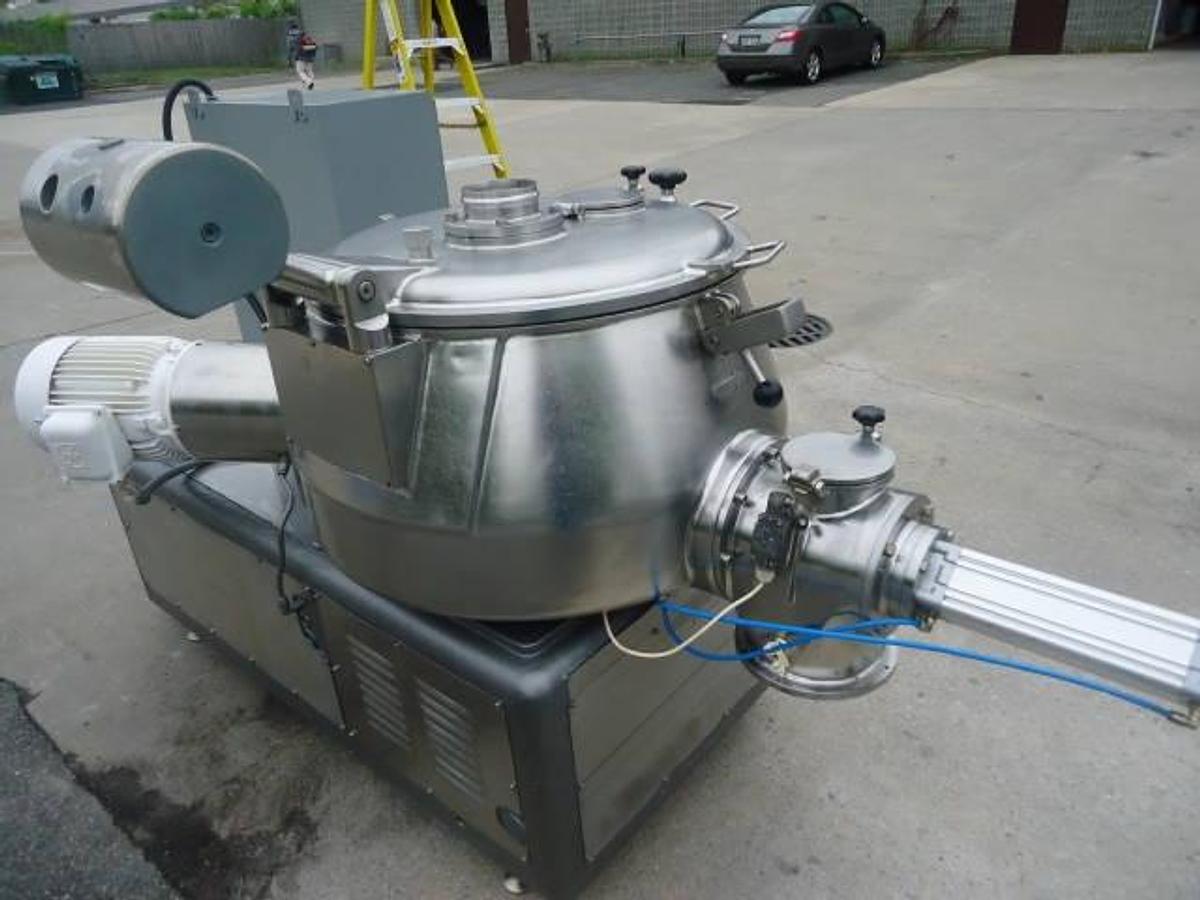
The Diosna P 250-A is a stainless steel mixer-granulator with a 250-liter bowl capacity, designed for high-shear mixing and wet granulation processes. It belongs to Diosna's P-Series, which is one of the most widely recognized product lines in pharmaceutical and food processing applications. The high-shear mixing action produced by these machines is used to blend dry powders, granulate materials with liquid binders, and create uniform granules that are suitable for downstream processes such as tablet compression or capsule filling.
At 250 liters, the P 250-A sits in the production-scale range rather than the lab or pilot scale, making it relevant for manufacturers running commercial-scale batch processes. The stainless steel construction is a key feature for regulated industries, as it supports cleaning validation and meets hygiene requirements for pharmaceutical and food-grade environments. When evaluating a used P 250-A, buyers should pay close attention to the condition of the impeller, chopper blades, seals, and bowl interior, as these components experience the most wear during normal operation.
How should buyers inspect used Diosna equipment before purchasing?
Inspection is one of the most important steps in buying used industrial equipment, and reputable dealers will typically offer multiple options to accommodate buyers. In-person inspections allow a buyer or their engineer to physically examine the machine, check the condition of wear parts, review any available maintenance records, and assess overall mechanical condition. Where in-person visits are not practical, video inspections or recorded walkthroughs can provide a reasonable level of visibility into the machine's current state. Some equipment may still be installed at a production facility, in which case the dealer can often arrange access through the current owner.
It is worth understanding that most used equipment dealers are not set up to run production tests, as operating production equipment requires permits and facilities that dealers typically do not have. What buyers can realistically assess through inspection includes the physical condition of contact surfaces, the integrity of seals and gaskets, the state of the control panel and electrical components, and the presence of any visible damage or corrosion. For pharmaceutical applications, asking whether IQ/OQ documentation or maintenance logs are available adds another layer of confidence. The more thorough the inspection process, the better positioned a buyer is to make an informed decision.
Are replacement parts and technical support available for older Diosna models?
Parts availability and technical support for used Diosna equipment depend largely on the age and model of the machine in question. Diosna has been manufacturing equipment since 1885 and continues to operate as an active company, which means support for many models remains accessible. However, as with most equipment manufacturers, the level of support available for older or discontinued models can be more limited than for current production lines. Buyers should contact Diosna directly before purchasing a used machine to get a realistic picture of what parts and service resources are available for that specific model and serial number.
For commonly traded models like the P-Series granulators, third-party parts suppliers and service technicians familiar with the equipment are often available as an alternative source of support. Buyers should also ask the selling dealer whether any spare parts, tooling, or consumables are included with the machine, as this can reduce the urgency of sourcing parts immediately after acquisition. Factoring parts availability into the purchase decision is particularly important for production-critical applications where extended downtime would be costly.
Can Diosna high-shear granulators be scaled from lab to production size?
Diosna's high-shear granulator line is designed with scalability in mind, offering equipment across a range of bowl sizes that span from small lab-scale units used in process development up to large production-scale machines. This makes it possible to develop and validate a granulation process at a smaller scale and then transfer that process to a larger unit with a higher degree of confidence in the outcome, provided the scale-up parameters are properly managed. In pharmaceutical manufacturing, this kind of scalability is particularly valuable because it supports the regulatory requirement to demonstrate process consistency across batch sizes.
On the used equipment market, both lab-scale and production-scale Diosna granulators are available, which gives buyers flexibility to find a unit that matches their current needs. A facility that is expanding production might look for a larger P-Series unit to complement a smaller machine already in use. Buyers should verify that the bowl volume, impeller geometry, and drive specifications of a used unit are compatible with their process requirements before purchasing, as differences between models can affect granulation outcomes even when the underlying process parameters appear similar.
What are the typical shipping and logistics considerations when buying used Diosna equipment?
Shipping used industrial equipment like Diosna mixers and granulators involves more complexity than standard freight, and buyers should get a clear picture of all logistics costs before finalizing a purchase. Larger machines require professional rigging for loading and unloading, which adds cost beyond standard freight rates. The level of packaging required, whether that is palletization, crating, or custom packaging, will also affect the final shipping cost. Dealers will typically provide details on how a specific machine will be prepared for transit, and buyers should ask for this information upfront to understand the full landed cost.
For international shipments, additional considerations include customs documentation, import duties, and compliance with any applicable import regulations for industrial equipment. Transit times vary based on origin, destination, and shipping method, and larger machines moving by freight or container can take several weeks to arrive. Buyers should confirm with the dealer whether the machine will be shipped with any loose components, spare parts, or documentation, and how those items will be packaged to prevent damage during transit. Getting all of this in writing before payment is a straightforward way to avoid surprises.
What payment terms are typical when purchasing used Diosna equipment from a dealer?
Most used equipment dealers require full payment before a machine is released for shipping. This is standard practice in the industry and reflects the nature of the secondary equipment market, where dealers typically do not extend credit to first-time buyers. Payment is usually accepted by wire transfer, and buyers should confirm accepted payment methods with the dealer early in the process to avoid delays. Some dealers may offer payment terms or installment arrangements to established customers with a history of prior transactions, but this is at the dealer's discretion rather than a standard offering.
Buyers should also clarify at what point title to the equipment transfers and when the machine will be made available for pickup or shipping after payment clears. For high-value machines, it is reasonable to ask about the dealer's process for confirming payment receipt and their timeline for preparing the equipment for shipment. Understanding these logistics in advance helps both parties move through the transaction smoothly and reduces the risk of miscommunication around timing.