Category
Manufacturer
Model
Diagraph
Diagraph specializes in manufacturing coding and marking equipment for various industries, including food and pharmaceuticals. They are known for their high-speed printing solutions that ensure accurate labeling and compliance with regulations. Diagraph’s technology enhances production efficiency and traceability.
FAQ:
What types of Diagraph marking and coding equipment are typically available on the used market?
Diagraph produces a broad range of industrial coding and marking equipment, and used examples of most product lines surface regularly through secondary market dealers. The main categories include continuous inkjet (CIJ) printers, thermal inkjet (TIJ) systems, laser coders, label applicators, and stencil equipment. Each technology serves a different set of production requirements, so buyers tend to shop by application first and model second. For example, a high-speed beverage line has very different needs than a small-batch pharmaceutical packaging operation.
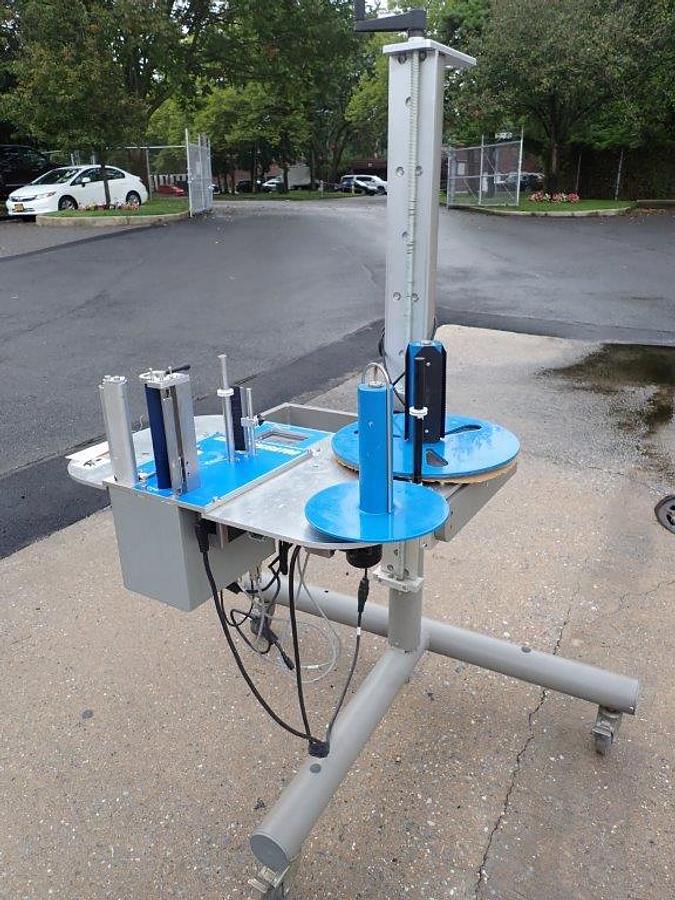
Label applicators like the Diagraph LA/4750 are a common find on the used market and are popular because of their portability and flexibility across production environments. CIJ and TIJ printers are also frequently listed, as manufacturers often upgrade equipment or decommission lines, releasing serviceable machines into the secondary market. When evaluating a used Diagraph unit, buyers should confirm the specific model and technology type, since ink systems, print heads, and software interfaces vary considerably across the product family. Knowing exactly which system you need before shopping saves time and reduces the risk of purchasing a machine that requires significant adaptation to fit your line.
What industries use Diagraph coding and marking equipment?
Diagraph equipment is designed for industrial-scale production environments where accurate, high-speed product identification is a regulatory or operational requirement. The food and beverage industry is one of the largest user segments, relying on Diagraph printers and coders to apply expiration dates, lot codes, and barcodes directly onto packaging at line speed. Pharmaceutical manufacturers use the equipment for similar reasons, with the added pressure of strict traceability requirements and compliance standards that make reliable coding non-negotiable.
Beyond food and pharma, Diagraph systems are found in general manufacturing, automotive parts production, building materials, and consumer goods packaging. Any operation that needs to print variable data, including batch numbers, QR codes, or shipping information, onto products or packaging is a candidate for this equipment. This broad applicability is one reason used Diagraph machines hold their value reasonably well and attract buyers from multiple sectors. A unit that was originally used in a beverage plant, for instance, may be perfectly suited for a contract packager or a mid-size manufacturer looking to add traceability to their line without the cost of purchasing new equipment.
What should buyers look for when purchasing used Diagraph equipment?
Condition assessment is the most critical step when buying any used industrial coding or marking equipment. For Diagraph machines specifically, buyers should ask about the age of the print head, the number of operating hours logged, and whether the unit has been sitting idle or was pulled directly from an active production line. Print heads and ink systems are the components most subject to wear, and their condition has a direct impact on how quickly the machine will be ready for production after purchase. Asking for photos or video of the machine powering on and cycling through a print test is a reasonable starting point.
Buyers should also verify which software version the machine is running and whether that version is still supported by Diagraph, now part of Illinois Tool Works (ITW). Older models may have limited parts availability, so it pays to check with the manufacturer directly before committing to a purchase. Reputable used equipment dealers will typically accommodate in-person or video inspections, and some machines may still be installed in a working facility where the equipment can be observed under actual production conditions. Keep in mind that most dealers are not set up to run full production tests, since that requires permitting and materials beyond the scope of a typical equipment sale, but a functional power-on and mechanical inspection is a reasonable expectation.
Does used Diagraph equipment come with a warranty?
Used industrial equipment is almost always sold on an as-is basis, and Diagraph machines purchased through secondary market dealers are no exception. Manufacturer warranties are tied to the original sale and do not transfer to subsequent buyers in most cases. This means the responsibility for evaluating the machine's condition falls squarely on the buyer before the transaction is complete, which is why thorough inspection matters so much.
To reduce risk, buyers should focus on dealers with a long track record in industrial coding and marking equipment specifically, since specialists are better positioned to accurately represent a machine's condition and history. It is also worth contacting Diagraph directly to understand what level of technical support, parts, and service is available for the specific model being considered, since support availability varies by age and product line. A machine that is well within the manufacturer's supported range is a safer purchase than an older unit that may have limited parts availability. Selecting a dealer who is transparent about condition, willing to facilitate inspections, and experienced in the category is the most practical form of buyer protection available in the used equipment market.
What is the typical lifespan of Diagraph marking and coding equipment?
Diagraph equipment is built for continuous industrial use, and well-maintained units have a reputation for lasting well beyond a decade in active production environments. The actual service life depends heavily on the technology type, usage intensity, and how consistently the machine received preventive maintenance. CIJ printers, for example, require regular ink system cleaning and fluid management to prevent clogging, while laser coders have fewer consumable parts and tend to have lower maintenance demands over time. Machines that were properly serviced on schedule will generally be in significantly better shape than those that ran until failure.
For buyers shopping the used market, the practical question is not just how long Diagraph equipment can last in theory, but how much useful life remains in a specific unit. A five-year-old machine that was serviced regularly and stored properly may outperform a two-year-old machine that was run hard and neglected. Asking for any available service records, inquiring about the condition of wear parts like print heads and seals, and arranging an inspection before purchase are all ways to get a clearer picture of remaining service life. Buyers should also factor in the availability of replacement parts for the model in question, since parts availability is often what determines whether an older machine remains viable long-term.
Are replacement parts and consumables easy to source for Diagraph equipment?
Parts and consumables availability varies depending on the age and model of the Diagraph equipment in question. For machines that are still within the manufacturer's current or recently supported product range, parts including print heads, ink cartridges, and maintenance kits are generally accessible through Diagraph's authorized service network. ITW, the parent company, maintains a broad industrial service infrastructure, which works in buyers' favor for relatively recent models.
For older or discontinued Diagraph models, the situation is more complex. Some parts may be available through third-party suppliers or the used parts market, but buyers should not assume availability without confirming first. Before purchasing a used Diagraph machine, it is worth reaching out to Diagraph directly to ask which parts are still stocked for that specific model and whether the unit is still within the supported service window. This step takes minimal time but can prevent a situation where a machine is purchased and then sidelined because a critical consumable or replacement component is no longer available. Dealers who specialize in coding and marking equipment are often a useful resource here, as they tend to have working knowledge of parts availability across the models they sell.
Can Diagraph equipment integrate with existing production line systems?
Most Diagraph coding and marking systems are designed with production line integration in mind. Many models support communication with PLCs, line controllers, and enterprise software systems, allowing them to receive variable print data automatically rather than requiring manual input at the machine. This is particularly valuable in food, beverage, and pharmaceutical environments where date codes, batch numbers, and product-specific information change frequently and need to update in real time without stopping the line.
When buying used Diagraph equipment, integration capability is worth verifying carefully. The software version running on the machine, the available communication ports, and compatibility with current network protocols all affect how easily the unit will connect to a modern production environment. A machine that was integrated into a facility a decade ago may require a software update or interface adapter to work with current systems. Buyers should ask the dealer for as much documentation as possible, including any manuals or configuration files that came with the machine, and plan to consult with their own controls or IT team before assuming plug-and-play compatibility. In many cases integration is straightforward, but it is better to confirm before the machine arrives on the floor.
What inks and consumables are compatible with Diagraph printers and coders?
Diagraph printers and coders are engineered to work with specific ink formulations that match the technology type and the substrate being printed. CIJ systems use solvent-based or water-based inks depending on the application, with different formulations available for porous surfaces like cardboard, non-porous surfaces like glass or plastic, and high-temperature environments. Thermal inkjet cartridges are model-specific and designed to work within defined viscosity and chemical parameters. Using off-specification inks can damage print heads, clog ink pathways, and void any remaining service support from the manufacturer.
For used equipment buyers, consumables compatibility is an important practical consideration. Before purchasing a used Diagraph machine, it is worth confirming that the inks and consumables required for that specific model are still commercially available and at what cost. Some older models use ink formulations that have been updated or replaced, which may require a flush and reconfiguration before the machine can run on currently available consumables. Diagraph and ITW's service network are the most reliable sources for this information. Third-party ink suppliers exist for some models, but buyers should verify compatibility carefully, since ink chemistry mismatches are a common source of problems in used coding equipment.
What should buyers expect regarding shipping and delivery of used Diagraph equipment?
Shipping used industrial coding and marking equipment requires more planning than a standard freight shipment. Diagraph machines range from compact benchtop units to larger integrated systems, and the packaging requirements vary accordingly. Smaller units like portable label applicators may ship on a standard pallet with protective wrapping, while larger or more fragile systems may need custom crating to prevent damage in transit. Buyers should ask the dealer specifically how the machine will be packaged and what that service costs, since packaging quality has a direct impact on whether the equipment arrives in the same condition it left the warehouse.
For heavier or more complex Diagraph systems, rigging for loading and unloading may be required, which adds to the total landed cost. Buyers should request a complete breakdown of packaging, freight, and any rigging charges before finalizing a purchase so there are no surprises when the invoice arrives. Most used equipment dealers require full payment before the machine ships. Some dealers extend payment terms to repeat customers, but that is the exception rather than the rule. Getting clarity on all costs and logistics upfront is the best way to avoid complications and ensure a smooth delivery.
How should buyers inspect used Diagraph equipment before purchasing?
Inspection is one of the most important steps in any used equipment purchase, and Diagraph coding and marking machines are no exception. Reputable dealers will typically offer some form of inspection, whether that is an in-person visit to the dealer's facility, a live video walkthrough, or a recorded video showing the machine powering on and operating. The goal is to get an accurate picture of the machine's current mechanical and functional condition before money changes hands. Buyers should ask to see the print head, ink system, and any wear components, and should request that the machine be powered on during the inspection if at all possible.
Some used Diagraph equipment may still be installed and running in an active production facility at the time of sale. In those cases, the dealer can sometimes arrange access for the buyer to observe the machine operating under real production conditions, which is the most informative type of inspection available. However, even in a production setting, the dealer is unlikely to be able to run the buyer's specific substrate or ink through the machine, since production facilities are not set up to accommodate outside testing. Buyers should come to any inspection with a clear checklist of what they need to verify, including software version, port configuration, condition of consumable components, and any visible signs of wear or prior repair. A thorough inspection upfront is the most effective way to make a confident purchasing decision.