Category
Manufacturer
Model
Della Toffola
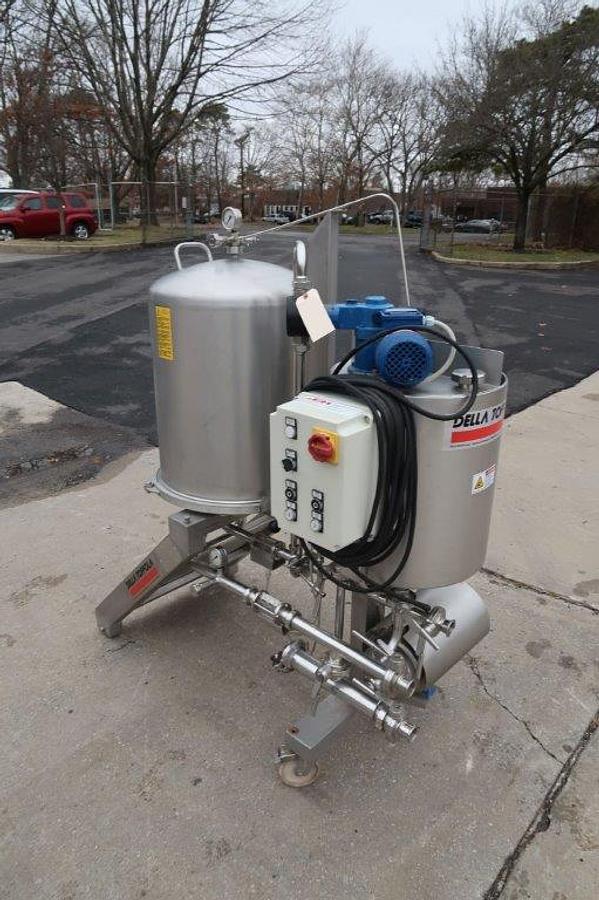
Della Toffola offers a wide range of equipment for the food and beverage industry, particularly in wine and olive oil production. They are known for their pressing and filtration machines that enhance product quality. Their solutions are designed to meet the specific needs of producers in these sectors.
FAQ:
What types of Della Toffola equipment are commonly available on the used market?
Della Toffola produces a broad range of machinery for the wine, beverage, and food processing industries, and most of these product categories turn up regularly on the used equipment market. Common finds include tangential filtration systems, pressure leaf filters (such as the FSB4 DE filter), membrane filters, wine presses, flotation systems, refrigeration units, and bottling lines. The brand's presence across so many stages of production, from juice clarification through to final packaging, means buyers can often source multiple pieces of complementary equipment from the same manufacturer.
The filtration segment tends to be particularly well represented among used listings, since filtration units are high-volume workhorses in wineries and juice facilities and get replaced or upgraded on a fairly regular cycle. Buyers in the olive oil sector also look specifically for Della Toffola pressing and separation equipment, which is engineered for the particular challenges of that product. Because the brand has been manufacturing for decades and has a strong installed base across Europe, North America, and beyond, used units from various production eras are available, giving buyers flexibility on both specification and budget.
Is used Della Toffola equipment reliable enough for commercial production?
Della Toffola has a well-established reputation for building durable, long-lasting machinery, and that reputation is a primary reason buyers actively seek out used units rather than simply purchasing a lesser-known brand. Machines from this manufacturer are routinely reported to remain in productive commercial service for 15 to 25 years with proper maintenance, which is a meaningful indicator of build quality. That said, reliability of any specific used machine depends heavily on its service history, how it was operated, and whether it has been properly maintained between uses.
Buyers considering used Della Toffola equipment should treat the inspection process as the single most important step in the purchase decision. Request detailed maintenance records if available, and arrange either an in-person or video inspection to assess the machine's current condition. Pay particular attention to wear components such as seals, membranes, filter plates, and pump housings, as these are the parts most likely to need attention on older units. A thorough inspection before purchase is the most effective way to gauge whether a specific machine is ready for production or will require reconditioning work before it earns its place on a processing line.
What industries use Della Toffola equipment?
Della Toffola's machinery is primarily associated with the wine industry, where the company built much of its reputation through pressing, filtration, and clarification equipment designed specifically for grape-based production. However, the equipment's application extends well beyond wine. Breweries use Della Toffola filtration systems for beer clarification, juice producers rely on their pressing and separation technology, and olive oil processors use specialized equipment designed for the unique characteristics of oil extraction and clarification. The brand is essentially a broad solution provider for liquid food and beverage processing rather than a single-niche manufacturer.
This cross-industry applicability is worth noting for buyers who may be entering a new segment or expanding production. A filtration unit that served a winery for years may be equally appropriate for a cider producer or a specialty juice operation, provided the specifications align. When evaluating used equipment, buyers should confirm that the specific model and configuration match the viscosity, flow rates, and processing requirements of their product, since Della Toffola produces variants optimized for different applications within these broad industry categories.
What should buyers inspect when evaluating a used Della Toffola filtration system?
Filtration equipment takes a lot of wear over its working life, so a careful inspection is essential before committing to a purchase. On a pressure leaf or DE filter like the Della Toffola FSB4, key areas to examine include the condition of the filter leaves or plates, the integrity of the vessel shell and any internal coatings, the state of seals and gaskets, and the functionality of the pump and associated valves. Corrosion, pitting, or scaling inside the vessel can affect both performance and food safety compliance, so these areas deserve close attention. Ask whether the unit is still installed and operational, or has been decommissioned, as this affects how thoroughly its current condition can be assessed.
Reputable used equipment dealers will typically accommodate in-person inspections or arrange video walkthroughs of the machine. Some units may still be in active production at a facility, which can allow a buyer to observe the equipment running, though most dealers do not have the permitting or infrastructure to run actual product tests themselves. If an in-person visit is not possible, detailed video documentation of all major components, including close-ups of wear surfaces and any visible damage, is a reasonable alternative. Buyers should also consult with Della Toffola's manufacturer support channels to understand what parts and service resources are available for the specific model and production year they are considering.
Are spare parts available for older Della Toffola machines?
Parts availability is one of the most practical considerations when buying used processing equipment, and it varies depending on the age and model of the machine in question. For relatively recent Della Toffola units, the manufacturer and its authorized service network are often able to supply replacement parts, though buyers should contact the manufacturer directly to confirm support availability for a specific model before purchasing. Older or discontinued models may have limited support from the manufacturer, which is a common reality across the used capital equipment market regardless of brand.
When manufacturer parts are not readily available, third-party suppliers often fill the gap for common wear components such as seals, gaskets, filter media, and pump parts. Many of these components are manufactured to standard dimensions and can be sourced from industrial suppliers even when branded replacements are no longer stocked. Buyers purchasing older Della Toffola equipment should budget for the possibility of sourcing some components through alternative channels, and ideally identify a qualified technician familiar with the equipment type before finalizing a purchase. Speaking with other operators who run similar equipment can also be a practical way to understand the real-world parts landscape for a given model.
Does used Della Toffola equipment come with a warranty?
Used equipment is sold on the secondary market without the manufacturer warranties that accompany purchases from the original production channel. Warranties from manufacturers are tied to the initial sale of a machine, and those protections do not transfer through subsequent resales. Used equipment dealers typically sell machinery on an as-is basis, which places the responsibility for assessing condition squarely on the buyer. This is standard practice in the used capital equipment industry and applies to Della Toffola machines just as it does to any other brand.
Because there is no warranty safety net, the inspection process becomes the buyer's primary tool for managing risk. Selecting a reputable dealer with a long track record in food and beverage processing equipment is an important first step, since established dealers have reputational incentives to represent their inventory accurately. Buyers should also consult directly with Della Toffola regarding the support they can expect for a particular model, since the manufacturer's willingness to provide technical assistance, documentation, and parts can vary by age and product line. A thorough pre-purchase inspection combined with a clear understanding of available manufacturer support gives buyers the most complete picture of what they are acquiring.
What is the typical price range for used Della Toffola equipment?
Pricing for used Della Toffola equipment varies considerably depending on the type of machine, its age, capacity, condition, and how recently it was last serviced. Smaller filtration units or individual processing components can sell for a fraction of their original cost, while larger, more complex systems such as complete bottling lines or high-capacity tangential filtration units can still represent a significant capital investment even in used condition. The brand's reputation for durability tends to support stronger resale values compared to lesser-known manufacturers, meaning buyers should not expect to find Della Toffola equipment at rock-bottom prices simply because it is used.
Buyers should also factor in costs beyond the purchase price when calculating total acquisition cost. Shipping, rigging, and any reconditioning or part replacement work can add meaningfully to the landed cost of the equipment. Larger machines may require specialized rigging for loading and unloading, which is an additional expense that varies by location and machine size. Getting a clear picture of packaging, freight, and installation requirements from the seller before agreeing to a price is the best way to avoid surprises and accurately compare options across different machines and sellers.
Can used Della Toffola equipment be shipped internationally?
International shipping of used processing equipment is common and entirely feasible, but it requires careful planning to manage costs and avoid damage in transit. Della Toffola machinery, being manufactured in Italy and sold globally, has an established history of international movement, and many used units have already crossed borders at least once. That said, the logistics of shipping industrial equipment internationally involve more complexity than domestic freight, including export documentation, customs clearance, import duties, and compliance with the destination country's equipment regulations.
Proper packaging and crating are critical for international shipments, particularly for precision components such as filter systems and pumps that can be damaged by vibration or moisture during long ocean or air freight journeys. Larger machines typically require professional rigging for loading into containers, which is an added cost that buyers should clarify with the seller upfront. Buyers should ask the dealer specifically about their experience with international shipping, what packaging standards they apply, and who is responsible for arranging freight and customs documentation. Understanding the full landed cost, including freight, insurance, duties, and any local delivery charges, before finalizing a purchase is essential for accurate budgeting.
What compliance standards does Della Toffola equipment meet, and does that change for used machines?
Della Toffola designs its equipment to meet the regulatory and food safety standards applicable in its primary markets, which include European Union food contact material regulations and CE marking requirements for machinery sold within Europe. Equipment intended for the wine and food processing industries must meet standards related to materials in contact with food products, hygienic design, and in some cases pressure vessel regulations depending on the type of machine. These certifications and compliance standards are established at the point of manufacture and are documented in the machine's technical file and documentation package.
For used equipment, buyers should request whatever original documentation is available, including CE declarations of conformity, technical manuals, and any maintenance or inspection records. The original compliance documentation does not expire simply because a machine changes hands, but buyers should be aware that regulations in their own country or region may have requirements beyond what the machine was originally certified to meet. It is worth consulting with a local regulatory authority or qualified food safety engineer if there is any uncertainty about whether a specific used machine meets current requirements in the buyer's jurisdiction. Age and any modifications made to the machine since manufacture can also be relevant factors in this assessment.
What payment terms should buyers expect when purchasing used Della Toffola equipment?
Payment practices in the used industrial equipment market are fairly consistent across reputable dealers. Most sellers require full payment before a machine is released for shipping, which is the standard approach when buyer and seller may not have an established relationship. This policy protects the seller against non-payment after a machine has been loaded and shipped, and it is a reasonable expectation for buyers to plan around. Some dealers extend payment terms to repeat customers or in cases involving larger transactions, but this is at the dealer's discretion and not something buyers should assume will be available on a first purchase.
Buyers should clarify payment expectations early in the negotiation process to avoid delays once a purchase agreement is reached. Acceptable payment methods vary by dealer but commonly include wire transfer for transactions of this size, given the dollar amounts typically involved in industrial equipment purchases. It is also worth confirming the timeline between payment and shipment, particularly if the machine needs to be prepared, palletized, or crated before it can be loaded. Understanding the full sequence from payment confirmation through to delivery helps buyers plan around their own operational schedules, which is especially relevant for seasonal businesses in the wine and food processing sectors.