Category
Manufacturer
Model
FAQ:
What types of Delfield equipment are commonly available on the used market?
Delfield produces a wide range of commercial foodservice equipment, and most product categories show up regularly on the used market. The most frequently available units include sandwich and salad prep tables, undercounter refrigerators and freezers, reach-in refrigerators, chef bases, display merchandisers, and specialty items like chill tables. Delfield's lineup covers nearly every refrigeration and cold-holding need a commercial kitchen might have, which is part of why the brand has such a strong presence among used equipment buyers.
Because Delfield has been manufacturing commercial refrigeration for decades under the Welbilt umbrella, there is a large installed base of equipment in restaurants, hotels, and institutional foodservice operations. That installed base means a steady supply of used units enters the market as kitchens upgrade or close. Buyers searching for used Delfield equipment will often find a broad selection of models and configurations, from compact undercounter units suited to tight prep stations to full-size reach-in refrigerators designed for high-volume operations.
Is used Delfield equipment a practical choice for a commercial kitchen?
Delfield has a long-standing reputation for building durable, heavy-duty refrigeration equipment designed to hold up in demanding commercial environments. That durability is exactly what makes used Delfield units attractive to buyers. A well-maintained Delfield prep table or reach-in refrigerator can have many years of productive service life remaining even after its first owner has moved on. For operators trying to control startup costs or replace a failed unit quickly, buying used Delfield equipment is a practical and widely accepted approach in the foodservice industry.
The key is doing proper due diligence before purchasing. Buyers should request detailed photos, ask about the unit's service history, and take advantage of any inspection opportunities the seller offers. Used equipment is typically sold as-is, so the condition assessment falls on the buyer. Choosing a dealer who specializes in commercial foodservice equipment and has a verifiable track record of sales in that category gives buyers the best chance of getting a unit that performs reliably from day one.
Are Delfield units NSF certified and compliant with commercial foodservice regulations?
Most Delfield refrigeration and prep equipment carries NSF certification and ETL listing, both of which are standard compliance requirements for commercial foodservice operations in the United States. NSF certification confirms that the equipment meets public health and sanitation standards, which health departments typically require during inspections. ETL listing indicates the unit has been tested to relevant safety standards. These certifications are built into the design of Delfield's commercial product lines, not added as optional features.
When buying a used Delfield unit, it is worth confirming the specific model's certification status, since compliance requirements can vary by jurisdiction and by the type of food operation. The model number and serial number on the unit can be cross-referenced with Delfield's documentation or with the relevant certification body to verify the unit's listed status. Local health departments can also clarify what certifications they require for equipment used in a licensed commercial kitchen.
What should a buyer inspect when evaluating a used Delfield refrigeration unit?
A thorough inspection of a used Delfield unit should cover several key areas. The refrigeration system is the most critical: check that the compressor runs, that the unit reaches and holds its rated temperature, and that there are no signs of refrigerant leaks such as oily residue around fittings or lines. Door gaskets should seal properly without cracks or tears, since a failed gasket forces the compressor to work harder and can cause temperature inconsistency. Interior surfaces, shelving, and drawers should be examined for damage, corrosion, or missing components.
Used equipment dealers who specialize in commercial foodservice will often accommodate in-person inspections or provide detailed video walkthroughs of the equipment. Some units may still be in active production at a facility, allowing for an inspection while the machine is running. Keep in mind that most dealers do not have the permitting required to test actual food production, but they can demonstrate that the refrigeration system is operating. Buyers should ask specific questions about the unit's age, the environment it operated in, and any repairs or parts replacements that were made during its service life.
How does Delfield equipment hold up in high-volume commercial kitchen environments?
Delfield builds its equipment to handle the demands of high-volume foodservice, including restaurants, hotel kitchens, hospital cafeterias, and institutional operations. The brand's prep tables, chef bases, and reach-in refrigerators are constructed with stainless steel interiors and exteriors, heavy-duty hinges and drawer slides, and refrigeration systems sized for continuous operation in warm kitchen environments. That construction quality is a big reason why Delfield equipment retains its reputation even after years of heavy use.
In practice, how well a used Delfield unit holds up depends significantly on how it was maintained during its previous service life. Units that received regular cleaning, proper gasket replacement, and routine coil maintenance tend to have substantially more life remaining than those that were neglected. When evaluating a used unit, the operating environment it came from matters. A unit pulled from a well-run kitchen with documented maintenance will generally be in better condition than one from an operation where maintenance was deferred.
Are replacement parts readily available for used Delfield equipment?
Parts availability for Delfield equipment is generally considered good relative to many other commercial refrigeration brands, largely because of the brand's long history and wide install base in North American foodservice. Common wear items like door gaskets, shelf clips, drawer slides, thermostats, and evaporator fan motors are frequently stocked by commercial refrigeration parts suppliers. For older or discontinued models, availability can vary, and some parts may need to be sourced from specialty suppliers or fabricated.
Buyers considering a used Delfield unit should check the model number against current parts availability before purchasing, particularly for older machines. Contacting Delfield's manufacturer support directly is a useful step: they can advise on the level of parts and service support available for a specific model and age of equipment. Age and model both affect what the manufacturer can realistically support. A technician familiar with commercial refrigeration can also assess whether the specific unit is likely to present parts sourcing challenges down the road.
What are the most popular Delfield product lines among restaurant and foodservice buyers?
Sandwich and salad prep tables are consistently among the most sought-after Delfield products in the used market. These units combine refrigerated storage below with a cold rail and cutting board surface on top, making them central to high-traffic prep stations in sandwich shops, delis, pizza operations, and full-service restaurants. Delfield's chef bases, which are low-profile refrigerated units designed to support heavy cooking equipment on top, are also in high demand, particularly from operations running griddles, charbroilers, or ranges.
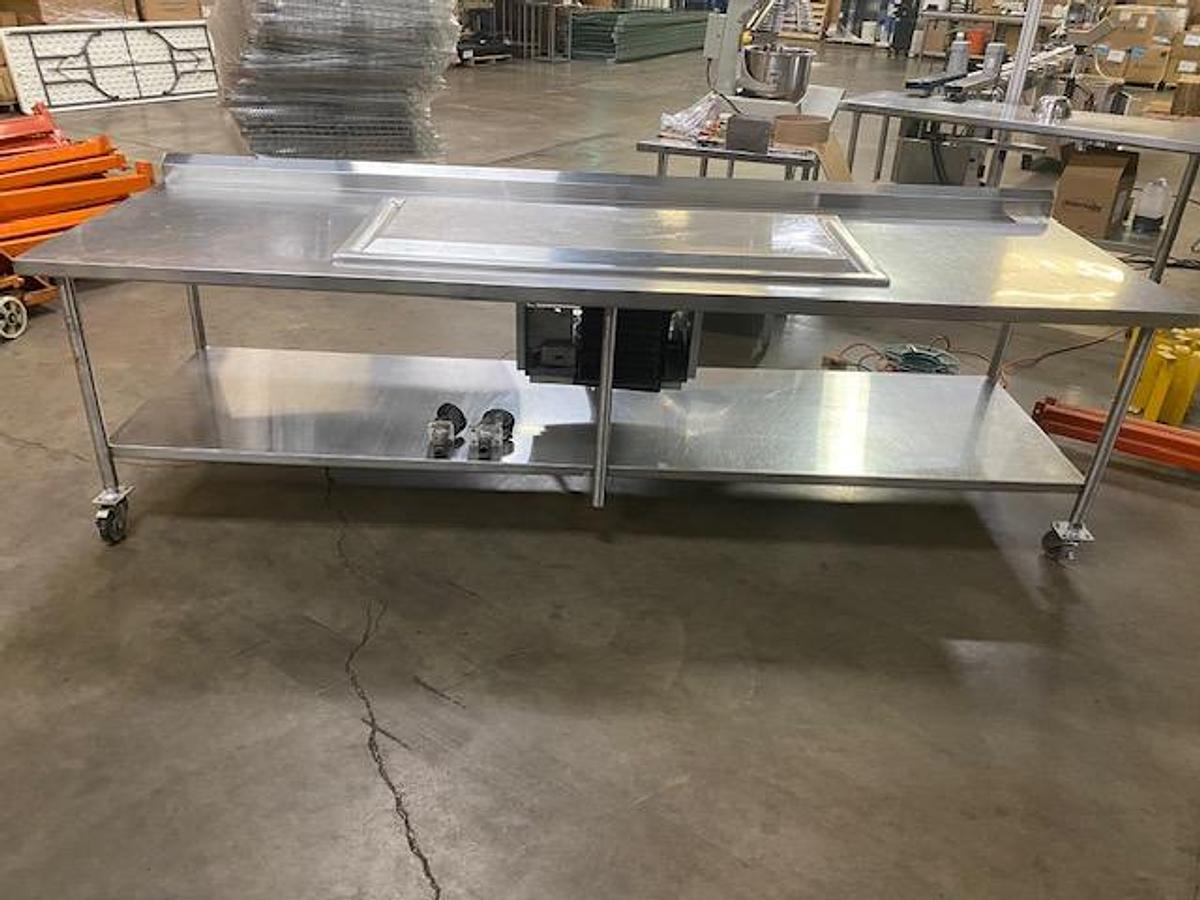
Undercounter refrigerators and freezers are another popular category, valued for their flexibility in tight kitchen layouts. Reach-in refrigerators and freezers from Delfield are standard in back-of-house storage applications across virtually every segment of foodservice. Display merchandisers, including the Lipstick Chill Table, appeal to grab-and-go operations and catering setups where product visibility matters. Each of these product lines has a strong track record in commercial use, which translates into continued demand for used units as operators look to equip or expand their kitchens cost-effectively.
What does 'sold as-is' mean when buying used Delfield equipment, and how should buyers protect themselves?
Used commercial equipment is typically sold as-is, meaning the seller makes no representations about the equipment's future performance and the buyer accepts the unit in its current condition. There is no manufacturer warranty on used equipment, and used equipment dealers generally do not offer guarantees on the machines they sell. This places the responsibility for evaluating the equipment's condition squarely on the buyer before the purchase is finalized. Understanding this dynamic is essential for anyone entering the used equipment market.
The most effective way to protect yourself as a buyer is to do thorough pre-purchase due diligence. Request as much information about the unit as possible, including photos, model and serial numbers, and any known service history. Ask the dealer about inspection options, whether in person, via video call, or through video documentation of the machine. Selecting a dealer with a long, verifiable track record in commercial foodservice equipment adds an important layer of confidence. Consulting with a refrigeration technician who can review photos or accompany you to an in-person inspection is also a sound investment before committing to a significant purchase.
How does shipping work for used Delfield commercial refrigeration equipment?
Shipping used commercial refrigeration equipment requires more planning than shipping standard freight. Delfield units, depending on the model, can range from compact undercounter pieces to large reach-in refrigerators that require careful packaging to prevent damage in transit. Dealers will typically palletize or crate equipment before shipment, and the level of packaging required affects the shipping cost. Buyers should ask specifically what packaging the dealer provides and whether custom crating is available for more vulnerable units.
Larger or heavier Delfield units may require specialized rigging for loading at the dealer's location and unloading at the destination. Rigging services are typically an added cost separate from freight charges. Buyers should ask for a complete breakdown of all costs, including packaging, rigging, and freight, to understand the full landed cost of the equipment before committing to a purchase. Most used equipment dealers require full payment prior to shipping, so having clarity on total costs upfront prevents surprises at the time of payment.
Do Energy Star-rated Delfield units offer meaningful savings in a commercial kitchen setting?
Delfield has produced Energy Star-rated models within several of its product lines, and in a commercial kitchen context the operating cost difference between an efficient and an inefficient refrigeration unit can be meaningful over time. Commercial refrigeration runs continuously, often 24 hours a day, 365 days a year. Energy Star-certified refrigeration equipment is required to meet efficiency thresholds that can translate to measurable reductions in electricity consumption compared to standard models. For operations with multiple refrigeration units, those savings compound.
When shopping for used Delfield equipment, it is worth identifying whether a specific model carried an Energy Star rating during its production run. The model number can be checked against Energy Star's historical product lists or Delfield's published specifications. Keep in mind that an older Energy Star-rated unit may have experienced some degradation in efficiency over time due to wear on components like door gaskets, condenser coils, and fan motors. A unit that is well-maintained and in good mechanical condition will perform closer to its rated efficiency than one that has been neglected, regardless of its original certification status.