Category
Manufacturer
Model
Del Packaging
Del Packaging is focused on providing comprehensive packaging solutions for various industries, including food and cosmetics. They are well-known for their automated packaging machines that ensure high-speed production and product integrity. Their equipment is designed to adapt to different packaging needs.
FAQ:
What types of packaging machines does Del Packaging manufacture?
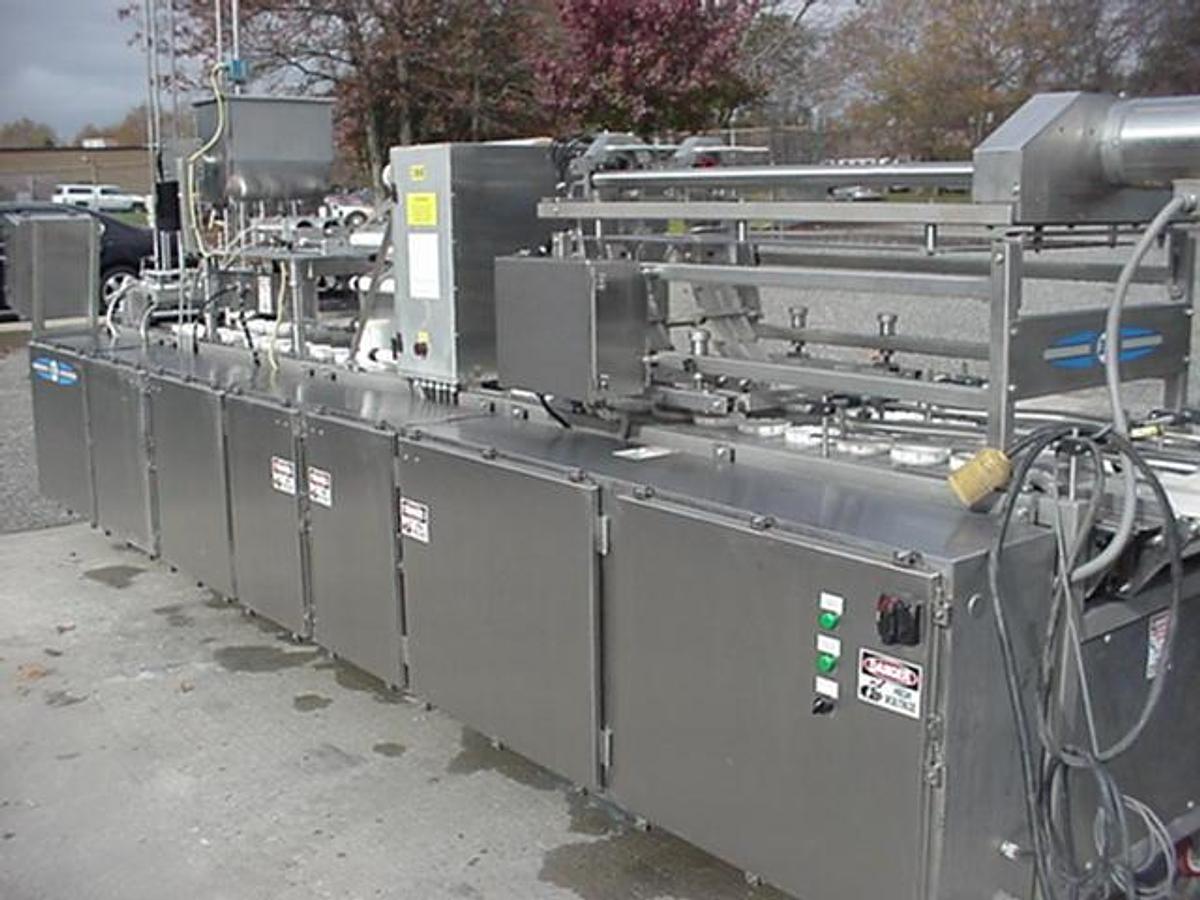
Del Packaging builds automated packaging equipment focused on high-speed production and product integrity across a range of industries. Their machines are designed to handle multiple stages of the packaging process, and one of their more recognized systems is the Dual Lane Cup Filling, Sealing, and Lidding System, which is PLC-controlled and capable of managing two lanes of product simultaneously. This kind of multi-lane configuration is common in food and cosmetics production, where throughput and consistency are priorities.
Beyond cup filling and sealing systems, Del Packaging equipment is broadly associated with food, beverage, pharmaceutical, and consumer goods applications. Their machines are engineered to adapt to different packaging formats and production requirements, which is part of why they appear regularly in the used equipment market. Buyers looking for automated solutions that can handle filling, sealing, and lidding in a single integrated system often find Del equipment worth considering.
What industries commonly use Del Packaging machines?
Del Packaging machines are used across a fairly wide range of industries, with food and cosmetics being among the most prominent. Their cup filling, sealing, and lidding systems are particularly well-suited for dairy products, prepared foods, sauces, dips, and similar portioned food items that require hermetic sealing and consistent fill weights. Cosmetics manufacturers also use this type of equipment for creams, gels, and other products packaged in small cups or tubs.
Beyond those two categories, Del Packaging equipment shows up in beverage, pharmaceutical, and general consumer goods production environments. The common thread is a need for high-speed automated packaging with reliable sealing integrity. Buyers from contract packaging operations often seek out this type of equipment as well, since the adaptability of the machines allows them to run different product types for multiple clients without retooling the entire line.
What should buyers consider when evaluating a used Del Packaging machine?
Buying used packaging equipment requires a more careful evaluation process than purchasing from a manufacturer, since the machine comes without a production history guarantee. The first thing to assess is the mechanical condition of the key components: the filling heads, sealing station, lidding mechanism, and PLC controls. These are the parts that experience the most wear in a cup filling and sealing system, and repair or replacement costs can be significant if they are not in good working order. Asking the dealer for detailed photos, video of the machine running, or an in-person inspection is the best way to get an accurate picture of current condition.
Beyond mechanical condition, buyers should think about total cost of ownership rather than just the purchase price. This includes the cost of spare parts, compatibility with existing production line equipment, the footprint of the machine relative to available floor space, and energy consumption. It is also worth contacting Del Packaging directly to understand what level of manufacturer support is available for the specific model and age of machine being considered, since older models may have limited parts availability or reduced technical support from the manufacturer.
How does a PLC-controlled cup filling and sealing system work?
A PLC-controlled cup filling and sealing system uses a programmable logic controller to automate and coordinate each stage of the packaging process. The PLC acts as the central brain of the machine, managing the timing and sequencing of cup feeding, product filling, foil or film sealing, and lid placement. Operators can typically adjust fill volumes, sealing temperatures, line speeds, and other parameters through an operator interface panel, which makes changeovers between different product types or cup sizes more straightforward than on older mechanically-driven machines.
In a dual-lane configuration like the Del system, two rows of cups move through the machine simultaneously, which significantly increases throughput without requiring a proportionally larger footprint. The sealing station applies heat and pressure to bond the lidding material to the cup rim, creating a hermetic seal that protects product integrity and extends shelf life. PLC controls also make it easier to diagnose faults, since the system can display error codes and operational data that help maintenance technicians identify issues quickly rather than troubleshooting mechanically from scratch.
What is the typical price range for used Del Packaging machines?
Pricing for used Del Packaging equipment varies considerably depending on the machine type, age, condition, and the configuration of features included. A basic semi-automatic unit from a smaller run might be priced in the lower five-figure range, while a fully automated dual-lane cup filling, sealing, and lidding system with PLC controls can reach into the mid to upper five figures or higher depending on its condition and how recently it was last in production. The used market reflects what buyers are willing to pay for a machine that is ready to run with minimal refurbishment versus one that needs significant work.
It is important to factor in costs beyond the purchase price when building a budget. Rigging, crating, freight, installation, and any required spare parts or tooling for a specific cup size can add meaningfully to the total landed cost. Buyers should request itemized quotes from dealers that break out all of these components. Getting a clear picture of what the machine will actually cost to put into production is more useful than comparing sticker prices alone.
Are used Del Packaging machines suitable for small or mid-sized production operations?
Used Del Packaging machines can be a practical option for small to mid-sized operations, particularly those that need automated packaging capability but cannot justify the cost of purchasing equipment directly from a manufacturer. Buying used allows a smaller operation to access industrial-grade equipment at a fraction of the price, which can make automated cup filling and sealing economically viable at lower production volumes than would otherwise be the case.
That said, buyers from smaller facilities should pay close attention to the machine's minimum and maximum throughput ranges, as high-speed industrial equipment is sometimes designed for continuous high-volume runs and may not perform as efficiently at lower speeds. Floor space is another practical consideration, since dual-lane systems and inline packaging equipment can have a significant footprint. Discussing the specific production requirements with the equipment dealer before purchasing helps ensure the machine is genuinely suited to the scale of the operation rather than oversized for the actual need.
What materials and cup formats are compatible with Del cup filling and sealing machines?
Del cup filling and sealing systems are generally designed to work with a range of cup materials including plastic, aluminum, and composite materials, depending on the specific model and the tooling installed. The sealing station is typically configured to work with heat-seal foil or film lidding materials, and the sealing parameters can usually be adjusted to accommodate different material thicknesses and compositions. Cup diameter and depth compatibility is determined by the tooling and change parts installed on the machine, and different tooling sets allow the machine to run different cup sizes.
Buyers should confirm with the dealer exactly what tooling comes with the machine and which cup formats it is currently set up to run. If a buyer needs to run a cup size that requires different tooling, that tooling may need to be sourced separately, either from Del Packaging or from a compatible tooling supplier. Contacting the manufacturer to verify parts availability for the specific model is a useful step, especially for older machines where tooling options may be more limited.
How should buyers inspect a used packaging machine before purchasing?
Used packaging equipment dealers typically offer buyers the opportunity to inspect machines in person, via video call, or through recorded video footage of the equipment. The goal of any inspection is to get an accurate, honest picture of the machine's current mechanical and electrical condition. For a cup filling and sealing system, a thorough inspection should cover the filling heads and volumetric accuracy, the condition of the sealing station and heating elements, the state of the PLC and operator interface, and the overall cleanliness and wear on the frame and conveyor components.
In some cases, the machine may still be installed at a production facility where it was last used, which can allow a buyer to see it running in a live environment. In other cases, the machine will be decommissioned and at the dealer's location. Keep in mind that most used equipment dealers are not set up to run actual product through a machine during inspection, since operating a food or pharmaceutical production line requires permitting and infrastructure that a typical equipment dealer does not have. The inspection is therefore focused on mechanical function and visual condition rather than a full production trial. Buyers who want additional assurance can hire an independent machinery appraiser or technician to conduct the inspection on their behalf.
What are the typical payment and shipping terms for used packaging equipment?
Most used equipment dealers require payment in full before a machine is released for shipping. Some dealers extend payment terms to established repeat customers, but first-time buyers should generally expect to pay the full purchase price upfront. Payment methods vary by dealer and transaction size, and buyers should confirm accepted payment forms early in the process to avoid delays.
Shipping costs for packaging machinery depend on the size and weight of the equipment, the origin and destination, and the level of packaging required to protect the machine in transit. Smaller machines may ship on standard pallets, while larger systems like a dual-lane cup filling and sealing line typically require custom crating and heavy-duty rigging for safe loading and unloading. Rigging charges at both the origin and destination are usually additional costs beyond the freight quote itself. Buyers should request a fully itemized landed cost estimate from the dealer that covers crating, rigging, freight, and any required permits for oversized loads, so there are no surprises when the machine arrives.
How can buyers assess the availability of parts and manufacturer support for a used Del Packaging machine?
Before committing to a used Del Packaging machine, it is worth reaching out to Del Packaging directly to ask about parts availability and technical support for the specific model and approximate age of the machine. Manufacturers vary considerably in how long they support older equipment, and some models may have parts that are no longer stocked or produced. Getting clarity on this before purchase helps buyers avoid situations where a critical component fails and cannot be sourced through the manufacturer.
For machines where manufacturer support is limited, buyers have a few options. Third-party parts suppliers and machine shops can sometimes fabricate or source replacement components for common wear items. Experienced packaging equipment technicians who have worked on similar systems can also be a valuable resource for maintenance and repair. When evaluating a used machine, it helps to identify the components most likely to need replacement over time and confirm in advance that those parts are available and reasonably priced. This kind of due diligence is a normal part of buying used industrial equipment and is one of the reasons selecting a reputable dealer with deep industry experience matters.