Category
Manufacturer
Model
FAQ:
What types of pharmaceutical equipment does Deitz manufacture?
Deitz is a well-established name in pharmaceutical solid-dose manufacturing equipment. The company is particularly recognized for tablet counters, rotary unscrambling and accumulating tables, capsule filling machines, and related packaging and handling equipment used in pharmaceutical production environments. Their equipment is designed to meet the demanding requirements of both small-scale compounding pharmacies and large commercial drug manufacturers.
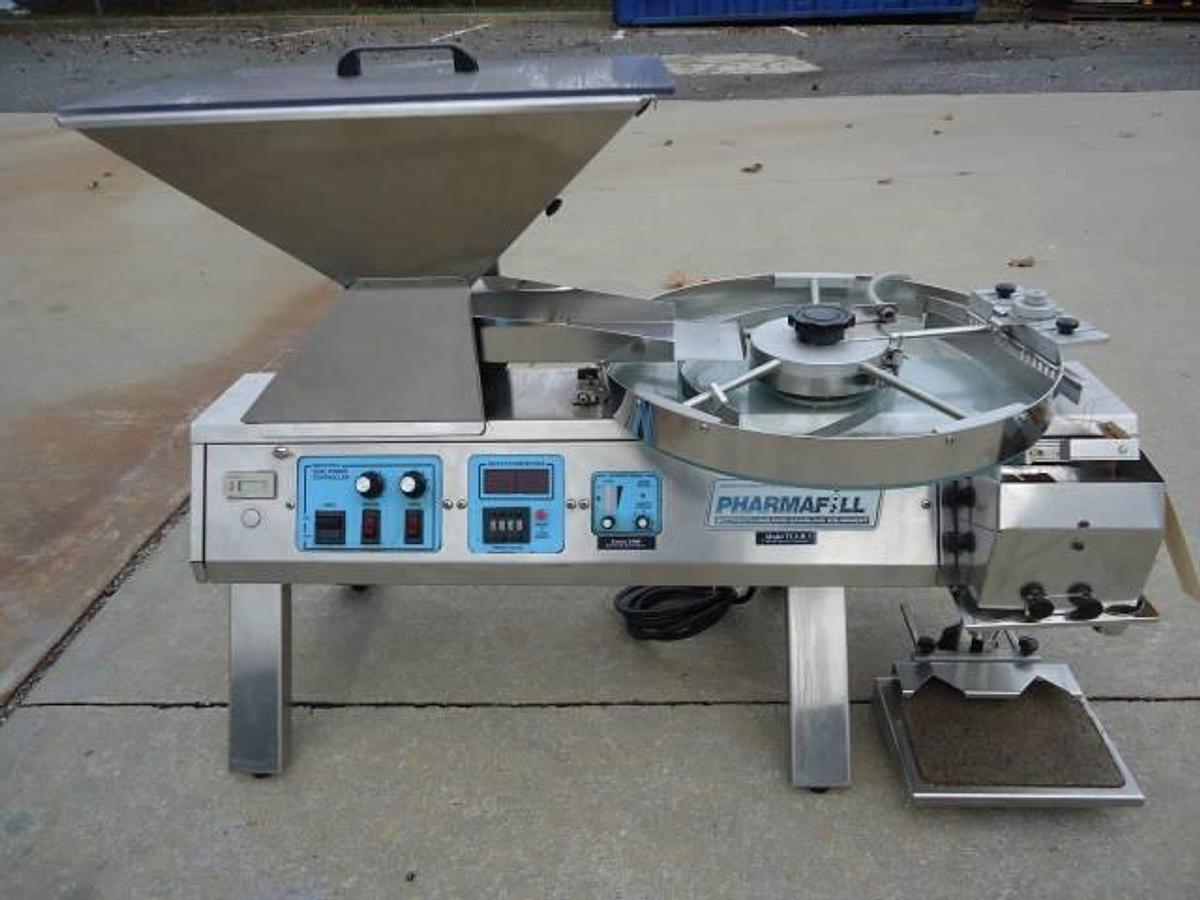
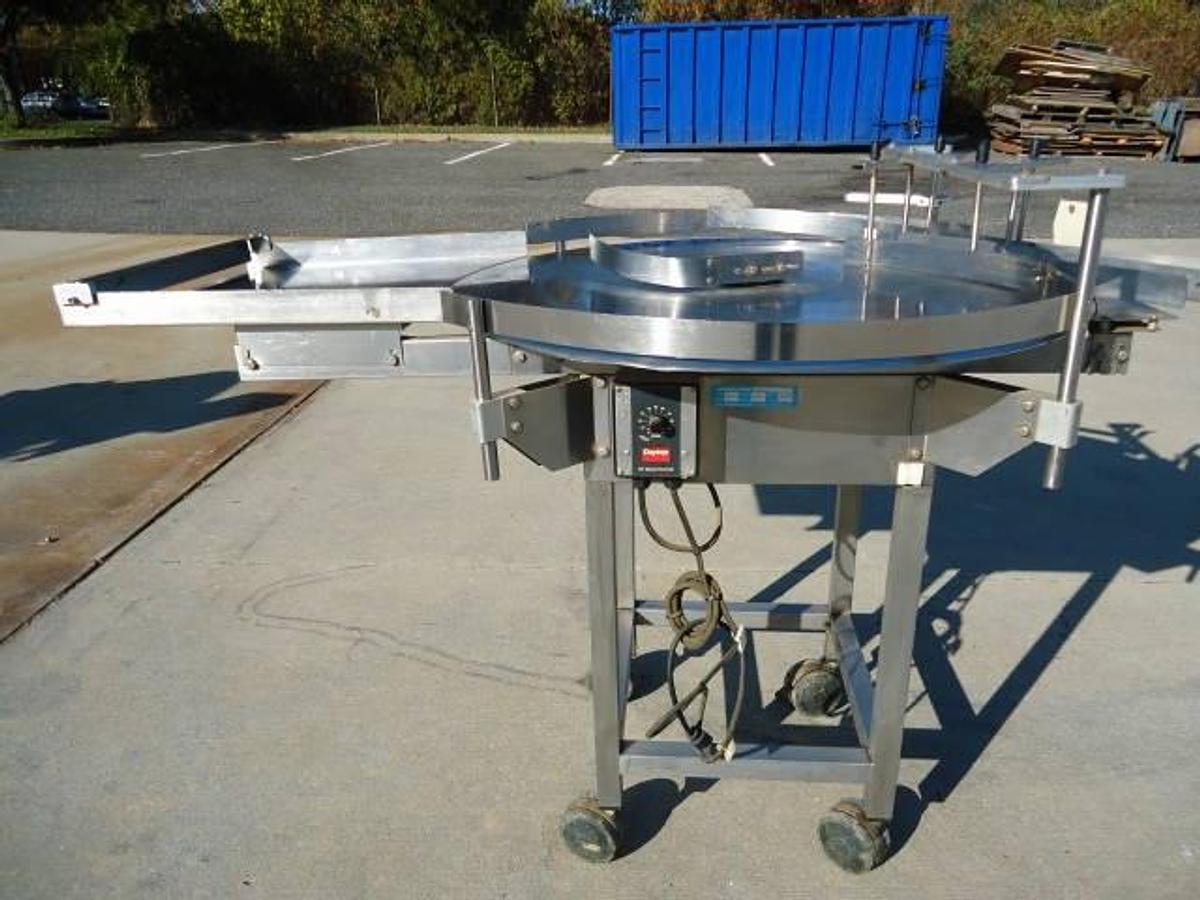
Used Deitz equipment available on the secondary market commonly includes models like the Pharmafill Electronic Tablet Counter and stainless steel rotary unscrambling tables, among others. These machines are built with pharmaceutical-grade stainless steel construction and are designed to integrate into regulated production lines. Buyers searching for used Deitz equipment will typically find a range of solid-dose handling and counting machines suited to various production capacities.
What should buyers know about purchasing used Deitz pharmaceutical equipment?
Buying used pharmaceutical equipment requires a different level of diligence than purchasing standard industrial machinery. Because Deitz equipment is used in regulated environments, buyers should request as much documentation as possible, including the machine's service history, any available calibration records, and qualification documentation such as IQ/OQ/PQ files if the seller has retained them. This paperwork can significantly reduce the time and cost of re-qualifying equipment at a new facility.
Used equipment is sold as-is, so the responsibility for verifying condition falls on the buyer. Selecting a reputable dealer with a long track record in pharmaceutical equipment is one of the most important steps a buyer can take. Buyers should also contact Deitz directly to understand what level of manufacturer support, parts availability, and technical documentation they can expect for a specific model and production year, since older machines may have more limited support options than more recent ones.
How do I inspect used Deitz pharmaceutical equipment before buying?
Reputable used equipment dealers will typically offer inspection options in person, via video call, or through detailed video recordings of the machine. The goal of any inspection is to get an accurate picture of the equipment's current mechanical condition, visible wear, and overall state. For pharmaceutical equipment specifically, buyers should pay close attention to the condition of contact parts, seals, and any surfaces that interface with product, since these directly affect compliance and cleaning validation.
Some machines may still be installed and running at a production facility at the time of sale, which can allow for an inspection while the equipment is in active use. Keep in mind that most used equipment dealers do not hold the production permits required to run pharmaceutical product through a machine for a live demonstration. If an in-person visit is not feasible, requesting a thorough video walkthrough with the machine powered on is a reasonable alternative that most dealers can accommodate.
Is used Deitz pharmaceutical equipment FDA and cGMP compliant?
Deitz equipment was designed and manufactured to meet FDA and current Good Manufacturing Practice (cGMP) standards at the time of production. Stainless steel construction, sanitary design features, and documentation compatibility are hallmarks of the brand. However, compliance in a pharmaceutical manufacturing setting is ultimately the responsibility of the facility operating the equipment, not the equipment itself in isolation. A used machine will need to be re-qualified at its new location through the appropriate IQ/OQ/PQ validation process before it can be used in a regulated production environment.
Buyers should verify that the specific model they are considering was built to the cGMP standards relevant to their operation. Requesting any existing qualification documentation from the seller is a practical first step. Consulting with a validation specialist or the manufacturer directly can help buyers understand what re-qualification will involve for a particular Deitz model, and whether any modifications or refurbishment are needed before the machine can be brought back into a compliant production line.
What is the price range for used Deitz pharmaceutical equipment?
Pricing for used Deitz pharmaceutical equipment varies considerably depending on the machine type, model, age, condition, and included accessories or documentation. Simpler pieces like tablet counters may be priced in the low thousands of dollars, while more complex systems such as rotary unscrambling tables or integrated filling and counting lines can run significantly higher. The availability of service history, calibration records, and qualification documentation can also influence price, since these materials have real value for buyers who need to validate equipment quickly.
Because pharmaceutical equipment is a specialized category, pricing on the secondary market does not always follow predictable patterns. A well-maintained machine with documentation from a reputable facility may command a premium over a similar model with no history available. Buyers are encouraged to get quotes from multiple sources and to factor in the full landed cost of the equipment, including shipping, rigging, and any refurbishment or re-qualification costs, before comparing prices across listings.
What are typical shipping and logistics considerations for used pharmaceutical equipment?
Shipping used pharmaceutical equipment requires careful planning, particularly for larger or more complex machines. Equipment should be properly palletized or crated to prevent damage in transit, and the level of packaging required will affect shipping costs. Heavier machines such as rotary tables or integrated systems may require specialized rigging for loading at the origin and unloading at the destination, which adds to the total cost. Buyers should ask dealers for a full breakdown of packaging, rigging, and freight charges so they understand the complete landed cost before committing to a purchase.
For international shipments, additional considerations include customs documentation, import duties, and compliance with the destination country's import regulations for pharmaceutical machinery. Buyers should confirm with the dealer whether the machine will be shipped fully assembled or partially disassembled, as this affects both freight costs and the complexity of reinstallation. Getting clarity on all logistics details upfront avoids unexpected expenses and delays once the purchase is finalized.
What payment terms are standard for used pharmaceutical equipment purchases?
Most used equipment dealers require payment in full before a machine is released for shipping. This is standard practice in the secondary equipment market and applies broadly across industries, including pharmaceutical machinery. Some dealers may extend credit terms or payment plans to established customers with a prior purchasing history, but buyers should not assume this option is available without asking in advance. Wire transfer is the most common payment method for transactions of this size.
Buyers should also be aware that deposits are sometimes required to hold a machine while inspection or financing arrangements are being finalized. Before sending any payment, it is worth verifying the dealer's reputation through references, industry contacts, or third-party reviews. Working with a dealer who has a long, verifiable track record in pharmaceutical equipment specifically provides an added layer of confidence that the transaction will be handled professionally.
Are replacement parts available for used Deitz pharmaceutical equipment?
Parts availability for used Deitz equipment depends largely on the age and model of the machine. For relatively recent models, the manufacturer or authorized service providers may still stock or be able to source replacement components. For older equipment, parts may need to be sourced from the secondary market, fabricated to spec, or sourced from machines being parted out. Buyers should contact Deitz directly before purchasing a used machine to get a clear picture of what parts support they can expect for the specific model they are considering.
This is an important due diligence step that is easy to overlook. A machine that is priced attractively on the secondary market may cost significantly more to maintain if key wear components are difficult to source. Asking the dealer whether any spare parts are included with the sale is also worthwhile, as sellers sometimes include extra components that were kept on hand during the machine's working life. Having a small inventory of critical spare parts on hand from the start can reduce downtime if a component needs replacement after installation.
What is a pharmaceutical tablet counter and how is it used in production?
A pharmaceutical tablet counter is a machine designed to count solid-dose products such as tablets, capsules, or softgels and dispense them into bottles or containers in precise quantities. In a production setting, tablet counters are positioned inline with filling and capping equipment to automate the counting and bottling process. Electronic tablet counters, like those produced by Deitz under the Pharmafill line, use sensors or vision systems to count individual units as they pass through the machine, achieving high accuracy at production speeds that manual counting cannot match.
These machines are used across a wide range of pharmaceutical operations, from large commercial manufacturers filling hundreds of bottles per minute to smaller compounding pharmacies handling lower volumes. The key performance metrics for a tablet counter include counting accuracy, throughput speed, and ease of changeover between different product sizes. Stainless steel construction is standard for pharmaceutical-grade counters to support sanitary cleaning and meet cGMP requirements. Used tablet counters are frequently available on the secondary market and can offer significant cost savings compared to purchasing equivalent equipment elsewhere.
What is a rotary unscrambling table and where does it fit in a pharmaceutical packaging line?
A rotary unscrambling table is a piece of material handling equipment used at the infeed end of a pharmaceutical packaging line. Its function is to take randomly oriented empty containers, such as bottles, and orient them upright and in a single-file stream so they can be fed consistently into downstream filling, counting, and capping equipment. The table uses a rotating disc and guide rails to separate and orient containers through centrifugal motion. In a high-speed packaging line, a reliable unscrambler is essential for maintaining consistent throughput and preventing jams or misfeeds.
Deitz, through its Pharmafill line, produced stainless steel rotary unscrambling and accumulating tables in various sizes, with 36-inch diameter models being a common configuration seen on the secondary market. These tables are built for pharmaceutical environments and are designed to handle a range of container sizes with appropriate changeover tooling. When evaluating a used unscrambling table, buyers should assess the condition of the rotating disc, drive components, and guide rail adjustments, and confirm that the table's capacity and container size range are compatible with their specific production requirements.