Category
Manufacturer
Model
FAQ:
What is a Day Pony Mixer and what is it used for?
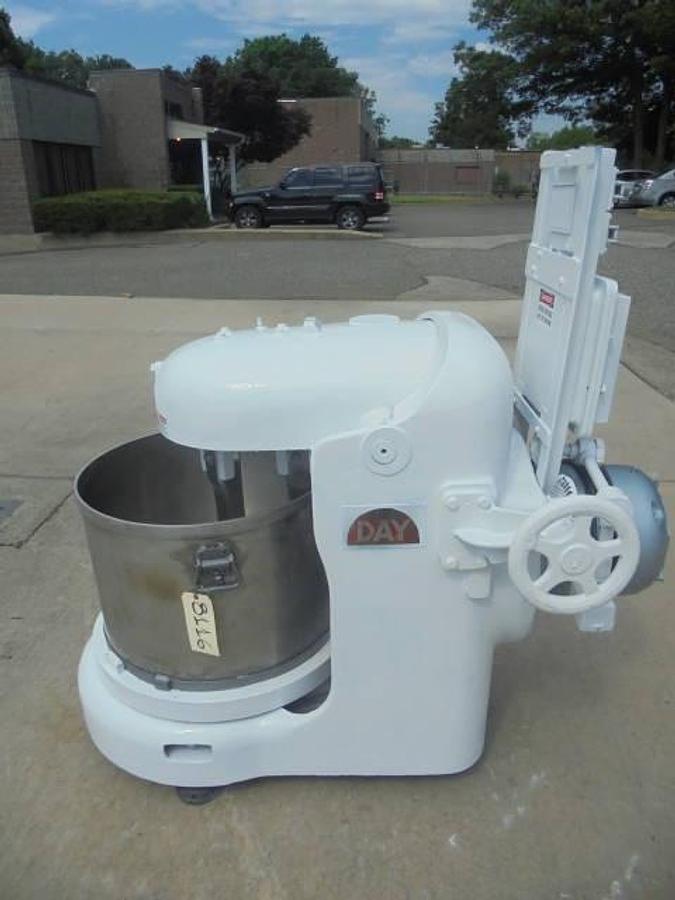
The Day "Pony" Mixer is an industrial-grade mixing machine manufactured by Day Mixing, a company with a long history of producing heavy-duty process equipment for manufacturing and production environments. Unlike consumer stand mixers, the Day Pony is built for demanding applications in industries such as food processing, pharmaceuticals, cosmetics, adhesives, and chemical compounding. The "Pony" designation refers to a specific model line within Day's mixer lineup, designed to handle viscous and semi-viscous materials that require consistent, thorough blending under sustained operational loads.
These machines are commonly used for mixing batters, pastes, creams, gels, and similar materials at a production scale. The 40-gallon capacity makes the Pony well-suited for mid-volume production runs where a full-scale industrial mixer would be oversized but a small bench-top unit would be insufficient. Operators value the Pony for its sturdy construction, reliable gear-driven transmission, and the ability to run continuously through long production cycles without overheating or mechanical fatigue.
What capacity is the Day Pony Mixer available in?
Day Pony Mixers have been produced in a range of bowl capacities over the years, with models spanning from smaller bench-top configurations up to larger floor-standing units capable of handling significant batch volumes. The specific used unit currently available is a 40-gallon model, which places it firmly in the mid-range production category. A 40-gallon working capacity is a practical size for contract manufacturers, specialty food producers, and industrial processors who need consistent batch output without committing to the footprint and cost of a full production-scale mixer.
When evaluating capacity, buyers should keep in mind that the rated gallon figure refers to the total bowl volume, and working fill levels are typically recommended at 60 to 70 percent of that total to allow adequate mixing action and prevent spillage. For a 40-gallon unit, that translates to roughly 24 to 28 gallons of actual working product per batch. Buyers sourcing used equipment should confirm the bowl condition and verify that all bowl-related hardware, including the bowl lift mechanism and any agitator attachments, are present and in serviceable condition before finalizing a purchase.
How powerful is the motor on the Day Pony Mixer?
The 40-gallon Day Pony Mixer is equipped with a 5 HP motor, which is a substantial power rating appropriate for the machine's intended use with heavy, viscous materials. A 5 HP drive provides enough torque to work through thick doughs, dense pastes, and high-viscosity compounds without stalling or straining the drivetrain. In an industrial mixing context, motor horsepower directly affects the machine's ability to maintain consistent agitator speed under load, which is critical for achieving uniform batch quality across a full production run.
Buyers evaluating motor performance on a used machine should factor in the age and service history of the unit. A 5 HP motor in good working order is a meaningful asset, but it is worth requesting an operational inspection or video demonstration prior to purchase to confirm the motor starts cleanly, runs without unusual noise or vibration, and holds speed under simulated load conditions. Reputable used equipment dealers will typically accommodate in-person or video-based inspections so buyers can assess the machine's current condition before committing to a purchase.
What should buyers look for when inspecting a used Day Pony Mixer before purchasing?
A thorough pre-purchase inspection of a used Day Pony Mixer should cover several key areas. Start with the motor and drivetrain: listen for abnormal noise during operation, check for excessive heat buildup, and confirm that the motor draws appropriate amperage. The gearbox should shift smoothly between speeds without grinding or hesitation. Inspect the agitator shaft and mixing tool for wear, bending, or corrosion, as these components take the most mechanical stress during operation. The bowl and bowl lift mechanism should operate without binding, and the bowl itself should be free of deep gouges, cracks, or significant corrosion that could compromise sanitation or structural integrity.
Beyond the mechanical components, buyers should examine the machine's overall condition for signs of deferred maintenance, such as worn seals, missing guards, or improvised repairs. Ask the dealer whether the machine was decommissioned from active production or has been sitting idle, since long periods of inactivity can affect seals, lubricants, and electrical components. Most used equipment dealers will arrange in-person visits or video walkthroughs of the machine. Keep in mind that dealers generally do not have production permits to run actual product through the machine during a demonstration, so inspections typically focus on mechanical operation rather than full production trials. Consulting the Day Mixing manufacturer directly can also help buyers understand parts availability and support expectations for a specific model and age of machine.
How much does a used Day Pony Mixer typically cost?
Pricing for used Day Pony Mixers varies based on factors including the bowl capacity, motor horsepower, overall condition, age of the unit, and included accessories. Smaller or older units in fair condition may be priced in the lower range, while well-maintained 40-gallon models with functional motors and complete agitator sets command higher prices reflecting their production-ready status. As a general reference point, used industrial planetary mixers in the 40-gallon class from established manufacturers tend to fall in a wide range depending on condition, from a few thousand dollars for units needing refurbishment up to significantly more for machines that have been recently serviced.
Buyers should approach pricing with a total landed cost mindset rather than focusing solely on the listed machine price. Shipping and rigging for a floor-standing industrial mixer can add meaningful costs, particularly if the machine requires specialized loading equipment or long-distance freight. Crating, palletization, and any required electrical modifications at the receiving facility are additional considerations. Requesting a detailed quote from the dealer that breaks out the machine price, packaging, rigging, and freight will give buyers a clear picture of the full acquisition cost before committing to the purchase.
What types of agitators or mixing tools are compatible with the Day Pony Mixer?
Day Pony Mixers are planetary mixers, meaning the agitator rotates on its own axis while simultaneously orbiting the center of the bowl, a motion that ensures thorough coverage of the entire bowl volume without dead spots. The most common agitator types used with these machines include flat beaters for general mixing and emulsifying, dough hooks for heavy bread and pastry applications, and wire whips for incorporating air into lighter mixtures such as batters and creams. The specific attachments compatible with a given unit depend on the model configuration and the agitator hub design.
When purchasing a used Day Pony Mixer, buyers should confirm which agitators are included with the machine, as mixing tools are not always sold as a set with used equipment and sourcing them separately can add cost and lead time. Aftermarket agitators are available for many Day mixer models, but fit and finish can vary, so it is worth verifying compatibility with the specific bowl and hub dimensions of the unit being purchased. If the machine is intended for food-contact applications, buyers should also confirm that any included or sourced agitators meet applicable food-grade material standards.
Is a used Day Pony Mixer suitable for food production environments?
Day Pony Mixers have a long track record of use in commercial food manufacturing, bakeries, confectionery operations, and food processing facilities. The machines are built to handle the kinds of viscous, dense, and sticky materials common in food production, and their stainless steel bowls and food-contact components make them appropriate for regulated production environments when properly maintained and sanitized. Many used units available on the market were originally installed in licensed food manufacturing facilities, which is a reasonable indicator of their suitability for similar applications.
That said, buyers sourcing a used machine for a food production environment should conduct a careful inspection to confirm the condition of all food-contact surfaces, including the bowl interior, agitator, and any seals or gaskets that may have degraded over time. Worn seals or pitted bowl surfaces can harbor bacteria and complicate sanitation. It is also advisable to check with local regulatory authorities or a food safety consultant regarding any inspection or certification requirements that may apply to used equipment being introduced into a permitted facility. The machine's age and prior use history are relevant factors in that assessment.
How does a used Day Pony Mixer compare to purchasing a new industrial mixer?
Buying a used Day Pony Mixer can offer significant cost savings compared to purchasing a comparable mixer from a current manufacturer, often at a fraction of the price of a new equivalent-capacity unit. For businesses with budget constraints, startups scaling into production, or operations that need a backup machine, the used market provides access to well-built industrial equipment that would otherwise be out of reach. Day Mixing has a strong reputation for building durable machines, and many older units remain fully functional with basic maintenance, which adds to their appeal in the used market.
The trade-offs are worth understanding clearly. Used machines are sold as-is, without manufacturer warranties, and the buyer takes on responsibility for assessing condition and any needed repairs. Parts availability can vary depending on the age and model of the unit, so it is worth contacting the manufacturer before purchasing to understand what support and replacement parts are accessible for that specific machine. Buyers who work with reputable used equipment dealers with industry-specific expertise and a verifiable track record can offset some of this risk by getting honest condition assessments, inspection access, and informed guidance on the machine's remaining service life.
What are the typical shipping and rigging requirements for a Day Pony Mixer?
A 40-gallon Day Pony Mixer is a substantial piece of floor-standing industrial equipment, and moving it requires more planning than standard freight. The machine will need to be properly secured and crated or palletized before shipment to prevent damage in transit. Depending on the dealer's packaging capabilities and the distance being shipped, crating requirements and associated costs will vary. Buyers should ask the dealer specifically how the machine will be packaged and what the estimated freight costs are to their location, as these figures can meaningfully affect the total cost of acquisition.
Loading and unloading a machine of this size typically requires a forklift or other mechanical rigging equipment. If the buyer's receiving facility does not have a loading dock or forklift access, arrangements for a lift-gate truck or third-party rigging service will need to be made in advance. Rigging charges are generally quoted separately from freight and can vary based on the complexity of the move. Buyers should request a complete breakdown of all shipping-related costs, including packaging, loading rigging, freight, and any unloading requirements, before finalizing the purchase to avoid unexpected expenses at delivery.
What payment terms should buyers expect when purchasing a used Day Pony Mixer?
Used industrial equipment purchases typically require full payment prior to the machine being released for shipment. This is standard practice across the used machinery industry and reflects the nature of the transaction, where the dealer needs to confirm cleared funds before committing to packaging, rigging, and freight logistics. Buyers who are new to a particular dealer should expect to pay in full upfront, which makes the pre-purchase inspection process all the more important since the buyer assumes responsibility for the machine's condition once payment is made and the unit ships.
Some dealers may offer payment terms or financing arrangements to established repeat customers, but this is not a standard offering for first-time buyers. Buyers who need financing for equipment acquisitions may want to explore third-party equipment financing companies that specialize in used industrial machinery, as these lenders are familiar with the asset class and can sometimes move quickly on smaller transactions. Regardless of payment method, buyers should ensure they receive clear documentation of the sale, including a detailed description of the machine, its condition as represented, and any agreed-upon terms related to inspection access or shipping logistics.