Category
Manufacturer
Model
DYE
FAQ:
What sizes are DYE sanitary tanks available in?
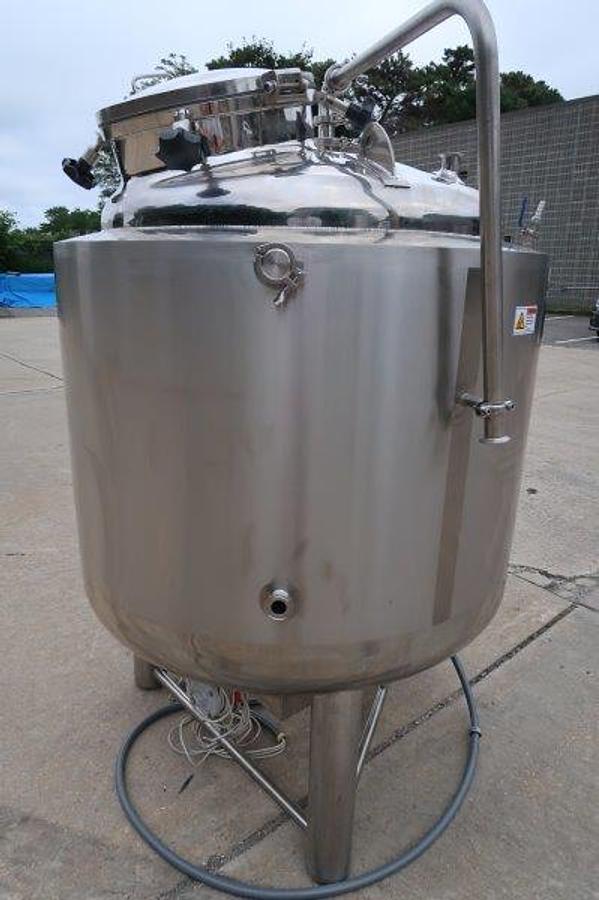
DYE manufactures sanitary tanks across a range of capacities to suit different production scales. Used DYE tanks on the market commonly include vessels such as the 500-liter closed jacketed sanitary tank, which is a popular size for small to mid-scale production in food, beverage, dairy, and pharmaceutical applications. Larger and smaller capacities do appear in the used equipment market depending on what facilities have decommissioned or upgraded away from.
When shopping for a used DYE sanitary tank, it pays to have a clear picture of your batch size requirements before you start. Tank capacity directly affects throughput, and buying too small forces frequent batch cycling while buying oversized can create sanitation challenges if the vessel is never filled to an appropriate working level. Reputable used equipment dealers typically list the exact capacity in liters or gallons alongside the key dimensional specs, so you can cross-check the footprint against your available floor space before committing.
What materials are DYE sanitary tanks made from?
DYE sanitary tanks are constructed from stainless steel, which is the standard material across the sanitary process equipment industry. The two most common grades are 304 stainless steel and 316L stainless steel. Grade 304 is widely used for general food, beverage, and dairy applications where corrosion resistance requirements are moderate. Grade 316L contains added molybdenum, which significantly improves resistance to chlorides and other aggressive cleaning agents, making it the preferred choice for pharmaceutical, high-purity biotech, and applications involving acidic or salty product streams.
Beyond the base material, the interior surface finish is equally important in sanitary tank selection. Surface finish is measured in Ra values (roughness average), expressed in microinches or micrometers. Smoother finishes, meaning lower Ra values, reduce the surface area where bacteria or product residue can harbor, which is why pharmaceutical and high-purity applications typically specify a more refined mechanical or electropolished interior. When evaluating a used DYE tank, asking the dealer about the interior finish specification and reviewing any available documentation on the original build spec is a worthwhile step.
What is the pressure rating for DYE sanitary tanks?
Pressure ratings on DYE sanitary tanks vary by model and configuration. The 500-liter closed jacketed DYE tank, for example, carries a 30 PSI rating, which is a common working pressure specification for jacketed sanitary vessels used in temperature-controlled processing. The jacket allows a heating or cooling medium to circulate around the tank wall, and the pressure rating governs how much pressure that jacket can safely handle during operation.
For buyers evaluating used jacketed tanks, the pressure rating is one of the most critical specs to confirm. It determines compatibility with your existing utility systems, whether steam, hot water, or glycol chilled water. On a used machine, it is also worth asking the dealer whether the tank has any documentation from prior pressure testing or inspection, since jackets can develop leaks or corrosion over time depending on how the vessel was maintained. A thorough visual inspection or pressure test before purchase is a reasonable precaution, and most reputable dealers will accommodate inspection requests either in person or via video walkthrough.
What industries are DYE sanitary tanks used in?
DYE sanitary tanks are designed for industries where product purity, cleanability, and contamination prevention are non-negotiable. The primary sectors that rely on this type of equipment include food and beverage processing, dairy production, craft and commercial brewing, pharmaceutical manufacturing, nutraceutical production, and cosmetics or personal care product manufacturing. In each of these industries, the tank comes into direct contact with the product, so the hygienic design of the vessel, its fittings, and its surface finish are all tightly regulated or at minimum industry-standard expectations.
Brewing operations use sanitary tanks for fermentation, bright beer, and brite tank applications. Dairy processors use them for milk, cream, and cultured product holding. Pharmaceutical and biotech facilities rely on them for buffer preparation, media storage, and intermediate product holding. Because the same basic vessel design serves so many industries, used DYE tanks tend to hold their value reasonably well and find buyers across a wide range of sectors when they come onto the secondary market.
Are DYE sanitary tanks compatible with CIP (Clean-In-Place) systems?
CIP, or Clean-In-Place, compatibility is one of the most valued features in sanitary tank design, and DYE tanks are built with this in mind. A CIP-compatible tank allows cleaning solutions, rinse water, and sanitizing agents to be circulated through the vessel without requiring disassembly. This dramatically reduces cleaning labor, minimizes contamination risk from manual handling, and supports consistent, validated cleaning cycles that are often required in regulated industries like pharmaceuticals and dairy.
Key design elements that support CIP compatibility include spray balls or rotating spray heads mounted inside the tank, smooth interior welds that eliminate crevices where residue can accumulate, sloped bottoms to ensure complete drainage, and sanitary fittings that do not create dead legs in the flow path. When purchasing a used DYE sanitary tank, it is worth confirming whether the original spray ball or CIP inlet fittings are still present, and whether the interior welds and surface finish are in acceptable condition. A visual or video inspection of the tank interior is the most direct way to assess this before purchase.
What are tri-clamp fittings and why do they matter on a sanitary tank?
Tri-clamp fittings, also called tri-clover or sanitary clamp fittings, are the industry-standard connection method on sanitary process equipment. They consist of two ferrule ends, a gasket, and a clamp that draws the assembly together to form a leak-free, hygienic seal. The design allows for fast disassembly without tools for cleaning, inspection, or reconfiguration, which is essential in industries where downtime and contamination risk must be minimized. Nearly all sanitary tanks, including those made by DYE, use tri-clamp ports for inlets, outlets, sample valves, CIP connections, and instrumentation ports.
For buyers of used sanitary tanks, tri-clamp compatibility matters because it determines how easily the tank will integrate with your existing piping, valves, and instrumentation. Standard tri-clamp sizes follow the IDF or ISO sanitary standard, so a tank with 1.5-inch or 2-inch tri-clamp ports will connect directly to standard sanitary fittings available from any process equipment supplier. Before purchasing a used DYE tank, confirming the port sizes and verifying that the ferrule ends are undamaged and free of pitting or corrosion is a practical part of the inspection process.
What does 'closed jacketed' mean on a DYE sanitary tank?
A closed jacketed tank has two walls, an inner vessel that holds the product and an outer jacket that surrounds part or all of the inner vessel. A heating or cooling medium, typically steam, hot water, or glycol, circulates through the space between the two walls. This allows precise temperature control of the product inside the tank without any direct contact between the utility fluid and the product itself. The term 'closed' refers to the fact that the jacket is a sealed, pressurized system rather than an open channel.
This design is used extensively in brewing, dairy, pharmaceutical, and food processing applications where maintaining a specific product temperature is critical to quality or safety. For example, a fermentation tank might use glycol circulation through the jacket to hold a precise fermentation temperature, while a processing tank might use steam to heat a sauce or syrup to a required pasteurization temperature. When buying a used closed jacketed DYE tank, the condition of the jacket itself, including welds, inlet and outlet fittings, and the absence of leaks, is just as important as the condition of the inner vessel.
What should buyers inspect when purchasing a used DYE sanitary tank?
Buying used sanitary process equipment requires a more deliberate inspection process than buying standard industrial tanks, because surface condition and hygienic integrity directly affect the tank's fitness for use. The interior of the vessel should be inspected for pitting, corrosion, discoloration, or damaged welds. Any surface defect that creates a crevice or rough area can harbor bacteria and may be difficult or impossible to clean adequately. The condition of the interior surface finish relative to the application requirements is a key consideration, especially for pharmaceutical or high-purity use.
Beyond the interior, buyers should examine the jacket for any signs of leaks, corrosion, or prior repairs, check that all tri-clamp ports and fittings are intact and undamaged, verify that the spray ball or CIP components are present if CIP capability is needed, and confirm that any agitator or mixer components are functional if the tank is an agitated model. Most reputable used equipment dealers will accommodate an in-person inspection or provide a detailed video walkthrough of the tank. Keep in mind that dealers typically do not have production permits that would allow them to run actual product through the equipment, so testing is limited to visual and mechanical checks. Consulting with the manufacturer about parts availability and support for the specific model is also a sensible step before finalizing a purchase.
How does shipping work for a used DYE sanitary tank?
Shipping a used sanitary tank involves more planning than standard freight because stainless steel vessels require careful packaging to prevent denting, scratching the interior surface finish, or damaging fittings and ports during transit. Smaller tanks may ship palletized with appropriate blocking and bracing, while larger vessels typically require custom crating. The level of packaging required directly affects shipping costs, so buyers should ask the dealer specifically what packaging is included in the quoted price and what additional crating charges may apply.
Larger tanks may also require specialized rigging for loading at the dealer's facility and unloading at the destination. Rigging costs, which cover the labor and equipment needed to safely move a heavy vessel, are usually separate from freight charges and should be factored into the total landed cost. Most used equipment dealers require full payment prior to shipping. Buyers should request a complete breakdown of packaging, rigging, freight, and any applicable fuel surcharges before confirming the purchase, so there are no surprises when the final invoice arrives.
What payment terms are typical when buying used sanitary tanks from an equipment dealer?
Used equipment dealers generally require full payment before a machine is released for shipping. This is standard practice across the industry and reflects the nature of the used equipment market, where transactions are typically final and equipment is sold as-is. Payment is usually accepted by wire transfer, though some dealers may accept other forms depending on the transaction size and the buyer's relationship with the dealer. Buyers who have an established purchasing history with a particular dealer may occasionally be offered terms, but this is the exception rather than the rule for first-time transactions.
Because used sanitary tanks can represent a significant capital expenditure, especially for jacketed or agitated vessels with specialized configurations, it is worth having financing arrangements in place before approaching a purchase. Some buyers use equipment financing companies that specialize in used machinery, which allows them to spread the cost over time while still meeting the dealer's requirement for full upfront payment. Clarifying payment terms, acceptable payment methods, and any applicable sales tax or documentation fees early in the conversation with the dealer avoids delays once you are ready to move forward.