Category
Manufacturer
Model
DJM Food Processing Co.
FAQ:
What types of equipment does DJM Food Processing Co manufacture?
DJM Food Processing Co produces specialized food processing machinery, with vacuum forming equipment being among their known product lines. The DJM VacForm series, for example, is designed for food packaging applications where precise forming of trays and containers is required. These machines are used in commercial food production environments where consistent, repeatable packaging output is critical to throughput and food safety compliance.
Beyond vacuum forming, food processing equipment manufacturers in this category typically produce machinery suited to protein, produce, dairy, and prepared foods production. Buyers looking at used DJM equipment should review each machine's specifications carefully to confirm it fits their specific application, since model capabilities, forming dimensions, and output speeds can vary significantly between product lines and production years.
What should I know before buying used food processing equipment?
Buying used food processing equipment is a high-consideration decision that typically involves multiple stakeholders, including operations managers, procurement teams, and food safety officers. Before committing to a purchase, buyers should gather as much information as possible about the machine's age, production history, maintenance records, and current condition. Understanding whether the equipment has been decommissioned or is still actively running in a facility can significantly affect how you evaluate its readiness for your production line.
Reputable used equipment dealers will accommodate in-person or video inspections so buyers can assess the machine's working order before purchase. Keep in mind that most dealers do not have the permitting required to run actual product through the equipment during a demonstration, so inspections focus on mechanical condition, cleanliness, and visual wear rather than live production testing. Consulting with the original manufacturer about parts availability and support for the specific model and age of equipment is also a smart step before finalizing any purchase.
What is a vacuum forming machine used for in food processing?
A vacuum forming machine in a food processing context is used to shape plastic or film materials into trays, containers, or packaging shells that hold food products for retail or distribution. The process involves heating a sheet of thermoplastic material until it becomes pliable, then drawing it down over a mold using vacuum pressure to create a precise shape. These machines are common in meat, poultry, seafood, produce, and prepared foods packaging lines where presentation, portion control, and shelf life are all important factors.
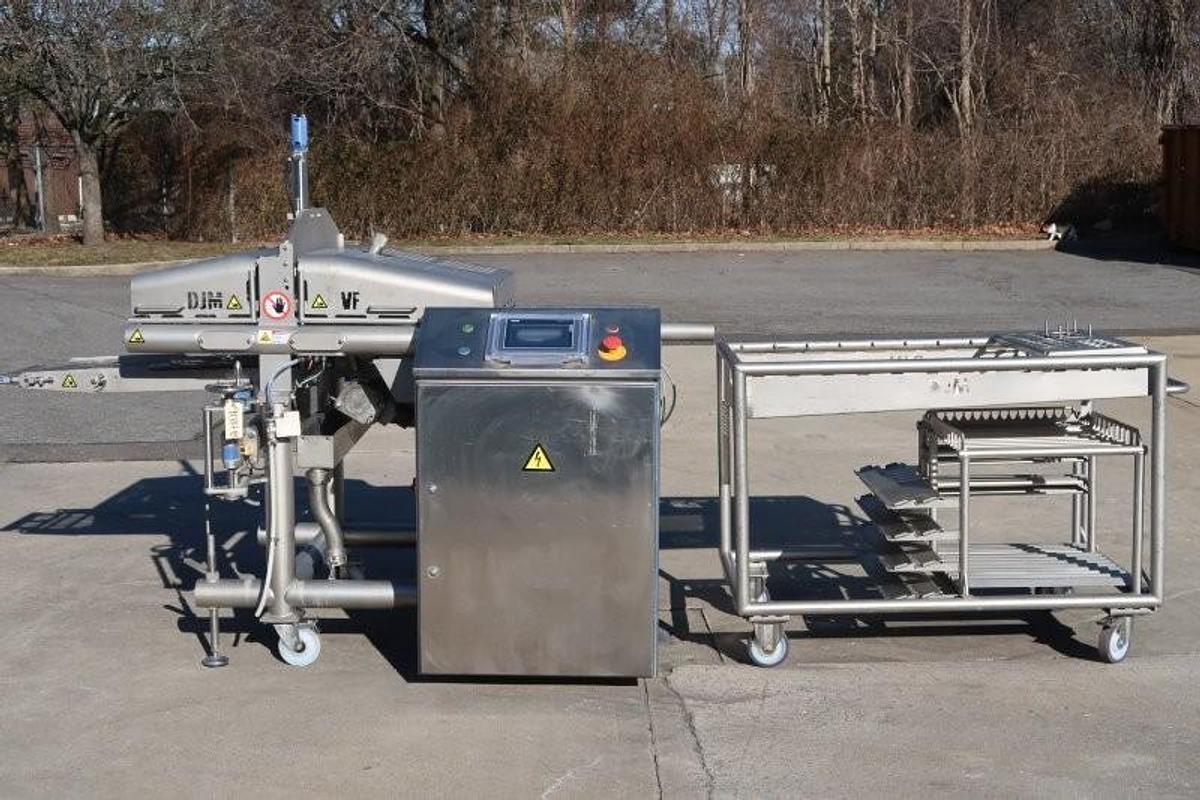
The DJM VacForm VF 04, for example, is a forming machine manufactured in 2022, making it relatively recent in terms of production year for used equipment. When evaluating a vacuum forming machine, buyers should consider the forming area dimensions, cycle speed, compatibility with different film types and gauges, and how easily the tooling or molds can be changed between product runs. Tooling availability and changeover time are often underestimated factors that directly affect line flexibility and production efficiency.
How do I inspect used food processing equipment before buying?
Inspections of used food processing equipment typically happen in one of three ways: in person at the dealer's facility, virtually through a live video call, or through detailed video recordings the dealer provides of the machine. Each approach gives buyers a chance to evaluate the equipment's physical condition, check for visible wear or damage, review major components, and ask questions in real time. For machines that are still installed at a production facility, the dealer can often arrange access to the plant so buyers can see the equipment in its operating environment.
For food processing equipment specifically, buyers should pay close attention to the condition of food-contact surfaces, seals, gaskets, and any components that are subject to regular sanitation cycles, as these tend to show wear faster than structural parts. It is also worth asking about the availability of maintenance logs or service records. Since most dealers sell equipment as-is and do not run product through machines during inspections due to permitting limitations, a thorough visual and mechanical review is the buyer's primary tool for assessing value and risk before purchase.
Are warranties available on used food processing equipment?
Warranties on used food processing equipment are generally not offered by dealers. Used equipment is typically sold as-is, which places the responsibility for evaluating condition squarely on the buyer prior to purchase. This is standard practice across the used machinery industry, and it underscores why the inspection process is so important before any transaction is finalized.
Warranties are most commonly associated with equipment purchased directly from manufacturers. For used machinery, the best protection a buyer has is choosing a dealer with a long track record of selling food processing equipment, conducting a thorough pre-purchase inspection, and consulting with the equipment manufacturer to understand what level of support, parts, and service is available for the specific model and production year. Some manufacturers continue to support older equipment lines well, while others may have limited parts availability for machines beyond a certain age.
Does the age of a used food processing machine affect parts availability?
Yes, the age and model of a used food processing machine can have a direct impact on parts availability and the level of manufacturer support a buyer can expect. Manufacturers periodically discontinue support for older equipment lines, which can make sourcing replacement parts more difficult and expensive over time. For machines that are only a few years old, parts availability is generally much less of a concern, and manufacturer technical support is more likely to be accessible.
Before purchasing any used food processing equipment, it is worth contacting the manufacturer directly to ask about parts availability, whether technical documentation is still provided, and what service support exists for that specific model. This step is especially important for complex machines like vacuum formers, fillers, or packaging systems where proprietary components may not have aftermarket alternatives. Buyers who skip this step sometimes find themselves with a functional machine that becomes difficult or costly to maintain after the first major repair.
What food safety and compliance standards should used food processing equipment meet?
Commercial food processing equipment is commonly evaluated against several regulatory and industry standards, including FDA regulations for food-contact materials, USDA requirements for meat and poultry processing environments, NSF International certification for sanitary equipment design, and CE marking for equipment sold or used in European markets. These certifications indicate that equipment has been designed and tested to meet specific hygiene, material safety, and performance benchmarks relevant to food production.
For used equipment, buyers should verify whether the machine was originally built to meet applicable standards and whether it still meets those standards given its current condition. Age, modifications, and wear can affect compliance status, so food safety officers and operations teams should assess the equipment against current facility requirements before putting it into production. It is also advisable to check with local health authorities or a food safety consultant if there is any uncertainty about whether a specific used machine meets current regulatory expectations for your production environment.
What does shipping and delivery typically involve for used food processing equipment?
Shipping used food processing equipment involves more logistical complexity than standard freight because these machines are often heavy, sensitive to vibration, and require careful handling to avoid damage in transit. Dealers typically package equipment with palletization or custom crating depending on the machine's size and fragility, and the level of packaging required will affect the total shipping cost. Buyers should ask dealers specifically about how the equipment will be prepared for transit and what that preparation costs, since this is a variable that can meaningfully change the total landed price.
Larger or heavier machines often require specialized rigging for both loading at the dealer's facility and unloading at the buyer's location. Rigging services are generally an added cost and should be factored into the budget early in the buying process. Getting a full breakdown of packaging, rigging, freight, and any destination handling fees before agreeing to a purchase helps buyers avoid surprises and accurately compare the true cost of equipment from different sources.
What are typical payment terms for purchasing used food processing equipment?
Most used equipment dealers require full payment before the machine is shipped. This is standard practice in the industry and reflects the nature of selling high-value, one-of-a-kind assets where holding inventory for a buyer who has not yet paid carries real financial risk for the dealer. Payment is typically made by wire transfer, though accepted methods can vary by dealer. Buyers should confirm payment requirements early in the process to avoid delays once a purchase decision is made.
Some dealers may offer payment terms or financing arrangements to repeat customers or buyers with an established relationship, but this is not a universal practice. Buyers who need financing for equipment purchases sometimes work with third-party equipment financing companies that specialize in commercial machinery loans or leases. Exploring financing options in parallel with the equipment search can help speed up the purchase process once the right machine is identified.
How do I evaluate whether a used food processing machine is priced fairly?
Pricing for used food processing equipment depends on several factors: the machine's age, manufacturer reputation, model capabilities, current condition, hours of use, and how readily available comparable machines are in the market at a given time. A machine manufactured in 2022, for instance, carries a different value profile than one manufactured a decade earlier, even if both are technically functional, because the newer machine is more likely to have current parts availability, modern safety features, and a longer remaining service life.
To gauge fair market value, buyers can research comparable models through used equipment listings, speak with dealers who specialize in food processing machinery, and get input from equipment technicians or consultants familiar with the category. Condition transparency matters a great deal here. Machines sold with documented maintenance history, clear photos, and inspection access tend to command higher prices, and in many cases that premium is justified by the reduced risk the buyer takes on. Buyers who skip due diligence to chase a lower price sometimes find that repair costs or downtime quickly erase any savings.