Category
Manufacturer
Model
FAQ:
What types of DC Norris equipment are available on the used market?
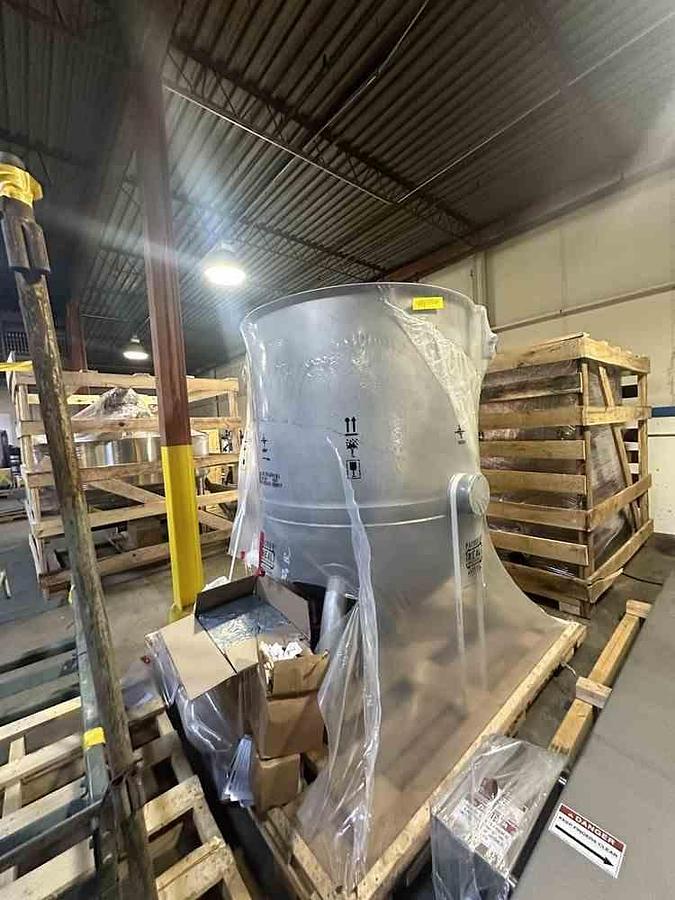
DC Norris is well known in the food processing industry for manufacturing large-capacity cooking and processing kettles, scraper kettles, and steam-jacketed vessels used in commercial and industrial food production. Their equipment is built to handle high-volume cooking, mixing, and heating applications, and is commonly found in facilities that produce soups, sauces, stews, pet food, and similar products. A typical example of what surfaces on the used market is a 528-gallon stainless steel DC Norris scraper kettle with a 100 PSI jacket, which is the kind of heavy-duty unit that food manufacturers rely on for continuous production.
On the used equipment market, DC Norris kettles and processing vessels appear periodically as food manufacturers upgrade their lines, consolidate facilities, or close operations entirely. Because this equipment is built to last and carries a strong reputation for durability, used units are actively sought after by food processors looking to expand capacity without the cost of purchasing brand-new machinery. Buyers should check with reputable used equipment dealers who specialize in food processing machinery to find current availability, as inventory changes frequently.
What should I know before buying a used DC Norris scraper kettle?
A scraper kettle is a specialized piece of food processing equipment that uses rotating scraper blades to continuously move product across a heated surface, preventing scorching and ensuring even cooking. DC Norris scraper kettles are designed for viscous or particulate-heavy products that would otherwise stick or burn in a standard steam-jacketed kettle. Key specifications to evaluate before purchasing include the vessel capacity (measured in gallons or liters), the jacket pressure rating (commonly 100 PSI for steam-heated models), the material of construction (typically 316 or 304 stainless steel for food-grade compliance), and the drive motor horsepower and scraper configuration.
Because these are used machines, buyers should pay close attention to the condition of the scraper blades, the interior vessel surface, the jacket integrity, and any agitator or drive components. Worn blades can affect product quality and may need replacement. Pitting or corrosion on the interior surface is worth examining closely, particularly if the kettle was used with acidic products. Requesting a thorough inspection, either in person or via detailed video, is strongly recommended before committing to a purchase. Consulting with a DC Norris service technician or the manufacturer directly can also help buyers understand what parts and support are available for a specific model and age of equipment.
What industries commonly use DC Norris processing equipment?
DC Norris processing kettles and cooking systems are most widely used in the food and beverage manufacturing industry. Their equipment is a staple in facilities that produce ready meals, canned goods, soups, gravies, sauces, baby food, pet food, and institutional food products. The large capacities available, often ranging from a few hundred to well over a thousand gallons, make DC Norris kettles practical for high-throughput commercial operations rather than small-batch or artisan production. Meat processing plants, co-packers, and contract manufacturers are among the most frequent users.
Beyond traditional food processing, DC Norris equipment is also used in pharmaceutical ingredient preparation, nutraceutical manufacturing, and chemical processing applications where hygienic stainless steel construction and precise temperature control are required. The steam-jacketed design and scraper agitation system make these kettles versatile enough to handle a range of viscous materials across different industries. Buyers from outside the food sector should verify that the specific unit they are considering meets the material and construction standards required for their application, particularly if regulatory compliance is a factor.
How does a steam-jacketed scraper kettle work?
A steam-jacketed scraper kettle heats product indirectly by circulating steam through a sealed jacket that surrounds the outer wall of the cooking vessel. This method transfers heat evenly across the vessel surface without direct flame contact, which reduces the risk of localized burning and gives operators better control over cooking temperatures. The jacket pressure rating, such as 100 PSI, determines the maximum steam pressure the jacket can safely handle, which in turn affects the maximum achievable cooking temperature. Higher jacket pressure ratings allow for faster heat-up times and higher processing temperatures.
The scraper mechanism consists of spring-loaded or fixed blades mounted on a central agitator shaft that rotates continuously during operation. As the blades sweep across the heated inner wall, they prevent product from sticking and ensure that every portion of the batch comes into contact with the heat source. This is especially important for thick, starchy, or protein-rich products that have a tendency to foul on heated surfaces. The combination of indirect heating and continuous scraping makes this type of kettle one of the most effective tools for cooking large volumes of viscous food products consistently and efficiently.
What does a 100 PSI jacket rating mean on a DC Norris kettle?
The jacket pressure rating on a steam-jacketed kettle refers to the maximum allowable working pressure (MAWP) of the outer jacket that surrounds the cooking vessel. A 100 PSI rating means the jacket is designed and tested to safely contain steam at pressures up to 100 pounds per square inch. In practical terms, steam at 100 PSI corresponds to a temperature of approximately 338 degrees Fahrenheit (170 degrees Celsius), which gives operators the ability to cook or process products at temperatures well above the boiling point of water. This is particularly useful for applications requiring rapid heat penetration or sterilization-level temperatures.
For buyers evaluating a used DC Norris kettle, the jacket pressure rating is an important specification because it directly affects what the equipment can do. A unit rated at 100 PSI offers more flexibility than lower-rated models and is compatible with most industrial steam systems. However, buyers should also verify that the jacket on a used machine has been maintained properly and has not been subjected to damage, corrosion, or unauthorized repairs. Pressure vessels are subject to regulatory inspection requirements in many jurisdictions, so checking the vessel's certification status and inspection history is a prudent step before putting a used kettle back into service.
How should buyers inspect a used DC Norris kettle before purchasing?
Inspecting used food processing equipment like a DC Norris kettle requires looking at both the mechanical and structural condition of the machine. On the mechanical side, buyers should assess the condition of the agitator drive, scraper blades, shaft seals, and any associated gearbox or motor. Signs of excessive wear, unusual noise during operation, or visible damage to the drive assembly can indicate maintenance costs ahead. The interior surface of the vessel should be examined for pitting, scratches, or corrosion, as surface condition affects both product quality and the ability to clean the equipment to food-grade standards.
Most reputable used equipment dealers will accommodate in-person inspections at their facility or, if the equipment is still located at the seller's plant, can arrange access for a buyer's representative. Video inspections and detailed photo documentation are also commonly offered when travel is not practical. Keep in mind that most used equipment dealers are not set up to run actual food production, so live operational testing with product is generally not possible. Buyers can, however, ask for the agitator to be run under power and for the jacket to be pressure-tested if conditions allow. Contacting DC Norris or an authorized service technician to review the unit's serial number and assess parts availability for that specific model is also a smart step before finalizing a purchase.
Are spare parts available for used DC Norris kettles and processing equipment?
Parts availability for DC Norris equipment depends largely on the age and model of the specific machine in question. DC Norris has been manufacturing food processing equipment for decades, and for many of their kettle models, wear components such as scraper blades, shaft seals, agitator bearings, and drive belts are still available either directly from the manufacturer or through third-party suppliers who specialize in food processing equipment parts. Stainless steel vessel components and jacketed assemblies are less commonly replaced as consumables, but repairs and modifications are generally possible through qualified fabricators.
Before purchasing a used DC Norris unit, it is worth contacting the manufacturer directly to ask about parts support for the specific model. Older or discontinued models may have limited availability for certain components, which can affect long-term operating costs. Some buyers also source spare parts from other used DC Norris machines being sold for parts, which can be a practical option for older equipment. A used equipment dealer who specializes in food processing machinery may also have useful insight into parts sourcing, given their familiarity with the equipment and supplier network.
What are typical shipping and rigging considerations for a large DC Norris kettle?
Large stainless steel kettles like the DC Norris 528-gallon scraper kettle are heavy, oversized pieces of industrial equipment that require careful planning to move safely. The vessel itself, along with any attached drive assembly, legs, or frame, can weigh several thousand pounds depending on the configuration. This means standard freight carriers are typically not suitable, and specialized flatbed trucking or enclosed equipment transport is usually required. The seller or dealer should be able to provide the approximate weight and dimensions of the unit to help buyers obtain accurate freight quotes.
Rigging is another important cost to factor in. Loading the kettle at the seller's facility and unloading it at the buyer's site both require appropriate lifting equipment, such as a forklift with adequate capacity or a crane, depending on the ceiling height and layout of the receiving facility. Buyers should ask the dealer specifically about how the equipment will be prepared for shipment, including whether it will be crated, palletized, or simply blocked and strapped to a flatbed. Getting a clear picture of the full landed cost, including rigging, packaging, freight, and unloading, before committing to a purchase helps avoid unexpected expenses after the sale.
What payment terms do used equipment dealers typically require for industrial kettles?
The standard practice among used industrial equipment dealers is to require full payment before the equipment is released for shipping or pickup. This applies to most transactions, particularly for first-time buyers. The reasoning is straightforward: once a large piece of equipment like a stainless steel processing kettle leaves the dealer's facility, reversing the transaction becomes logistically complicated and costly for both parties. Payment is typically accepted by wire transfer, though some dealers may also accept certified checks or other verified payment methods.
Buyers with an established relationship with a dealer may occasionally be offered extended terms or other arrangements, but this is not the norm for one-time or first-time purchases. Buyers should also be aware that the quoted equipment price is generally separate from shipping, rigging, and any applicable taxes or import duties, all of which need to be settled before or at the time of shipment. Clarifying the full scope of what is included in the purchase price, and what costs will be invoiced separately, is an important step in the buying process.
How does buying used DC Norris equipment compare to purchasing new processing kettles?
Used DC Norris kettles and processing vessels can offer significant cost savings compared to purchasing equivalent equipment built to current specifications. A 528-gallon stainless steel scraper kettle with a 100 PSI jacket is a substantial capital investment when priced as a current-production unit from any major manufacturer. Buying a used machine in good working condition can reduce that cost considerably, which is why food processors, co-packers, and startups frequently turn to the used equipment market when building out or expanding a production line. The trade-off is that used equipment comes without the assurances that accompany a purchase from a manufacturer, so due diligence during the inspection process carries more weight.
Another practical advantage of buying used is lead time. Fabricating a large custom kettle to order can take months, while a used unit that is already in inventory can often be shipped within weeks of completing the purchase. For operations that need to get a line running quickly, this can be a deciding factor. The main considerations that favor buying current-production equipment are access to the latest design features, full manufacturer support from day one, and the ability to specify exact configurations. For buyers whose requirements match what is available on the used market, however, a well-maintained DC Norris kettle can deliver many years of reliable service at a fraction of the cost.