Category
Manufacturer
Model
Cutler Metal Prod.
Cutler Metal Prod. is a pivotal supplier of fabricated metal products for the construction and automotive sectors. Known for precision and durability, their products are integral components in large-scale infrastructure and vehicle manufacturing projects.
FAQ:
What types of equipment and products does Cutler Metal Products manufacture?
Cutler Metal Products specializes in fabricated metal products, with a focus on precision components used in construction and automotive applications. Their product line includes industrial filtration equipment such as basket filters, fabricated from materials like 316 stainless steel for durability and corrosion resistance. The 316 stainless steel designation is particularly significant in industrial settings because it offers superior resistance to chlorides and harsh chemicals compared to standard 304-grade steel, making it well-suited for demanding filtration environments.
Beyond filtration hardware, Cutler Metal Products has historically served as a supplier of metal fabricated components that become integral parts of larger infrastructure and vehicle manufacturing projects. This positions their equipment in a niche category where precision tolerances and material quality are critical. Buyers looking for used Cutler Metal Products equipment should pay close attention to specifications like filter basket dimensions, material grade, and connection sizing, as these details directly affect compatibility with existing production systems.
What industries commonly use Cutler Metal Products equipment?
Cutler Metal Products equipment is used primarily in the construction and automotive manufacturing sectors, where fabricated metal components and filtration systems play a supporting role in larger production and infrastructure workflows. In automotive manufacturing, precision metal parts and filtration equipment are used throughout assembly lines, paint booths, coolant systems, and fluid handling processes. The durability and dimensional accuracy of fabricated metal products are especially critical in these environments, where component failure can disrupt entire production runs.
In construction-related applications, fabricated metal products from suppliers like Cutler Metal Products often appear in HVAC systems, structural assemblies, and industrial process equipment. Basket filters made from stainless steel, for example, are commonly used in fluid processing and water treatment systems found at construction sites and industrial facilities. Any operation that handles liquids or particulate-laden fluids at scale is a likely candidate for this type of equipment, which broadens the potential buyer base beyond just automotive and construction to include food processing, chemical handling, and general manufacturing.
What should I inspect when buying used Cutler Metal Products equipment?
Buying used industrial equipment requires a thorough inspection process, and Cutler Metal Products machinery is no exception. For filtration equipment like basket filters, the most important areas to examine are the filter basket mesh or screen for tears, deformation, or clogging that cannot be cleaned out, the housing body for cracks, corrosion, or weld failures, and the sealing surfaces and gaskets for wear that could cause leaks under operating pressure. On stainless steel equipment specifically, look for pitting corrosion or discoloration that may indicate exposure to chemicals outside the material's rated tolerance. Request any available maintenance records, service logs, or documentation of past repairs to get a clearer picture of how hard the equipment was run and whether it was properly maintained.
Beyond the physical condition of the unit, buyers should also verify that the equipment's specifications match their application requirements before committing to a purchase. Confirm dimensions, pressure ratings, flow capacity, and connection types against your existing system specs. If an in-person inspection is not feasible, ask the dealer for detailed photographs or a video walkthrough that covers all critical surfaces and components. Reputable used equipment dealers will typically accommodate both in-person and virtual inspection requests. Keep in mind that most dealers do not have full production setups to run live operational tests, so the inspection will focus on physical condition and completeness rather than a full performance demonstration under load.
Are replacement parts available for older Cutler Metal Products equipment?
Parts availability is one of the more important practical considerations when buying used equipment from a niche manufacturer. For Cutler Metal Products, which operates in a specialized segment of fabricated metal and filtration equipment, aftermarket parts support may be more limited than what buyers would find for larger, widely distributed industrial brands. Gaskets, seals, and filter media are often the first components to need replacement in filtration equipment, and for standard-sized basket filters, these consumables may be sourced from third-party suppliers who manufacture to common industry dimensions rather than brand-specific specs.
Before purchasing used Cutler Metal Products equipment, it is worth contacting the manufacturer directly to ask about parts availability for the specific model and age of the machine you are considering. Manufacturers can often clarify whether a given model is still supported, which parts are stocked, and whether technical documentation like exploded diagrams or parts lists is available. If the manufacturer confirms limited support for older units, factor that into your total cost of ownership calculation. In some cases, a used machine with good parts availability from a better-supported brand may represent a lower long-term cost than a cheaper unit with uncertain parts sourcing.
Does used Cutler Metal Products equipment come with a warranty?
Used industrial equipment is typically sold on an as-is basis, and Cutler Metal Products equipment purchased through used machinery dealers is generally no different. Warranties are most commonly associated with purchases made directly from equipment manufacturers for brand-new units. When equipment changes hands through the secondary market, the responsibility for assessing condition shifts to the buyer, which is why thorough pre-purchase inspection is so important.
Because there is no warranty safety net on used equipment, buyers should focus their due diligence on choosing reputable dealers with a demonstrated track record in industrial machinery, requesting as much documentation and inspection access as possible, and consulting the manufacturer about the level of support available for the specific model being considered. Age and model generation can significantly affect how much technical support and parts a manufacturer is willing to provide, so getting that information upfront helps set realistic expectations for ongoing maintenance and serviceability.
How is used industrial equipment like Cutler Metal Products machinery typically shipped?
Shipping used industrial equipment involves more complexity than standard freight because of the weight, dimensions, and fragility of metal fabricated components. Smaller items like basket filters are generally palletized or crated to prevent damage in transit, and the level of packaging required will affect the shipping cost. Heavier or larger pieces of equipment may require specialized rigging for loading at the dealer's facility and unloading at the destination, which adds to the total landed cost. Buyers should ask dealers specifically about how the equipment will be packaged, what rigging services are included or available, and what the estimated freight cost is to their location before finalizing a purchase.
For international shipments or oversized loads, additional considerations like export documentation, customs duties, and specialized transport carriers come into play. Even for domestic shipments, it is worth confirming whether the dealer handles freight coordination or whether the buyer is responsible for arranging their own carrier. Getting a clear picture of all shipping-related costs upfront prevents surprises and allows for an accurate comparison of the total acquisition cost versus purchasing from a closer source. Some dealers will provide freight quotes from multiple carriers to help buyers find the best rate.
What payment terms should I expect when buying used Cutler Metal Products equipment?
Most used equipment dealers require payment in full before the equipment is released for shipping. This is standard practice across the secondary industrial machinery market and reflects the logistical and financial risks involved in holding and preparing equipment for a specific buyer. For first-time buyers working with a dealer, full prepayment is almost universally the expectation. Some dealers may extend credit terms or deferred payment arrangements to established customers with a history of repeat transactions, but this is the exception rather than the rule.
Accepted payment methods vary by dealer but commonly include wire transfer, ACH, and in some cases credit card for smaller purchases. Buyers should clarify payment expectations early in the negotiation process, particularly if financing is needed, since arranging equipment financing through a third-party lender can take time and the dealer may not hold equipment indefinitely without a deposit. Confirming payment terms, deposit requirements, and the timeline between payment and shipment are all practical steps that help avoid misunderstandings and keep the transaction moving smoothly.
How do I verify the condition of used filtration equipment before buying?
Verifying the condition of used filtration equipment starts with understanding what the equipment was used for and how intensively it was operated. Filtration systems that handled aggressive chemicals, high-temperature fluids, or abrasive particulates will show more wear than units used in lighter-duty applications. Requesting maintenance records, service history, and any documentation of repairs or part replacements gives buyers a factual baseline for assessing how much operational life remains in the equipment. For stainless steel basket filters specifically, surface condition is a key indicator: heavy pitting, discoloration, or weld repairs can signal exposure to conditions that exceeded the material's design limits.
Inspections can be conducted in person, virtually through a live video call with the dealer, or through detailed photo and video documentation provided by the seller. Reputable dealers will typically accommodate all three formats. Keep in mind that dealers generally cannot run full production tests on equipment, as operating industrial machinery at scale requires permitting and infrastructure that most equipment resellers do not maintain. The inspection will therefore focus on physical condition, completeness of components, and dimensional verification rather than a live performance test. If the equipment is still installed at an active production facility, some dealers can arrange access for an in-person inspection at the site before the machine is decommissioned and removed.
What is a GAF basket filter and what is it used for?
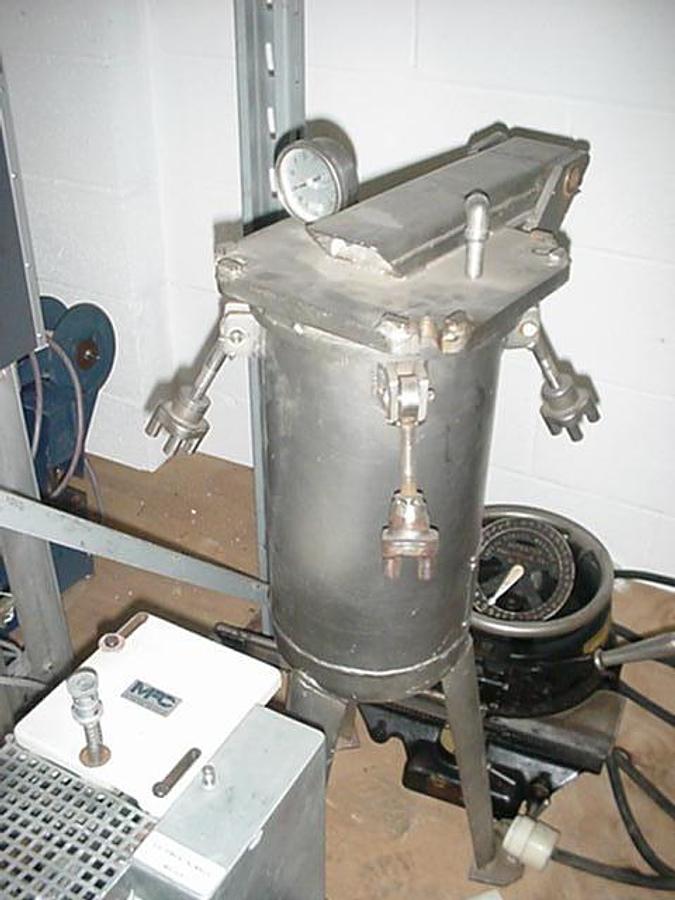
A basket filter is a type of industrial strainer used to remove solid particulates from liquid streams in piping systems. The filter element is shaped like a basket, typically made from perforated metal or wire mesh, and sits inside a housing through which liquid flows. As fluid passes through, the basket captures debris, scale, and other solid contaminants, protecting downstream equipment like pumps, valves, heat exchangers, and instrumentation from damage or clogging. Basket filters are widely used in water treatment, chemical processing, food and beverage production, HVAC systems, and industrial fluid handling applications.
The GAF designation on a Cutler Metal Products basket filter refers to the specific model or product line configuration, with the 9-inch by 12-inch dimensions indicating the basket size and the 316 stainless steel construction indicating the material grade. The 316 stainless steel alloy contains molybdenum, which significantly improves its resistance to pitting and corrosion in chloride-rich or acidic environments compared to standard 304 stainless. This makes 316 stainless basket filters appropriate for more demanding chemical or marine-adjacent applications where a lesser material grade would degrade prematurely. When evaluating a used basket filter, the mesh or screen condition is the most critical element to inspect, as damaged or deformed screening media compromises filtration performance.
What due diligence should buyers perform before purchasing equipment from a niche industrial manufacturer?
Purchasing equipment from a niche industrial manufacturer requires a higher level of due diligence than buying from a widely distributed brand, primarily because information, parts, and technical support may be harder to come by. Start by researching the manufacturer's history, product line, and current operational status. Confirm whether the company is still active and manufacturing, or whether it has been acquired, restructured, or discontinued. This matters because an active manufacturer is far more likely to provide technical documentation, parts, and service guidance than one that has ceased operations. Contact the manufacturer directly with the model number and approximate age of the equipment you are considering to get a candid assessment of the support level you can expect.
Beyond manufacturer research, evaluate the dealer selling the used equipment. A dealer with a long track record in industrial machinery and a specialization in your equipment category is better positioned to accurately represent the condition and history of the machine than a generalist reseller. Ask about the source of the equipment, how long the dealer has had it, and whether any refurbishment or repairs were performed prior to listing. Verify that the equipment's specifications are documented and match your application requirements. Finally, factor in the total cost of ownership, including estimated shipping, any refurbishment needed after purchase, parts sourcing, and the availability of technicians who can service the specific equipment type in your area.