Category
Manufacturer
Model
FAQ:
What types of used boiler equipment are typically available from industrial surplus dealers?
Industrial surplus dealers specializing in boiler equipment generally carry a broad range of products, including fire-tube boilers, water-tube boilers, steam boilers, hot water boilers, heat exchangers, jacketed tanks, portable tanks, and associated controls and accessories. Stainless steel equipment is particularly common in food processing, pharmaceutical, and chemical applications, where sanitary construction is a requirement. Jacketed tanks, for example, are used to heat or cool contents through a fluid circulated in the outer jacket, making them versatile pieces of process equipment across many industries.
Beyond complete boiler units, buyers often find auxiliary components such as boiler feed pumps, deaerators, blowdown separators, and pressure vessels. The available inventory at any given time depends on what industrial facilities have decommissioned or upgraded, so selection can shift frequently. Buyers with specific requirements are well-served by contacting dealers directly to ask about current stock and upcoming acquisitions, since used equipment inventories turn over quickly.
What is a jacketed stainless steel portable tank, and what industries use them?
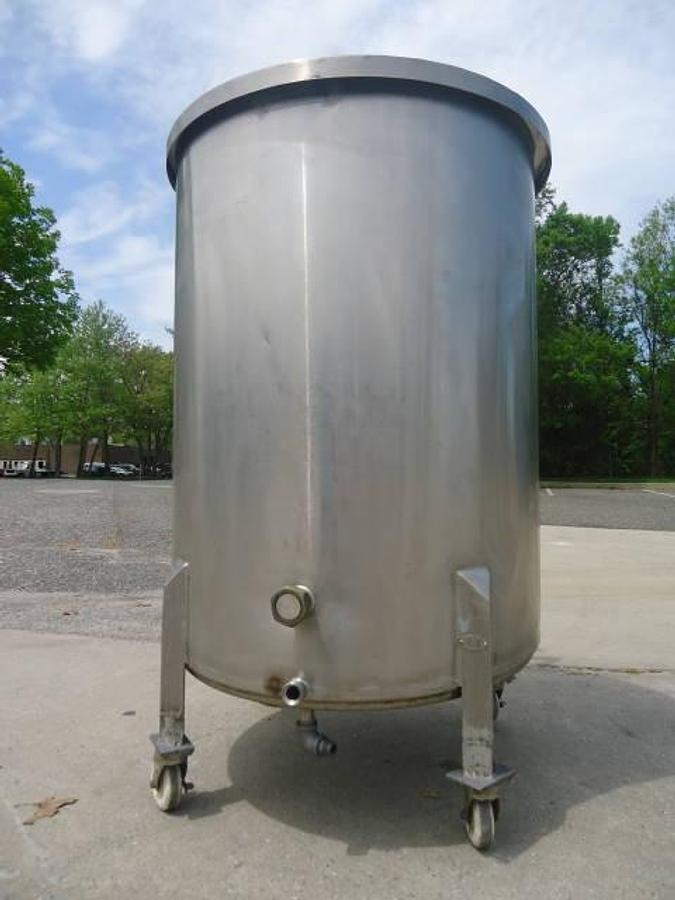
A jacketed stainless steel portable tank is a double-walled vessel where the space between the inner and outer walls (the jacket) is used to circulate steam, hot water, or chilled water to control the temperature of the contents inside. The stainless steel construction makes these tanks suitable for applications where cleanliness, corrosion resistance, and product purity are priorities. Portable designs typically include casters or forklift pockets, allowing the tank to be moved around a production floor as needed.
These tanks are widely used in food and beverage manufacturing, dairy processing, pharmaceutical production, cosmetics, and specialty chemical blending. A 125-gallon capacity, for instance, is a practical size for batch processing operations where smaller volumes of product need to be heated, cooled, mixed, or held at a specific temperature. Used jacketed tanks in good condition can represent significant cost savings compared to purchasing purpose-built equipment, provided the buyer conducts a thorough inspection of the jacket integrity, welds, and any fittings or agitators included with the unit.
How do buyers evaluate the condition of used boiler and process equipment before purchasing?
Evaluating used boiler and process equipment requires looking at several factors beyond basic visual appearance. Buyers should request detailed photographs of all major components, including the interior vessel surfaces, welds, fittings, gauges, and any signs of corrosion, scaling, or prior repairs. For pressure vessels and boilers specifically, documentation such as ASME certification stamps, National Board registration numbers, and any available pressure test records are important indicators of the equipment's history and code compliance. Hour meters, service logs, and maintenance records, when available, provide additional context about how hard the equipment was run.
Reputable dealers will typically accommodate in-person inspections or virtual walkthroughs via video call so buyers can assess condition directly. Some equipment may still be installed and operating at an industrial facility, in which case the dealer can often arrange an inspection at the plant. Keep in mind that most equipment dealers do not have the permitting or infrastructure to run full production tests, so inspections focus on physical condition, completeness, and visual evidence of prior operation rather than live performance testing. Buyers with technical concerns should consider bringing a qualified boiler technician or mechanical engineer to assist with the evaluation.
Why is ASME certification important when buying used boiler or pressure vessel equipment?
ASME (American Society of Mechanical Engineers) certification indicates that a pressure vessel or boiler was designed and fabricated to meet the standards outlined in the ASME Boiler and Pressure Vessel Code, which is the benchmark for pressure equipment safety in North America. Equipment bearing the ASME stamp has been built to specific material, design, and testing requirements, and the certification is typically accompanied by a National Board registration number that allows the vessel's history to be traced. Many states and jurisdictions require ASME-certified equipment for certain pressure applications, so confirming certification status before purchase is a practical necessity for buyers who need to pass local inspections or insurance reviews.
For used equipment, the presence of an ASME stamp does not automatically mean the vessel is currently in compliance with all local codes, since regulations vary and equipment may have been modified after fabrication. Buyers should verify that the stamp is intact and legible, check the National Board registration if possible, and consult with a local boiler inspector or authority having jurisdiction (AHJ) to confirm what is required for their specific installation. A reputable used equipment dealer should be able to provide whatever documentation exists with the unit and be transparent about any known modifications or repairs.
What should buyers expect to pay for used industrial boiler and process equipment?
Pricing for used industrial boiler and process equipment varies considerably based on the type of equipment, capacity, age, condition, and current market demand. A small used jacketed tank in the 100 to 200 gallon range might sell for a few thousand dollars in good condition, while larger fire-tube or water-tube boilers with higher horsepower ratings can range from tens of thousands to well over a hundred thousand dollars depending on size and specification. Stainless steel construction generally commands a premium over carbon steel due to material value and the range of industries that can use it.
Beyond the purchase price, buyers should factor in the full landed cost of the equipment, which includes any rigging required to move the unit, packaging or crating for shipment, freight charges, and any reconditioning or installation costs at the destination. Getting a clear picture of these additional costs upfront prevents surprises and allows for a more accurate comparison between buying used versus other procurement options. Buyers are encouraged to ask dealers for itemized quotes that break out equipment price, rigging, packaging, and shipping separately.
Does buying used boiler equipment come with any warranty or protection for the buyer?
Used industrial equipment is typically sold on an as-is basis, meaning the seller makes no representations about future performance and the buyer accepts the equipment in its current condition. Warranties are generally only offered by equipment manufacturers on products they produce, and used equipment dealers are not in a position to extend those manufacturer terms. This is standard practice across the used machinery industry and reflects the reality that equipment condition, history, and remaining service life vary widely from unit to unit.
Because there is no warranty safety net, the buyer's due diligence before purchase becomes especially important. Selecting a dealer with a long track record in the specific equipment category, requesting thorough inspection access, reviewing all available documentation, and consulting with the original manufacturer about parts availability and service support for the specific model are all steps that reduce risk. Manufacturers can often advise on whether a given model is still supported, what replacement parts are available, and what known issues to look for, which is valuable information for any buyer considering older equipment.
How does shipping and freight work for used industrial boiler and process equipment?
Shipping used industrial equipment involves more complexity than standard freight because of the size, weight, and fragility of many components. Equipment must be properly secured, palletized, or crated before shipment to prevent damage in transit, and the level of packaging required will affect the overall shipping cost. Smaller items like portable tanks may ship on standard pallets, while larger boilers or heat exchangers may require custom crating, blocking, and bracing. Buyers should ask the dealer specifically what packaging will be used and whether that cost is included in the quoted price or billed separately.
For heavy equipment, rigging is often required at both the origin and destination to safely load and unload the unit. This can involve forklifts, cranes, or specialized rigging crews, and the cost depends on the weight and configuration of the equipment as well as local labor rates. Buyers should request a full breakdown of rigging, packaging, and freight costs before committing to a purchase so they understand the true landed cost. Freight carriers experienced in industrial machinery shipments are preferable to general freight services, as they are better equipped to handle oversized or overweight loads and are more familiar with the documentation requirements for such shipments.
What are the typical payment terms when purchasing used industrial equipment from a dealer?
Most used industrial equipment dealers require payment in full before the equipment is released for shipment. This is standard practice in the industry and reflects the logistical realities of managing used inventory, where holding costs and resale risk make extended payment terms impractical for most transactions. Common payment methods include wire transfer, ACH, and in some cases certified funds. Credit card payments, if accepted, may carry a processing fee. Buyers should confirm accepted payment methods with the dealer before proceeding.
Some dealers may extend payment terms to established customers with a history of repeat purchases, but this is at the dealer's discretion and is not typically available to first-time buyers. Buyers who need financing for larger equipment purchases may want to explore equipment financing through third-party lenders who specialize in used machinery, as this can spread costs over time while still allowing the dealer to receive full payment at the time of sale. Getting clarity on payment expectations early in the purchasing process helps avoid delays once a deal is agreed upon.
Can buyers inspect used industrial equipment in person before committing to a purchase?
In-person and virtual inspections are a standard part of the used equipment buying process, and reputable dealers routinely accommodate both. An in-person visit allows a buyer or their technical representative to physically examine the equipment, check for wear, assess weld quality, verify that all listed components are present, and get a general sense of how the unit was maintained. For equipment that is still installed and operating at an industrial facility, the dealer can often coordinate an inspection at the plant, giving buyers the added benefit of seeing the equipment in its working environment.
Virtual inspections via video call or pre-recorded video walkthroughs are increasingly common and can be a practical option for buyers who are geographically distant. A thorough video inspection should cover all sides of the equipment, close-ups of nameplates and data plates, interior surfaces where accessible, and any areas of concern such as welds, fittings, or wear points. Buyers should not hesitate to ask the dealer to move the camera to specific areas or answer questions in real time during a live video call. Regardless of the inspection format, the goal is to get an accurate, honest picture of the equipment's current condition before any money changes hands.
Who typically buys used boiler and process equipment, and what are the main reasons for choosing used over other options?
The primary buyers of used industrial boiler and process equipment include facilities managers at manufacturing plants, mechanical contractors, HVAC professionals, plant engineers, and process equipment specialists across industries like food processing, pharmaceuticals, chemicals, and general manufacturing. These buyers are often working within capital budget constraints, need equipment on a faster timeline than lead times for purpose-built units allow, or are sourcing replacement equipment for a system that requires a specific configuration that is no longer readily available through standard channels.
The cost advantage is usually the most compelling reason to buy used. A well-maintained piece of used process equipment can perform comparably to a purpose-built unit at a fraction of the price, freeing up capital for other operational needs. Used equipment also avoids the extended lead times that can accompany orders for specialized industrial equipment, which in some cases run six months to a year or longer. The trade-off is that buyers take on more responsibility for verifying condition and fitness for purpose, which is why thorough inspection and working with experienced, specialized dealers matters significantly in this market.