Category
Manufacturer
Model
FAQ:
What types of packaging equipment does Combi Packaging Systems manufacture?
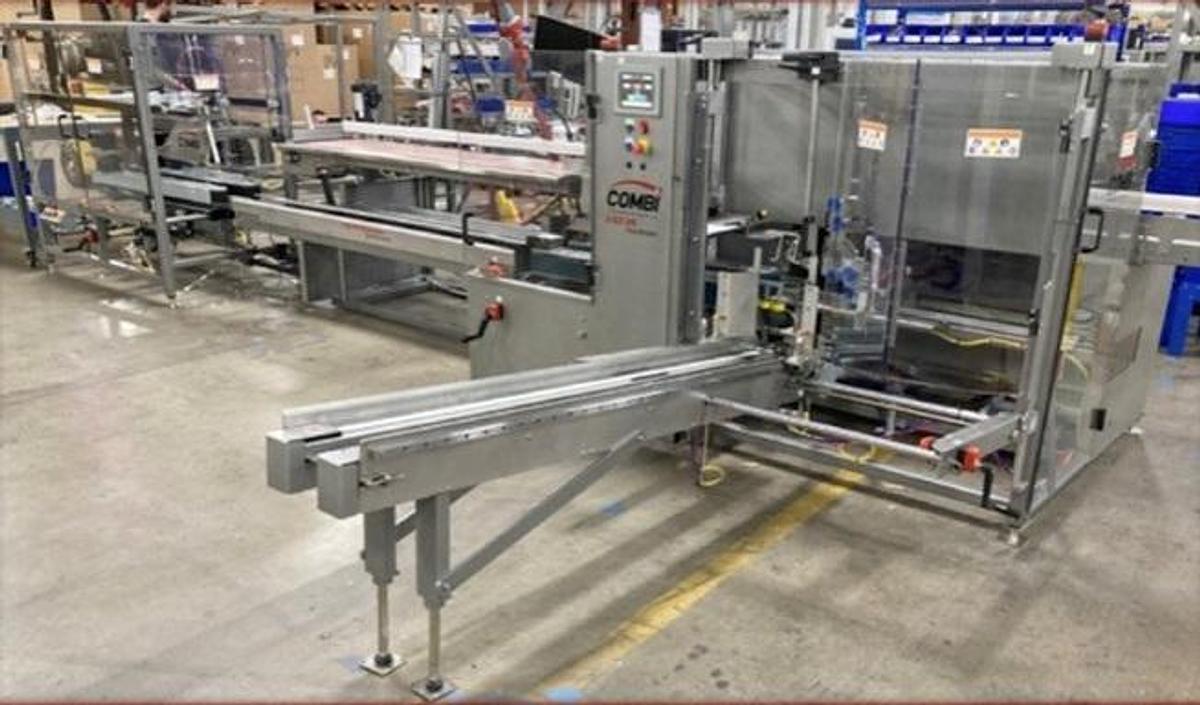
Combi Packaging Systems is a U.S.-based manufacturer headquartered in Aurora, Ohio, specializing in end-of-line packaging automation. Their product line centers on case erectors, case sealers, tray formers, and wraparound case packers. These machines are designed to handle the final stages of a production line, where products are packed into shipping cases or display trays and sealed for distribution. Both semi-automatic and fully automatic configurations are available across their lineup, which makes their equipment a practical fit for a wide range of operation sizes, from small and mid-sized facilities to high-volume manufacturing plants.
Beyond the core machine categories, Combi has built a reputation for durable, heavily constructed equipment that holds up well over years of continuous use. Many of their machines include hygienic design options, which is particularly relevant for food, beverage, and pharmaceutical applications. Because the equipment is built to last, used Combi machines that have been properly maintained often retain strong mechanical integrity, making them a frequently sought-after option on the secondary market for buyers looking to reduce capital expenditure without compromising on reliability.
What is the difference between a Combi case erector, a case sealer, and a tray former?
These three machine types each handle a distinct stage of the end-of-line packaging process. A case erector takes flat-folded corrugated blanks and forms them into open boxes, folding and sealing the bottom flaps so the case is ready to receive product. A case sealer, by contrast, handles the other end of the process, closing and sealing the top flaps of a filled box, typically using tape or hot melt adhesive. The two machines are often used in tandem on the same production line, with the erector at the infeed and the sealer at the outfeed.
A tray former serves a somewhat different purpose. Rather than producing a fully enclosed shipping case, it forms a shallow open-top tray, which is commonly used for retail display packing or as a base for shrink-wrapped multipacks. Combi manufactures all three machine types, and their configurations can be semi-automatic or fully automatic depending on the throughput requirements of the facility. When evaluating used equipment, it is worth confirming which specific model and configuration a machine represents, since case sizes, speeds, and sealing methods can vary significantly between models within the same product family.
What industries are Combi Packaging Systems machines best suited for?
Combi Packaging Systems equipment is used across a broad range of industries, though it is most heavily concentrated in food and beverage, pharmaceutical, e-commerce fulfillment, and consumer goods manufacturing. The food and beverage sector is a particularly strong fit because Combi offers hygienic design options that accommodate washdown environments and meet sanitation requirements common in those facilities. Pharmaceutical and personal care manufacturers are drawn to the precision and repeatability of Combi machines, where consistent case integrity is important for product protection and regulatory compliance.
E-commerce fulfillment operations have also become significant users of end-of-line case erecting and sealing equipment as order volumes have grown and labor costs have risen. Combi's semi-automatic configurations are well-suited to operations that need flexible, operator-assisted automation without the full capital investment of a high-speed automatic line. Consumer goods manufacturers, including those producing household products, hardware, and personal care items, rely on Combi machines for reliable throughput on mixed SKU lines. This industry diversity is one reason used Combi equipment moves consistently on the secondary market, since buyers from many different sectors are looking for it.
What should buyers expect to pay for used Combi Packaging Systems equipment?
Pricing for used Combi Packaging Systems machines varies considerably depending on the machine type, model, age, condition, and configuration. Entry-level semi-automatic case erectors or sealers in older configurations can be found at relatively modest price points, while fully automatic, high-speed systems with more recent controls and features will command significantly higher prices. As a general reference point, used case erectors and sealers from established manufacturers in the Combi category tend to range from a few thousand dollars for older or simpler units up to $50,000 or more for late-model fully automatic systems in good working condition.
Buyers should factor in more than just the listed machine price when calculating the true cost of acquisition. Shipping, rigging, and any required crating or palletization add to the landed cost, and those figures can be substantial for larger, heavier machines that require specialized loading equipment. Electrical and mechanical integration costs at the destination facility should also be budgeted. Consulting with the selling dealer about the full scope of delivery and installation costs before committing to a purchase is a practical step that helps avoid budget surprises after the sale.
Does used Combi Packaging Systems equipment come with a warranty?
Warranties on used packaging equipment are handled very differently than purchases made directly through a manufacturer. Used equipment dealers typically sell machinery on an as-is basis, meaning the buyer accepts the machine in its current condition without a manufacturer-backed warranty. This places the responsibility of due diligence squarely on the buyer, which is why selecting a reputable dealer with a long track record in industrial and packaging machinery is so important. A dealer who has been operating in the industry for many years and specializes in packaging equipment is far more likely to provide accurate condition assessments and stand behind their listings in a practical, if informal, sense.
Before purchasing, buyers should contact Combi Packaging Systems directly to understand what level of manufacturer support is available for the specific model and age of machine they are considering. Older models may have limited parts availability or reduced technical support from the factory, while more recent models are more likely to have active support channels. Asking the dealer to facilitate an inspection, whether in person or via video, and requesting any available maintenance records or service history will give the buyer the clearest possible picture of what they are acquiring. Taking these steps reduces risk significantly even in the absence of a formal warranty.
How can buyers inspect used Combi Packaging Systems equipment before purchasing?
Reputable used equipment dealers typically offer multiple inspection options to help buyers assess a machine's condition before committing to a purchase. In-person inspections are the most thorough approach, allowing a buyer or their technician to physically examine the machine, check for wear, review the electrical panel, cycle the machine through its motions, and ask questions on the spot. Some machines are still installed and running in active production facilities at the time of sale, in which case the dealer can often arrange a plant visit where the buyer observes the equipment operating under real production conditions.
For buyers who cannot travel, virtual inspections via live video call or pre-recorded video walkthroughs are a common alternative. A good video inspection should cover the major mechanical components, the control panel, any visible wear points, and ideally a powered cycle of the machine. One important limitation to keep in mind is that most equipment dealers are not permitted to run actual production through the machinery at their facilities, since that would require different operational permitting. Inspections therefore focus on mechanical condition and powered function rather than full production runs. Buyers should request as much documentation as possible, including photos, videos, and any available service records, to build a complete picture of the machine's history and current state.
How difficult is it to integrate used Combi Packaging Systems equipment into an existing production line?
Integration complexity depends on several factors, including the specific machine model, the existing line layout, the electrical infrastructure at the facility, and whether the Combi machine needs to communicate with upstream or downstream equipment. Case erectors and case sealers are generally considered standalone machines that do not require deep integration with other systems, which makes them relatively straightforward to add to an existing line. The primary considerations are conveyor height matching, case size compatibility, and ensuring the electrical supply matches the machine's requirements, which are typically 480V three-phase for fully automatic models.
Older Combi machines may use control systems or PLCs that are less familiar to current maintenance teams, which can add some complexity to troubleshooting and setup. Consulting with a packaging systems integrator or the manufacturer's technical support team before installation is advisable, particularly if the machine will need to be timed with other line equipment. Buyers should also confirm that the case sizes the machine was configured for align with their current packaging specifications, since changeover parts for different case dimensions may need to be sourced separately. Getting clarity on these points before the machine ships helps avoid delays once it arrives at the facility.
Are replacement parts and technical support available for older Combi Packaging Systems models?
Parts availability for Combi Packaging Systems equipment depends heavily on the age and model of the machine. Combi is an established U.S.-based manufacturer with a history of producing durable equipment, and for many of their models, parts support through the manufacturer remains available. That said, older or discontinued models may have reduced factory support, and some components may need to be sourced from third-party suppliers or fabricated. Before purchasing a used Combi machine, it is worth contacting the manufacturer directly to ask about parts availability and technical support for that specific model and serial number.
Many of the electrical and pneumatic components used in Combi machines, such as sensors, solenoids, drives, and PLC hardware, are sourced from major industrial suppliers like Allen-Bradley, Omron, or SMC, which means they can often be replaced independently of the Combi factory supply chain. Mechanical wear parts like belts, rollers, and folding guides are similarly available through industrial distributors in many cases. Buyers who are purchasing older equipment should budget for potential parts sourcing costs and factor in the time it may take to locate less common components. Working with a dealer who has experience with Combi equipment can also help, as they may have knowledge of common wear items or spare parts that come with the machine.
What should buyers know about shipping and delivery of used Combi Packaging Systems machines?
Shipping used packaging machinery requires careful planning to avoid transit damage, and the costs involved go beyond a simple freight quote. Combi case erectors, sealers, and tray formers vary significantly in size and weight, and proper packaging is essential. Depending on the machine, this may mean securing it to a heavy-duty pallet, building a custom crate around it, or applying protective wrapping to exposed components. The level of packaging required directly affects the shipping cost, so buyers should ask the dealer specifically what palletization or crating is included and what any additional packaging will cost.
Larger, heavier machines often require specialized rigging for loading at the origin and unloading at the destination. Forklift loading may be sufficient for smaller units, but full-sized automatic case erectors or wraparound packers may need a crane or a rigging crew, which adds cost on both ends of the shipment. Freight carriers experienced with industrial machinery should be used rather than standard LTL carriers, as machinery requires different handling. Buyers should request a complete breakdown of all shipping-related costs from the dealer before finalizing the purchase so the full landed cost of the equipment is understood before payment is made.
What are the typical payment terms for purchasing used Combi Packaging Systems equipment?
Payment practices in the used industrial equipment market follow conventions that differ from typical retail or e-commerce transactions. Most used equipment dealers require full payment before the machine is released for shipping. This is standard practice across the industry and reflects the nature of high-value, one-off transactions where the dealer needs to confirm funds before committing to packaging, rigging, and freight logistics. Wire transfer is the most common payment method for transactions of this size, though some dealers may accept other forms of payment depending on the transaction amount and the buyer's relationship with the dealer.
Some dealers extend payment terms to buyers they have an established history with, but first-time buyers should expect to pay in full upfront. Buyers who need financing for equipment purchases can explore options through third-party equipment financing companies, which specialize in providing loans or leases for used industrial machinery. If financing is being considered, it is worth arranging that before identifying a specific machine, since popular used equipment can sell quickly and having financing in place allows a buyer to move without delay. Confirming all payment terms and conditions with the dealer in writing before submitting payment is always a sound practice.