Category
Manufacturer
Model
Columbia
Columbia is a leader in the production of manufacturing equipment for the construction and materials sectors, particularly known for their advanced concrete block making machines. Their equipment is engineered to deliver high efficiency and quality in building material production. Columbia’s systems are integral to enhancing productivity in construction-related manufacturing.
FAQ:
What types of manufacturing equipment does Columbia produce?
Columbia is a well-established manufacturer with a product range that spans multiple industrial categories. They are particularly recognized for their concrete block making machines, which are engineered for high efficiency and quality output in building material production. Beyond that, Columbia has a strong presence in end-of-line packaging equipment, including palletizing systems, stretch wrappers, and conveyors that support high-volume manufacturing environments. Their boiler systems, such as gas-fired models rated for industrial pressure and electrical configurations, are also found across a variety of production facilities.
Buyers shopping for used Columbia equipment will typically encounter machines from these core categories, each designed for durability in demanding production settings. The brand's reputation for solid construction makes their equipment a common target for facilities looking to expand or replace aging machinery without the cost of purchasing brand-new systems. Understanding which product line fits your operation is the first step, and reviewing available used inventory from specialized dealers is a practical way to assess what is currently on the market.
What industries commonly use Columbia manufacturing equipment?
Columbia manufacturing equipment is most closely associated with the construction and building materials sectors, where their concrete block making machines are widely used to produce masonry units at scale. These machines are integral to operations that supply block, brick, and related materials to residential, commercial, and infrastructure construction projects. The equipment is engineered to handle continuous production runs, which makes it well-suited to manufacturers that need consistent output and minimal downtime.
Beyond construction materials, Columbia's packaging and palletizing systems are found in food and beverage, consumer goods, and general industrial manufacturing facilities. Any operation that requires organized end-of-line handling, whether stacking pallets, wrapping loads, or moving product along a conveyor, may benefit from Columbia's equipment. Their boiler systems serve an even broader range of industries, from food processing to light manufacturing, wherever steam or hot water generation is part of the production process. Used Columbia equipment tends to attract buyers across all of these sectors because the machines are built to last and often retain strong functional value well into their service life.
What should buyers know about warranties when purchasing used Columbia manufacturing equipment?
Warranties on used manufacturing equipment work very differently than they do on machines purchased directly from a manufacturer. When buying used Columbia equipment through a dealer, the machines are typically sold as-is, meaning the dealer does not extend a manufacturer-backed warranty. This places the responsibility of evaluating the machine's condition squarely on the buyer before the sale is finalized. Selecting a reputable used equipment dealer with a long track record in industrial machinery is one of the most important steps a buyer can take to reduce risk.
Buyers should also contact Columbia directly to understand what level of support the manufacturer can provide for the specific model they are considering. Older models or discontinued product lines may have limited parts availability or reduced technical support from the factory. Before committing to a purchase, request an inspection, ask detailed questions about the machine's service history, and factor in the cost of any refurbishment or parts replacement that may be needed. Doing this due diligence upfront is the most reliable way to assess the true value and condition of a used machine.
How can buyers inspect used Columbia equipment before purchasing?
Reputable used equipment dealers typically offer several inspection options to give buyers an accurate picture of a machine's current condition. In-person inspections are the most thorough approach, allowing a buyer or their technician to physically examine the equipment, check for wear, test controls, and evaluate overall mechanical condition. Some machines may still be installed and running at a production facility, in which case the dealer can often arrange an inspection at the plant where the equipment is actively in use or has recently been decommissioned.
For buyers who cannot travel, video inspections and detailed photo documentation are commonly available alternatives. A dealer can walk through the machine on a live video call, focusing on specific components the buyer wants to examine. Keep in mind that most dealers do not have the permits or infrastructure required to run full production tests, so functional testing of actual product output is generally not possible in a dealer's facility. The goal of any inspection is to get the clearest possible picture of the machine's working order, and buyers should ask pointed questions about hours of use, maintenance history, and any known repairs or replacements that have been made.
What are the typical shipping and logistics considerations for used Columbia manufacturing equipment?
Shipping industrial manufacturing equipment involves more planning than standard freight. Machines need to be carefully packaged, palletized, or crated to prevent damage in transit, and the level of packaging required directly affects the shipping cost. Smaller Columbia equipment like boilers or compact conveyors may ship on standard pallets, while larger systems such as concrete block machines or full palletizing lines require custom crating and heavy-duty rigging for safe loading and unloading at both ends of the shipment.
Buyers should request a full breakdown of shipping costs from the dealer before finalizing a purchase, including rigging fees, crating or palletization charges, freight costs, and any unloading requirements at the destination. For very large or heavy equipment, a specialized machinery mover with the right rigging equipment may be required, which adds to the landed cost. Getting a clear picture of total delivered cost, not just the purchase price, is essential for accurate budgeting and avoiding surprises after the sale is complete.
What payment terms are common when buying used manufacturing equipment?
Used equipment dealers generally require full payment before a machine is shipped. This is standard practice in the industry and reflects the nature of the transaction, since the dealer is releasing a physical asset that cannot easily be returned once it has been loaded and shipped. Buyers should be prepared to wire funds or arrange another form of cleared payment prior to the machine leaving the dealer's facility or the seller's plant.
Some dealers may offer payment terms to established customers with a history of prior purchases, but this is the exception rather than the rule for first-time buyers. If financing is a priority, buyers may want to explore third-party equipment financing or leasing options through commercial lenders that specialize in industrial machinery. These arrangements are handled separately from the dealer transaction and can allow a buyer to spread costs over time while still paying the dealer in full at the time of sale. Clarifying payment expectations early in the conversation with a dealer avoids delays and keeps the transaction moving efficiently.
Are replacement parts readily available for used Columbia manufacturing equipment?
Parts availability for used Columbia equipment depends heavily on the age of the machine and the specific product line. For models that are still supported by the manufacturer, replacement parts can often be sourced directly through Columbia or through authorized distributors. Buyers should contact Columbia's parts department with the machine's model number and serial number to get a realistic assessment of what is available and at what cost before committing to a purchase.
For older or discontinued models, parts sourcing becomes more of a challenge. In these cases, buyers often turn to third-party parts suppliers, machine shops that can fabricate components, or the used equipment market itself for donor machines. This is a critical factor in the total cost of ownership calculation. A machine with an attractive purchase price can become expensive to maintain if key components are difficult to find. Asking the dealer about known wear items on the specific machine being considered, and researching parts availability independently, gives buyers a much clearer picture of what long-term maintenance will look like.
How does buying used Columbia equipment compare to purchasing new machinery?
Used Columbia equipment offers a significantly lower entry cost compared to purchasing equivalent machinery through a manufacturer or authorized dealer. For facilities that need proven, durable equipment without the capital expenditure of a new machine, the used market provides access to industrial-grade systems at a fraction of the cost. Columbia's reputation for building long-lasting equipment means that well-maintained used machines can deliver years of reliable service, making them a practical choice for budget-conscious operations.
The tradeoffs are worth understanding clearly. Used machines come without manufacturer warranties and may require some level of refurbishment or parts replacement depending on their condition and service history. Lead times can also differ, since a used machine's availability depends on current inventory rather than a production schedule. That said, for many buyers, the combination of lower cost, immediate availability, and the ability to inspect the machine before purchase makes the used market an attractive and sensible route. Choosing a dealer that specializes in the relevant equipment category adds an important layer of confidence to the buying process.
What is a Columbia CT Gas Fired Boiler, and what are its key specifications?
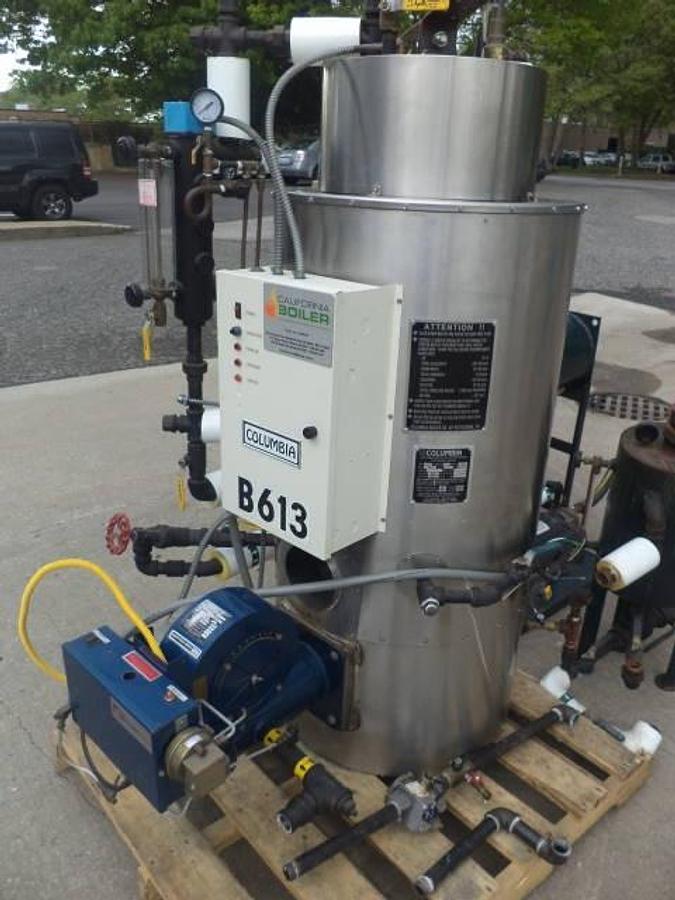
The Columbia CT Gas Fired Boiler is an industrial boiler designed for facilities that require reliable steam or hot water generation as part of their production or heating processes. The CT model operates on gas fuel and is built for continuous use in commercial and light industrial settings. Key specifications on available used units include a 6 horsepower rating, a working pressure of 150 PSI, and single-phase electrical requirements, making it compatible with a range of facility electrical configurations without the need for three-phase power infrastructure.
Boilers of this type are used across a wide variety of industries, from food processing and manufacturing to facility heating and process steam applications. When evaluating a used Columbia CT boiler, buyers should pay close attention to the condition of pressure vessels, burner components, and controls, as these are the areas most subject to wear and regulatory inspection. It is also worth confirming whether the unit has current certifications or has been inspected by a licensed boiler inspector, since pressure vessel equipment is subject to safety regulations that vary by jurisdiction. A thorough inspection before purchase is especially important for boiler equipment given the safety implications of pressure systems.
How should buyers evaluate the condition of used Columbia concrete block making machines?
Concrete block making machines operate in demanding, high-vibration environments that put significant stress on mechanical components over time. When evaluating a used Columbia block machine, buyers should focus on the condition of the mold box and tamper head assemblies, since these components directly affect block quality and are subject to the most wear. Hydraulic systems, vibration tables, and PLC controls are also key areas to examine, as repairs or replacements in these systems can be costly.
Asking for the machine's production history, including the number of cycles run and the types of products it was used to make, gives useful context for assessing remaining service life. If possible, arrange an in-person inspection with a technician who has experience with concrete products machinery, as they will know where to look for signs of fatigue, misalignment, or deferred maintenance. Dealers who specialize in construction and materials manufacturing equipment are better positioned to provide accurate condition assessments and answer technical questions about the specific model. Taking the time to do a thorough evaluation upfront is the most effective way to avoid unexpected costs after the machine arrives at your facility.