Category
Manufacturer
Model
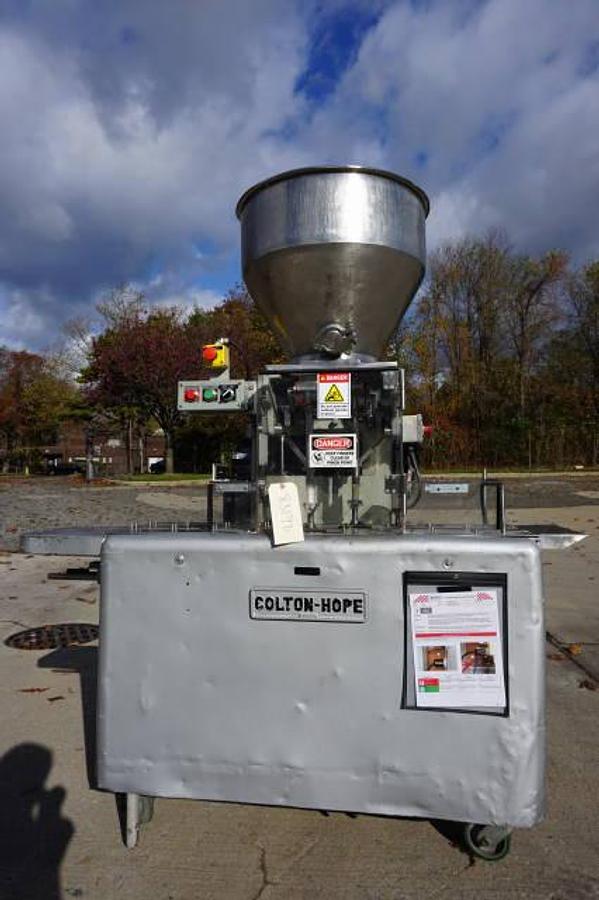
Colton Hope
Colton Hope focuses on developing cutting-edge solutions for the pharmaceutical industry, particularly in the encapsulation and granulation sectors. Their machinery is designed to enhance the accuracy and efficiency of drug production processes. With a reputation for innovation, Colton Hope provides equipment that meets stringent industry standards.
FAQ:
What types of pharmaceutical equipment does Colton Hope manufacture?
Colton Hope builds machinery focused on two core areas of pharmaceutical production: encapsulation and granulation. Their equipment is designed to improve the accuracy and efficiency of drug manufacturing, and the brand has built a reputation for meeting the stringent standards that regulated pharmaceutical environments demand. Common machine types associated with the Colton Hope name include capsule filling equipment, granulators, tablet presses, coating machines, and liquid filling systems such as piston fillers.
When buying used Colton Hope equipment through a secondary market dealer, it is worth confirming exactly which model and configuration is being offered, since the product line spans a range of capacities and production speeds. Specific machines that appear on the used market include twin head piston fillers designed for bottom-up filling applications, which are common in liquid pharmaceutical and nutraceutical filling operations. Buyers should request full equipment specifications, including output rates and any documentation that came with the machine, to verify it suits their production requirements.
What should buyers know about purchasing used Colton Hope pharmaceutical equipment?
Buying used pharmaceutical equipment carries a different set of considerations than sourcing machinery directly from a manufacturer. Used machines are sold as-is, meaning the condition of the equipment at the time of sale is what the buyer receives. There are no manufacturer warranties attached to a used machine purchase, so the responsibility for evaluating the equipment's condition falls entirely on the buyer. This makes choosing a reputable dealer with a verifiable track record in pharmaceutical equipment sales one of the most important decisions a buyer can make.
Buyers should also factor in the machine's history before committing to a purchase. Key details to request include the number of operational hours logged, the products previously run through the machine, any service or maintenance records, and whether the equipment was decommissioned or is still in active production. Machines with well-documented service histories and lower operational hours generally carry less risk. Consulting directly with the Colton Hope manufacturer is also advisable, as they can advise on parts availability and the level of technical support that can be expected for a specific model and age of equipment.
How can buyers inspect used Colton Hope equipment before purchasing?
Reputable used pharmaceutical equipment dealers typically offer several inspection options to give buyers an accurate picture of a machine's current condition. In-person inspections are the most thorough approach, allowing a buyer or their technical representative to physically examine the equipment, check for wear, verify component integrity, and in some cases observe the machine in operation if it is still installed at a production facility. Virtual inspections and detailed video walkthroughs are increasingly common alternatives, particularly for international buyers or situations where travel is not practical.
It is important to understand that most equipment dealers do not have the permitting or infrastructure required to run actual pharmaceutical product through a machine during an inspection. What a dealer can typically demonstrate is mechanical function, motion, and general operating condition. If the equipment is still located at the facility where it was last used, the dealer may be able to arrange an inspection at that site, where the machine may still be in production or recently decommissioned. Buyers should clarify the inspection options available before proceeding, and should not finalize a purchase without getting a clear, documented view of the machine's condition.
Is used Colton Hope pharmaceutical equipment cGMP compliant?
cGMP (Current Good Manufacturing Practice) compliance is a regulatory requirement that applies to the facility and processes in which pharmaceutical equipment is used, not to the machine itself as a standalone object. A piece of equipment that was operating in a cGMP-compliant facility may have associated documentation such as equipment qualification records, cleaning validation reports, and maintenance logs that can support a buyer's own compliance efforts. However, once a machine changes hands, the buyer's facility and quality systems are responsible for establishing and demonstrating compliance in their own environment.
For buyers operating under FDA or other regulatory oversight, requesting any available documentation that accompanied the machine during its previous use is strongly recommended. This can include IQ (Installation Qualification), OQ (Operational Qualification), and PQ (Performance Qualification) records, which can reduce the validation burden when requalifying the equipment in a new facility. Not all used machines will come with complete documentation, so buyers should ask dealers specifically what records are available and factor that into their purchasing decision. The age and model of the equipment can also affect whether the manufacturer is still able to provide technical support or supply parts, which has downstream implications for maintaining compliance.
What validation documentation should buyers request when buying used pharmaceutical equipment?
Validation documentation is one of the most valuable assets that can accompany a used pharmaceutical machine. The most commonly requested records are IQ, OQ, and PQ packages, which document that the equipment was properly installed, operated within defined parameters, and performed consistently during its previous use. These records can significantly reduce the time and cost involved in requalifying the equipment at a new facility, which is a major consideration for pharmaceutical manufacturers working under regulatory oversight.
Beyond formal qualification packages, buyers should also ask for calibration certificates, preventive maintenance logs, spare parts lists, and any change control records that document modifications made to the machine during its operational life. Equipment manuals and wiring diagrams are also worth requesting, as these are not always easy to obtain for older machines. Not every used machine will come with a full documentation package, and buyers should weigh the completeness of available records against the purchase price and intended use of the equipment. A machine with sparse documentation may still be suitable for certain applications, but the cost and effort of revalidation should be factored into the total cost of acquisition.
How does the pricing of used Colton Hope equipment compare to buying directly from a manufacturer?
Used pharmaceutical equipment is typically available at a significant discount compared to purchasing equivalent machinery through a manufacturer. The price difference varies depending on the age of the machine, its condition, the completeness of any accompanying documentation, and current market demand for that type of equipment. For capital-intensive pharmaceutical machinery like encapsulation systems and granulators, the savings from buying used can be substantial, making the secondary market an attractive option for companies managing tight capital budgets or looking to scale production capacity quickly.
That said, the purchase price is only one part of the total cost equation. Buyers should account for inspection costs, shipping and rigging fees, any refurbishment or parts replacement needed to bring the machine to their required operating standard, and the cost of revalidation if the equipment will be used in a regulated environment. A machine listed at a low price but requiring significant reconditioning may end up costing more in total than a higher-priced unit in better condition. Getting a clear picture of the machine's current state through inspection, and building a realistic estimate of all associated costs, is essential before making a final decision.
What are the typical payment terms for purchasing used pharmaceutical equipment?
Most used pharmaceutical equipment dealers require full payment before a machine is released for shipping. This is standard practice in the industry and reflects the fact that used equipment transactions do not carry the same financing infrastructure that might accompany a capital equipment purchase from a manufacturer. Buyers should plan for this requirement and ensure that funds are available and cleared before expecting delivery to be scheduled.
Some dealers extend payment terms to established repeat customers with whom they have a prior relationship, but this is not a standard offering and should not be assumed. Buyers who are new to a particular dealer should expect to pay in full upfront. It is also worth clarifying the accepted payment methods early in the process, as wire transfers are the most common form of payment for large equipment transactions. Understanding payment expectations before entering negotiations helps avoid delays and keeps the transaction moving smoothly.
What should buyers understand about shipping and rigging costs for used pharmaceutical equipment?
Shipping costs for used pharmaceutical machinery can vary considerably depending on the size and weight of the equipment, the distance it needs to travel, and the level of packaging or crating required to protect it in transit. Smaller benchtop machines may ship on a standard pallet, while larger production equipment such as tablet presses, coating pans, or granulators may require custom crating and heavy-duty rigging for safe loading and unloading. These are not trivial costs and should be factored into the total landed price of the equipment from the start.
Buyers should ask dealers for a detailed breakdown of packaging, rigging, freight, and any applicable handling fees before finalizing a purchase. In some cases, the dealer will arrange freight on behalf of the buyer; in others, the buyer is responsible for coordinating their own carrier. For international shipments, customs duties, import fees, and compliance documentation add another layer of cost and complexity. Rigging at the destination facility is also something to plan for, particularly if the machine needs to be moved into a production area that requires specialized lifting equipment or floor protection. Getting all of these costs in writing before committing to a purchase prevents surprises at the time of delivery.
What is a twin head piston filler and what pharmaceutical applications is it used for?
A twin head piston filler is a liquid filling machine that uses two synchronized piston-driven filling heads to dispense a measured volume of product into containers. The twin head configuration allows two containers to be filled simultaneously, which increases throughput compared to a single head system without requiring a significantly larger machine footprint. These machines are commonly used for filling liquids, suspensions, creams, gels, and other semi-viscous products into bottles, vials, tubes, or other containers.
In pharmaceutical and nutraceutical manufacturing, piston fillers are valued for their volumetric accuracy, which is critical when filling products that must meet precise dosage requirements. Bottom-up filling, a feature found on some piston filler models, means the filling nozzle enters the container and dispenses product from the bottom up as the nozzle withdraws. This technique reduces foaming and minimizes air entrapment, which is particularly important for certain formulations. Used twin head piston fillers appear regularly on the secondary market and can represent a cost-effective way to add or expand liquid filling capacity, provided the machine has been properly inspected and its condition verified before purchase.
How should buyers evaluate a used pharmaceutical equipment dealer before making a purchase?
The dealer's track record is one of the most reliable indicators of a trustworthy transaction. Buyers should look for dealers who have been operating in the pharmaceutical equipment space for a significant period of time and who specialize in the industry rather than selling general industrial machinery across many sectors. Specialization matters because pharmaceutical equipment has specific documentation requirements, regulatory context, and technical nuances that generalist dealers may not fully understand or be equipped to address.
Beyond longevity and specialization, buyers should assess how transparent a dealer is about the condition of their inventory. A dealer who proactively offers inspection access, provides whatever documentation is available, and gives honest descriptions of a machine's history is demonstrating the kind of integrity that reduces purchase risk. It is also worth asking how the dealer sources their inventory, since machines that come directly from pharmaceutical manufacturers or contract organizations tend to have more traceable histories than equipment that has passed through multiple hands. Checking references or looking for evidence of repeat business from regulated pharmaceutical companies can also provide useful signals about a dealer's reputation in the market.