Category
Manufacturer
Model
Chromalox
Chromalox provides advanced thermal technologies and heating solutions for multiple industries, including chemical processing and oil and gas. They are famous for their electric heating systems that are customized for various demanding applications.
FAQ:
What types of Chromalox electric heating equipment are available on the used market?
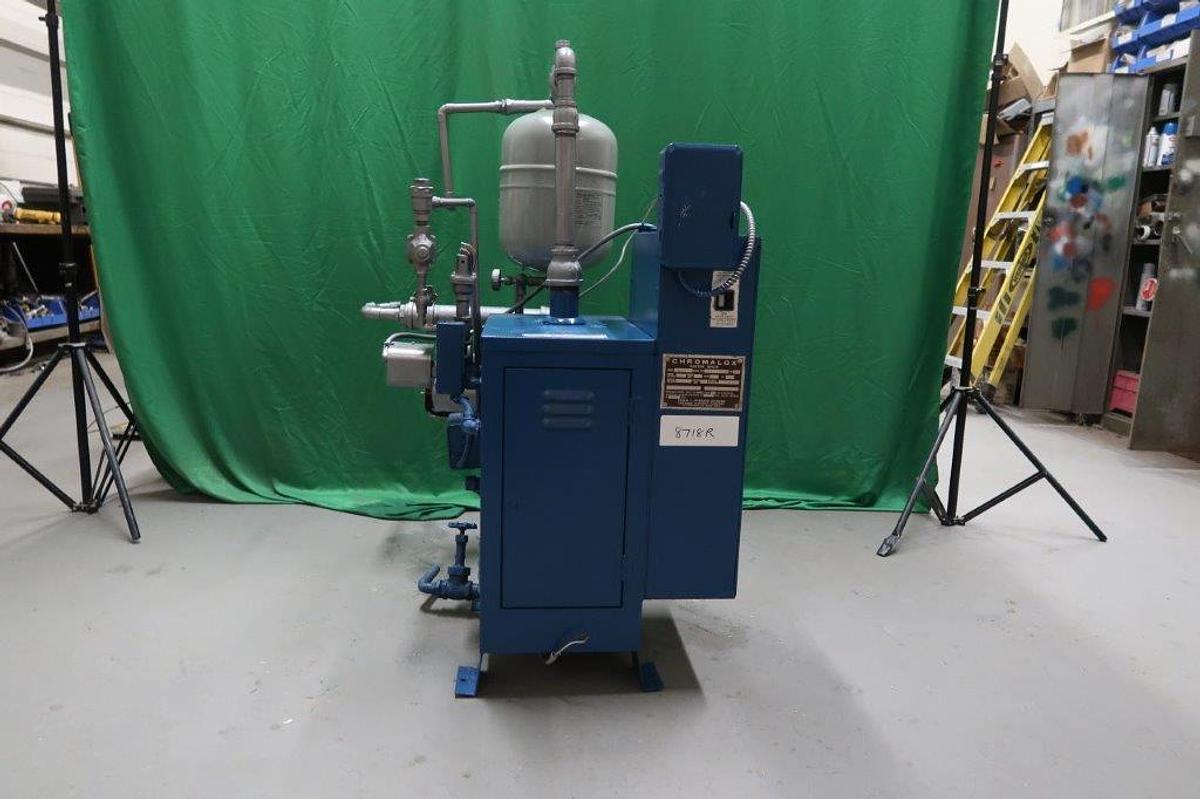
Chromalox manufactures a wide range of electric heating products, and many of these turn up regularly on the used equipment market. The most commonly available types include immersion heaters, circulation heaters, tubular heaters, strip heaters, radiant heaters, and complete thermal systems. Compact electric boilers, such as the Chromalox CEW24 (a 24 kW unit), are also available through used equipment dealers. Each product type is built for specific thermal applications, so the variety on the used market tends to reflect the broad range of industries that originally put this equipment to work.
Beyond individual heaters, Chromalox also produces packaged heating systems that integrate controls, sensors, and heating elements into a single unit. These systems are particularly sought after in industrial settings where precise temperature management is critical. Buyers shopping the used market should pay close attention to the specific model numbers, since Chromalox's product line is extensive and the differences between models, including wattage, voltage, and configuration, can be significant for matching equipment to a given application.
Which industries commonly use Chromalox electric heating equipment?
Chromalox electric heating equipment is used across a broad set of industries, which is one reason it shows up frequently on the used equipment market. The primary sectors include oil and gas, chemical processing, food and beverage production, semiconductor manufacturing, power generation, and HVAC. In oil and gas and chemical processing especially, Chromalox equipment is valued for its ability to handle demanding environments where precise temperature control and reliable performance are non-negotiable.
The food and beverage industry uses Chromalox heaters for processes like pasteurization and fluid heating, while semiconductor manufacturers rely on the equipment's precision for temperature-sensitive fabrication steps. Power generation facilities use larger Chromalox thermal systems for freeze protection and process heating. Because this equipment has been deployed across such a wide range of industrial settings, buyers sourcing used Chromalox units should confirm that the specific model they're considering is rated for their industry's requirements, particularly if hazardous location certifications are needed.
What certifications and safety standards should buyers look for on used Chromalox equipment?
Chromalox has historically built its equipment to meet rigorous third-party safety standards, and many units carry UL listings, CSA certifications, and ATEX ratings. The ATEX certification is particularly important for buyers in oil and gas or chemical processing, as it indicates the equipment is rated for use in potentially explosive or hazardous atmospheres. UL and CSA listings confirm that the equipment has been tested and meets North American electrical safety requirements. These certifications are typically marked on the equipment's nameplate or data plate.
For buyers purchasing used Chromalox equipment, verifying that the certification markings are still intact and legible on the physical unit is an important step during inspection. It's also worth consulting Chromalox directly to confirm whether a specific model and serial number retains its certification status after years of use, since modifications or damage to the unit could affect compliance. Buyers whose applications require hazardous location ratings should be especially diligent about confirming certification details before completing a purchase.
How does electric heating equipment from Chromalox compare to combustion-based heating alternatives?
Electric heating equipment from Chromalox offers several practical advantages over combustion-based systems, the most significant being precise temperature control. Electric resistance heating allows operators to dial in and maintain exact temperatures, which is difficult to achieve consistently with gas or fuel-fired systems. This precision matters a great deal in industries like semiconductor manufacturing, chemical processing, and food production, where even small temperature deviations can affect product quality or process outcomes. Electric systems also eliminate combustion byproducts, making them cleaner to operate and easier to use in enclosed or sensitive environments.
From a maintenance standpoint, electric heating systems generally have fewer moving parts and no combustion components to service, which can reduce long-term maintenance demands. They also tend to be more energy-efficient at the point of use, since nearly all electrical energy is converted directly to heat with minimal loss. For buyers considering used Chromalox equipment, these inherent advantages of electric heating apply regardless of whether the unit is purchased new from a manufacturer or sourced through the used equipment market, as long as the equipment is in sound working condition.
What should buyers know about inspecting used Chromalox heating equipment before purchasing?
Buying used industrial heating equipment requires careful inspection, and Chromalox units are no exception. Reputable used equipment dealers will typically offer buyers the option to inspect equipment in person, via video call, or through detailed video footage of the machine. During an inspection, buyers should look at the condition of heating elements, wiring, terminals, and control components. The nameplate data should be checked to confirm voltage, wattage, phase, and any certification markings are intact. Any signs of overheating, corrosion, or physical damage to the housing or elements are worth flagging before committing to a purchase.
It's also worth noting that most used equipment dealers do not have the permitting or production infrastructure to run full operational tests on heating equipment. This means the inspection is primarily a visual and mechanical assessment rather than a live performance test. Buyers should factor this into their evaluation and, where possible, consult with Chromalox directly about the model in question to understand what to look for and what level of technical support might be available for that particular unit given its age and configuration. Selecting a dealer with a long track record in industrial equipment is one of the better ways to reduce purchasing risk.
Are replacement parts available for older Chromalox heating equipment?
Chromalox was founded in 1917 and has maintained a consistent presence in the industrial heating market for over a century, which generally works in favor of buyers looking for parts support on older equipment. The company has historically supported a wide range of its product lines with replacement heating elements, thermostats, controls, and accessories. That said, parts availability can vary depending on the age and model of the unit, and some older or discontinued models may have limited support. Buyers should contact Chromalox directly to verify parts availability for any specific model before purchasing used equipment.
Beyond the manufacturer, a secondary market for Chromalox components exists through industrial parts suppliers and other used equipment dealers. Heating elements for many Chromalox models are also manufactured to standard specifications, which means compatible replacements from third-party suppliers may be an option when factory parts are unavailable. For buyers making purchasing decisions based partly on long-term serviceability, researching parts availability for the specific model and configuration is a practical step that can prevent headaches down the road.
What is the typical price range for used Chromalox electric heating equipment?
Pricing for used Chromalox electric heating equipment varies considerably depending on the type of unit, its kilowatt rating, age, condition, and configuration. Smaller units like individual strip heaters or tubular heaters can be found at relatively modest prices, while larger circulation heaters, compact electric boilers, or complete packaged thermal systems command significantly higher prices. A unit like the Chromalox CEW24 compact electric boiler, rated at 24 kW, sits in the mid-range of the product line and is priced accordingly on the used market. Specialty units built for hazardous locations or high-pressure applications also tend to carry a premium.
Buyers should keep in mind that the purchase price is only part of the total cost. Shipping, rigging, and any reconditioning or installation work need to be factored in. Larger or heavier equipment may require specialized rigging for loading and unloading, which adds to the landed cost. Getting a clear picture of all associated costs from the dealer before agreeing to a purchase is a straightforward way to avoid surprises. Comparing a few dealers and asking for detailed quotes that include packaging and freight is a reasonable approach for any significant equipment purchase.
How does shipping typically work for used Chromalox heating equipment?
Shipping used industrial heating equipment requires proper packaging to prevent damage in transit, and the cost and complexity of that packaging depends on the size and weight of the unit. Smaller Chromalox heaters can often be palletized and shipped via standard freight carriers, while larger systems or boilers may require custom crating. The level of packaging required directly affects shipping costs, so buyers should ask dealers specifically what packaging will be used and what the associated charges are before finalizing a purchase.
Larger Chromalox thermal systems or boilers may also require heavy-duty rigging for loading at the dealer's facility and unloading at the buyer's location. Rigging costs are typically separate from freight charges and can be a meaningful expense depending on the equipment's size and weight. Buyers are well-served by asking for a complete breakdown of packaging, rigging, and freight costs upfront so they can accurately calculate the full landed cost of the equipment before committing.
What are the standard payment terms for purchasing used Chromalox equipment from a dealer?
Most used industrial equipment dealers require full payment before equipment is released for shipping. This is standard practice in the industry and applies to Chromalox equipment purchases as it does to most other used machinery transactions. Some dealers may offer payment terms to established customers with a prior purchasing history, but buyers who are new to a particular dealer should expect to pay in full upfront. Accepted payment methods vary by dealer but commonly include wire transfer and, in some cases, credit card for smaller purchases.
Buyers who are unfamiliar with a dealer should take the time to research the dealer's reputation and track record before sending payment. Looking for dealers who specialize in industrial or process heating equipment, have been in business for a meaningful number of years, and can provide references or verifiable transaction history is a reasonable way to approach the process. The combination of full upfront payment and the as-is nature of used equipment makes dealer credibility one of the more important factors in a successful purchase.
How should a buyer select the right used Chromalox heater for their specific application?
Matching a used Chromalox heater to a specific application starts with understanding the core requirements: the type of medium being heated (air, water, oil, or another fluid), the required wattage or kilowatt output, the operating voltage and phase, and any environmental conditions such as hazardous location ratings or pressure ratings. Chromalox's product line is extensive, and the differences between models are often significant. Reviewing the nameplate data and any available documentation for a used unit is essential to confirming it fits the intended use.
Beyond the technical specifications, buyers should consider how the equipment will integrate with existing systems, including whether the control configuration matches what's already in place at their facility. Consulting with Chromalox technical support about a specific model can provide useful guidance on compatibility and application suitability. Dealers who specialize in process heating equipment can also be a helpful resource, since they tend to have practical knowledge about how different Chromalox models have been used in the field. Taking the time to match specifications carefully before purchasing reduces the risk of buying equipment that doesn't fit the application.