Category
Manufacturer
Model
FAQ:
What is a Cherry Burrell Votator and what is it used for?
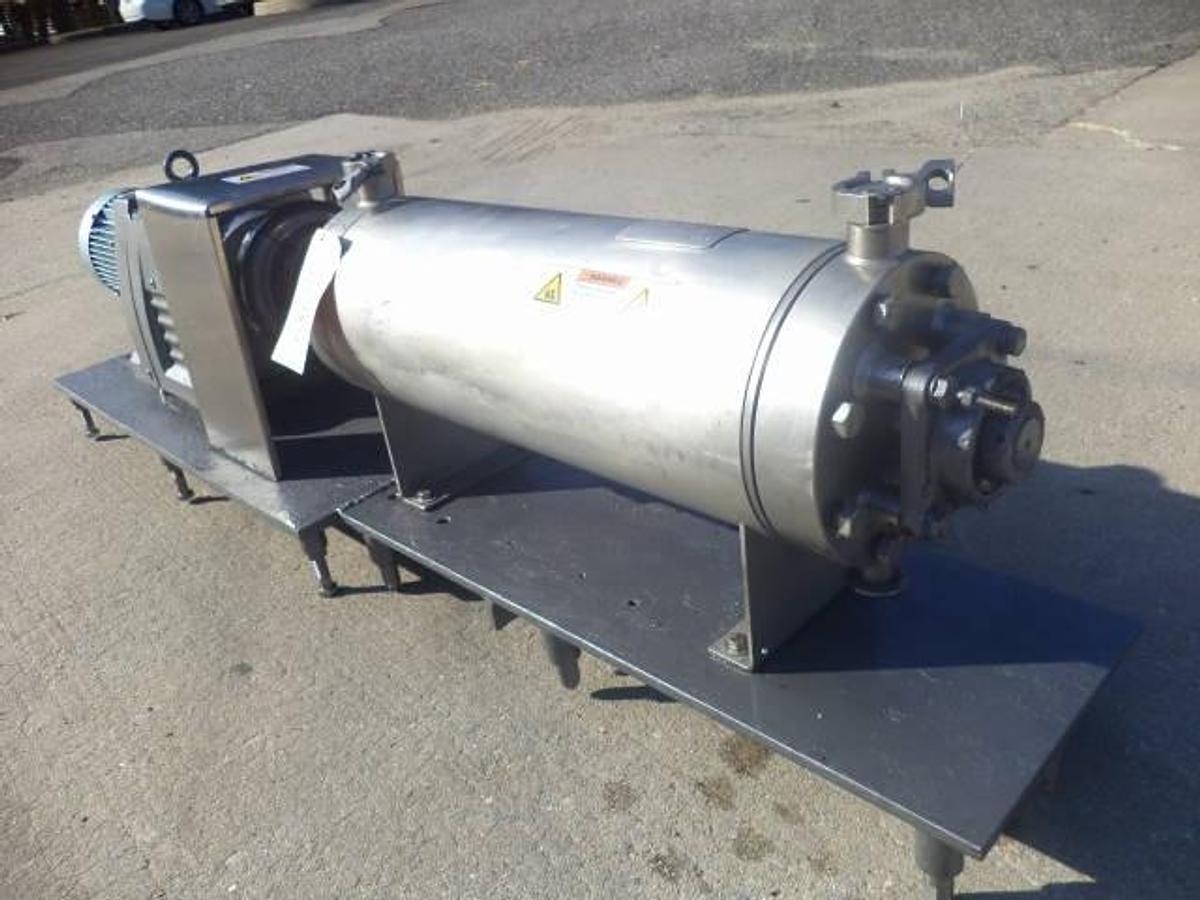
The Cherry Burrell Votator is a scraped surface heat exchanger designed to heat, cool, or crystallize viscous and semi-solid food products with precise temperature control. It works by passing product through a jacketed cylinder while rotating mutator blades continuously scrape the product film from the inner heat transfer surface. This constant scraping prevents product buildup, ensures uniform temperature exposure, and keeps viscous materials moving through the unit without scorching or uneven processing. The design is particularly effective for products that would foul or degrade on a static heat transfer surface.
The Votator is used across a wide range of food and personal care manufacturing applications. Common uses include margarine production, shortening processing, peanut butter manufacturing, ice cream and frozen dessert processing, cheese processing, and the production of cosmetic or personal care products like lotions and creams. Its ability to handle high-viscosity materials while maintaining tight temperature tolerances makes it a workhorse in continuous processing lines where product consistency and throughput are critical.
What sizes and configurations are available for used Cherry Burrell Votators?
Cherry Burrell Votators are typically categorized by tube diameter and the number of tubes in the unit. Common tube diameters found on the used market include 2-inch, 4-inch, and 6-inch, with the diameter directly influencing the product throughput capacity. Larger diameter tubes handle greater volumes per pass, while smaller diameter units are well suited for pilot plant work, product development, or lower-volume production runs. The number of tubes in a multi-tube configuration multiplies effective capacity and allows processors to scale output without changing the fundamental design.
A good example of the smaller end of the size range is the 6-inch by 24-inch pilot plant horizontal pin mixer configuration, which shows up on the used market for facilities doing smaller-batch development work or specialty processing. Used dealers typically carry a rotating inventory of different sizes, so buyers looking for a specific tube diameter and tube count should expect to check availability periodically. Matching the right size to your process flow rate, product viscosity, and available utilities like chilled water or steam is essential before purchasing any unit.
What industries rely on scraped surface heat exchangers like the Votator?
Scraped surface heat exchangers like the Cherry Burrell Votator are most heavily used in food manufacturing, where precise temperature control of viscous or crystallizing products is a core process requirement. Margarine and spread producers depend on the Votator for controlled crystallization that gives finished products the right texture and consistency. Ice cream and frozen novelty manufacturers use them for continuous freezing and aeration. Peanut butter, shortening, and processed cheese lines also rely on scraped surface technology to keep product moving through heat transfer zones without sticking or uneven processing.
Beyond food, the cosmetics and personal care industry uses similar scraped surface equipment for lotions, creams, and ointments that require temperature-controlled blending and cooling. Pharmaceutical manufacturers processing semi-solid dosage forms or topical products also turn to this type of equipment. The common thread across all these industries is the need to process materials that are too thick, sticky, or crystallization-prone to run through conventional shell-and-tube or plate heat exchangers without fouling the heat transfer surface.
Are used Cherry Burrell Votators food-grade compliant and what materials are they made from?
Cherry Burrell Votators are built with stainless steel product-contact surfaces, which is the standard material for equipment intended for food, dairy, and personal care processing. Stainless steel resists corrosion, tolerates the cleaning chemicals used in food plant sanitation, and meets the surface finish requirements set by regulatory bodies like the FDA and USDA. The jacketed cylinder design keeps product-contact surfaces separate from the heating or cooling medium, which is important for both safety and process control. CIP (Clean-in-Place) compatibility is a standard feature of the design, meaning the internal surfaces can be cleaned and sanitized without full disassembly.
For used units, buyers should verify the condition of product-contact surfaces before purchase. Scratches, pitting, or corrosion on stainless steel surfaces can harbor bacteria and may not meet current sanitary standards without refurbishment. A thorough inspection, either in person or via detailed video, should include a close look at the interior cylinder walls, the mutator blades, seals, and any gaskets or fittings. Consulting with the manufacturer about parts availability for seals and blades is also worthwhile, since the age and model of the unit affects what replacement components are still supported.
How do you assess the condition of a used Cherry Burrell Votator before buying?
Evaluating a used Votator requires more than a visual once-over. Buyers should request an in-person inspection or, at minimum, a detailed video walkthrough that covers the exterior jacket, the internal cylinder bore, the mutator blade assembly, the drive motor and gearbox, and all product inlet and outlet connections. Look for signs of corrosion, weld repairs, or surface damage on product-contact areas. Check the condition of seals and shaft packing, since worn seals are a common maintenance point on scraped surface equipment. If the unit is still installed at a production facility, there may be an opportunity to observe it running, which gives a much better read on mechanical condition than a static inspection.
It is worth noting that most used equipment dealers do not have the permitting or production infrastructure to run actual product through the machine during an inspection. What they can typically demonstrate is that the drive turns freely, the motor draws appropriate current, and there are no obvious mechanical issues. Buyers should also contact the manufacturer directly to ask about parts availability for the specific model and serial number they are considering. Older units may have limited support for replacement mutator blades, seals, or drive components, and knowing that before purchase helps avoid surprises during commissioning or the first maintenance cycle.
What should buyers understand about purchasing a used Cherry Burrell Votator without a warranty?
Used industrial equipment, including Cherry Burrell Votators, is almost always sold on an as-is basis by dealers. Warranties are generally only offered by equipment manufacturers on new production, and used equipment dealers are not in a position to guarantee the mechanical history or remaining service life of a machine that has already been in production. This places the responsibility of due diligence squarely on the buyer, which is why inspection access and dealer reputation matter so much in a used equipment transaction.
The best protection a buyer has is choosing a dealer with a long track record in food processing or industrial equipment, requesting thorough inspection access before committing to a purchase, and doing independent research on the specific model. Buyers should also factor in the cost of any refurbishment, seal replacement, or electrical updates needed to bring the unit into their facility's compliance standards. Consulting with the manufacturer about the model's support status, available spare parts, and recommended service intervals gives buyers a clearer picture of the total cost of ownership before the machine ever arrives on the dock.
What is the typical price range for a used Cherry Burrell Votator?
Pricing for used Cherry Burrell Votators varies considerably based on tube size, number of tubes, age, mechanical condition, and any refurbishment work that has been done before sale. Smaller pilot plant units with a single tube in a 2-inch or 4-inch diameter configuration will generally fall at the lower end of the price spectrum, while larger multi-tube production units in 6-inch or larger diameters command significantly higher prices. Units that have been inspected, cleaned, and confirmed to be in good working order typically carry a premium over units sold strictly as-is from a plant closure or auction.
Because the used market for this type of equipment is relatively specialized, prices are not as transparent as commodity goods. Buyers should request quotes from multiple reputable dealers, factor in the cost of shipping, rigging, and any site modifications needed for installation, and compare the total landed cost against the price of alternative scraped surface equipment from other manufacturers. The long operational lifespan of well-maintained Votator units means that a higher upfront price for a cleaner machine often makes more economic sense than a lower price on a unit that needs significant work before it can be put into service.
What does shipping a used Cherry Burrell Votator involve and what costs should buyers anticipate?
Shipping a used Votator is not a simple freight transaction. These are industrial machines with jacketed cylinders, drive assemblies, and precision internal components that require proper packaging to prevent damage in transit. Depending on the size of the unit, packaging can range from standard palletization with blocking and bracing to full custom crating. The level of packaging required directly affects the shipping cost, and buyers should ask the dealer specifically what packaging method will be used and what that adds to the total price. Larger multi-tube units may also require specialized rigging equipment for loading at the dealer's facility and unloading at the buyer's plant, which is typically an additional cost.
Buyers should request a complete breakdown of all charges before finalizing a purchase, including the equipment price, packaging and crating fees, freight charges, and any rigging costs at either end of the shipment. For heavier units, a flatbed or specialized heavy freight carrier may be required rather than standard LTL service. Getting clarity on the full landed cost before committing to a purchase prevents surprises and makes it easier to compare the true cost of different units from different sources.
Can a used Cherry Burrell Votator be retrofitted or adapted for a different process application?
Retrofitting a used Votator for a different application is possible in some cases, but it depends heavily on the mechanical condition of the unit and the nature of the process change. The core scraped surface design is adaptable across a range of viscous product applications, and many facilities have successfully repurposed Votator units from one product type to another, for example moving a unit from margarine service into a cosmetics or personal care application. Changes in product type may require different mutator blade materials or configurations, different seal compounds compatible with new product chemistry, and potentially different jacket connections if the heating or cooling medium changes.
More significant modifications, like changing tube diameter or converting a horizontal unit to a vertical orientation, are generally not practical retrofits and would require purpose-built equipment instead. Before purchasing a used unit for a new application, it is worth consulting with a process engineer familiar with scraped surface technology to confirm that the existing configuration will handle the target product's viscosity, temperature requirements, and flow rate. The manufacturer can also provide guidance on what modifications are supported for a given model, and whether replacement components for a modified configuration are still available for that unit's age and series.
What payment terms should buyers expect when purchasing a used Cherry Burrell Votator from a dealer?
Most used industrial equipment dealers require payment in full before a machine is released for shipping. This is standard practice in the industry and applies to Cherry Burrell Votators as it does to most other categories of used processing equipment. The reasoning is straightforward: once a machine leaves the dealer's facility, the transaction is effectively complete, and dealers have little recourse if payment issues arise after shipment. Some dealers may offer payment terms to established customers with a history of prior transactions, but first-time buyers should plan on full payment upfront as the default expectation.
Accepted payment methods vary by dealer but commonly include wire transfer, ACH, or certified funds. Credit card payments may be accepted for smaller purchases but are less common for larger equipment transactions due to processing fees. Buyers should clarify payment method, timing, and any deposit requirements before signing a purchase agreement. Understanding the payment terms in full, alongside the shipping and inspection terms, is part of the due diligence process that protects both parties and keeps the transaction straightforward.