Category
Manufacturer
Model
Chemicolloid Industries
Chemicolloid Industries excels in the production of high-performance homogenizing mixers used mainly in the food, cosmetics, and pharmaceutical sectors. Their equipment is celebrated for its robust construction and capability to produce uniform and stable emulsions.
FAQ:
What types of equipment does Chemicolloid Industries manufacture?
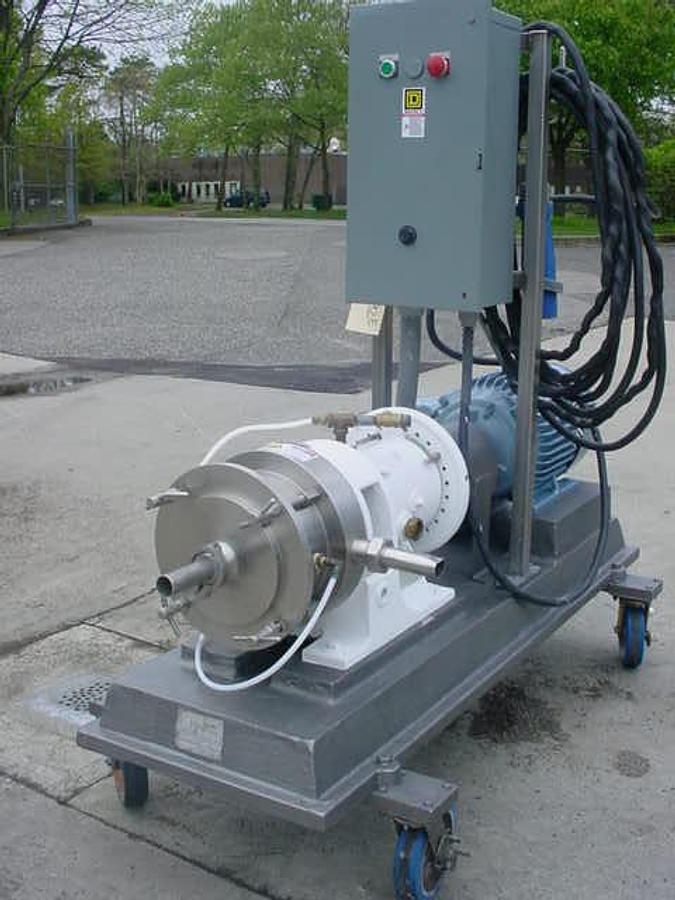
Chemicolloid Industries is best known for producing high-performance homogenizing mixers and colloid mills, with a particular focus on equipment designed to create fine particle dispersions, stable emulsions, and uniform mixtures. Their machines are built for continuous or batch processing and are engineered to handle viscous, dense materials that standard mixing equipment cannot effectively process. The Charlotte SD-20 Mill is one example of a specific model that appears in the used equipment market, often listed with rebuilt components such as rotors.
The product line has historically served the food processing, cosmetics, and pharmaceutical industries, where consistent particle size reduction and emulsification are critical to product quality. Colloid mills from this manufacturer have been widely used in the production of peanut butter, nut butters, pharmaceutical ointments, and cosmetic creams. The equipment's reputation for durable construction and reliable output has kept demand strong in the secondary market, even for older models.
What is the difference between a Chemicolloid colloid mill and a standard homogenizer?
A colloid mill and a standard homogenizer both reduce particle size and create emulsions, but they work through different mechanical principles. A colloid mill uses a rotor-stator configuration where material passes through a narrow, adjustable gap between a spinning rotor and a stationary stator. The intense shear forces generated in that gap break down particles and droplets into extremely fine sizes. This makes colloid mills especially effective for high-viscosity materials like nut butters, pastes, and thick pharmaceutical preparations that would clog or perform poorly in a pressure-based homogenizer.
A standard homogenizer, by contrast, typically forces liquid through a small orifice under high pressure, which works well for lower-viscosity fluids like milk or juice but is less suited to dense or paste-like materials. Chemicolloid Industries colloid mills are particularly valued in applications where the feed material is thick or contains fibrous content, and where a very fine, stable end product is required. The adjustable gap on a colloid mill also gives operators more control over the final particle size, which is a meaningful advantage in industries with strict product specifications.
What industries commonly use Chemicolloid Industries equipment?
Chemicolloid Industries equipment is used across several processing-intensive industries, with the strongest concentration in food production, pharmaceuticals, and cosmetics. In food manufacturing, colloid mills from this brand are a standard tool for producing nut butters, including peanut butter and almond butter, because they can reduce roasted nuts to a smooth, stable paste in a single continuous pass. They are also used for processing sauces, baby food, and other products that require a homogeneous texture without separation.
In the pharmaceutical and cosmetics sectors, the equipment is used to manufacture ointments, creams, gels, and suspensions where uniform particle size directly affects product efficacy and stability. Chemical processing operations also rely on this type of equipment for creating emulsions, dispersions, and blended compounds that require consistent quality across large production runs. The breadth of industries that have historically adopted this equipment is a large part of why used Chemicolloid machines remain actively sought after on the secondary market long after the units have been decommissioned from their first production environments.
Are Chemicolloid Industries colloid mills available as used units, and is that a practical option?
Yes, used Chemicolloid Industries colloid mills and homogenizing mixers appear regularly in the secondary industrial equipment market. Because this equipment was built with heavy-duty construction and a relatively simple mechanical design, many units have long operational lifespans and remain functional and serviceable well after their initial production runs. Buyers sourcing used units can find specific models, such as the Charlotte SD-20 Mill, sometimes listed with rebuilt components like rotors, which can meaningfully extend the working life of the machine.
Purchasing used equipment is a practical option for many operations, particularly those with tighter capital budgets or those scaling up production incrementally. That said, buyers should approach used equipment purchases with care. Inspecting the rotor-stator gap, checking for wear on the grinding surfaces, and confirming the condition of seals and motor components are all important steps before committing to a purchase. Reputable used equipment dealers with experience in food, pharmaceutical, or chemical processing machinery are generally better positioned to provide accurate condition assessments than general-purpose surplus sellers.
How do I verify the condition of used Chemicolloid Industries equipment before purchasing?
Verifying the condition of used processing equipment starts with a thorough inspection, and buyers have a few practical options available. Most reputable used equipment dealers will accommodate in-person inspections at their facility, or they can arrange video inspections and provide detailed photo documentation of the machine's current state. For equipment that is still installed at a production facility, it may be possible to observe the machine while it is in operation, which gives a clearer picture of mechanical function than a static inspection alone. However, keep in mind that most dealers do not have the permitting or production infrastructure to run actual product through a machine during an inspection, so functional testing is generally limited to confirming that the motor runs and the rotor turns freely.
For Chemicolloid colloid mills specifically, key things to examine include the condition of the rotor and stator surfaces (worn or pitted surfaces affect output quality), the integrity of seals and gaskets, the gap adjustment mechanism, and the overall condition of the housing and any product contact surfaces. It is also worth contacting the manufacturer directly to ask about parts availability and service support for the specific model and age of the machine you are considering, since older models may have limited parts availability. Buyers who take the time to do a careful pre-purchase inspection and consult with knowledgeable dealers are far less likely to encounter surprises after the equipment arrives.
What should I know about replacement parts and service support for older Chemicolloid Industries models?
Parts availability for older industrial processing equipment can vary considerably depending on the age and model of the machine. For Chemicolloid Industries equipment, prospective buyers should contact the manufacturer directly to ask about current parts support for the specific model they are considering. Manufacturers can clarify which components are still available through official channels, which parts may need to be sourced from third-party suppliers or fabricated, and whether technical support or documentation is still accessible for that model. The answers to those questions should factor into a buyer's purchasing decision, especially for critical wear components like rotors, stators, and seals.
In some cases, used equipment dealers who specialize in food, pharmaceutical, or chemical processing machinery will have spare parts or rebuilt components available alongside the machines they sell. A rebuilt rotor, for example, can significantly extend the usable life of a colloid mill and is worth factoring into the overall cost calculation. Buyers should also consider that a machine with a more established service history and documented maintenance is generally a lower-risk purchase than one with unknown operating hours. Asking the dealer for any available service records or maintenance logs is a reasonable step in the due diligence process.
What is the typical price range for used Chemicolloid Industries equipment?
Pricing for used Chemicolloid Industries equipment varies based on several factors, including the specific model, the size and throughput capacity of the machine, its age, overall mechanical condition, and whether any components have been rebuilt or refurbished. Smaller laboratory-scale colloid mills will generally be priced lower than larger production-scale units. Machines that have had rotors or other major components rebuilt will often carry a higher asking price than units sold strictly as-is, reflecting the additional work and parts that have gone into restoring them.
Because used equipment pricing is not standardized and fluctuates with market supply and demand, buyers are best served by contacting dealers directly for current pricing on specific units. It is also important to account for the full landed cost of the equipment, not just the listed price. Shipping, rigging, palletization or crating, and any freight charges for heavier machines can add meaningfully to the total investment. Getting a clear breakdown of all costs before committing to a purchase helps avoid budget surprises and allows for a more accurate comparison between available units.
How do I find the model number and specifications for a used Chemicolloid Industries machine?
The model number and basic specifications for a used Chemicolloid Industries machine are typically found on the equipment's nameplate, which is usually affixed to the main housing or motor assembly. The nameplate will generally list the model designation, serial number, motor horsepower, voltage requirements, and sometimes the production date. When reviewing a used machine listing, reputable dealers should be able to provide the model number and any available specification details, and many will include photos of the nameplate as part of the listing documentation.
If the nameplate is missing or illegible, the machine's general configuration, size, and throughput capacity can sometimes be used to identify the model through manufacturer documentation or by contacting Chemicolloid Industries directly with photos of the unit. Having the correct model number is important for several reasons: it helps confirm that the machine matches your production requirements, it allows you to verify parts availability with the manufacturer, and it gives you a baseline for evaluating whether the asking price is reasonable relative to comparable units. Buyers should always confirm specifications with the dealer before purchasing rather than relying solely on listing descriptions.
What should buyers understand about shipping and logistics for used Chemicolloid Industries equipment?
Shipping industrial processing equipment like colloid mills and homogenizers requires more planning than standard freight shipments. These machines are heavy, often contain precision components that can be damaged by vibration or improper handling, and may require specialized packaging such as custom crating to protect them in transit. The level of packaging required will affect shipping costs, and buyers should ask dealers specifically about how the equipment will be prepared for shipment. Larger or heavier units may also require rigging equipment for loading and unloading, which is typically an added cost on top of standard freight charges.
Buyers should request a full breakdown of all shipping-related costs before finalizing a purchase, including palletization or crating fees, rigging charges, freight costs, and any destination-side unloading requirements. For very large machines, a freight quote based on the actual dimensions and weight of the packaged unit is more reliable than an estimate. Understanding the complete landed cost of the equipment, meaning the purchase price plus all costs to get the machine to your facility and ready for installation, is essential for making an informed buying decision and avoiding unexpected expenses.
What are typical payment terms when purchasing used Chemicolloid Industries equipment from a dealer?
Payment practices in the used industrial equipment market follow a fairly consistent pattern. Most dealers require full payment before the equipment is released for shipment, which is standard practice across the industry and reflects the nature of selling high-value, one-of-a-kind machinery. Unlike retail purchases, used equipment transactions typically do not involve installment plans or financing through the dealer, though some dealers may offer payment terms to established customers with a history of prior transactions.
Buyers who are new to a particular dealer should expect to pay in full upfront and should factor that into their cash flow planning. It is worth asking the dealer about accepted payment methods, as wire transfers are common for larger transactions. Before sending any payment, buyers should confirm all details of the sale in writing, including the specific machine being purchased, the agreed price, what is included in the sale, and the shipping terms. Working with dealers who have a verifiable track record in the industry and clear communication practices reduces the risk inherent in upfront payment arrangements.