Category
Manufacturer
Model
Chemap
Chemap is known for its innovative solutions in the design and manufacture of sterilization and filtration equipment. They primarily serve the pharmaceutical and biotechnology industries with reliable, efficient systems that meet stringent industry standards.
FAQ:
What is a Chemap fermenter reactor and what is it used for?
Chemap AG was a Swiss-based manufacturer that built fermenter reactors and bioprocessing equipment for the pharmaceutical, biotechnology, and food industries. Their fermenter reactors are pressure vessels designed to maintain precise biological and chemical conditions, including temperature, agitation, pH, and dissolved oxygen, so that microbial or cell cultures can grow under controlled, repeatable conditions. These machines were engineered to meet the stringent cleanliness and sterility standards that regulated industries demand, which is a large part of why they remain sought after on the used equipment market decades after production ended.
In practical terms, Chemap fermenters are used for processes like antibiotic production, enzyme synthesis, recombinant protein expression, yeast fermentation, and similar bioprocess applications. The agitated stainless steel design allows operators to keep culture media well-mixed while maintaining sterile conditions throughout a batch or fed-batch run. Because Chemap is a legacy brand that is no longer in active production, the used and surplus equipment market is now the primary way to acquire one of these reactors. Buyers in pharmaceutical and biotech settings continue to seek them out because the build quality holds up well over time when the equipment has been properly maintained.
What sizes and volume capacities are available for used Chemap fermenter reactors?
Chemap produced fermenter reactors across a wide range of working volumes, from small bench-top laboratory units of just a few liters up to large industrial-scale vessels of several thousand liters. This range made them practical across the full spectrum of bioprocess development, from early-stage R&D fermentation runs all the way through pilot-scale and commercial manufacturing. On the used market, available inventory at any given time depends on what has been decommissioned from pharmaceutical and biotech facilities, so the selection shifts regularly.
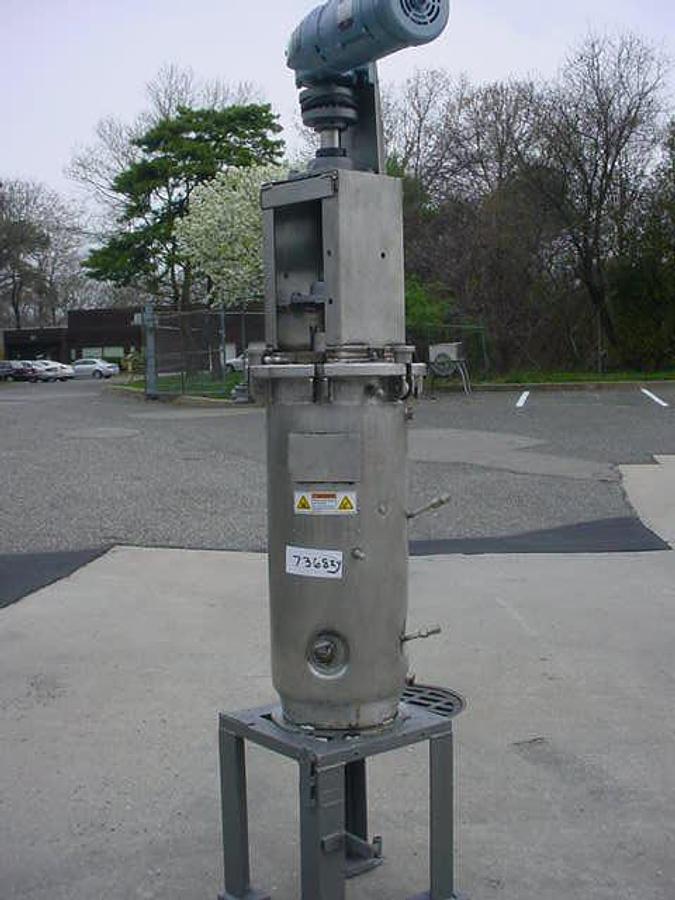
A good example of what appears on the used market is a 15-gallon (roughly 57-liter) agitated stainless steel reactor/fermenter, which is a practical size for pilot-scale work or process development. Buyers looking for a specific volume capacity should check with used equipment dealers frequently, since inventory turns over and a size that is unavailable one month may become available shortly after. It is also worth noting that Chemap fermenter reactors were often sold as part of complete fermentation systems, so buyers occasionally find units that include jackets, agitator assemblies, and associated instrumentation bundled together, which can add significant value compared to purchasing a bare vessel.
Are used Chemap fermenter reactors reliable, and what should buyers look for before purchasing?
Used Chemap fermenter reactors have a strong reputation for durability, largely because of the quality of materials and manufacturing standards the company applied during production. The 316L stainless steel construction resists corrosion from aggressive fermentation media, cleaning agents, and sterilization cycles, which means a well-maintained unit can retain its mechanical integrity for many years after its initial installation. That said, reliability on the used market depends heavily on how the specific unit was operated and maintained at its previous facility, so the condition of individual machines varies considerably.
Buyers should request as much information as possible about a unit's service history, including the types of processes it ran, how frequently it was sterilized, and whether any repairs or component replacements were made. Since Chemap is no longer in production and OEM support is not available, it is especially important to assess the condition of seals, agitator shafts, bearings, and instrumentation ports before committing to a purchase. Reputable used equipment dealers will typically accommodate in-person or video inspections so buyers can evaluate the machine's current condition directly. Consulting with a qualified bioprocess engineer or an independent inspector before finalizing a purchase adds another layer of assurance, particularly for larger or more complex units.
What materials are Chemap fermenter reactors made from, and are they suitable for pharmaceutical or food-grade applications?
Chemap fermenter reactors were constructed primarily from 316L stainless steel, which is the standard alloy for bioprocess and pharmaceutical manufacturing equipment. The 'L' designation refers to a low-carbon variant that provides superior resistance to corrosion, particularly in environments that involve frequent steam sterilization (SIP), cleaning-in-place (CIP) cycles, and exposure to acidic or alkaline fermentation media. Interior surfaces on Chemap units were typically finished to a smooth, sanitary standard that minimizes product adhesion and bacterial harboring sites, both of which are critical requirements in regulated manufacturing environments.
For pharmaceutical and food-grade applications, the material specification alone is not the only factor buyers should evaluate. The design of ports, gaskets, and agitator seals also matters, since these are the points most susceptible to contamination or wear. On a used unit, seals and gaskets should be inspected and likely replaced as part of commissioning, regardless of visible condition, because elastomers degrade over time even without heavy use. Buyers should also verify that the vessel's surface finish still meets the Ra (roughness average) requirements for their intended application, particularly if the unit will be used in GMP pharmaceutical production. A borescope inspection of the interior is a practical way to assess surface condition without disassembling the entire vessel.
What is the typical price range for a used Chemap fermenter reactor?
Pricing for used Chemap fermenter reactors varies considerably based on vessel volume, included accessories, overall condition, and current market availability. Small laboratory-scale units in the range of 10 to 50 liters tend to be priced lower than pilot-scale or production-scale reactors, but even within the same volume range, a unit with a full complement of instrumentation, controls, and auxiliary equipment will command a higher price than a bare vessel. Because Chemap is a discontinued brand, pricing is also influenced by scarcity. As fewer units become available on the used market over time, prices for well-maintained examples tend to hold or increase.
Buyers should approach pricing with an eye toward total landed cost rather than just the sticker price of the reactor itself. Shipping, rigging, and any required crating or palletization add to the final cost, and larger vessels may require specialized rigging equipment for loading and unloading. Recommissioning costs, including seal replacement, instrumentation calibration, and any necessary repairs, should also be factored into the budget. Contacting a reputable used equipment dealer directly for a current quote is the most reliable way to get accurate pricing, since used equipment inventory and market conditions change frequently. Dealers who specialize in pharmaceutical and biotech equipment will have the most relevant pricing context for Chemap units specifically.
Do used Chemap fermenter reactors typically include instrumentation and control systems?
The instrumentation and controls included with a used Chemap fermenter reactor depend entirely on how the unit was configured at its previous facility and what the seller is including in the sale. Chemap produced fermenters that were designed to integrate with control systems for parameters like temperature, pH, dissolved oxygen, agitation speed, and foam detection. Some used units come with their original control panels or skids intact, while others have been stripped of instrumentation before decommissioning, leaving only the vessel and agitator assembly.
Buyers should ask the dealer specifically what is included with a listed unit before assuming the sale covers a complete, ready-to-run system. A fermenter sold with its original control hardware can save significant time and cost during commissioning, but buyers should also assess whether the existing controls are compatible with their facility's infrastructure and whether replacement parts or technical support are still accessible for those control components. In some cases, buyers choose to retrofit used Chemap vessels with modern control systems, which can extend the useful life of the reactor considerably while providing more current automation capabilities. This is a common approach in facilities that already have a preferred control platform they want to standardize across their equipment.
What is the availability of spare parts and technical support for Chemap equipment?
Because Chemap AG is no longer in active production, OEM spare parts and factory technical support are not available through the manufacturer. This is a meaningful consideration for buyers, and it should factor into the decision-making process before a purchase is finalized. The practical implication is that buyers need to source replacement components through third-party suppliers, specialty bioprocess parts vendors, or by identifying compatible aftermarket equivalents. Common wear items like mechanical seals, agitator bearings, gaskets, and sparger components are often available from third-party suppliers who manufacture to standard bioprocess specifications, so these are generally manageable to source.
For more specialized components, buyers should try to obtain any available technical documentation, drawings, or parts lists from the seller before the transaction closes, since this information becomes much harder to track down after the fact. Contacting the manufacturer's former regional service networks or bioprocess engineering firms that have experience with legacy fermentation equipment can also be a productive way to locate parts or technical expertise. Some buyers choose to purchase a second unit as a parts source, particularly for larger production-scale reactors where a single critical component failure could cause significant downtime. Factoring parts sourcing into the total cost of ownership is a practical step that experienced buyers of legacy bioprocess equipment routinely take.
How does the inspection process work when buying a used Chemap fermenter reactor?
Reputable used equipment dealers typically offer buyers the option to inspect a Chemap fermenter reactor in person, via live video call, or through detailed video documentation of the machine's current condition. The goal of any inspection is to get an accurate picture of the equipment's mechanical state, surface condition, and completeness before committing to a purchase. For a fermenter reactor specifically, key areas to evaluate include the interior vessel surface, agitator shaft and seal condition, port fittings, jacket integrity, and any included instrumentation. If the unit is still installed at a production facility, the dealer can often arrange access through the current owner for a more thorough assessment.
It is worth understanding that most used equipment dealers do not have the permitting or production infrastructure to run a live fermentation batch as part of an inspection, so functional testing of the complete bioprocess is generally not possible in a dealer setting. What buyers can reasonably expect is a visual and mechanical inspection, confirmation that motors and agitators turn freely, and documentation of any visible wear or damage. For higher-value purchases, hiring an independent bioprocess engineer or equipment inspector to participate in the inspection is a sensible step. Buyers should also ask the dealer about the unit's most recent operating history, including what process it was running and when it was last in service, since this context helps frame the inspection findings accurately.
Can a used Chemap fermenter reactor be scaled up or integrated into an existing bioprocessing system?
Chemap fermenter reactors were designed with standard bioprocess engineering principles, which makes them reasonably compatible with integration into existing fermentation or upstream bioprocessing systems. The vessels include standard port configurations for inoculation, sampling, aeration, temperature control, and instrumentation, so connecting them to existing utilities like steam, cooling water, compressed air, and process gases is typically straightforward for a qualified bioprocess engineer. The main variables to assess are the specific port sizes and fittings on a given unit, the agitator drive specifications, and whether the jacket connections match the facility's heating and cooling supply.
Scale-up using Chemap reactors follows the same geometric and engineering principles that apply to any stirred-tank fermenter. Moving from a smaller Chemap unit to a larger one within the same product line can simplify scale-up calculations because the design geometry tends to be consistent across the range. For facilities integrating a used Chemap reactor into an existing automated system, the vessel itself is generally straightforward to connect to modern process control platforms, even if the reactor's original controls are outdated or absent. The agitator motor can be connected to a variable frequency drive, and standard bioprocess sensors for pH, dissolved oxygen, and temperature are available in formats compatible with the port sizes Chemap used. Consulting with a bioprocess systems integrator before finalizing a purchase is a practical way to confirm compatibility with a specific facility setup.
What should buyers know about shipping and payment when purchasing a used Chemap fermenter reactor?
Shipping a used Chemap fermenter reactor involves more logistical planning than shipping standard lab equipment, particularly for larger vessels. The unit needs to be properly secured, palletized, or crated to prevent damage in transit, and the level of packaging required will affect the overall shipping cost. Larger reactors may require specialized rigging equipment for loading at the seller's location and unloading at the buyer's facility, which adds to the total landed cost. Buyers should ask the dealer for a detailed breakdown of packaging, rigging, and freight charges before finalizing the purchase so there are no surprises when the equipment arrives.
On payment terms, most used equipment dealers require full payment before the equipment is released for shipping. Some dealers may offer payment terms to established repeat customers, but buyers purchasing from a dealer for the first time should expect to pay in full upfront. This is standard practice in the used industrial equipment market. Buyers should factor the full landed cost, including the equipment price, freight, rigging, and any recommissioning expenses, into their budget from the start of the sourcing process. Choosing a dealer with a strong track record in pharmaceutical and biotech equipment sales provides additional confidence that the transaction will be handled professionally and that the equipment description accurately reflects the machine's actual condition.