Category
Manufacturer
Model
FAQ:
What types of Charles Ross & Son mixing equipment are commonly available on the used market?
Charles Ross & Son has manufactured a wide range of industrial mixing and blending equipment since 1842, and many of these machine types circulate regularly on the used equipment market. The most frequently available units include Double Planetary Mixers (DPM), High Shear Rotor-Stator Mixers, Ribbon Blenders, Tumble Blenders, Paddle Mixers, Multi-Shaft Mixers, and Three Roll Mills. Each of these serves a distinct processing function, so buyers typically search for a specific type based on their production requirements rather than browsing generically.
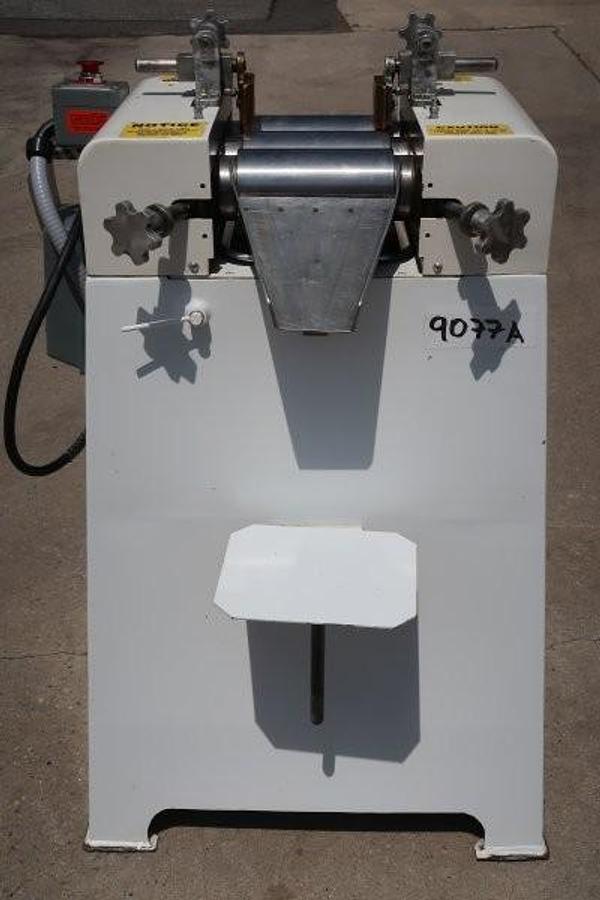
Three Roll Mills, like the Ross Model 4X8TRM, are a good example of the specialized equipment that turns up through used dealers. These machines are designed for dispersing, refining, and homogenizing viscous materials, and they are valued in industries ranging from inks and coatings to adhesives and cosmetics. Because Ross equipment is built to last, machines that are decades old can still be fully functional, which is part of why the used market for this brand stays active.
What industries use Charles Ross & Son equipment?
Ross mixing and blending equipment has found a home across a broad range of manufacturing sectors, largely because the company produces machines capable of handling materials with vastly different viscosities and processing requirements. The most common industries include pharmaceuticals, cosmetics and personal care, food processing, adhesives and sealants, specialty chemicals, paints and coatings, electronics manufacturing, and plastics compounding. In pharmaceuticals and cosmetics, Ross mixers are used for creams, ointments, gels, and emulsions. In the adhesives and electronics sectors, the equipment handles high-viscosity pastes and encapsulants that require precise dispersion.
This cross-industry demand is one reason used Ross equipment holds its value well. A Double Planetary Mixer that was previously used in a pharmaceutical plant, for example, may be perfectly suited for an adhesives manufacturer after proper cleaning and inspection. Buyers from almost any processing industry should find at least one Ross machine type relevant to their production needs, which is why used dealers who specialize in mixing equipment tend to carry multiple Ross models at any given time.
What is the difference between a Ross Double Planetary Mixer and a Ross High Shear Mixer?
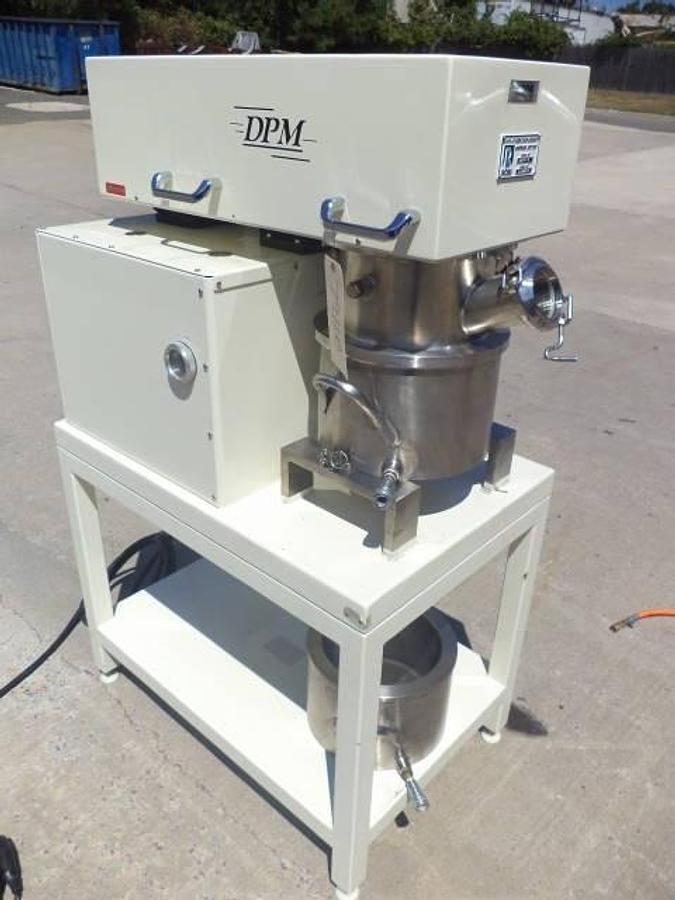
These two machine types serve fundamentally different mixing purposes, and understanding the distinction is important before purchasing either on the used market. A Double Planetary Mixer (DPM) uses two identical blades that rotate on their own axes while simultaneously orbiting the mixing vessel, producing a thorough, low-shear blending action. This design is particularly effective for high-viscosity materials, with Ross DPMs rated to handle materials ranging from 1 million to over 8 million centipoise. They are commonly used for pastes, putties, battery electrodes, thick gels, and similar products where gentle but thorough incorporation is the goal.
A High Shear Rotor-Stator Mixer, by contrast, generates intense mechanical and hydraulic shear by forcing material through a tight gap between a rapidly spinning rotor and a stationary stator. This action breaks down agglomerates, reduces particle size, and creates emulsions or dispersions in materials with much lower viscosity. High shear mixers are often used for cosmetic emulsions, pharmaceutical suspensions, and chemical dispersions. When evaluating used versions of either machine, buyers should consider whether the specific model's capacity and configuration match their production volume and material characteristics.
What is a Three Roll Mill and what is it used for?
A Three Roll Mill, sometimes called a triple roll mill, is a machine that uses the compressive and shear forces generated between three horizontally positioned rolls to mix, disperse, or homogenize viscous materials. The rolls rotate in alternating directions, and the material passes through the gaps between them multiple times, which progressively reduces particle size and creates a uniform dispersion. The gap between rolls is adjustable, allowing operators to control the degree of fineness achieved. Ross has manufactured Three Roll Mills for well over a century, and models like the 4X8TRM represent the kind of compact, precision-built equipment that remains useful across many industries.
Three Roll Mills are used in the production of inks, pigment pastes, cosmetics, pharmaceuticals, electronic pastes (such as solder paste and conductive adhesives), and specialty coatings. They are particularly valued when a product requires a very fine, consistent grind that other mixing equipment cannot achieve. On the used market, a well-maintained Three Roll Mill from a reputable manufacturer like Ross can offer significant value compared to purchasing a comparable machine through other channels, provided the buyer conducts a thorough inspection to assess roll condition, bearing wear, and gap adjustment functionality.
How do you evaluate the condition of a used Charles Ross & Son mixer before buying?
Assessing the condition of used mixing equipment requires looking beyond general appearance and focusing on the mechanical components most subject to wear. For any Ross mixer, key inspection points include the condition of the mixing blades or rolls, the integrity of seals and gaskets, the state of the drive motor and gearbox, and whether the controls and speed adjustment mechanisms function correctly. On a Three Roll Mill specifically, the condition of the rolls themselves is critical since surface wear, scoring, or uneven hardness can affect product quality directly. Buyers should ask for detailed photos or video of the machine running, and ideally arrange an in-person or live video inspection.
Reputable used equipment dealers will typically accommodate inspection requests, either at their facility or, in cases where equipment is still installed at a production site, by coordinating access with the current owner. Keep in mind that most dealers are not set up to run actual production tests, since that would require product-specific permitting and materials. What a dealer can demonstrate is whether the machine powers on, whether the drive system operates smoothly, and whether visible components are in acceptable condition. Buyers who are unfamiliar with a particular machine type may want to bring in a qualified service technician or consult directly with the Ross factory about what to look for on a specific model.
Does used Charles Ross & Son equipment come with a warranty?
Warranties on industrial equipment are typically provided by the original manufacturer and apply to machines sold through authorized channels. Used equipment is generally sold on an as-is basis, meaning the buyer accepts the machine in its current condition without a manufacturer-backed warranty. This is standard practice across the used machinery industry and is not specific to Ross equipment. The responsibility for assessing condition therefore falls on the buyer, which is why inspection before purchase is so important.
To manage this risk, buyers should focus on selecting dealers with a long track record in the mixing and processing equipment space, since experienced dealers have reputations to protect and are more likely to represent machines accurately. It is also worth contacting Ross directly to ask about parts availability and technical support for the specific model being considered, since the level of manufacturer support available can vary depending on the age and configuration of the machine. Older models may have limited parts availability, while more recent machines may still be supported with spare parts and service documentation.
What should buyers expect to pay for used Charles Ross & Son equipment?
Pricing for used Ross equipment varies considerably depending on the machine type, size, age, configuration, and overall condition. Smaller bench-top or laboratory-scale units, such as compact Three Roll Mills or small planetary mixers, can sell for a few thousand dollars in good condition. Production-scale Double Planetary Mixers, High Shear Mixers, or larger Three Roll Mills in working order typically range from the mid-five figures up to well over $100,000 for larger, more recently manufactured models with specialized features. Machines that include vacuum capability, jacketed vessels, explosion-proof motors, or custom tooling tend to command higher prices.
Because Ross equipment is known for durability and long service life, often 20 to 30 years with proper maintenance, used machines tend to hold their value better than equipment from less established manufacturers. This means buyers should not expect deep discounts simply because a machine is used. The value proposition is in acquiring a proven, high-quality machine at a fraction of the cost of a comparable unit purchased through other channels, not in getting equipment cheaply. Buyers should also factor in shipping, rigging, and any refurbishment costs when calculating the total landed cost of a machine.
What are the typical shipping and rigging considerations when buying used Ross mixing equipment?
Industrial mixing equipment ranges from relatively compact bench-top machines to large-scale production units that can weigh several tons, and the logistics involved in moving them vary accordingly. For smaller machines like a bench-top Three Roll Mill, standard palletization with appropriate blocking and bracing may be sufficient. Larger mixers, particularly Double Planetary Mixers or Multi-Shaft Mixers with heavy vessels, typically require custom crating and professional rigging for both loading at the seller's facility and unloading at the buyer's site. Forklift access, crane availability, and floor load capacity at the destination are all factors that need to be assessed in advance.
Buyers should request a detailed breakdown of packaging, rigging, and freight costs from the dealer before finalizing a purchase, since these expenses can add meaningfully to the total cost of acquisition. Shipping charges will depend on the machine's dimensions and weight, the distance involved, and the level of packaging required to prevent damage in transit. For international shipments, customs documentation and import duties add another layer of complexity. Getting clarity on all of these costs upfront avoids surprises and allows for an accurate comparison of total landed cost across different machines or sellers.
What are the available capacities for used Ross planetary mixers?
Ross Double Planetary Mixers have been manufactured across a wide range of batch sizes, from small laboratory models designed for batches under one liter up to large production units capable of handling hundreds of gallons. Common laboratory and pilot-scale sizes include 1-quart, 1-gallon, and 5-gallon models, which are frequently used for formulation development and small-batch production. Mid-range production models in the 10 to 100-gallon range are among the most commonly traded on the used market, since they represent a practical size for many manufacturing operations. Larger units in the 200-gallon and above range are less common but do appear, particularly from facilities that have upgraded or consolidated production.
When evaluating capacity, buyers should consider not just the nominal vessel size but also the working capacity, which is typically lower than the vessel's total volume to allow for proper blade engagement and mixing efficiency. The viscosity of the material being processed also affects which capacity range is appropriate, since very high-viscosity materials require more torque and may limit how full a vessel can be loaded. Used dealers who specialize in mixing equipment can often help match buyers to the right capacity range based on their production requirements and the specific materials they process.
Can used Charles Ross & Son equipment be retrofitted or upgraded after purchase?
Many Ross machines are designed with a degree of modularity that makes retrofitting feasible, though the extent of what is possible depends on the specific model, its age, and the availability of compatible components. Common upgrades that buyers pursue after acquiring used equipment include adding vacuum capability to planetary mixers, replacing worn mixing blades or rolls with current equivalents, upgrading motor controls to modern variable frequency drives, and adding temperature control to jacketed vessels. In some cases, vessels and blades from different Ross machines of the same model line are interchangeable, which can make it easier to expand capacity or replace worn parts.
Before purchasing a used Ross machine with the intention of retrofitting it, buyers should contact the Ross factory directly to discuss what modifications are supported and what parts are available for that particular model. The company's engineering team can often advise on compatibility and feasibility. For older machines, some original components may no longer be manufactured, which could limit retrofit options or require custom fabrication. Working with a dealer or service provider who has experience with Ross equipment specifically can also help buyers understand what is realistic before committing to a machine that may require significant investment beyond the purchase price.