Category
Manufacturer
Model
Chamunda Pharmatech
Chamunda Pharmatech is a prominent supplier of pharmaceutical machinery, including tablet presses and capsule filling machines. They serve the pharmaceutical and nutraceutical industries, providing highly precise and automated solutions for medication production.
FAQ:
What types of pharmaceutical machinery does Chamunda Pharmatech make?
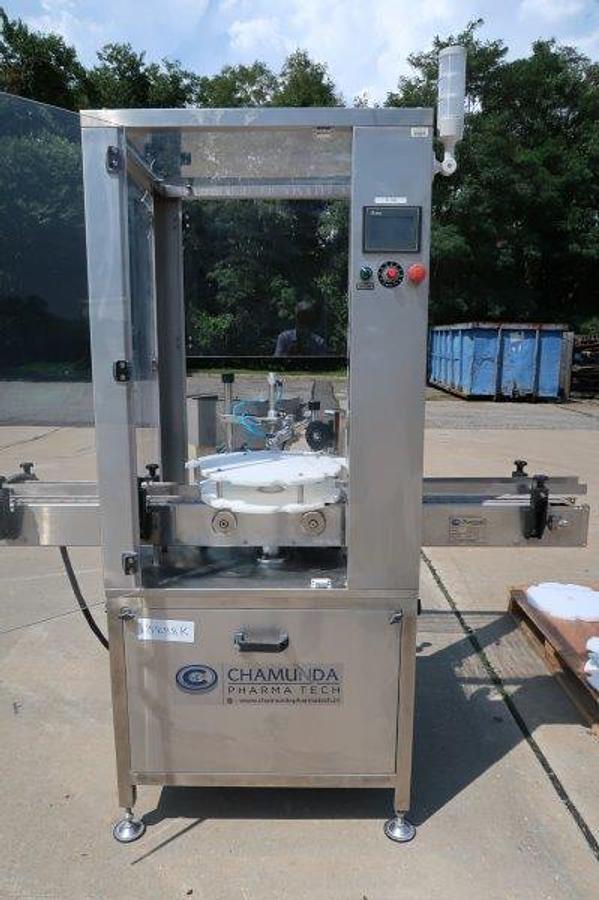
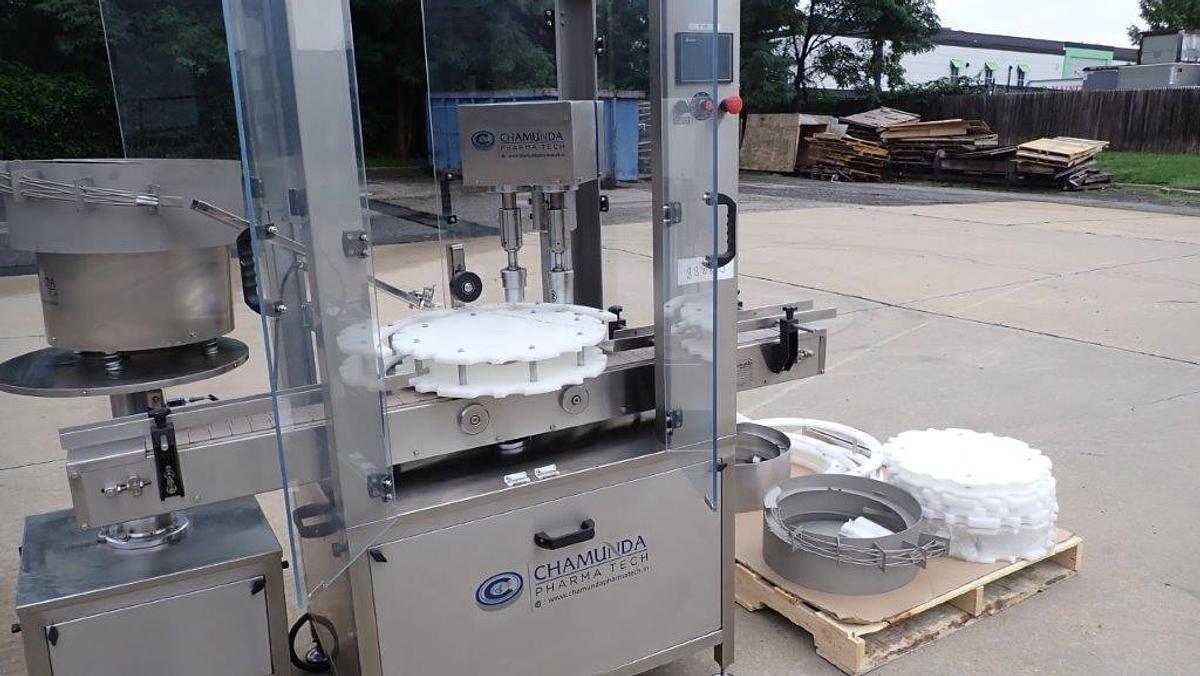
Chamunda Pharmatech produces a broad range of pharmaceutical and nutraceutical processing equipment. Their lineup covers solid dosage manufacturing, including tablet press machines and capsule filling machines, as well as packaging equipment such as blister packing machines, auto screw cappers, and automatic plugger/inserter machines. On the liquid and semi-solid side, they also manufacture liquid filling lines and coating machines, along with granulation equipment used earlier in the production process.
The company is headquartered in Ahmedabad, Gujarat, which has long been one of India's most active hubs for pharmaceutical machinery manufacturing. Their equipment is commonly found in small to mid-sized pharmaceutical plants, contract manufacturing facilities, nutraceutical producers, and Ayurvedic medicine manufacturers. The machines are generally built to GMP-aligned standards with stainless steel SS316 construction, which matters for regulatory compliance in markets across India, Africa, Southeast Asia, and other regions where these machines are widely exported.
What is the difference between buying used Chamunda Pharmatech machinery versus buying directly from the manufacturer?
Buying directly from a manufacturer means receiving equipment that has never been put into production service. Purchasing used Chamunda Pharmatech machinery means acquiring equipment that has already been deployed in a working pharmaceutical or nutraceutical facility. The practical implication is that the buyer takes on more responsibility for understanding the machine's current condition, operating history, and any wear on components. Used machines are typically sold as-is, without the coverage that a manufacturer would attach to a factory purchase.
The upside is cost. Used pharmaceutical machinery is generally priced well below manufacturer pricing, which makes it an attractive path for companies looking to expand capacity, replace a specific piece of equipment, or enter production without the capital outlay of buying new. Buyers should focus on sourcing from reputable used equipment dealers who specialize in pharmaceutical machinery, request a thorough inspection before committing, and contact Chamunda Pharmatech directly to understand what parts and technical support are available for the specific model and age of machine they are considering.
How should a buyer inspect used Chamunda Pharmatech equipment before purchasing?
Inspection is one of the most important steps in buying any used pharmaceutical machinery, and buyers have a few practical options. Reputable dealers will typically accommodate in-person visits, live video walkthroughs, or recorded video captures of the machine so the buyer can assess its physical condition, completeness, and visible wear. If the equipment is still installed and running at a pharmaceutical facility, it may be possible to arrange an inspection at the actual production site, which gives the buyer the clearest picture of how the machine has been maintained and operated.
One thing to keep in mind is that most used equipment dealers are not licensed pharmaceutical manufacturers, so they cannot run actual product through the machine during an inspection. What they can do is demonstrate mechanical operation, show control panel function, and document the machine's overall state. Buyers should also check whether all original tooling, change parts, and documentation are included with the machine, since missing components can add unexpected cost and downtime after purchase. Consulting with Chamunda Pharmatech's technical team about the specific model is also a smart step, as the manufacturer can clarify what spare parts and service support remain available for that machine.
Is Chamunda Pharmatech equipment GMP-compliant?
Chamunda Pharmatech designs their machinery to align with Good Manufacturing Practice (GMP) standards, which is a baseline requirement for pharmaceutical equipment used in regulated production environments. Key construction features associated with GMP compliance include stainless steel SS316 contact parts, smooth weld finishes that minimize contamination risk, and designs that allow for cleaning and validation. These features make the equipment suitable for use in regulated markets across India, Africa, Southeast Asia, and other regions where GMP adherence is required by health authorities.
For buyers purchasing used Chamunda Pharmatech machinery, GMP compliance is not automatically assumed. The machine's condition at the time of purchase, its maintenance history, and whether it has been properly cleaned and stored all affect whether it can meet the validation requirements of a specific facility. Buyers operating in strictly regulated markets, such as those seeking US FDA or EU GMP compliance, should have the equipment assessed by a qualified engineer or validation specialist before putting it into production. The manufacturer may also be able to provide documentation on the machine's original specifications, which supports the qualification process.
What should buyers know about spare parts availability for used Chamunda Pharmatech machines?
Spare parts availability is a practical concern with any used pharmaceutical machinery, and it is worth investigating before finalizing a purchase. For Chamunda Pharmatech equipment, the manufacturer is based in Ahmedabad, India, and has been an active supplier to the pharmaceutical and nutraceutical industries for many years. That ongoing presence generally means that replacement parts, tooling, and technical documentation are available for a range of their models. However, availability can vary depending on the age of the machine and whether a particular model is still in active production.
Buyers should contact Chamunda Pharmatech directly with the machine's model number and any available serial information to get a clear answer on parts availability and lead times before purchasing. It is also worth asking the used equipment dealer whether the machine comes with any spare parts, change parts, or documentation, since these can reduce the time and cost of getting a machine back into production. For older or discontinued models, buyers may need to factor in the cost of having certain components fabricated locally or sourced through third-party suppliers.
What is the typical price range for used Chamunda Pharmatech pharmaceutical machinery?
Pricing for used Chamunda Pharmatech machinery varies significantly based on the type of equipment, its age, condition, and included accessories. As a general reference point, Chamunda Pharmatech equipment is known for being competitively priced compared to European or US-manufactured equivalents even when purchased directly from the manufacturer, which means used examples can represent meaningful savings for buyers in budget-conscious markets. Simpler packaging machines like cappers and plugger/inserters tend to sit at the lower end of the price spectrum, while more complex equipment such as tablet presses, capsule fillers, and blister packaging lines command higher prices.
Buyers should request itemized pricing that accounts for the machine itself, any included tooling or spare parts, packaging and crating for shipping, rigging costs for loading and unloading, and freight to the destination. These ancillary costs can add a meaningful percentage to the base machine price, particularly for heavy equipment being shipped internationally. Getting a full landed cost estimate before committing to a purchase is the most reliable way to compare options accurately.
How does shipping work for used pharmaceutical machinery like Chamunda Pharmatech equipment?
Shipping used pharmaceutical machinery requires more planning than standard freight because the equipment is often heavy, precision-built, and sensitive to vibration and impact during transit. Machines should be properly palletized or crated before shipment, and the level of packaging required depends on the size and fragility of the equipment. Lighter machines may be adequately protected with standard pallet and stretch-wrap packaging, while larger or more complex machines typically require custom wooden crating. The cost of packaging is usually the buyer's responsibility and will vary based on what the dealer provides.
For heavy equipment, rigging is an additional consideration. Loading a large tablet press or liquid filling line onto a truck or container requires specialized lifting equipment, and unloading at the destination requires the same. Buyers should ask the dealer for a detailed breakdown of packaging, rigging, and freight costs so there are no surprises when the machine arrives. International shipments also involve customs documentation, import duties, and potentially local compliance inspections, all of which should be factored into the total cost and timeline. Working with a freight forwarder experienced in pharmaceutical equipment can simplify the logistics considerably.
What are the most common applications for Chamunda Pharmatech capsule filling and tablet press machines?
Chamunda Pharmatech capsule filling machines are used to fill hard gelatin or HPMC capsules with powder, pellets, granules, or tablet inserts. They are a standard piece of equipment in pharmaceutical plants producing prescription medications, over-the-counter supplements, and nutraceutical products. The machines are also widely used by Ayurvedic and herbal medicine manufacturers, particularly in India, where capsule-based formulations are a common delivery format. Capsule fillers from Chamunda Pharmatech range from semi-automatic bench-top models suited to smaller production runs to fully automatic machines capable of high-volume output.
Their tablet press machines serve a similar breadth of applications, compressing powder blends into tablets of specified weight, hardness, and diameter. These machines are central to the production of both pharmaceutical-grade tablets and nutraceutical products like vitamins and mineral supplements. Used versions of both machine types are sought after by contract manufacturers looking to expand capacity, startups entering pharmaceutical production, and established manufacturers replacing aging equipment. Because Chamunda Pharmatech machines are built to GMP-aligned standards with SS316 contact parts, they are generally suitable for use in regulated production environments, though buyers should verify the specific machine's condition and documentation before use in a validated facility.
What payment terms should buyers expect when purchasing used pharmaceutical machinery?
Most used pharmaceutical equipment dealers require full payment before a machine is released for shipping. This is standard practice in the industry and reflects the fact that used machinery, unlike manufactured goods, is a one-of-a-kind item that the dealer takes off the market once a sale is agreed upon. Wire transfer is the most common payment method for transactions of this size, particularly for international purchases. Some dealers may accept other forms of payment, but buyers should clarify the accepted methods early in the negotiation to avoid delays.
For buyers with an established relationship with a dealer, some flexibility on payment timing may be available, but this is not the norm for first-time transactions. Buyers should also make sure that the payment process is tied to a clear agreement that specifies exactly what is included in the sale, the condition of the machine as represented, and the logistics responsibilities of each party. Having this documentation in place before payment is made protects both sides and reduces the risk of disputes after the machine has shipped.
How do Chamunda Pharmatech machines compare to European or US-made pharmaceutical equipment?
Chamunda Pharmatech machinery is generally positioned as a cost-effective alternative to equipment manufactured in Europe or the United States. Indian-manufactured pharmaceutical equipment has improved considerably in quality and precision over the past two decades, and manufacturers like Chamunda Pharmatech have built reputations for producing reliable, GMP-aligned machines that meet the needs of small to mid-sized pharmaceutical operations. The price difference compared to European or American equivalents can be substantial, which is why their equipment is popular in emerging markets across Africa, Southeast Asia, and South Asia.
The trade-offs are worth understanding. European and US manufacturers often have longer track records in highly regulated markets like the US FDA and EU GMP environments, and their machines may come with more extensive validation documentation and broader global service networks. Chamunda Pharmatech equipment is well-suited to markets where GMP compliance is required but where the full weight of US or EU regulatory scrutiny is not the primary concern. For buyers operating in those stricter regulatory environments, additional validation work may be needed regardless of the machine's origin. When purchasing used equipment of any origin, the machine's actual condition at the time of sale matters more than the manufacturer's reputation alone.