Category
Manufacturer
Model
FAQ:
What is a CFS/Koppens spiral oven and what is it used for?
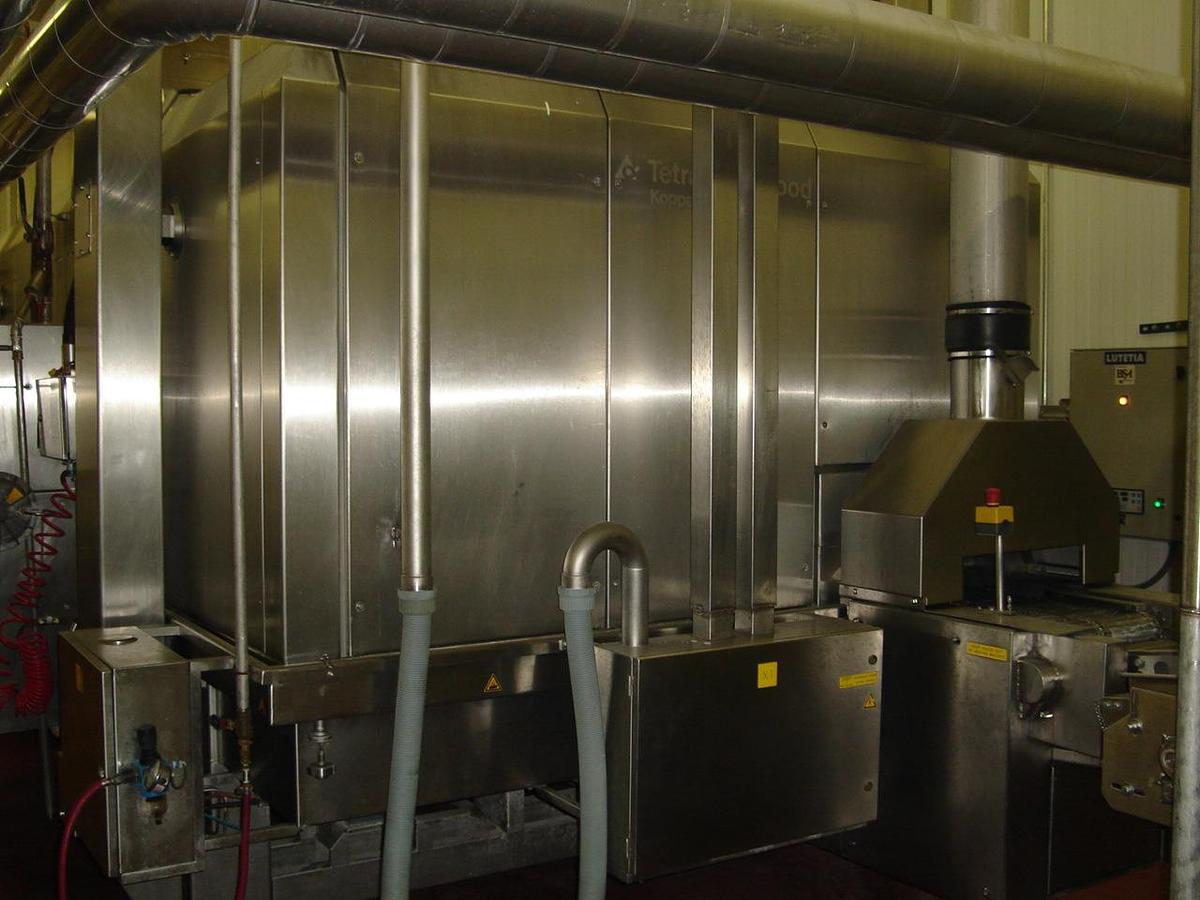
A CFS/Koppens spiral oven is an industrial-grade continuous cooking system designed for high-volume food production environments. The design uses a helical conveyor belt that winds upward around a central drum, allowing product to travel a long cooking path within a relatively compact floor footprint. This makes spiral ovens particularly well suited for facilities where space is limited but throughput demands are high. The CFS brand originated from Koppens, a Dutch equipment manufacturer with a strong reputation in the food processing industry, and the line was later folded into the Marel group.
These ovens are used across a wide range of food categories including poultry (whole pieces, patties, and nuggets), beef burgers, fish fillets, vegetables, and certain bakery products. Depending on the model and configuration, they can operate using steam injection, hot air impingement, or a combination of both, giving processors flexibility in how they achieve browning, moisture retention, and internal temperature targets. The consistent cooking environment produced by this design makes it a preferred choice for processors who need repeatable results at scale, shift after shift.
What food products are best suited for processing in a CFS/Koppens spiral oven?
CFS/Koppens spiral ovens are versatile enough to handle a broad range of protein and vegetable products, but they perform especially well with items that benefit from controlled heat and moisture during cooking. Chicken breast fillets, formed chicken patties, beef burgers, fish portions, and breaded or battered products are among the most common applications. The ability to combine steam and hot air in the same cooking chamber means processors can dial in the right balance of surface color and internal moisture for each product type.
Beyond proteins, some configurations are used for par-baked breads, pastry items, and vegetable portions that require gentle, even heat over an extended dwell time. The spiral design inherently provides that extended dwell time without requiring a long linear oven, which is why food manufacturers with limited floor space often favor this format. When evaluating a used CFS/Koppens spiral oven, buyers should confirm which cooking modes the specific unit supports, since not all models include steam injection or impingement capabilities, and the installed configuration will directly affect which products can be run efficiently.
What throughput capacity can a CFS/Koppens spiral oven handle?
Throughput on CFS/Koppens spiral ovens varies considerably depending on the model, belt width, drum diameter, and the specific product being cooked. Smaller units in this product family can process in the range of 500 kg per hour, while larger configurations are capable of exceeding 3,000 kg per hour under the right conditions. Product density, target internal temperature, and the cooking mode being used all influence actual output, so published capacity figures should be treated as a starting point rather than an absolute guarantee for any given application.
When shopping for a used unit, it is worth asking the seller for documentation on the specific model's rated capacity and, if possible, any production records from the facility where the machine was in service. Understanding the gap between rated capacity and actual production output can help buyers size the equipment correctly for their line requirements. Oversizing can mean unnecessary energy costs, while undersizing creates obvious bottlenecks. A reputable used equipment dealer should be able to provide model specifications or connect the buyer with manufacturer documentation to support this evaluation.
What should buyers inspect when purchasing a used CFS/Koppens spiral oven?
Buying a used spiral oven of this type requires a thorough mechanical and structural review, and there are several areas that deserve particular attention. The conveyor belt itself is one of the highest-wear components in any spiral oven. Buyers should examine the belt for broken links, uneven wear, and any signs of deformation that could cause tracking problems during production. The drum drive system, including the drive motor, gearbox, and any friction or positive drive interface between the drum and the belt, should also be assessed for wear and operational integrity.
Beyond the belt and drive, the burner assemblies or heating elements, steam injection nozzles (if applicable), fan motors, and the control system all warrant close inspection. Stainless steel panels and internal ductwork should be checked for corrosion, damage, or missing components. Buyers should also ask about the service history of the machine, including any major repairs or part replacements. Most reputable used equipment dealers will accommodate in-person inspections or video walkthroughs of the machine, and some units may still be installed at an active production facility where a live inspection can be arranged. Keep in mind that dealers typically cannot run actual product through the oven during an inspection, as full production testing requires permitting and infrastructure beyond what a standard equipment dealer operates.
What utility requirements does a CFS/Koppens spiral oven typically need?
CFS/Koppens spiral ovens are industrial systems that require significant utility infrastructure, and the specific requirements depend on the model and cooking configuration. Gas-fired units need a natural gas or propane supply sized to the oven's BTU rating, which on larger models can be substantial. Electrically heated variants require three-phase power at voltages and amperages that vary by model. Steam injection systems, where present, need a reliable steam supply at the correct pressure, and facilities without existing steam infrastructure may face added costs to support this feature.
Additionally, these ovens typically require compressed air for pneumatic controls and actuators, water for condensate drainage and cleaning systems, and exhaust ventilation to handle cooking vapors and combustion gases. Before purchasing a used unit, buyers should obtain the full utility specification sheet for the specific model and compare it against what their facility can provide. Retrofitting a facility to meet utility requirements can add meaningful cost to a project, so understanding the full picture upfront is important. A seller with experience in food processing equipment should be able to supply technical documentation or connect buyers with the information needed to complete this assessment.
What are the available belt widths and drum sizes for CFS/Koppens spiral ovens?
CFS/Koppens produced spiral ovens in a range of configurations to serve different production scales and product types. Belt widths across the product line have historically ranged from roughly 400 mm on smaller models up to 1,000 mm or more on high-capacity units. Drum diameter is the other key dimension, as a larger drum allows for more belt tiers and therefore a longer total cooking path within the same footprint. The combination of belt width and drum size determines both the throughput potential and the physical footprint of the installed machine.
For buyers purchasing used equipment, the specific belt width and drum configuration of the unit being offered is a critical specification to confirm early in the process. These dimensions affect not only capacity but also compatibility with upstream and downstream equipment on the production line. A unit with a belt width that does not match the existing line layout may require additional transfer equipment or line modifications. Sellers of used CFS/Koppens spiral ovens should be able to provide the model number and corresponding specifications, which can then be cross-referenced with technical documentation to confirm exact dimensions.
What is the typical price range for a used CFS/Koppens spiral oven?
Pricing for used CFS/Koppens spiral ovens varies widely based on model size, age, condition, cooking configuration, and current market availability. Smaller or older units in as-is condition can be found at significantly lower price points, while larger, more recent models with well-documented service histories and complete control systems command considerably higher prices. As a general reference point, used industrial spiral ovens in this category have historically traded anywhere from the low tens of thousands of dollars for basic units up to several hundred thousand dollars for large, well-maintained systems with full documentation.
Beyond the purchase price, buyers should factor in the total landed cost of the equipment. This includes rigging and loading at the seller's location, freight to the destination facility, any required crating or specialized packaging, and unloading and installation costs at the buyer's site. Larger spiral ovens are heavy, multi-section machines that require professional rigging and may need to be partially disassembled for transport, adding to logistics costs. Contacting the seller early to understand packaging, rigging, and freight requirements helps avoid surprises and gives a clearer picture of the true acquisition cost.
How does a spiral oven differ from a linear tunnel oven in food production?
The core difference between a spiral oven and a linear tunnel oven is how each design manages the relationship between cooking time and floor space. A linear tunnel oven achieves longer dwell times by extending the length of the cooking chamber, which means a machine requiring a 10-minute cook time at a given belt speed needs a proportionally long physical footprint. A spiral oven achieves the same dwell time by stacking the conveyor belt in a helical path around a central drum, so the effective belt length can be 50 to 100 meters or more while the machine occupies a fraction of the floor space a linear oven of equivalent capacity would require.
For food processors operating in facilities where floor space is at a premium, this is a meaningful practical advantage. Spiral ovens also tend to offer more uniform heat distribution across the product because the cooking environment is enclosed and recirculated rather than flowing in a single direction as in many tunnel designs. The tradeoff is that spiral ovens are mechanically more complex, with the drum drive system and multi-tier belt arrangement requiring more specialized maintenance knowledge. This is worth considering when evaluating a used unit, since access to technicians familiar with the specific drive system and control platform of a CFS/Koppens machine can affect long-term operating costs.
How is a used CFS/Koppens spiral oven typically shipped and what should buyers expect for logistics?
Spiral ovens are large, heavy industrial machines, and shipping them requires careful planning. Most units will need to be partially disassembled before transport, with the drum, belt, and major structural sections separated to allow the machine to be moved out of the facility and loaded onto a flatbed or enclosed trailer. Professional rigging equipment, including cranes or heavy forklifts, is typically required for both loading at the origin and unloading at the destination. These rigging services are generally arranged and billed separately from the freight itself, and buyers should request a detailed breakdown of these costs from the seller before finalizing a purchase.
Packaging requirements will depend on the condition of the machine and the distance it needs to travel. Sellers may offer different levels of preparation ranging from basic palletization to full crating, with costs varying accordingly. Buyers should ask specifically about how the belt, control panels, and any fragile components will be protected during transit. International shipments add customs documentation and import duties to the equation. Getting a clear picture of the full landed cost, including rigging, packaging, freight, and any import costs, is an important step before committing to a purchase, particularly for a machine of this size and value.
What should buyers know about parts availability and manufacturer support for CFS/Koppens spiral ovens?
CFS/Koppens has a layered history as a brand. The equipment originated with Koppens, a Dutch manufacturer, which was acquired by CFS (Convenience Food Systems), and the combined entity was later absorbed into the Marel group. This ownership history matters for buyers of used equipment because it affects where parts can be sourced and what level of technical support is available. Marel, as the current successor entity, is the starting point for inquiries about spare parts, technical documentation, and service support for machines that carry the CFS or Koppens nameplate.
Buyers should contact the manufacturer directly before purchasing a used unit to understand what parts are still available for the specific model and serial number in question. Older models may have limited factory parts availability, which shifts the sourcing strategy toward third-party suppliers or fabricated replacements for common wear items. High-wear components like belt links, drive components, and seals are often available from aftermarket suppliers even when factory support is limited. Understanding this picture in advance helps buyers plan for ongoing maintenance costs and avoid situations where a critical part is unavailable after the machine is installed and in production. Selecting a used equipment dealer with experience in food processing machinery is also valuable, as they are more likely to have relevant contacts and knowledge to assist with post-sale support questions.