Category
Manufacturer
Model
Cassel
Cassel is a leader in the field of industrial metal detection and sorting equipment, serving food processing and recycling industries. They provide solutions that prevent contamination and ensure product safety and quality. Cassel’s equipment is known for its sensitivity and accuracy in detecting metal contaminants.
FAQ:
What types of Cassel metal detection equipment are available on the used market?
Cassel produces several distinct categories of industrial metal detection systems, and used examples from most of these product lines do appear on the secondary market. The main types include conveyor belt detectors (designed to scan packaged or loose product moving along a production line), pipeline and throat detectors (used for liquid, paste, or pumped products), gravity-fall detectors (positioned above packaging equipment to scan free-falling bulk material), and bulk product detectors for high-volume applications. Each configuration is built around a specific processing environment, so buyers typically need to match the detector type to their production setup rather than treating all Cassel units as interchangeable.
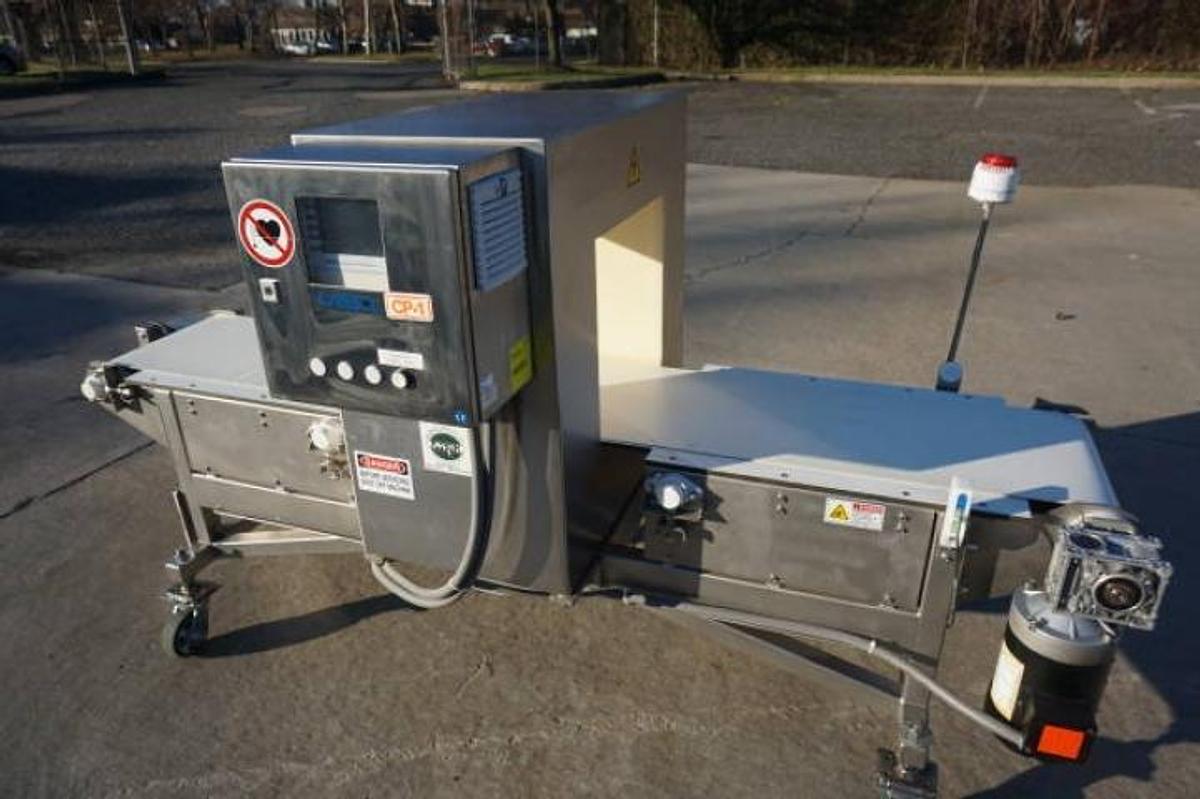
One example of used Cassel equipment that surfaces for sale is the Cassel Shark 2, a stainless steel conveyor-style metal detector with an 18-inch wide by 16-inch high aperture opening. The Shark series is a well-known Cassel product line, recognized for its sensitivity in food processing environments. When shopping for used Cassel equipment, buyers should pay close attention to the aperture dimensions, frequency settings, and any optional rejection systems (air blast, pusher arm, drop flap) that may or may not be included with the unit, as these details significantly affect how the machine fits into an existing line.
What industries use Cassel metal detection systems?
Cassel metal detection equipment is used across a broad range of industries, though food processing accounts for a large share of installations. Within food manufacturing, Cassel systems are found in meat and poultry processing, bakery and snack production, dairy, frozen foods, and fresh produce packing. The equipment helps processors identify and remove metal contaminants before product reaches consumers, which is a core requirement under food safety management frameworks like HACCP, BRC, and IFS. Cassel has also built a strong reputation in the pharmaceutical industry, where contamination control standards are equally stringent and the products being scanned can be electrically conductive or packaged in metallic materials.
Beyond food and pharma, Cassel systems are used in textile manufacturing (to protect cutting and processing machinery from broken needles and metal fragments) and in recycling operations where sorting ferrous and non-ferrous metals from mixed material streams is the primary goal. This cross-industry versatility is one reason used Cassel equipment tends to retain interest on the secondary market. A detector originally installed in a food plant may be reconfigured for a different application, though buyers should verify that the specific model and frequency settings are appropriate for their intended product and environment before purchasing.
What metals can a Cassel metal detector identify?
Cassel metal detectors are designed to detect all three primary categories of metal contaminants: ferrous metals (iron and steel), non-ferrous metals (aluminum, copper, brass, lead, and similar materials), and stainless steel. Stainless steel is widely considered the most challenging contaminant to detect because it has relatively low magnetic permeability and electrical conductivity compared to other metals. Cassel systems are specifically engineered to handle this, which is one reason they are prevalent in meat and dairy processing where stainless steel fragments from processing equipment are a realistic contamination risk.
Many Cassel systems use multi-frequency simultaneous detection technology, which means the detector operates across several frequencies at the same time rather than cycling through them sequentially. This approach improves sensitivity to difficult-to-detect metals, particularly stainless steel in wet or high-salt products that are themselves electrically conductive. In those product effect situations, single-frequency detectors often require sensitivity to be dialed back to reduce false rejects, but multi-frequency systems can better distinguish between the product signal and a genuine metal contaminant. Buyers evaluating used Cassel equipment should confirm whether the specific unit supports multi-frequency operation, as this capability varies by model and age.
How sensitive are Cassel metal detectors compared to other industrial metal detection brands?
Cassel is generally regarded as one of the more sensitive brands in the industrial metal detection category, particularly for stainless steel detection in challenging product environments. Sensitivity in metal detection is not a fixed number; it depends on the aperture size (larger openings reduce sensitivity), the product being scanned (wet, salty, or conductive products create background noise), the type of metal being detected, and the orientation of the metal fragment as it passes through the detector coil. Cassel's engineering focus on multi-frequency technology and signal processing has earned the brand a reputation for maintaining usable sensitivity levels even in difficult product conditions where competing systems may require significant sensitivity compromises.
For practical comparison, a well-maintained Cassel conveyor detector in a mid-range aperture size can typically detect ferrous spheres in the 0.3 to 0.8 mm range, non-ferrous spheres in the 0.5 to 1.2 mm range, and stainless steel spheres in the 1.0 to 2.0 mm range, though actual performance figures vary by model, aperture, and product. Buyers purchasing used Cassel equipment should request any available test records or ask for a functional demonstration during inspection, since sensitivity can degrade over time if the detector has been exposed to physical damage, electromagnetic interference, or component wear. Comparing specifications between the used unit and current Cassel documentation is a reasonable way to benchmark expected performance.
Are Cassel metal detectors compliant with food safety standards like HACCP, BRC, and IFS?
Cassel metal detection systems are designed and built to support compliance with major food safety management standards, including HACCP (Hazard Analysis and Critical Control Points), BRC (British Retail Consortium Global Standard for Food Safety), and IFS (International Featured Standards). These frameworks require food manufacturers to identify metal contamination as a critical control point and to demonstrate that detection equipment is capable, calibrated, and regularly tested. Cassel equipment typically includes data logging and audit trail functionality, which allows production teams to record test results, sensitivity checks, and rejection events in a format that satisfies third-party auditor requirements.
When buying used Cassel equipment, food processors should consider whether the unit's software and data logging features are still functional and whether the machine can generate the documentation formats their specific certification body requires. Older Cassel models may have more basic logging capabilities compared to current production units, which often feature touchscreen interfaces with more sophisticated reporting tools. It is also worth consulting directly with Cassel or an authorized service provider to confirm that the specific model being considered can still receive software updates or calibration support, since audit compliance depends on ongoing maintenance as much as the initial design of the equipment.
Can a used Cassel metal detector be integrated into an existing production line?
Used Cassel metal detectors can generally be integrated into existing production lines, but successful integration depends on matching several technical parameters to the specific line requirements. The most critical factor is aperture size. The detector opening must be large enough to accommodate the product and conveyor belt (or pipeline diameter, in the case of throat detectors) while being as small as practical to maximize sensitivity. Buyers should measure their conveyor belt width, product height at its tallest point, and any required clearance before evaluating a used unit. The Cassel Shark 2, for example, has an 18-inch wide by 16-inch high aperture, which suits a fairly wide range of packaged food applications but would not fit every line without modification.
Beyond physical fit, integration involves connecting the detector's rejection system (if included) to the line controls, configuring the conveyor speed settings, and establishing communication with any upstream or downstream equipment or data systems. Cassel detectors often support standard industrial communication protocols, which simplifies integration into automated lines. For used equipment, buyers should verify that the control system and rejection mechanism are intact and functional, and should plan for the possibility that some components may need replacement or recalibration before the unit performs to specification. Engaging a qualified metal detection technician or the manufacturer's service team for commissioning is a practical step that reduces startup risk.
What should buyers inspect when evaluating used Cassel metal detection equipment?
A thorough inspection of used Cassel metal detection equipment should cover both the physical condition of the unit and its functional performance. On the physical side, buyers should examine the search head housing for cracks, dents, or signs of moisture ingress, since the coil assembly inside is sensitive to physical damage and contamination. Stainless steel conveyor frames and belt assemblies should be checked for wear, corrosion, and belt tracking issues. The control panel or touchscreen should be powered on and tested for responsiveness, and any rejection mechanism (air blast valve, pusher arm, or flap) should be cycled to confirm it operates correctly.
For functional assessment, the standard approach is to pass test pieces (calibrated ferrous, non-ferrous, and stainless steel spheres of known diameter) through the aperture and confirm the detector triggers at the expected sensitivity levels. Reputable used equipment dealers will typically accommodate in-person inspections or provide video demonstrations of the machine operating. Some units may still be installed in a working facility where a live inspection can be arranged. Buyers should also ask about the machine's service history, any known repairs, and whether the original documentation or calibration records are available. Consulting with Cassel directly about the age and model can help buyers understand what level of technical support and parts availability to expect going forward.
What are typical shipping and logistics considerations for used Cassel metal detection equipment?
Shipping used Cassel metal detection equipment requires careful planning because the search head coil assembly is sensitive to shock and vibration, and improper packaging can cause damage that is not immediately visible but affects detection performance. Dealers typically palletize or crate the equipment before shipment, and the level of packaging required depends on the size and configuration of the unit. Smaller conveyor detectors may ship on a standard pallet with appropriate blocking and bracing, while larger systems or those with integrated conveyor frames may require custom crating. Buyers should ask the seller specifically how the unit will be packaged and what that packaging is designed to protect against, since shipping costs vary significantly based on the crating method used.
For larger or heavier Cassel systems, rigging for loading and unloading at both the origin and destination is an added cost that buyers should factor into their total landed price. Freight carriers that handle industrial machinery are generally preferable to standard LTL (less-than-truckload) carriers for this type of equipment. Buyers should request a complete breakdown of packaging, rigging, and freight charges before finalizing a purchase so there are no surprises. It is also worth confirming with the seller whether the unit will be tested or inspected before it is packaged for shipment, since identifying any issues before the machine leaves the facility is far simpler than dealing with them after delivery.
What payment terms do used equipment dealers typically offer for Cassel metal detectors?
Used equipment dealers generally require payment in full before a machine is released for shipment. This is standard practice in the secondary machinery market and applies to most Cassel metal detection equipment purchases. The reasoning is straightforward: once a machine has shipped, the dealer has limited recourse if payment issues arise, and used equipment transactions typically do not involve the same credit infrastructure as large capital equipment purchases from manufacturers. Buyers who are unfamiliar with a particular dealer should treat the payment-in-advance requirement as a baseline expectation rather than a red flag, provided the dealer has a verifiable track record.
Some dealers extend payment terms or net arrangements to repeat customers with whom they have an established relationship. Wire transfer is the most common payment method for machinery purchases of this type, though some dealers accept other forms depending on transaction size and buyer history. Buyers making a first purchase from a dealer should research the company's history, look for verifiable references or reviews from past customers, and confirm that the dealer specializes in industrial processing or food manufacturing equipment rather than being a generalist reseller with limited technical knowledge of the category. Paying close attention to inspection rights and the clarity of the sale terms before sending payment is the most practical protection available when buying used equipment.
How does buying used Cassel metal detection equipment compare to purchasing current production models?
Buying used Cassel metal detection equipment offers a meaningful cost advantage over purchasing current production models, which is the primary reason buyers pursue the secondary market. Industrial metal detection systems represent a significant capital investment, and a used unit in good working condition can perform the same core detection function at a fraction of the price. For companies that need to add a detection point to a line, replace a failed unit quickly, or equip a secondary production area without a large capital budget, used equipment is a practical path. The Cassel brand's reputation for durability means that well-maintained older units can still deliver reliable sensitivity performance.
The trade-offs are worth understanding clearly. Used equipment is sold as-is, without the coverage that comes with a purchase from the manufacturer. The buyer assumes responsibility for verifying condition, and any issues discovered after purchase become the buyer's cost to resolve. Older Cassel models may also have limited parts availability or reduced support from the manufacturer depending on age, so buyers should contact Cassel directly to gauge what service resources exist for the specific model they are considering. Software features, communication protocols, and data logging capabilities on older units may also fall short of what current food safety audits expect. For buyers whose primary need is reliable detection in a less documentation-intensive environment, these limitations may be entirely acceptable. For those with strict audit requirements, a careful evaluation of the specific unit's capabilities against current certification standards is a necessary step before purchase.