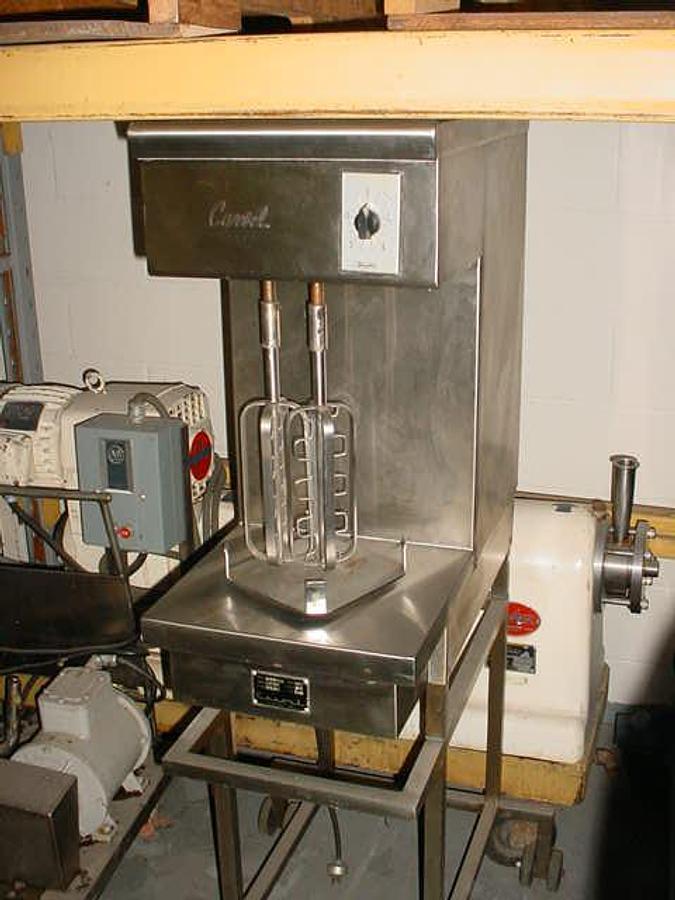
Category
Manufacturer
Model
Carvel
Carvel is a specialist in the field of fluid dispensing and metering equipment for the chemical and automotive industries. They offer solutions that ensure precise control over fluids in manufacturing processes. Carvel’s technology is pivotal in achieving quality and reducing waste in applications that demand accuracy.
FAQ:
What types of used Carvel equipment are typically available for sale?
Used Carvel equipment that comes to market tends to fall into a few main categories. The most commonly available pieces include soft serve machines, ice cream cake display freezers, dipping cabinets, shake mixers, and fluid dispensing and metering units. Carvel has historically used commercial-grade machines from manufacturers like Taylor and Carpigiani in their locations, so buyers often find models such as the Taylor 794 or Taylor 8756 listed under Carvel-associated equipment. Whippers and other specialty dispensing units also appear on the used market periodically.
Beyond the ice cream service equipment, Carvel has also been associated with fluid dispensing and metering technology for chemical and automotive applications. This side of the brand focuses on precise fluid control in manufacturing environments, and used equipment from this segment occasionally surfaces through industrial equipment dealers. Buyers searching for Carvel equipment should clarify which category they need, since the commercial food service equipment and the industrial fluid metering equipment serve very different purposes and come from different supply channels.
Is used Carvel equipment reliable enough for commercial use?
Used Carvel-associated equipment, particularly the soft serve machines from manufacturers like Taylor and Carpigiani, has a strong reputation for commercial-grade durability. These machines were built to handle the high-volume demands of a busy retail ice cream operation, which means they are generally overbuilt relative to lighter-duty alternatives. A machine that has been properly maintained through its service life at a Carvel location can still have significant useful life remaining when it enters the secondary market.
That said, reliability of any used machine depends heavily on its maintenance history, age, and how it was operated. Since all used equipment is sold as-is, the burden of assessing condition falls on the buyer. Prospective buyers should request an inspection, either in person or via video, before committing to a purchase. Asking for service records, reviewing visible wear on components, and consulting with a qualified technician who knows the specific model are all practical steps. Selecting a dealer who specializes in commercial food service or industrial equipment and has a verifiable track record adds another layer of confidence to the buying process.
What should buyers inspect before purchasing a used Carvel soft serve machine?
Before buying a used soft serve machine that was previously operated at a Carvel location, there are several mechanical and operational points worth examining closely. The freezing cylinder, scraper blades, and drive shaft are high-wear components that should be checked for scoring, cracking, or excessive wear. The refrigeration system, including the compressor and condenser coils, should show no signs of refrigerant leaks or unusual noise during operation. Electrical components, control boards, and mix feed systems are also worth scrutinizing, as repairs to these parts can be costly.
Most reputable used equipment dealers will accommodate in-person inspections or provide detailed video walkthroughs of the machine. Keep in mind that dealers typically do not have food production permits, so running an actual batch of soft serve mix during inspection is generally not possible. What buyers can reasonably expect is a visual inspection of all accessible components, a demonstration of the machine powering on and cycling through its functions, and honest disclosure of any known issues. If the machine is still installed at an operating facility, the dealer may be able to arrange an inspection at that location where a more thorough operational review is possible.
Do Carvel soft serve machines use proprietary parts, or are replacement parts widely available?
Because many Carvel locations have historically relied on Taylor-brand soft serve machines, replacement parts for those units are widely available through Taylor's extensive independent dealer and service network. Taylor has a long-established parts distribution system, and components for popular models like the Taylor 794 are generally accessible from multiple sources. Carpigiani machines, which also appear in some Carvel setups, similarly have established parts channels through their authorized service network in North America.
Before purchasing any specific used machine, it is worth contacting the manufacturer directly to confirm parts availability for that particular model and production year. Older or discontinued models may have limited parts support, which can affect long-term serviceability. The manufacturer can also indicate whether factory-trained technicians are still available in a given region, which matters for ongoing maintenance. Buyers who skip this step sometimes discover after purchase that a key component is no longer produced, so doing this research upfront is a practical safeguard.
Does buying used Carvel equipment include any rights to use the Carvel brand or recipes?
Purchasing used equipment that was previously operated at a Carvel franchise location does not transfer any rights to the Carvel name, logo, trade dress, recipes, or any other intellectual property. The equipment itself is simply a physical asset. Any branding, signage, or proprietary formulations that were part of the franchise relationship remain the property of Carvel and its parent company, and those rights stay with the brand regardless of what happens to the physical machines.
Buyers who want to operate an independent soft serve or ice cream business using this type of equipment are free to do so, but they must develop or source their own product recipes, branding, and business identity. The equipment is capable of producing soft serve, shakes, and related products using any compatible mix from any supplier. This actually gives independent operators flexibility in product development that a franchisee would not have. Anyone with questions about franchise licensing should contact Carvel corporate directly, as that is a separate conversation from the equipment purchase entirely.
What is the typical price range for used Carvel-associated soft serve machines?
Pricing for used commercial soft serve machines that were operated at Carvel locations varies considerably based on the model, age, condition, and where the machine is being sold. Entry-level or older single-flavor units in fair condition can sometimes be found in the range of a few thousand dollars, while high-capacity, multi-flavor machines from manufacturers like Taylor or Carpigiani in good working condition can command prices of ten thousand dollars or more on the secondary market. Auction sales through liquidation channels tend to produce lower prices, while dealer-listed equipment that has been inspected and cleaned typically carries a premium.
Buyers should also factor in the total landed cost of the equipment, not just the sticker price. Shipping a commercial soft serve machine requires proper crating or palletization to prevent damage in transit, and larger or heavier units may require specialized rigging for loading and unloading. These logistics costs can add a meaningful amount to the final number. Asking the dealer for a complete breakdown of packaging, freight, and any rigging fees before agreeing to purchase gives a clearer picture of the actual investment.
Where does used Carvel equipment typically come from when it enters the secondary market?
Used Carvel equipment most commonly enters the secondary market through a few distinct channels. Franchise closures and location consolidations are the most frequent source, as equipment from shuttered stores gets liquidated either through commercial equipment dealers, auction platforms, or direct sales. In some cases, equipment may still be installed and operational at a facility that is being sold or repurposed, which can actually be advantageous for buyers since it may allow for a more thorough inspection.
Industrial and commercial equipment dealers who specialize in food service or manufacturing equipment are another reliable source. These dealers often acquire machines in bulk from liquidations, clean and assess them, and then list them individually. Buyers sourcing from specialized dealers tend to have more access to inspection options and more detailed information about the machine's history compared to buying through a general auction platform. Regardless of the source, verifying the seller's track record and experience with this category of equipment is a reasonable step before committing to a purchase.
What are the maintenance and cleaning requirements for commercial soft serve machines?
Commercial soft serve machines require a consistent maintenance routine to operate safely and produce a quality product. Daily cleaning is standard practice in food service environments and typically involves disassembling the mix hopper, feed tube, freezing cylinder, and dispensing components, then washing, sanitizing, and reassembling them according to the manufacturer's specifications. This process prevents bacterial growth in the mix pathway, which is a food safety requirement in virtually every commercial jurisdiction. Machines that have been sitting idle, as is common with used equipment, should be thoroughly sanitized before being put back into service.
Beyond daily cleaning, soft serve machines require periodic lubrication of moving parts, inspection and replacement of worn seals and O-rings, and regular checks of the refrigeration system including refrigerant levels and condenser cleanliness. Drive belts, scraper blades, and mix feed components are wear items that need scheduled replacement. Manufacturers publish service manuals that outline these intervals, and Taylor and Carpigiani both have service networks that can assist with more involved maintenance tasks. Buyers of used machines should budget for an initial service call from a qualified technician to assess the machine's condition and address any deferred maintenance before ramping up production.
What are the shipping and logistics considerations for buying used Carvel equipment?
Shipping commercial food service equipment like soft serve machines and display freezers involves more planning than shipping standard parcels. These machines are heavy, often contain refrigerant, and have components that can be damaged if not properly secured during transit. Dealers typically offer varying levels of packaging, from basic palletization to full custom crating, and the cost of packaging is usually the buyer's responsibility. The level of protection required depends on the size and fragility of the specific machine, and buyers should ask the dealer to explain what packaging will be used before finalizing the purchase.
For larger or heavier machines, specialized rigging equipment may be needed to safely load the unit onto a freight carrier and unload it at the destination. This is an added cost that buyers should confirm upfront. Freight charges for commercial equipment can vary significantly based on distance, carrier, and the freight class of the shipment. Getting a complete landed cost estimate, including packaging, rigging, and freight, before agreeing to buy gives a realistic picture of the total investment. Most used equipment dealers require full payment before shipping, so understanding all costs in advance avoids surprises.
Can used Carvel fluid dispensing and metering equipment be used in non-food industrial applications?
Carvel's fluid dispensing and metering equipment was designed specifically for precision fluid control in chemical and automotive manufacturing environments. This equipment is built to handle the demands of industrial processes where accurate metering reduces waste and ensures consistent output quality. Used units from this segment of Carvel's product line are generally suitable for any application that requires precise dispensing of compatible fluids, provided the materials being handled are compatible with the machine's seals, valves, and internal components.
Buyers considering used Carvel metering or dispensing equipment for a specific industrial application should review the machine's specifications carefully against their process requirements. Factors like flow rate range, fluid viscosity limits, pressure ratings, and material compatibility all matter. Consulting with a technician familiar with the specific model before purchase is advisable, particularly if the intended fluid type differs from what the machine was previously used for. Since used equipment is sold as-is, understanding the machine's actual capabilities and condition prior to purchase is the buyer's responsibility, and a thorough inspection, either in person or via video, is the most practical way to assess that.