Category
Manufacturer
Model
FAQ:
What is a Canol donut line and what equipment does it typically include?
Canol is an Italian manufacturer with a long-standing reputation in the bakery equipment industry, particularly known for producing industrial and semi-industrial donut and fried dough production lines. A Canol donut line is a modular production system designed to automate the full donut-making process from dough preparation through to finishing. Depending on the configuration, a complete line can include a dough mixer, dough divider, proofer, fryer, and a glazing or sugar coating station.
Because the system is modular, buyers have flexibility in what they purchase. Some operations need a full turnkey line, while others may be looking to replace or upgrade a single component, such as the fryer or proofer. Used Canol donut lines are available in various configurations, so it's worth confirming exactly which components are included with any specific listing before making a purchasing decision.
What production capacity can you expect from a Canol donut line?
Canol donut lines are built to serve a wide range of production scales. Smaller semi-industrial models can produce a few hundred donuts per hour, making them a practical fit for mid-sized bakeries or foodservice operations that need consistent output without the footprint of a full industrial system. Larger industrial configurations can reach outputs of several thousand donuts per hour, which is typical for high-volume commercial bakeries and donut chains.
When evaluating a used Canol line, the production capacity is one of the most important specifications to verify. Capacity can vary significantly between models and line configurations, so buyers should request detailed specs on the specific unit being sold, including the fryer belt speed, proofer capacity, and divider output rate. Matching the line's capacity to your actual production needs will help avoid both underutilization and bottlenecks.
What types of donuts can be produced on a Canol production line?
Canol donut lines are designed with versatility in mind. Depending on the model and the tooling or attachments included, these lines can produce ring donuts, filled donuts, and mini donuts, among other fried dough products. The divider and forming components are typically what determine the donut style, and some lines can be reconfigured with different tooling to switch between product types.
For bakeries that produce multiple donut varieties, it's important to confirm which product formats the specific used line being considered is set up to handle. Some lines come with interchangeable dies or forming heads, while others may be configured exclusively for one product type. Asking the seller for details on the included tooling and any available changeover parts is a practical step before committing to a purchase.
Is a Canol donut line suitable for small bakeries, or is it designed primarily for large industrial operations?
Canol produces equipment across a range of scales, so the answer depends heavily on the specific model. Their semi-industrial lines are genuinely viable for mid-sized bakeries that have outgrown manual or tabletop equipment but don't need the throughput of a full factory-scale system. These smaller configurations tend to have a more manageable footprint and lower utility demands, which makes them accessible to operations that are scaling up.
That said, larger Canol lines are clearly built for high-volume industrial environments. Before purchasing a used Canol line, it's worth mapping out your facility's available floor space, electrical capacity, and ventilation setup to make sure the equipment will fit and function properly. A used equipment dealer specializing in bakery machinery can help match the right model to your production requirements and facility constraints.
What are the power and utility requirements for a Canol donut line?
Power and utility requirements for a Canol donut line vary depending on the size and configuration of the system. Larger industrial lines with high-capacity fryers and proofing tunnels typically require three-phase electrical service and can draw significant amperage, so a facility electrical assessment is an important step before installation. Smaller semi-industrial models may have more modest electrical demands, but this should always be confirmed against the actual equipment specifications.
Beyond electricity, a donut line also requires adequate ventilation or exhaust systems to manage heat and steam from the fryer and proofer, as well as water connections for dough mixing and cleaning. Gas-fired fryer options may also be available depending on the model. Buyers purchasing used equipment should request the original equipment specifications sheet if available, or work with a qualified technician to assess the unit's requirements before finalizing installation plans.
What are the advantages of stainless steel construction in Canol donut equipment?
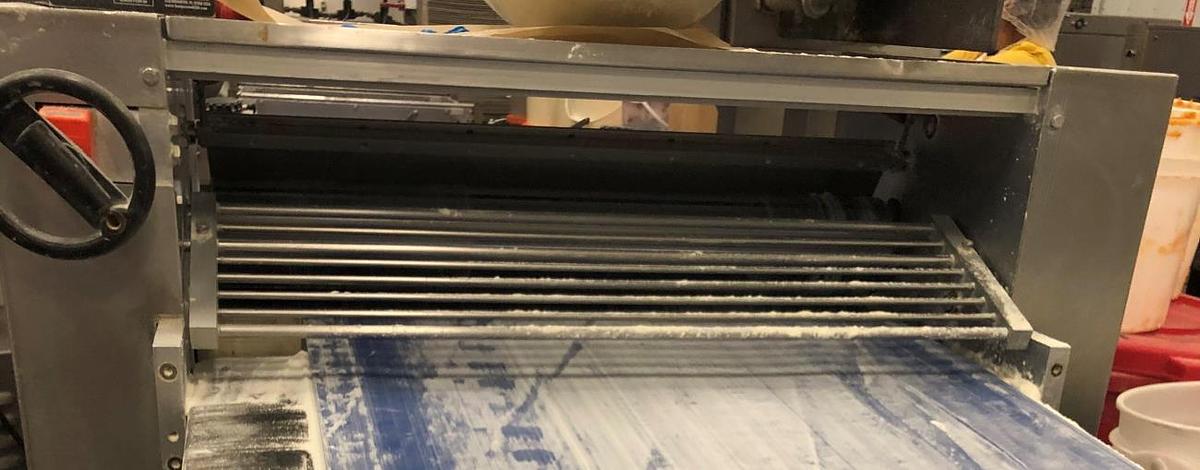
Canol donut lines are built with stainless steel construction throughout the major contact and structural components, which carries real practical benefits in a food production environment. Stainless steel resists corrosion, is non-porous, and can withstand the repeated washdowns and sanitizing chemicals that are standard in commercial bakery operations. This makes it far easier to maintain the hygiene standards required by food safety regulations, and it reduces the risk of contamination that can come from surfaces that degrade over time.
From a longevity standpoint, stainless steel construction also means that a well-maintained Canol line can remain serviceable for many years, which is a key reason why used units retain value and continue to perform reliably in production environments. When inspecting a used Canol line, buyers should pay attention to the condition of welds, belt supports, and any areas prone to buildup or moisture exposure, as these are the spots most likely to show wear on older equipment.
How should a buyer inspect a used Canol donut line before purchasing?
Inspecting a used donut line thoroughly before purchase is one of the most important steps a buyer can take. Reputable used equipment dealers will typically offer in-person inspections, virtual walkthroughs, or detailed video captures of the machine so buyers can assess its current condition. In some cases, the equipment may still be installed and operating at a production facility, which provides an opportunity to see it running under real conditions. In other cases, the line may have been decommissioned, in which case a physical inspection of components, welds, belts, and mechanical parts becomes even more critical.
Buyers should keep in mind that most used equipment dealers are not set up to run actual product through a line during an inspection, as food production requires different permitting and facility conditions than a machinery resale operation. The focus of any inspection should be on verifying the mechanical condition of each component, checking for signs of wear, corrosion, or damage, and confirming that all major parts are present and accounted for. Consulting with a Canol-familiar technician or the manufacturer directly about the specific model's known wear points can also help buyers know exactly what to look for.
Are spare parts and technical support available for used Canol donut equipment?
Parts availability and manufacturer support are practical considerations that buyers should investigate before purchasing any used bakery equipment, and Canol is no exception. Because Canol is an established Italian manufacturer with a history in the industry, support infrastructure tends to be more accessible than it would be for obscure or discontinued brands. However, the level of support available can vary based on the age of the specific model, and older lines may have components that are harder to source.
The recommended approach is to contact Canol or their authorized service representatives directly with the model and serial number of the equipment you're considering. This allows you to get a realistic picture of parts availability, lead times for any components that would need to be ordered from Italy, and whether the manufacturer still provides technical documentation or service support for that model. Factoring in parts availability is especially important for high-wear components like fryer belts, forming dies, and proofer conveyor parts.
What does it cost to ship a used Canol donut line, and what should buyers expect?
Shipping costs for a used Canol donut line can vary considerably depending on the size of the line, its configuration, the origin and destination locations, and the level of packaging required to protect the equipment in transit. Donut lines are large, heavy pieces of industrial equipment, and proper crating or palletization is essential to prevent damage during loading, transport, and unloading. Larger or more complex lines may require professional rigging services for safe loading and unloading, which adds to the overall landed cost.
Buyers should ask the seller for a detailed breakdown of packaging, rigging, and freight costs before finalizing a purchase so there are no surprises. International shipments, which are common given that Canol is an Italian manufacturer and used units may be located anywhere globally, will also involve customs clearance and import duties that need to be factored into the total acquisition cost. Getting a full landed cost picture upfront is the best way to accurately compare used equipment options.
What payment terms should buyers expect when purchasing a used Canol donut line?
Used industrial bakery equipment is typically sold under straightforward payment terms, and most used equipment dealers require payment in full before the equipment is released for shipping. This is standard practice in the used machinery market and reflects the nature of the transaction, where the seller needs to confirm funds before arranging logistics for large, high-value equipment. Some dealers may offer payment terms to established repeat customers, but this is the exception rather than the rule for first-time buyers.
Buyers should clarify accepted payment methods early in the process, as wire transfers are the most common form of payment for transactions of this size. It's also worth confirming the timeline between payment and equipment release, particularly if shipping logistics need to be coordinated with a freight forwarder or rigging company. Working with a dealer who has a verifiable track record in bakery equipment sales adds an important layer of confidence when making a significant upfront payment.