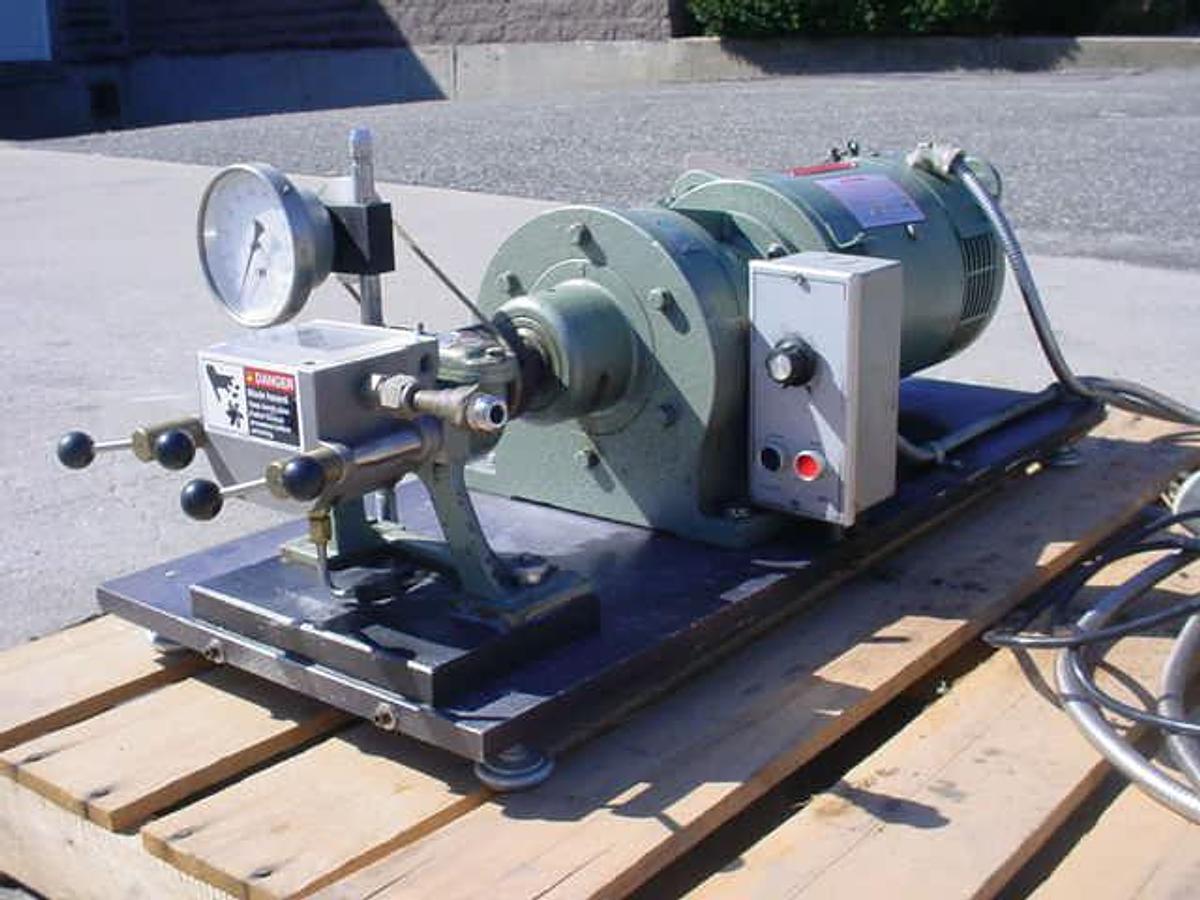
Category
Manufacturer
Model
C.W. Brabender
C.W. Brabender is well-regarded for its scientific and laboratory testing equipment, particularly in the food and plastics sectors. They are known for their rheometers and mixers that assist in research and development for product formulation. Their advanced tools provide vital data that drives innovation and ensures product quality in various industries.
FAQ:
What is C.W. Brabender and what is the company known for?
C.W. Brabender is a German precision instrument manufacturer with over a century of history in the scientific and industrial equipment space. The company built its reputation on producing highly accurate laboratory testing instruments, particularly for the food science and plastics industries. Their equipment is found in research laboratories, quality control departments, and production facilities around the world, and the brand carries significant credibility among scientists, food technologists, and polymer engineers.
Brabender's most recognized product lines include the Farinograph, Extensograph, Amylograph, Viscograph, and Plasti-Corder torque rheometers. Each instrument is designed to measure specific material properties, such as dough consistency, starch gelatinization behavior, or polymer melt flow. The company's mixers and rheometers are particularly valued for their role in research and development, helping formulators understand how raw materials behave and how changes in ingredients or processing conditions affect the final product. This depth of application across multiple industries is a big part of why Brabender equipment retains its value and usefulness even after many years of service.
What is the difference between a Brabender Farinograph, Extensograph, and Amylograph?
These three instruments are all used in grain and flour testing, but each one measures a distinctly different property of the dough or flour being analyzed. The Farinograph measures the consistency and water absorption of dough over time as it is mixed. It produces a curve that shows how dough develops, reaches peak consistency, and then breaks down, giving bakers and flour millers a reliable way to compare flour quality and predict how a flour will perform in production.
The Extensograph measures the extensibility and resistance to extension of a piece of dough after it has rested, which helps predict how a dough will behave during sheeting, proofing, and baking. The Amylograph, on the other hand, focuses on starch behavior rather than gluten behavior. It measures the viscosity of a flour-water suspension as it is heated, which reveals the gelatinization properties of the starch and the activity level of alpha-amylase enzymes in the flour. Together, these three instruments give grain scientists and bakers a detailed picture of flour quality from multiple angles, and they are frequently used in combination at commercial mills, ingredient companies, and food research institutions.
What industries use C.W. Brabender equipment?
Brabender equipment serves a wide range of industries, though it is most heavily associated with food science and plastics processing. In food science, the instruments are used by flour mills, grain traders, bakeries, starch producers, and food ingredient companies to evaluate raw material quality, develop formulations, and maintain consistency in production. Grain testing applications alone account for a significant share of Brabender installations worldwide, given how precisely instruments like the Farinograph and Amylograph can characterize wheat and other grains.
Outside of food, Brabender's torque rheometers and mixers are widely used in polymer research, rubber compounding, and plastics processing. The Plasti-Corder, for example, is a standard tool in many plastics laboratories for evaluating how resins, compounds, and additives behave under heat and shear. Pharmaceutical and chemical research labs also use Brabender equipment for mixing and viscosity testing applications. This cross-industry versatility is one reason why used Brabender instruments remain in demand. A piece of equipment retired from a food laboratory may be perfectly suited for a polymer research application, and vice versa.
What is a Brabender torque rheometer and what is it used for?
A torque rheometer is an instrument that measures the resistance a material exerts against a rotating mixing element, which is expressed as torque. Brabender's Plasti-Corder is one of the most recognized torque rheometers in the industry. As a material is mixed inside a heated chamber, the instrument continuously records torque, temperature, and time, producing a detailed profile of how the material behaves as it melts, mixes, and degrades. This data is essential for understanding processing behavior and for comparing different formulations or batches of raw material.
Torque rheometers are used extensively in plastics compounding, rubber processing, and polymer research. They help engineers evaluate how additives affect a compound's processing characteristics, determine optimal processing temperatures, and assess the thermal stability of a formulation. In food science, similar mixing bowl attachments allow Brabender torque rheometers to evaluate dough and other viscous food materials. The modular design of many Brabender systems means that a single drive unit can accept different attachments, making the equipment adaptable to multiple test types and a practical investment for laboratories that work across more than one material category.
Why do laboratories buy used C.W. Brabender equipment instead of purchasing from the manufacturer?
Cost is the most straightforward reason. Brabender instruments are precision-built laboratory tools, and purchasing them directly from the manufacturer at list price can represent a significant capital investment, particularly for smaller laboratories, universities, or research departments working within tight budgets. Used equipment can offer the same measurement capabilities at a fraction of the price, which makes it an attractive option when the underlying technology meets the lab's requirements and the machine is in good working condition.
Brabender equipment is also known for its durability. Many of these instruments were built to last decades, and a well-maintained unit from a previous generation can still deliver reliable, accurate results. For applications where the testing method itself has not changed significantly over time, there is little practical reason to pay for a current-generation instrument. Used Brabender equipment also tends to be available with accessories and attachments that can be difficult to source separately, which adds further value. Buyers should focus on the machine's maintenance history, physical condition, and the availability of any parts or consumables specific to that model before making a purchase decision.
What should a buyer look for when evaluating used C.W. Brabender equipment?
The physical condition of the mixing bowl, rollers, sensors, and drive components deserves close attention. Wear on the mixing elements is common after extended use, and replacement parts for older models can sometimes be difficult to source, so understanding the current state of those components before purchase is important. The heating and temperature control systems should also be examined carefully, since accurate temperature control is fundamental to how most Brabender instruments function. Any signs of inconsistent heating or damaged sensors are worth investigating before committing to a purchase.
Buyers should also ask about the instrument's history of calibration and whether any documentation exists from prior use. Reputable used equipment dealers will typically accommodate in-person inspections or provide detailed video walkthroughs of the machine so buyers can assess its condition before making a decision. Keep in mind that most dealers are not equipped to run actual production tests, since that requires different permitting and facilities, but a visual and mechanical inspection can reveal a great deal about the machine's condition. Consulting with Brabender directly about the specific model and its age can also help a buyer understand what level of manufacturer support, parts availability, and software compatibility to expect.
Are replacement parts and consumables available for older Brabender models?
Parts availability varies depending on the age and model of the instrument. Brabender has a long product history, and for models that were widely sold and used commercially, consumable items like mixing blades, bowl liners, and sensor components have generally remained available through the manufacturer or through specialized laboratory equipment suppliers. However, for instruments that are several decades old or were produced in limited quantities, sourcing certain components can become more challenging, and lead times from the manufacturer may be longer.
Before purchasing a used Brabender instrument, it is worth contacting Brabender directly to ask about parts availability for that specific model. The manufacturer can advise on which components are still stocked, which may need to be custom machined or sourced from third parties, and whether the model is still supported at a service level. This step is especially important for buyers who plan to use the equipment in a production or quality control environment where downtime would be costly. A dealer who specializes in laboratory and food science equipment will often have practical knowledge about which models have strong aftermarket parts support and which ones are more difficult to maintain.
Can older C.W. Brabender instruments be connected to modern data acquisition software?
Software compatibility is one of the more significant practical considerations when purchasing used Brabender equipment, particularly for instruments that were manufactured before digital interfaces became standard. Older analog Brabender units, such as early Farinograph or Amylograph models, were designed to produce paper chart recordings rather than digital output. Integrating these machines with modern laboratory information management systems or data acquisition software typically requires either a hardware retrofit or a third-party analog-to-digital conversion solution.
Brabender has introduced software platforms like their Metabridge system to help bridge older instruments with digital data recording, and some third-party solutions also exist for this purpose. However, buyers should verify compatibility with their specific model before assuming a software upgrade is straightforward. Instruments from the 1990s and 2000s that already have electronic outputs are generally easier to connect to current software environments. For laboratories operating under regulatory frameworks that require electronic data records, understanding the software pathway for a specific used instrument is an essential part of the due diligence process before purchase.
What does the purchasing process typically look like when buying used C.W. Brabender equipment from a dealer?
Most used equipment dealers list Brabender instruments with available specifications, model information, and photographs. Once a buyer identifies a machine of interest, the next step is usually to request additional details, including the machine's history, current condition, and any documentation that may be available. Reputable dealers will offer inspection options, either in person at their facility, through a live video call, or by providing recorded video walkthroughs of the equipment. For machines that are still located at the facility where they were last used, some dealers can arrange an inspection at that site.
Payment terms for used equipment typically require full payment before the machine ships. Some dealers may offer terms to established customers, but this is not standard practice. Shipping costs will depend on the size and weight of the instrument, the level of packaging or crating required to protect it in transit, and whether specialized rigging is needed for loading and unloading. Buyers should ask for a complete breakdown of packaging, freight, and rigging costs to understand the full landed cost of the equipment before finalizing the purchase. Since used equipment is sold as-is, the inspection process is the buyer's primary tool for assessing condition and making an informed decision.
What is the typical price range for used C.W. Brabender mixers and rheometers?
Pricing for used Brabender equipment varies considerably based on the instrument type, age, condition, included accessories, and current market availability. Simpler tabletop mixing units and individual attachments tend to be at the lower end of the range, while complete Farinograph or Extensograph systems with all accessories and documentation will typically command higher prices. Torque rheometer systems like the Plasti-Corder, particularly those with multiple bowl attachments or software packages, can range from a few thousand dollars for older units to significantly more for recent models in good condition.
The best way to get an accurate sense of current market pricing is to review active listings from reputable used laboratory and food science equipment dealers. Prices fluctuate based on supply, and certain Brabender models are more commonly available on the used market than others. Buyers should also factor in the cost of any necessary calibration, parts replacement, or software upgrades when evaluating the total cost of ownership. A machine listed at a lower price that requires significant investment to bring up to working standard may not represent better value than a higher-priced unit in ready-to-use condition.