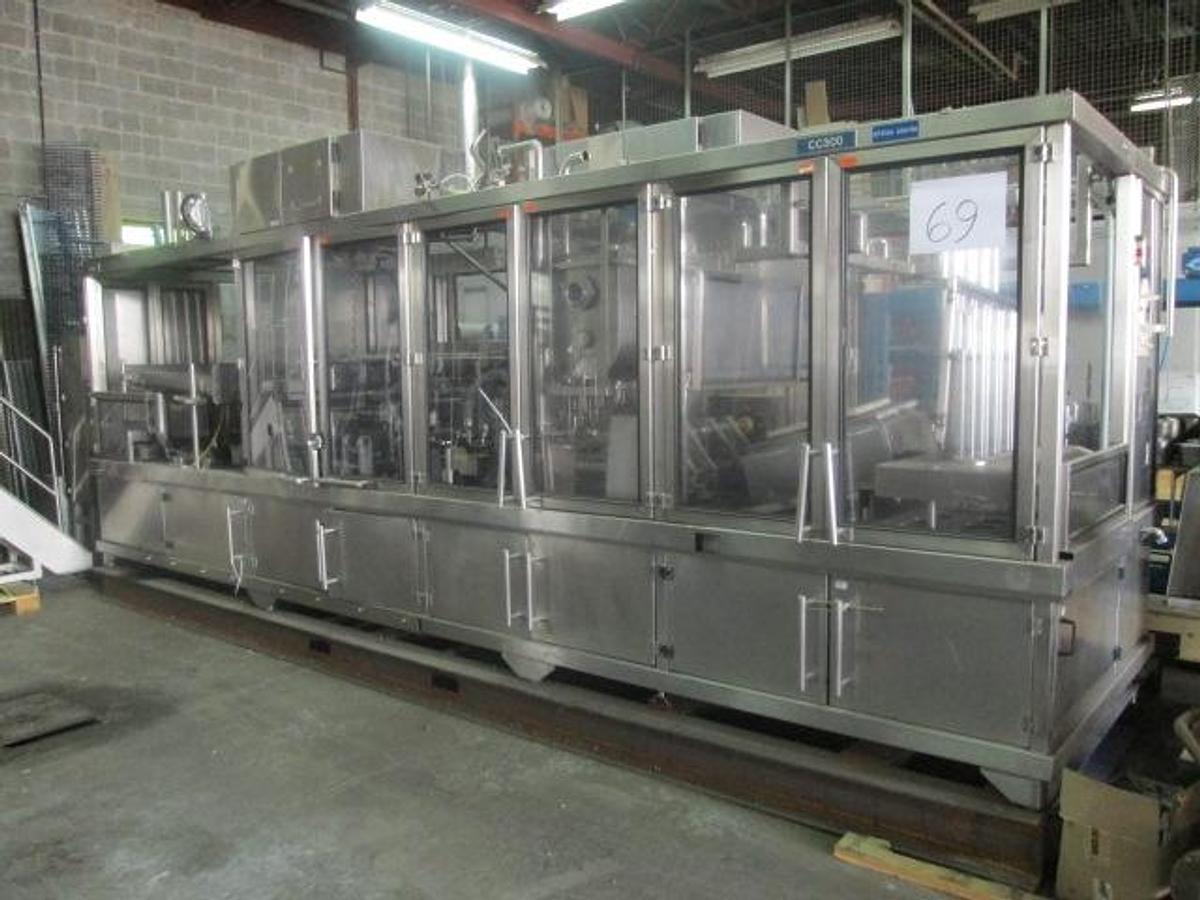
Category
Manufacturer
Model
FAQ:
What types of products can BWI Holmatic cup filling equipment handle?
BWI Holmatic cup filling machines were designed primarily for the dairy and deli food sectors, and they handle a wide range of semi-viscous and liquid products with consistent accuracy. Common applications include yogurt, sour cream, cottage cheese, cream cheese, dips, sauces, puddings, and similar pourable or spoonable food products. The equipment was built to manage products with varying viscosities, which made it a popular choice across small, mid-sized, and large-scale food production facilities.
Because these machines were engineered for food-grade environments, they typically feature product contact surfaces made from stainless steel and food-safe materials that can withstand repeated washdowns and sanitation cycles. Buyers sourcing used BWI Holmatic equipment should confirm which specific model they are acquiring, as filling head configurations and pump types can vary between units and may be better suited to certain product viscosities than others. Consulting with the equipment dealer about the machine's prior production history can give useful insight into which product types it was running before decommissioning.
What is the typical output capacity of BWI Holmatic cup filling machines?
Output capacity on BWI Holmatic cup fillers varies depending on the model, the number of filling lanes, and the cup size being run. Multi-lane inline models, such as four-lane configurations, can achieve significantly higher throughput than single-lane units. In general, cup filling lines of this type are capable of filling anywhere from several hundred to well over a thousand cups per minute under optimal production conditions, though actual rates depend on cup format, product characteristics, and line setup.
For used equipment, actual achievable speeds may differ from the machine's rated capacity due to wear on mechanical components, the condition of filling heads, or modifications made by previous owners. Prospective buyers should ask the dealer for documentation on the machine's prior production rates if available, and factor in potential refurbishment costs when estimating real-world throughput. A pre-purchase inspection, either in person or via video, is one of the most reliable ways to assess the current mechanical condition and gauge whether the machine is likely to meet production targets.
What cup sizes and container formats are compatible with BWI Holmatic filling equipment?
BWI Holmatic produced filling equipment designed to accommodate a range of cup diameters and volumes, with changeover tooling available to switch between formats. Common cup sizes used in dairy and deli applications range from small single-serve portions of a few ounces up to larger multi-serving containers. The specific cup sizes a given machine can run depend on the tooling and change parts that come with the unit, so buyers should confirm exactly which format tooling is included when purchasing used equipment.
Changeover parts such as cup nests, filling head tooling, and conveyor guides are often model-specific and may not be interchangeable across different BWI Holmatic machine generations. If a buyer needs to run a cup format that differs from what the machine was previously configured for, sourcing the appropriate change parts becomes an important pre-purchase consideration. Since BWI Holmatic is no longer in active production as a standalone brand, change parts may need to be sourced through specialized used equipment dealers, fabricated by a machine shop, or potentially adapted from compatible third-party components.
Are replacement parts still available for BWI Holmatic cup filling equipment?
Parts availability is one of the more important factors to investigate before purchasing any used BWI Holmatic machine. The brand is no longer in active production as a standalone manufacturer, which means buyers cannot simply place an order with the factory for standard replacement parts. That said, a meaningful supply of spare parts does still exist in the market through used equipment dealers, parts brokers, and facilities that have decommissioned BWI Holmatic lines. Wear items like seals, gaskets, filling nozzles, and drive components are among the parts most commonly available through these channels.
Buyers should also consult with the manufacturer or any successor entity to understand what level of technical support and parts supply they can realistically expect for the specific model they are considering. The age of the machine and its model generation can significantly affect parts availability. Some facilities that ran BWI Holmatic equipment for years have accumulated spare parts inventories that may be available for purchase alongside the machine itself. Asking the dealer directly about known parts challenges for a specific unit is a reasonable due diligence step before committing to a purchase.
What are the sanitation and clean-in-place (CIP) capabilities of BWI Holmatic filling machines?
BWI Holmatic cup filling equipment was designed for food production environments and was built with sanitation as a core requirement. Many models in the BWI Holmatic line feature stainless steel product contact surfaces and are designed to facilitate thorough cleaning between production runs. Depending on the specific model and its configuration, some units support clean-in-place (CIP) systems that allow cleaning solutions to circulate through the product pathways without full disassembly, reducing downtime between changeovers or production shifts.
For used machines, buyers should verify the condition of all seals, gaskets, and product contact surfaces during the inspection process, as these components are critical to maintaining sanitary filling operations. Worn or degraded seals can compromise both sanitation performance and fill accuracy. It is also worth confirming whether the CIP system components are intact and functional on any specific used unit, since previous operators may have modified or removed certain components. A detailed video inspection or in-person walkthrough with a focus on the product pathway and cleaning systems is a practical way to assess this before purchase.
Can BWI Holmatic cup filling equipment be integrated with sealing and labeling lines?
BWI Holmatic filling machines were commonly deployed as part of broader packaging lines that included downstream sealing, lidding, and labeling equipment. Many models were designed with integration in mind, allowing them to feed directly into foil or film heat sealers, cup lidding stations, and conveyor-based labeling systems. In some cases, BWI Holmatic produced combination fill-and-seal units that incorporated both filling and lidding functions within a single machine footprint, which can simplify line layout and reduce the number of discrete pieces of equipment required.
For buyers looking to integrate a used BWI Holmatic filler into an existing line, the key considerations are conveyor height compatibility, cup transfer timing, and line speed synchronization with downstream equipment. These factors are manageable in most cases but may require mechanical adjustments or the addition of buffer conveyor sections. Working with an experienced packaging line integrator or a dealer who specializes in food packaging equipment can help ensure that a used BWI Holmatic unit fits smoothly into a planned production layout without unexpected bottlenecks.
What should buyers look for when inspecting used BWI Holmatic cup filling equipment?
A thorough inspection is the most important step in evaluating any used BWI Holmatic cup filler before purchase. Key areas to examine include the condition of the filling heads and nozzles, the integrity of product contact seals and gaskets, the state of the drive system and timing components, and the overall cleanliness and corrosion status of the frame and product pathways. If the machine was used in a dairy or deli environment, inspecting for any residual product buildup or corrosion in hard-to-clean areas is particularly important. Buyers should also check the electrical panel and controls for signs of damage, missing components, or outdated wiring that may require updating to meet current safety codes.
Used equipment dealers will typically accommodate in-person inspections, virtual walkthroughs, or detailed video captures of the machine to give prospective buyers an accurate picture of its current condition. Keep in mind that most dealers do not have the production permits or facility setup needed to run actual product through a machine during an inspection, so functional testing is generally limited to dry cycling or mechanical operation checks. If the machine is still installed at a production facility, a plant inspection may be possible where the equipment can be observed in actual operation, which provides the most complete picture of its working condition. Buyers should take full advantage of whatever inspection options are available given the as-is nature of used equipment transactions.
What is the typical price range for used BWI Holmatic cup filling equipment?
Pricing for used BWI Holmatic cup filling equipment varies considerably based on the model, configuration, number of filling lanes, age, and overall mechanical condition. Single-lane or older units in basic condition tend to be priced lower, while multi-lane systems, combination fill-and-seal configurations, or machines that have been recently serviced and are in good working order command higher prices. In the broader used food packaging equipment market, cup filling lines of this type can range from tens of thousands of dollars for simpler or older units to well over a hundred thousand dollars for more capable, well-maintained systems.
Buyers should factor in more than just the purchase price when calculating the total cost of acquisition. Shipping, rigging, and crating costs can add meaningfully to the landed price, particularly for larger or heavier machines that require specialized loading and unloading equipment. Potential refurbishment costs, change parts, and any electrical or mechanical updates needed to bring the machine into compliance with current facility standards should also be budgeted. Requesting a detailed quote from the dealer that breaks out equipment price, packaging, freight, and any known service requirements is a practical way to understand the full investment before committing.
How does BWI Holmatic cup filling equipment compare to other cup filling machine brands?
BWI Holmatic built a strong reputation in the food packaging industry, particularly in dairy and deli applications, based on durable construction and reliable filling performance. The brand was known for producing machines with long operational lifespans, which is part of why used BWI Holmatic units continue to circulate in the secondary equipment market decades after production. Compared to some competitors, BWI Holmatic equipment is generally regarded as mechanically straightforward, which can make maintenance and troubleshooting more accessible for in-house maintenance teams familiar with the platform.
That said, the fact that BWI Holmatic is no longer in active production does create some disadvantages relative to brands that are still being manufactured and supported. Current-production machines come with direct factory support, active parts supply chains, and access to software updates for modern control systems. Used BWI Holmatic equipment trades some of those advantages for a lower acquisition cost and, in many cases, a proven track record of performance in real production environments. For small to mid-sized producers with the in-house technical capability to maintain older equipment, a well-preserved used BWI Holmatic line can represent strong value relative to the cost of purchasing current-production filling equipment.
What are the typical shipping and logistics considerations for purchasing used BWI Holmatic cup filling equipment?
Cup filling lines are substantial pieces of industrial machinery, and shipping them requires careful planning to avoid damage in transit. Depending on the size and configuration of the specific BWI Holmatic unit, the machine will need to be properly palletized or crated before shipment. Larger or heavier systems may require custom-built wooden crates and blocking to secure all components, which adds to the overall shipping cost but significantly reduces the risk of damage. Buyers should ask the dealer specifically about how the equipment will be packaged and what those packaging costs will be, since this varies by machine and dealer.
Loading and unloading are also important logistics considerations. Multi-lane filling lines and combination fill-and-seal systems can be quite heavy, requiring forklifts, cranes, or specialized rigging equipment at both the origin and destination. Rigging services are typically an added cost that buyers need to arrange or budget for separately. Most used equipment dealers require full payment prior to releasing equipment for shipment. Buyers should request a complete breakdown of all costs, including equipment price, crating, freight, and rigging, to understand the true landed cost before finalizing a purchase decision.