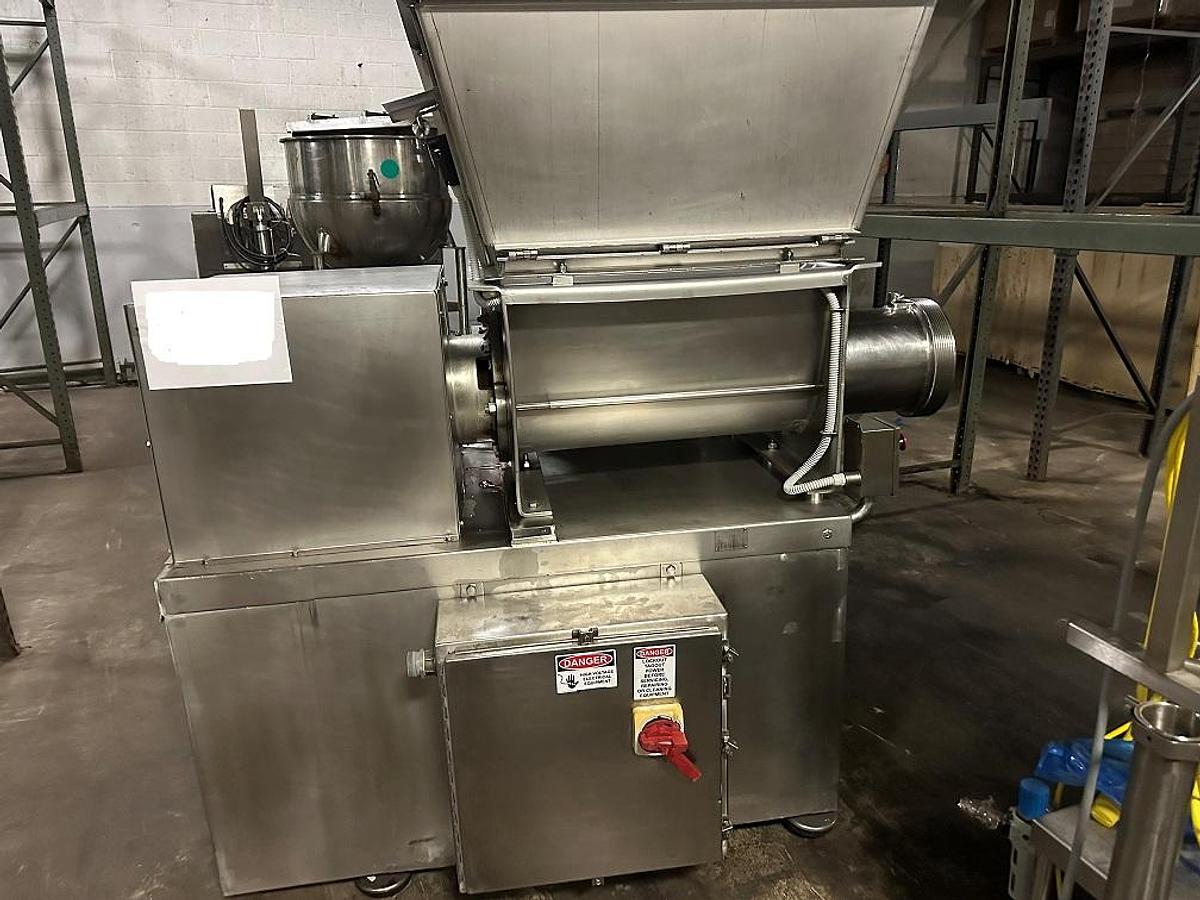
Category
Manufacturer
Model
FAQ:
What types of Butcher Boy equipment are commonly available on the used market?
Butcher Boy built a broad line of commercial meat processing equipment over its history, and the used market reflects that range. The most frequently listed machines include band saws in various throat sizes, meat grinders, and frozen block grinders capable of extremely high throughput. The Butcher Boy B16 and B20 band saws are among the most recognized models and tend to appear regularly through used equipment dealers. Frozen block grinders, like units rated at 15,000 lbs. per hour, represent the heavier industrial end of the product line and are suited for large-scale processing operations.
Beyond those flagship categories, buyers searching the used market may also come across slicers, mixers, and other processing accessories that carry the Butcher Boy name. Because the brand built equipment that routinely lasts 20 to 40 years with proper maintenance, machines from earlier decades are still in active circulation. That longevity is a big part of why used Butcher Boy equipment holds its appeal. Buyers should pay close attention to the specific model and configuration when evaluating any listing, since production runs spanned many years and specifications can vary between generations of the same model.
What is Butcher Boy's reputation in the commercial meat processing industry?
Butcher Boy earned a strong reputation as an American manufacturer of heavy-duty commercial meat processing equipment. The brand became particularly well known for its band saws and grinders, which were built with cast iron and steel construction designed to hold up under continuous daily use in butcher shops, grocery meat departments, and food processing facilities. That build quality is the primary reason used units remain in demand decades after production.
Industry professionals often point to the durability of Butcher Boy machines as a defining characteristic. It is not unusual to find units that have been in service for 20 to 40 years and are still mechanically sound. This track record makes the brand a trusted choice even in the secondary market, where buyers are purchasing equipment without the backing of a manufacturer warranty. For smaller butcher shops and mid-size processing operations, a well-maintained used Butcher Boy machine can deliver reliable performance at a fraction of the cost of comparable equipment purchased through other channels.
What should I expect to pay for used Butcher Boy band saws and meat processing equipment?
Pricing for used Butcher Boy equipment varies considerably depending on the model, age, condition, and the type of machine. Band saws like the B16 and B20 can range from a few hundred dollars for older units in rough cosmetic shape to several thousand dollars for machines that are clean, fully operational, and have been well maintained. Larger industrial equipment such as frozen block grinders commands significantly higher prices given the throughput capacity and the complexity of the machinery involved.
Buyers should also factor in costs beyond the listed price. Shipping and rigging for heavy commercial equipment can add meaningfully to the total landed cost, particularly for machines that require specialized loading equipment or custom crating. Asking the seller for a detailed breakdown of packaging, rigging, and freight charges before committing to a purchase is a practical step that prevents surprises. Condition documentation, including photos or video of the machine in its current state, is equally important for assessing whether the asking price reflects fair market value for that particular unit.
How do I find replacement parts for Butcher Boy equipment?
Sourcing replacement parts for Butcher Boy equipment can require some persistence because the brand has legacy status and is no longer manufacturing equipment. That said, parts are not impossible to find. Third-party suppliers who specialize in commercial meat processing equipment often stock or can source blades, guides, bearings, and other wear components for common Butcher Boy models. Specialty machining services can also fabricate certain parts to spec when off-the-shelf options are unavailable.
Before purchasing any used Butcher Boy machine, it is worth contacting parts suppliers to confirm availability for the specific model you are considering. Consulting directly with the manufacturer's successor or authorized service networks, if they still exist, can give you a clearer picture of what support to expect going forward. Some models have better parts availability than others, and age plays a real role in that equation. Buyers who do their homework on parts sourcing before completing a purchase are in a much better position to keep the equipment running long term.
Are used Butcher Boy meat saws compliant with food safety and NSF regulations?
Many Butcher Boy band saws and meat processing machines were built to NSF standards at the time of manufacture, which means they were designed with sanitation and food safety in mind. Features like stainless steel contact surfaces, sealed bearings, and smooth cleanable lines were part of the design intent. However, compliance status on any used machine depends heavily on its current condition, any modifications made during its service life, and the specific regulations in effect in your jurisdiction at the time of purchase.
Buyers operating in regulated commercial environments should have any used equipment evaluated by a local health inspector or equipment service technician before placing it into production. Regulations can vary by state and municipality, and a machine that met standards when it was built may need updates or refurbishment to satisfy current requirements. Discussing the machine's history and configuration with the seller, and requesting detailed photos of food-contact surfaces and safety guards, is a reasonable starting point for that evaluation process.
What cutting capacities and throat sizes are typical for Butcher Boy band saws?
Butcher Boy produced band saws in a range of sizes suited to different operation scales. The B16 and B20 are two of the most commonly referenced models, with the numbers reflecting the approximate throat size in inches. A 16-inch throat allows for cutting larger primal cuts and bone-in pieces that would not fit through a smaller saw, while the B20 offers additional clearance for bigger carcass sections. Cutting thickness is typically adjustable through a guide system, giving operators flexibility depending on the product being processed.
These machines were built to handle both bone-in and boneless cuts, which is a significant part of their utility in a full-service butcher shop or meat department. The heavy cast iron and steel frames contribute to stability during cutting, which matters both for precision and for operator safety. When evaluating a specific used unit, buyers should ask about the blade size and condition, the state of the guide bearings, and whether the table and fence adjustments are functioning correctly, as these components directly affect cutting accuracy and consistency.
How difficult is it to clean and maintain Butcher Boy commercial meat equipment?
Butcher Boy equipment was designed for commercial environments where cleaning is a daily requirement, and most models reflect that in their construction. Band saws typically feature removable blade guards, accessible blade tracks, and surfaces that can be wiped down or washed without disassembling the entire machine. Grinders and other processing equipment generally follow similar principles, with components that can be broken down for thorough sanitation between uses.
Maintenance on older used units may require more attention than a machine that has been recently serviced. Buyers should inspect blade tension mechanisms, drive belts, guide bearings, and motor components as part of any pre-purchase evaluation. Establishing a regular maintenance schedule that includes blade replacement, lubrication of moving parts, and inspection of electrical components will extend the operational life of the equipment considerably. Connecting with a service technician who has experience with legacy commercial meat processing equipment is a practical investment, particularly for high-throughput machines where downtime carries real operational costs.
What should I look for when inspecting used Butcher Boy equipment before buying?
A thorough inspection of any used Butcher Boy machine should cover both mechanical and cosmetic condition. On the mechanical side, key areas include the motor and drive system, blade or cutting components, guide bearings, tension mechanisms, and any safety interlocks. For grinders and block processing equipment, the feed system, auger, and cutting plates deserve close attention since these components experience significant wear during normal operation. Rust, cracks in cast iron components, and signs of makeshift repairs are red flags worth probing further.
Reputable used equipment dealers will accommodate in-person inspections or provide detailed video walkthroughs of the machine. Some equipment may still be installed at a production facility where it can be observed in a decommissioned or operational state, which gives buyers additional context about how it was used and maintained. Keep in mind that most dealers do not have the permitting required to run actual product through a machine during a demonstration, so the inspection will focus on mechanical function rather than a full production test. Asking for photos of serial number plates, control panels, and all accessible internal components is a reasonable request and helps build a complete picture of the machine's condition before committing to a purchase.
How does shipping and delivery work for large used Butcher Boy processing equipment?
Shipping heavy commercial meat processing equipment involves more logistics than standard freight. Machines like frozen block grinders or large band saws need to be properly secured, palletized, or crated to prevent damage during transit. The level of packaging required depends on the size and fragility of the unit, and costs will reflect the labor and materials involved. Buyers should ask sellers for a detailed breakdown of packaging and crating charges upfront so there are no surprises when the final invoice arrives.
For particularly heavy or large machines, specialized rigging may be required for both loading at the seller's location and unloading at the destination. Rigging services use equipment like forklifts, cranes, or pallet jacks rated for the machine's weight, and those services carry their own costs. Buyers who do not have appropriate receiving equipment at their facility should arrange for that ahead of delivery. Getting a clear picture of the total landed cost, including freight, rigging, and any accessory handling fees, is an important step before finalizing any purchase of large used processing equipment.
What payment terms are typical when purchasing used Butcher Boy equipment from a dealer?
Most used equipment dealers require full payment before a machine ships. This is standard practice in the industry and reflects the logistical realities of moving heavy, high-value equipment. Buyers should expect to complete payment in full prior to any shipping arrangements being made. Some dealers may extend payment terms to established repeat customers, but for first-time buyers, full payment upfront is the norm rather than the exception.
Accepted payment methods vary by dealer but commonly include wire transfer, ACH, and in some cases credit cards, though card payments on large transactions may carry processing fees. Before sending any payment, buyers should confirm that they have received adequate documentation of the machine's condition, including photos, video, or a written description that accurately reflects what they are purchasing. Taking time to verify the dealer's track record and reputation in the industry is also worthwhile, since the used equipment market rewards buyers who work with established sellers who have a documented history of fair transactions.