Category
Manufacturer
Model
Busch
Bush Tank provides custom tank fabrication and maintenance services, primarily for industries such as chemical processing and storage. Their offerings include various tanks and container solutions, emphasizing safety and compliance with industrial standards. Bush Tank’s commitment to quality ensures reliable operations for storing and transporting diverse materials.
FAQ:
What types of Busch vacuum pumps are available on the used equipment market?
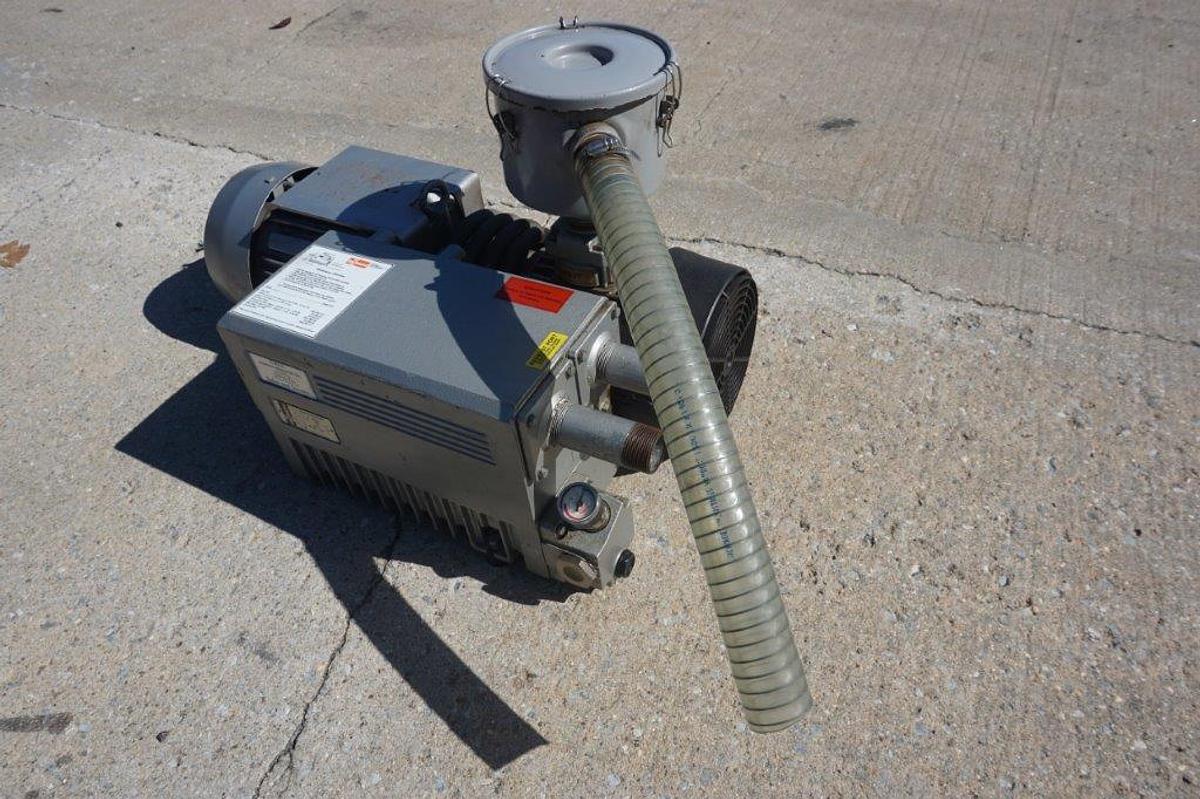
Busch produces several distinct product lines, and most of them appear regularly on the used equipment market. The most commonly traded models include the Zebra series rotary vane pumps, the Mink claw pumps, the Cobra screw pumps, and the Huckepack combination pumps. Each line is designed for a specific range of vacuum levels and operating conditions. Rotary vane models like the RA series (for example, the Busch Type RA0100.E506.1101) are among the most widely used in general industrial applications and tend to be the most frequently available used. Claw and screw pump models, which run without oil in the compression chamber, show up less often but are highly sought after for food processing and pharmaceutical applications where contamination is a concern.
Busch has been manufacturing vacuum equipment since 1963, and the brand's reputation for long service life means a large installed base of machines has accumulated over the decades. That installed base translates directly into a healthy supply of used units across a range of sizes, from small 1 to 5 HP units suited for lab or light production use, up to large industrial pumps rated for continuous duty in high-throughput packaging or semiconductor fabrication lines. Buyers searching the used market should pay close attention to the model designation, as the letters and numbers in a Busch model number encode the pump type, displacement, motor configuration, and voltage, all of which affect compatibility with a given application.
Are used Busch vacuum pumps a reliable option compared to buying new?
Busch vacuum pumps are widely regarded as one of the more durable industrial vacuum brands available, with well-maintained units routinely exceeding 20,000 operating hours before requiring major service. That long service life is precisely what makes the used market attractive. A pump that has been properly maintained and is being sold because a facility upgraded or closed down may still have thousands of hours of useful life remaining. The key variable is maintenance history. Buyers who can verify that oil changes, filter replacements, and scheduled service intervals were followed have a much stronger basis for confidence in a used unit.
That said, purchasing used industrial equipment always carries some degree of uncertainty, and used Busch pumps are sold as-is without the coverage that comes with a factory purchase. The practical way to manage that risk is to prioritize dealers who specialize in vacuum and process equipment, have a verifiable track record, and allow thorough pre-purchase inspections. Requesting a video walkthrough, an in-person visit, or detailed photos of the pump's condition, including the oil sight glass, inlet filter, exhaust filter, and motor nameplate, gives a buyer a much clearer picture of what they are getting. Consulting Busch directly about parts availability for a specific model and serial number range is also a smart step, since the manufacturer can confirm whether replacement parts and technical support are still readily available for that generation of equipment.
What industries use Busch vacuum pumps, and why are they so widely specified?
Busch vacuum pumps appear across an unusually broad range of industries, which is one reason they are so frequently encountered on the used equipment market. Packaging is probably the single largest application category, covering everything from modified atmosphere food packaging and vacuum skin packaging to blister pack sealing and bag-in-box filling. Food and beverage processors rely heavily on Busch equipment because many models are designed to handle humid or slightly contaminated air streams without rapid degradation. Medical device manufacturing, pharmaceutical production, and laboratory environments use Busch pumps where clean, oil-free vacuum is required. Semiconductor fabrication and electronics assembly are other significant segments, where precise, stable vacuum levels are critical to process yield.
Beyond those core sectors, Busch pumps are found in woodworking and CNC router tables for workpiece holding, in plastics processing for thermoforming and degassing, in printing and paper handling, and in general industrial automation. The brand's ability to cover such a wide range of applications comes from the breadth of its product line. Different pump technologies, rotary vane, claw, screw, and combination designs, address different vacuum depth requirements and sensitivity to process contamination. Busch also engineers many models to comply with CE, ISO, and ATEX standards, which matters in regulated industries where equipment certification is a procurement requirement. That compliance history carries forward when buying used, since the original design certifications are tied to the model, not the ownership history.
What is the difference between Busch rotary vane, claw, and screw vacuum pumps?
The three main pump technologies Busch produces differ primarily in how they compress gas and whether they require oil in the compression chamber. Rotary vane pumps, such as the RA series, use spring-loaded carbon vanes that slide in and out of a rotor as it turns inside an eccentric housing. Oil is injected into the compression chamber to seal the vanes, lubricate moving parts, and carry away heat. This makes rotary vane pumps capable of reaching deep vacuum levels, typically down to 0.1 mbar or lower in two-stage configurations, and they are a cost-effective choice for general industrial use. The trade-off is that the oil requires regular changes and can become contaminated if process gases carry moisture or aggressive vapors.
Claw pumps, sold under the Mink brand name, use two counter-rotating claw-shaped rotors that never touch each other or the housing walls. Because there is no contact and no oil in the compression chamber, they are essentially maintenance-free in normal operation and produce oil-free exhaust. They are well suited for packaging lines and food processing where oil mist in the exhaust stream is unacceptable. Screw pumps, the Cobra series, operate on a similar dry, non-contact principle but use intermeshing helical screws. Screw pumps can achieve deeper vacuum levels than claw pumps while still running dry, making them the preferred choice for pharmaceutical, chemical, and semiconductor applications that demand both clean operation and high vacuum depth. On the used market, dry claw and screw pumps tend to command higher prices than comparable rotary vane units because of their lower maintenance burden and suitability for sensitive processes.
How do I choose the right Busch vacuum pump model for my application?
Selecting the correct pump starts with two numbers: the vacuum level your process requires, expressed in millibar or Torr, and the pumping speed you need, expressed in cubic meters per hour or CFM. Vacuum level determines which pump technology is appropriate. Rotary vane pumps cover the widest range and can reach very deep vacuum. Claw pumps are typically limited to rough and medium vacuum, around 10 to 100 mbar, which is sufficient for most packaging applications. Screw pumps sit in between, offering dry operation at medium to fine vacuum levels. Once you know the required vacuum depth and flow rate, you can narrow the field to specific Busch model families and then to individual models based on motor horsepower and physical footprint.
Beyond those core parameters, the process environment matters considerably. If your application involves water vapor, solvent vapors, or particulate-laden air, the pump needs to be specified accordingly, and some models include built-in gas ballast valves or inlet separators to handle those conditions. Voltage and phase requirements must match your facility's power supply, and the model designation on Busch pumps typically encodes this information. When buying used, the model number on the nameplate is the starting point for verifying all of these specifications. Busch's published technical documentation for each model series is freely available and gives displacement curves, ultimate pressure ratings, and motor data that allow a buyer to confirm the pump matches the application before purchase.
What maintenance does a Busch vacuum pump require, and how does that affect total cost of ownership?
Maintenance requirements vary significantly by pump type. Oil-lubricated rotary vane pumps require the most regular attention. Oil changes are typically recommended every 500 to 2,000 operating hours depending on the process gas being handled, with more frequent changes needed when the pump is exposed to moisture or chemically active vapors. Inlet filters and exhaust oil mist separators also need periodic replacement. Vane replacement is the major scheduled overhaul item and typically becomes necessary somewhere between 8,000 and 20,000 hours depending on operating conditions. Neglecting oil and filter maintenance is the most common reason rotary vane pumps fail prematurely, so when evaluating a used unit, asking about the service history is not just due diligence, it is the single most important factor in predicting remaining service life.
Dry claw and screw pumps have a lower ongoing maintenance burden because they have no oil in the compression chamber and no wearing vanes. Bearing lubrication and gearbox oil are still required, but the service intervals are longer and the consumable costs are lower. For total cost of ownership calculations, the purchase price of a used pump is only part of the picture. Buyers should factor in the cost of Busch-specific consumables (oil, filters, vanes), the availability of those parts for the specific model, and the cost of any service work needed to bring the machine to operating condition. Contacting Busch directly with the model number and serial number before purchasing a used unit is a practical way to confirm that parts are still in production and to get a realistic sense of what a full service would cost.
What should I look for when inspecting a used Busch vacuum pump before buying?
A thorough inspection of a used Busch pump covers several areas. Start with the external condition: look for corrosion, cracks in the housing, damaged fittings, and signs of oil leaks around the shaft seal or drain plugs. Check the motor nameplate to confirm voltage, phase, and horsepower match your requirements. On oil-lubricated rotary vane models, the condition of the oil in the sight glass tells you a great deal. Dark, thick, or milky oil suggests the pump has been run past its service interval or has been exposed to moisture, either of which means a service will be needed before the pump goes back into production. Ask the seller whether the pump is still in service or has been decommissioned, and for how long it has been sitting idle, since extended storage without proper preservation can lead to vane sticking and bearing corrosion.
Most reputable used equipment dealers will accommodate in-person inspections or video walkthroughs of the machine. Some pumps may still be installed and running at the facility where they are being sold, which gives a buyer the opportunity to observe the pump under load, listen for unusual bearing noise, and check that it pulls down to the expected vacuum level. Keep in mind that dealers typically do not have the permitting or production infrastructure to run full process tests, so vacuum pull-down testing rather than full application simulation is the realistic expectation. Buyers who cannot travel for an in-person inspection should request a detailed video covering the motor nameplate, oil sight glass, inlet and exhaust ports, overall housing condition, and a brief run demonstration if the pump is connected to power.
What are typical price ranges for used Busch vacuum pumps?
Pricing for used Busch vacuum pumps spans a wide range depending on pump type, size, age, and condition. Small rotary vane units in the 1 to 5 HP range, such as the RA0100 series, typically trade in the low hundreds to low thousands of dollars on the used market. Mid-size units from 5 to 25 HP are more commonly found in the $1,000 to $5,000 range, though condition and model generation play a significant role. Larger industrial rotary vane pumps and dry-running claw or screw pumps in the 25 HP and above category can reach $10,000 to $30,000 or more depending on capacity and how recently the model was manufactured. Dry pump technologies generally command a premium over comparable rotary vane units because of their lower maintenance costs and suitability for clean process environments.
Buyers should treat the listed price as a starting point and account for additional costs before comparing options. Shipping, rigging, and any required service or reconditioning work all affect the true landed cost of the equipment. A pump priced attractively but requiring a full vane replacement, new filters, and an oil change may end up costing more in total than a slightly higher-priced unit that has been recently serviced. Asking the seller specifically about the pump's service history and current operating condition is the most direct way to assess whether the asking price reflects the machine's actual state. For high-value purchases, getting a quote from a Busch service center on what a full inspection and tune-up would cost for that specific model is a useful benchmark.
What should buyers understand about shipping and logistics for used Busch vacuum pumps?
Vacuum pumps are precision rotating machines, and how they are packaged for transit has a direct bearing on whether they arrive in the same condition they left the seller's facility. Smaller pumps can often be palletized and shipped via freight carrier with standard strapping and blocking, but larger units may require custom crating to protect the motor, inlet and exhaust fittings, and any exposed machined surfaces. The level of packaging required affects shipping cost, and buyers should ask the seller specifically what packaging method will be used before agreeing to a purchase. Damage during transit is one of the more common complications in used equipment transactions, and it is far easier to prevent than to resolve after the fact.
For larger Busch pumps, particularly those above 10 to 15 HP, loading and unloading may require a forklift or crane, and rigging costs can add meaningfully to the total landed price. Some sellers include basic rigging in the quoted price; others charge separately. Buyers should request a complete breakdown of all costs, including packaging, loading, freight, and any required unloading equipment, before finalizing a purchase. International shipments add customs documentation and import duties to the equation. Payment in full before shipment is standard practice in the used equipment industry, so understanding the full cost picture before committing protects the buyer from surprises once the transaction is underway.
How does the used equipment inspection process work for Busch vacuum pumps, and what can buyers realistically expect?
Reputable used equipment dealers generally offer three forms of inspection access: in-person visits to their facility, live video calls where a technician walks through the machine on camera, and pre-recorded video documentation covering the key components and nameplate data. Each approach has trade-offs. An in-person visit gives the buyer the most complete picture and allows hands-on checks like rotating the shaft by hand to feel for bearing roughness, but it requires travel. Video inspections are more practical for buyers at a distance and can still cover the critical checkpoints if the seller is thorough and responsive to specific requests.
In some cases, the pump being sold is still installed and running at the facility where it originated, meaning the inspection can include observing the machine under actual operating conditions. This is the most informative scenario available in the used market. However, even in that situation, the dealer is not typically able to simulate the buyer's specific process or run product through the system, since operating a production facility requires permits and infrastructure that a used equipment dealer does not maintain. The realistic goal of any inspection is to establish the pump's mechanical condition, confirm the nameplate specifications, and identify any visible wear or damage that would require service before the pump goes back into operation. Buyers who approach the inspection with a specific checklist and ask direct questions about service history, hours of operation, and reason for sale tend to come away with a much clearer basis for their purchasing decision.