Category
Manufacturer
Model
Bubbio
FAQ:
What is a Bubbio wine bottling machine?
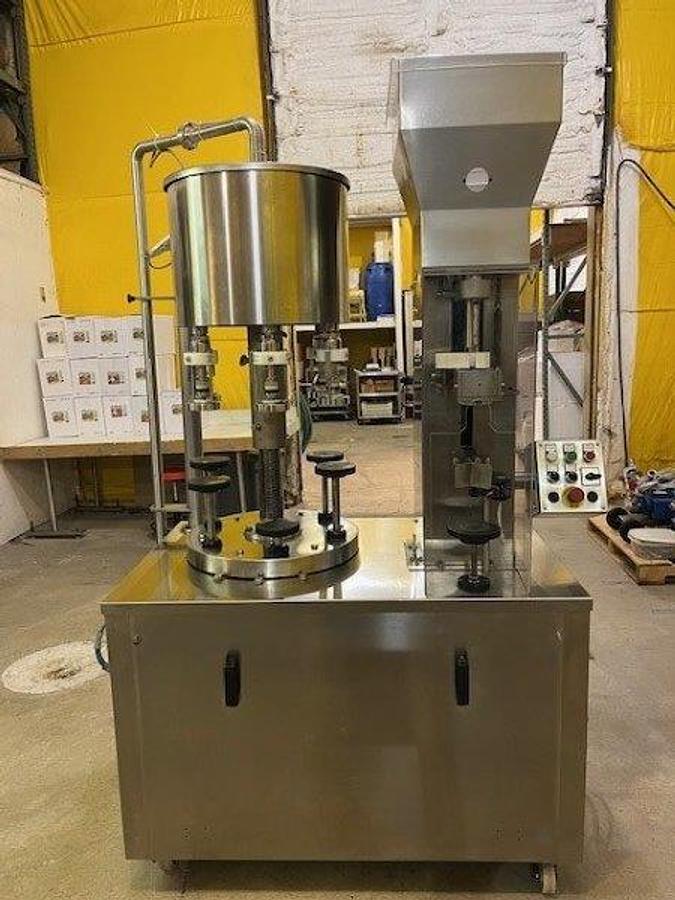
Bubbio is an Italian manufacturer of wine and beverage bottling equipment, known for producing compact, precision-engineered bottling lines suited to small and mid-scale winery operations. Their machines are built to handle the full bottling process, combining filling and corking functions into a single unit. The Bubbio 6 Head Wine Bottling Machine with Corker is a representative example of this design philosophy, integrating multiple filling heads with an integrated corking station to streamline the bottling workflow.
Italian-made bottling machinery in this category is generally associated with high-quality engineering, food-grade material compliance, and adherence to EU manufacturing standards. Bubbio equipment is designed for wineries that need reliable, consistent output without the footprint or cost of large-scale industrial lines. Because these machines combine filling and closure functions, they reduce the number of separate pieces of equipment a winery needs to manage, which is a practical advantage for operations with limited floor space or staffing.
What is the typical filling speed of a 6-head wine bottling machine like the Bubbio?
A 6-head wine bottling machine generally produces somewhere in the range of 600 to 1,500 bottles per hour, depending on factors like bottle size, fill volume, the viscosity of the wine, and how the machine is configured and maintained. Machines with more filling heads can cycle faster because multiple bottles are filled simultaneously rather than sequentially. The actual throughput of any specific used unit may differ from published specifications depending on its age, condition, and how it has been serviced.
For small to mid-scale wineries, a 6-head configuration typically represents a practical middle ground. It offers meaningfully higher output than 2- or 4-head tabletop fillers without requiring the infrastructure demands of a full 8- or 12-head commercial line. Filling accuracy is also a key consideration at this scale, since consistent fill levels across bottles reduce product waste and help wineries meet labeling and regulatory requirements. Buyers evaluating a used 6-head machine should ask the seller about the machine's rated speed and, where possible, request a demonstration or video showing it operating at production speed.
Is a Bubbio bottling machine suitable for small wineries, or is it designed for large commercial operations?
Bubbio bottling machines, particularly models in the 6-head configuration, are well-suited to small and mid-scale winery operations. They occupy a practical position in the market between manual hand-filling equipment and large-scale automated bottling lines. For a small winery producing anywhere from a few hundred to several thousand cases per year, a 6-head machine with an integrated corker can handle bottling days efficiently without requiring a full production crew or a large dedicated facility.
That said, the right fit depends on a winery's specific output goals, available space, and existing infrastructure. A used Bubbio machine in good working condition can be a cost-effective way for a growing winery to step up from manual or semi-manual bottling without committing to the capital expenditure of a brand-new line. Buyers should assess the machine's condition carefully, confirm compatibility with their bottle types and closure styles, and factor in any costs for reconditioning, spare parts, or technical support before purchasing.
What bottle sizes and types is a Bubbio wine bottling machine compatible with?
Most Bubbio wine bottling machines are designed with adjustability in mind, allowing operators to handle standard wine bottle formats such as 750ml Bordeaux, Burgundy, and sparkling wine bottles. Some models can also accommodate smaller formats like 375ml half-bottles or larger 1.5L magnums, though compatibility depends on the specific machine configuration and the adjustable range of its filling heads and conveyor or bottle-holding components.
When evaluating a used Bubbio machine, buyers should confirm which bottle formats are supported and whether any changeover parts or format-specific components are included with the sale. Machines that have been set up for a specific bottle type may require adjustment or additional tooling to handle different formats. Asking the seller for details on the machine's adjustment range, and if possible requesting a video or in-person inspection showing the machine handling the intended bottle type, is the most reliable way to confirm compatibility before purchase.
Can a Bubbio wine bottling machine handle sparkling wine, or is it only for still wine?
Filling sparkling wine requires counter-pressure filling technology, which allows the bottle to be pre-pressurized with CO2 before filling begins. This prevents the wine from losing carbonation during the fill cycle. Not all wine bottling machines include this capability, and whether a specific Bubbio unit supports sparkling wine depends on the model and how it was configured at the time of manufacture or subsequent modification.
Buyers who need to bottle sparkling, semi-sparkling, or petillant wines should specifically ask the seller whether the machine in question is equipped for counter-pressure filling. This is an important distinction because using a standard gravity or vacuum filler on a sparkling wine will result in excessive foaming, product loss, and inconsistent fill levels. Confirming this detail upfront, along with requesting documentation or a demonstration if available, will help avoid a costly mismatch between the machine's capabilities and the buyer's production needs.
What materials are used in the construction of Bubbio wine bottling machines?
Wine bottling equipment intended for commercial use is typically constructed from food-grade stainless steel, particularly for all components that come into direct contact with the wine. Stainless steel resists corrosion, does not impart flavor or odor to the product, and can withstand the cleaning and sanitizing chemicals used in winery environments. Italian-manufactured equipment like Bubbio is generally built to comply with EU food-contact material standards, which set specific requirements for surface finishes, material grades, and hygienic design.
For buyers evaluating a used Bubbio machine, it is worth inspecting the condition of the stainless steel components, particularly the filling heads, valves, and any tubing or seals that contact the wine. Seals and gaskets are wear items that may need replacement regardless of the overall machine condition, and sourcing these parts for an older machine is something buyers should discuss with the seller or directly with the manufacturer before committing to a purchase. The overall material quality of Italian wine equipment in this category tends to hold up well over time, but a thorough inspection remains essential.
How difficult is it to clean and sanitize a Bubbio wine bottling machine between uses?
Cleaning and sanitizing a wine bottling machine is a routine but important part of winery operations, and machines designed for this industry are generally built to facilitate the process. Most commercial wine fillers, including Italian-made equipment in this category, are designed with CIP (clean-in-place) capability or at minimum straightforward disassembly of the filling heads and valves to allow manual cleaning. Stainless steel construction makes sanitizing more practical, as the material tolerates the caustic and acid-based cleaning agents commonly used in wineries.
The ease of cleaning on any specific used machine depends on its design, age, and condition. Older machines may have seals, gaskets, or internal passages that are harder to clean thoroughly if they have degraded over time. Buyers should ask the seller about the cleaning procedure for the specific unit, and if possible review any available documentation or manuals. A machine that has been well-maintained and regularly cleaned will generally be easier to bring back into sanitary operation than one that has been sitting idle for an extended period.
Does a Bubbio wine bottling machine run on electricity, or does it operate pneumatically?
Wine bottling machines in this category typically rely on electricity to drive motors, conveyors, and control systems, while also using pneumatic systems for functions like valve actuation, corking, and bottle handling. The combination of electrical and pneumatic operation is common in Italian wine equipment, as pneumatics offer precise, repeatable force control for delicate tasks like inserting corks without damaging the bottle or closure. This means buyers generally need both an adequate electrical supply and a compressed air source to run the machine.
For a used Bubbio machine, buyers should confirm the electrical specifications, including voltage, phase, and amperage requirements, to ensure compatibility with their facility. Many Italian machines are built for 380-415V three-phase power, which may require an electrical upgrade in facilities wired for single-phase or North American voltage standards. Pneumatic requirements, including the recommended air pressure and flow rate, are equally important to confirm. Sellers should be able to provide these specifications, and buyers should factor any necessary electrical or air supply modifications into their total cost of ownership.
What types of closures does a Bubbio wine bottling machine support?
The Bubbio 6 Head Wine Bottling Machine is offered with an integrated corker, meaning it is specifically configured to apply natural or synthetic cork closures. Cork is the traditional and still widely used closure for still wines, and having the corking function built into the same machine as the filler simplifies the bottling line and reduces the need for a separate corking station. The corking mechanism on machines like this is typically designed to compress the cork and insert it to a consistent depth, which is important for maintaining a proper seal.
Buyers who need to apply other closure types, such as screw caps (ROPP), crown caps, or sparkling wine mushroom corks with wire cages, should verify whether the machine supports those formats or whether additional equipment would be required. Most integrated filler-corker combinations are designed around a specific closure type, so confirming this before purchase is important. If a winery uses multiple closure types across different products, they may need to evaluate whether the machine can be adapted or whether a separate capping unit would be needed alongside the filler.
What should buyers know before purchasing a used Bubbio wine bottling machine?
Buying used wine bottling equipment requires more due diligence than purchasing other types of used machinery, because the condition of food-contact surfaces, seals, and mechanical components directly affects both product quality and regulatory compliance. Before committing to a purchase, buyers should request a thorough inspection, either in person or via a detailed video walkthrough, covering the filling heads, valves, corking mechanism, and any conveyor or bottle-handling components. It is also worth contacting Bubbio or an authorized service provider to understand what parts and technical support are available for the specific model and age of the machine being considered, as older models may have limited parts availability.
Shipping and installation costs can add significantly to the total cost of a used bottling machine. Larger machines require professional rigging for loading and unloading, and proper crating or packaging is essential to prevent damage in transit. Buyers should ask the seller for a detailed breakdown of packaging, rigging, and freight costs to understand the full landed price before making a decision. Payment terms for used equipment are typically full payment prior to shipment, so buyers should also plan accordingly. Selecting a seller with a demonstrated track record in food and beverage machinery, and who can provide clear documentation of the machine's history and current condition, is one of the most important steps in the purchasing process.