Category
Manufacturer
Model
Bridge
Bridge Machine Company is known for its comprehensive solutions in manufacturing and packaging industries, offering a range of automated equipment to support efficient production processes. Their offerings include custom assembly machines, conveyors, and robotic systems that enhance manufacturing capabilities. Bridge Machine Company’s commitment to innovation and customization helps firms optimize their production operations effectively.
FAQ:
What is a Bridge meatball machine and how does it work?
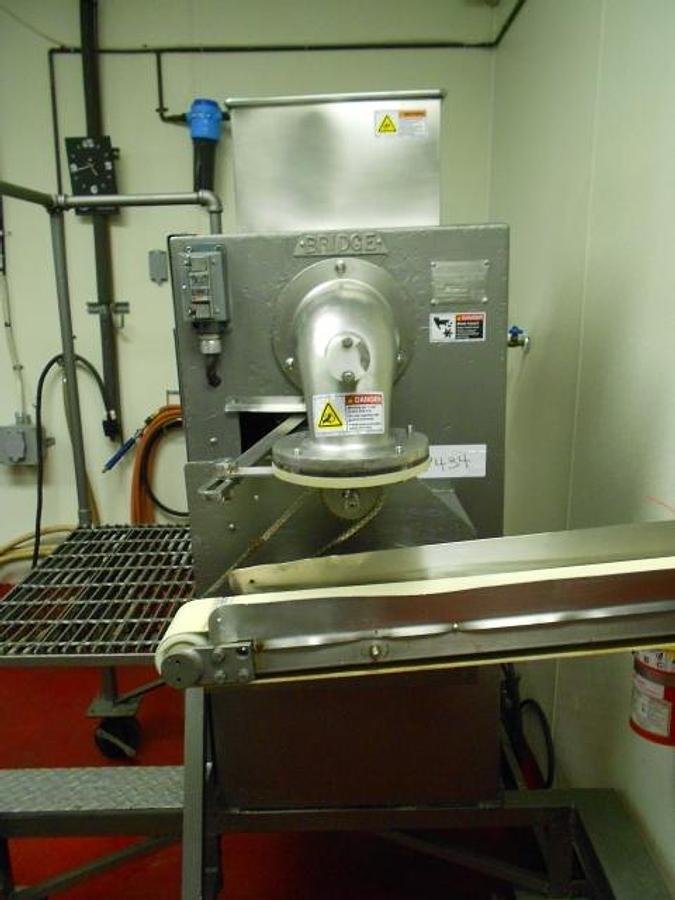
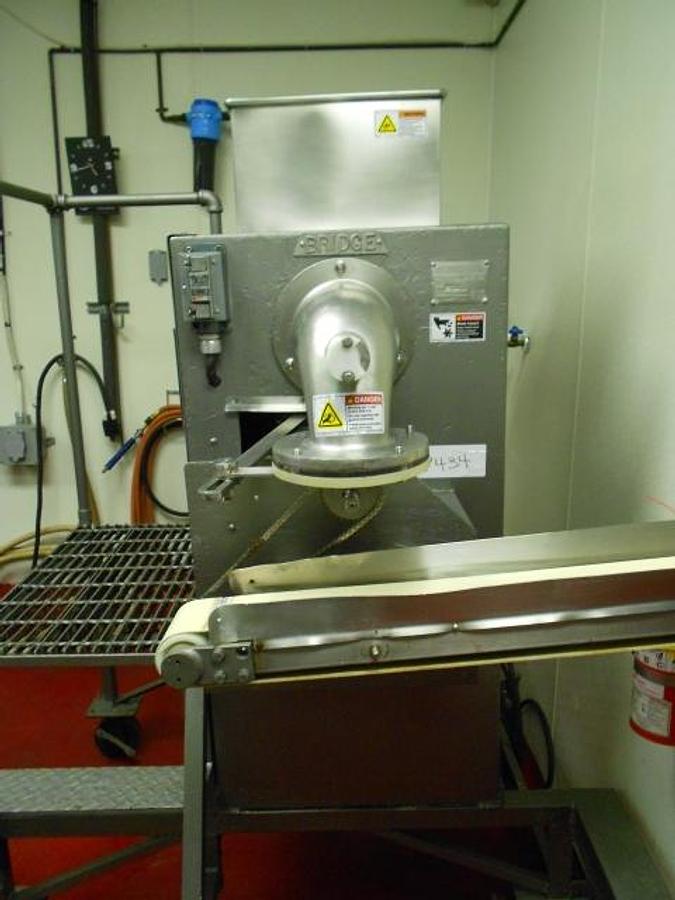
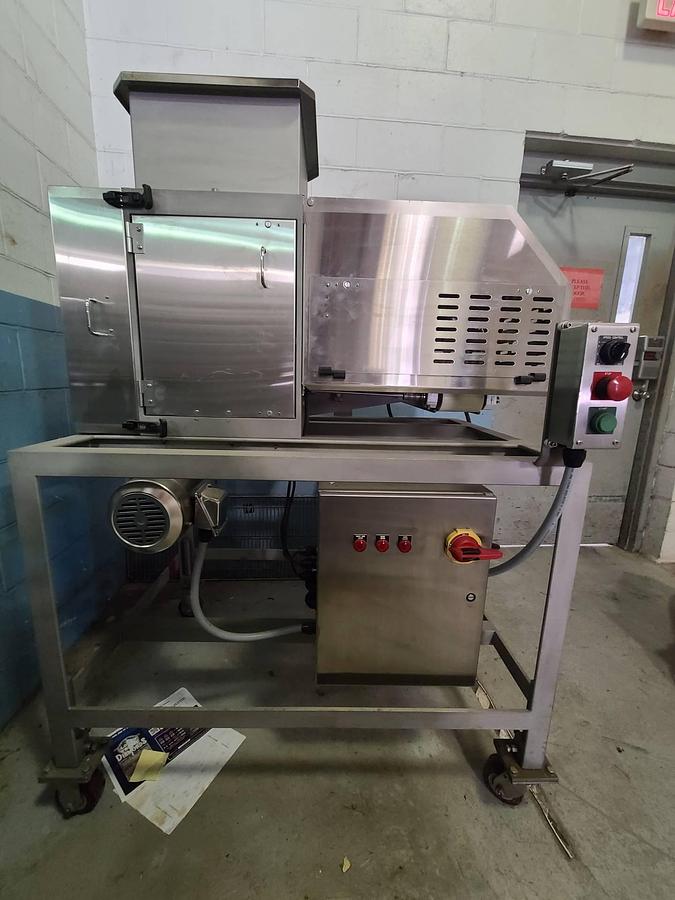
Bridge meatball machines are commercial-grade food processing machines designed to automate the forming and portioning of ground meat into uniform meatballs. Bridge Machine Company built a reputation in the food manufacturing sector for producing reliable, high-output equipment that reduces the need for manual labor while maintaining consistent product quality. The machines work by receiving a ground meat mixture, then using a forming mechanism to portion and shape each meatball to a set size and weight. This process runs continuously, allowing production facilities to output large quantities without the inconsistency that comes from hand-rolling.
The core advantage of the automated forming process is repeatability. Each meatball that comes off the machine is essentially identical in size and weight, which matters for cooking time consistency, portion control, and presentation. Bridge models like the Titan 5 are designed for high-throughput environments where volume and uniformity are both critical. The machines are typically built with stainless steel contact surfaces to meet food safety standards and to hold up under the demands of a commercial production environment.
What Bridge meatball machine models are commonly available on the used equipment market?
The Bridge models that appear most frequently in the used commercial food equipment market include the Bridge BT001 and the Bridge Titan 5. The Titan 5 is a well-known model in food production circles, recognized for its capacity and durability in continuous production settings. The BT001 has also circulated in the used market and can sometimes be found in near-unused condition, depending on the operational history of the facility that originally purchased it. Both models reflect Bridge Machine Company's focus on automated, high-volume meatball production.
When shopping for used Bridge meatball machines, it helps to know which model fits your production volume and floor space requirements. The Titan 5, as the name suggests, is positioned toward larger-scale operations, while the BT001 may suit facilities with moderate output needs. Used equipment dealers who specialize in food processing machinery are generally the best source for these machines, as they tend to have more detailed knowledge of the equipment's history, condition, and compatibility with current production environments.
What types of protein or meat mixtures can be processed on a Bridge meatball machine?
Bridge meatball machines are designed to handle a range of ground protein mixtures, making them versatile across different food production applications. Beef, pork, chicken, turkey, and lamb are all commonly processed on commercial meatball forming machines of this type. The key variable is the consistency and fat content of the mixture, since the forming mechanism relies on the meat having enough cohesion to hold its shape as it exits the machine. Recipes with binders like breadcrumbs, eggs, or starches tend to run more smoothly through automated forming equipment.
Some facilities also use meatball machines for non-traditional applications, including plant-based protein products and seafood-based balls, provided the mixture has the right texture and firmness. The specific tolerances of a given Bridge model will determine how much flexibility you have with different formulations. If you are evaluating a used machine for a specific product, it is worth discussing the mixture characteristics with the equipment dealer and, if possible, consulting with Bridge Machine Company directly to understand what formulations the machine was originally designed to handle.
What is the typical production output of a commercial Bridge meatball machine?
Commercial meatball forming machines in the Bridge lineup are built for high-volume production environments, and output rates can vary significantly depending on the model, the size of the meatballs being formed, and the specific configuration of the machine. In general, commercial-grade machines of this type are capable of producing anywhere from several hundred to several thousand meatballs per hour. The Titan 5, for example, is positioned as a higher-capacity model suited to operations where throughput is a priority.
When evaluating a used Bridge meatball machine, output capacity is one of the most important specifications to verify. The listed capacity from the manufacturer reflects optimal conditions, and actual throughput in a production environment can vary based on the meat mixture, meatball size settings, and the condition of the machine's forming components. Asking the seller for detailed specifications on the model and reviewing any available documentation on the machine's production history will help you set realistic expectations for what the equipment can deliver in your facility.
How easy is it to clean and maintain a Bridge meatball machine?
Cleaning and maintenance are significant operational considerations for any commercial food processing equipment, and Bridge meatball machines are built with this in mind. Stainless steel construction on food-contact surfaces is standard on commercial meatball formers, which makes sanitation more straightforward and helps the equipment hold up against the repeated washdowns required in food production environments. Disassembly of the forming heads and contact parts for cleaning is a routine part of operating this type of equipment, and most commercial models are designed with that process in mind.
For used machines specifically, it is worth paying close attention to the condition of seals, gaskets, and any plastic or rubber components that degrade over time and affect both sanitation and performance. A thorough inspection before purchase should include an assessment of these wear parts. Ongoing maintenance for meatball forming machines typically involves lubricating moving components, checking the forming mechanism for wear, and replacing any parts that affect portioning accuracy. Contacting Bridge Machine Company directly can help you understand parts availability for a specific model, since the age of the machine can affect what replacement components are still accessible.
What should buyers look for when inspecting a used Bridge meatball machine before purchasing?
Inspecting a used Bridge meatball machine carefully before committing to a purchase is one of the most important steps a buyer can take. The condition of the forming heads is a primary concern, since these are the components that directly determine meatball size consistency and are subject to the most wear. Stainless steel surfaces should be free from deep pitting or corrosion that could create sanitation issues. Electrical components, motors, and drive mechanisms should all be examined for signs of damage or excessive wear. Reputable used equipment dealers will typically accommodate in-person inspections at their facility, or offer video inspections and detailed photo documentation for buyers who cannot travel.
It is also worth asking whether the machine is still in production at its current location, since some used equipment is sold while still actively running, which gives buyers the opportunity to see it operating under real conditions. Keep in mind that most equipment dealers do not have food production permits and cannot run actual product through the machine during a dealer-side inspection, so the inspection will generally focus on mechanical condition and operation of the forming mechanism without a live meat mixture. Consulting with Bridge Machine Company about the specific model can also provide useful context on the machine's age, the support and parts availability you can expect, and any known service considerations for that model.
Are used Bridge meatball machines suitable for small food businesses or only large production facilities?
Bridge meatball machines were designed for commercial food production environments, and most models reflect that. Operations like delis, butcher shops, catering companies, mid-sized restaurants, and specialty food manufacturers are all realistic candidates for this type of equipment. The Titan 5 in particular is built for volume, making it a better fit for operations that need to produce large quantities consistently rather than a small batch here and there. That said, the used market can make commercial equipment accessible to smaller operations that could not justify the cost of purchasing the same machine from a manufacturer.
The practical question for a smaller business is whether the machine's minimum effective output aligns with actual production needs. Commercial forming equipment is most efficient when running at or near its designed capacity, so a machine built for thousands of meatballs per hour may not be the right fit for a business producing a few hundred per week. Buyers should evaluate their production volume honestly and discuss it with the equipment dealer to make sure the model they are considering is appropriately sized. A used machine at the right capacity is a smart investment; one that is significantly oversized for the operation can create inefficiencies rather than solving them.
What power requirements should buyers expect for a commercial Bridge meatball machine?
Commercial food processing equipment like Bridge meatball machines typically requires three-phase electrical power, which is standard in industrial and commercial food production facilities but may not be available in all locations. The specific voltage and amperage requirements will vary by model, and buyers should confirm the exact electrical specifications with the seller before finalizing a purchase. Running a commercial meatball former on inadequate power can damage the machine's motor and drive components, so confirming compatibility with your facility's electrical infrastructure is a necessary step before the equipment arrives.
For buyers who are setting up a new facility or retrofitting an existing space, it is worth having an electrician assess the power requirements of the specific Bridge model you are considering and confirm that your facility can support it. Used equipment dealers can typically provide the electrical specifications from the machine's data plate or documentation. If the specifications are not immediately available, Bridge Machine Company may be able to provide technical details based on the model number, though support availability can vary depending on the age of the machine.
How does buying a used Bridge meatball machine compare to purchasing one from a manufacturer?
Purchasing a used Bridge meatball machine through a reputable equipment dealer offers a significant cost advantage over acquiring the equivalent equipment through a manufacturer. Commercial meatball forming machines represent a substantial capital investment, and the used market allows food businesses to access proven, high-capacity equipment at a fraction of the cost. This is particularly valuable for businesses that are scaling up production or adding a second line without wanting to commit to the full expense of acquiring equipment at full market value.
The trade-off with used equipment is that buyers take on more responsibility for assessing the machine's condition, since used equipment is sold as-is without the coverage that sometimes accompanies a purchase from a manufacturer. This makes the selection of a reputable dealer critically important. Dealers who specialize in food processing equipment and have a long track record in the industry are better positioned to accurately represent the condition of a machine and to facilitate thorough inspections. Buyers should also factor in the potential cost of reconditioning, replacement parts, and any upgrades needed to bring the machine into compliance with current sanitation standards at their facility.
What are the typical shipping and logistics considerations for purchasing a used Bridge meatball machine?
Shipping a commercial meatball forming machine like a Bridge Titan 5 or BT001 involves more planning than standard freight shipments. These are heavy, industrial machines that require proper packaging to prevent damage in transit. Depending on the size and weight of the specific model, crating or heavy-duty palletization may be required, and the cost of that packaging is typically separate from the base freight charge. Buyers should ask sellers for a full breakdown of packaging, rigging, and shipping costs upfront so there are no surprises in the total landed cost of the equipment.
Loading and unloading are also logistical factors that can add to the overall cost. Larger machines may require forklift access or specialized rigging equipment at both the origin and destination. If your facility does not have a loading dock or forklift, arranging for that equipment in advance is essential to avoid delays or damage at delivery. Most reputable used equipment dealers will walk buyers through the logistics process and help coordinate shipping, but buyers should confirm all details in writing before the transaction is finalized. Payment in full before shipment is standard practice in the used equipment industry.