Category
Manufacturer
Model
Breddo
Breddo Manufacturing excels in designing and producing innovative mixing and packaging equipment for the food and beverage industry. Known for their continuous mixers and blending systems, Breddo supports a wide range of applications including bakery, dairy, and beverage production. Their equipment is designed to maximize production efficiency, process hygiene, and product consistency, ensuring high-quality food and beverage outcomes.
FAQ:
What types of Breddo equipment are commonly available on the used market?
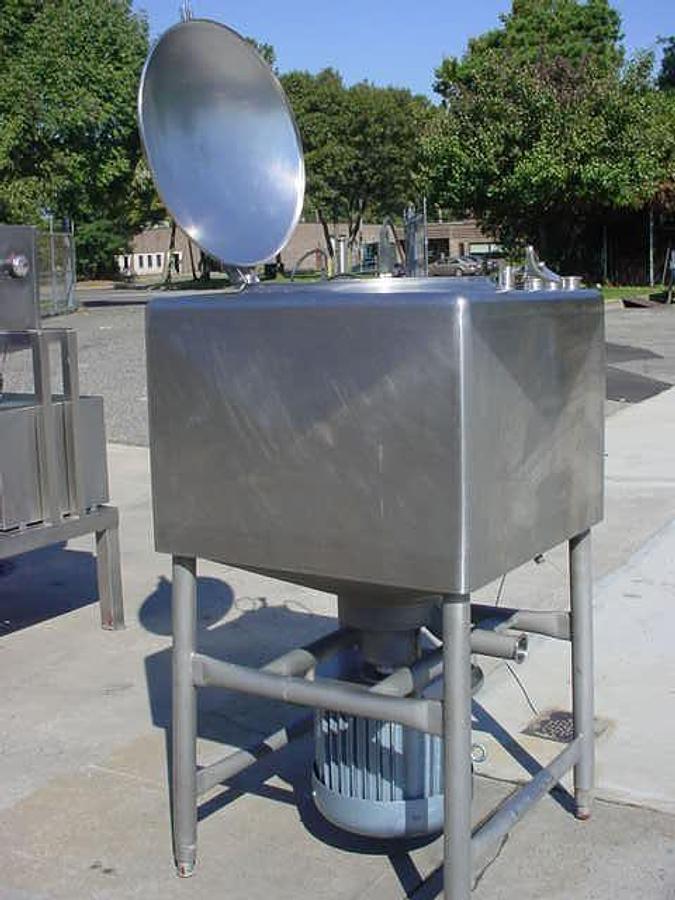
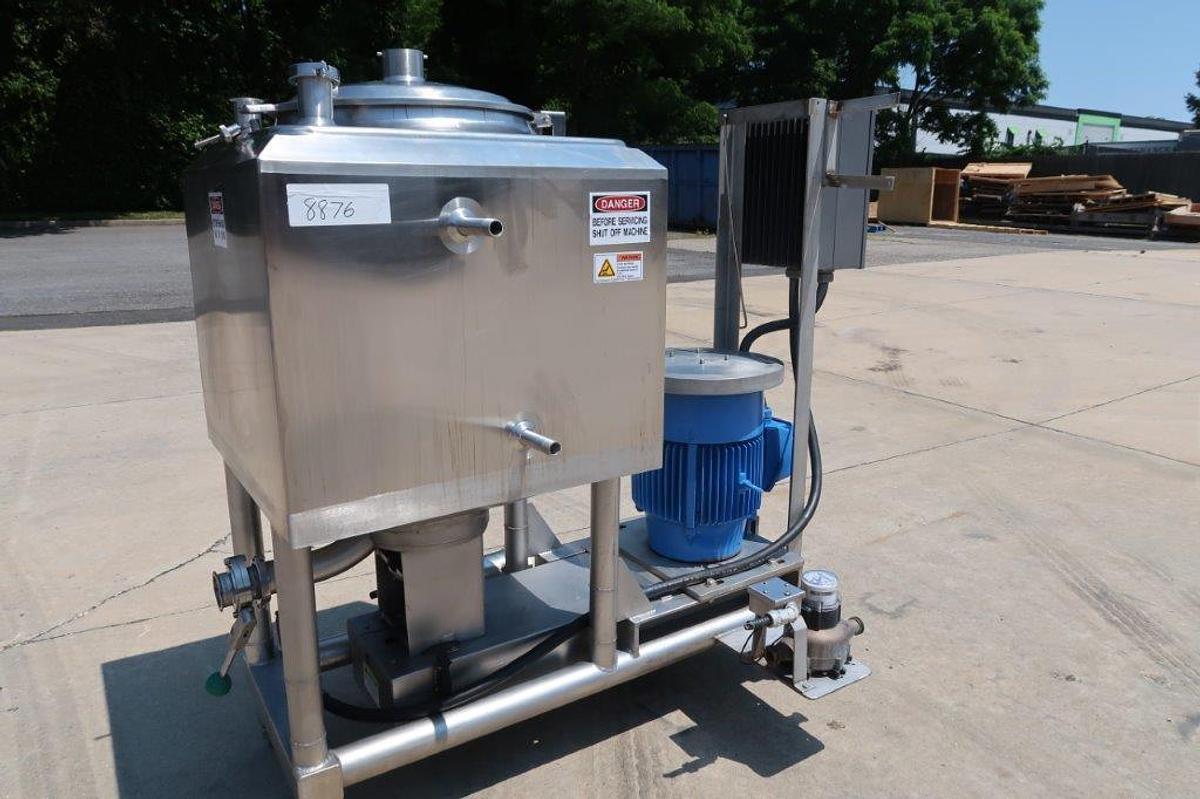
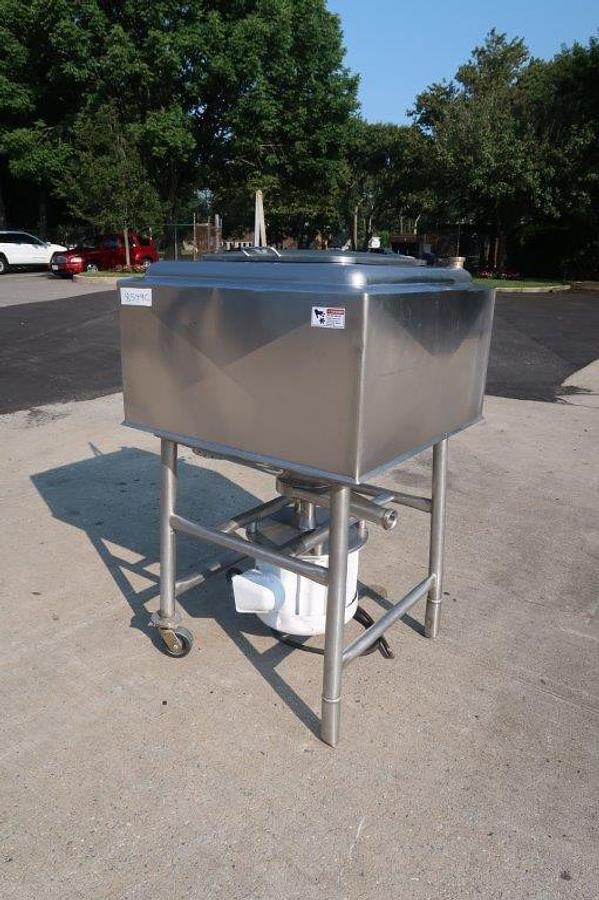
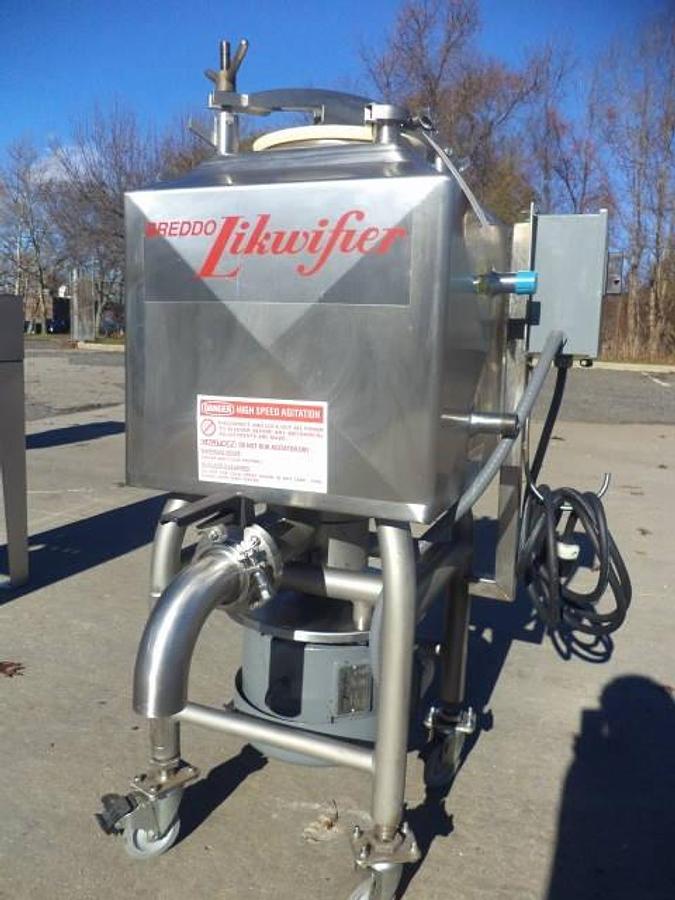
Breddo manufactures a focused line of mixing and blending equipment, and the models that appear most frequently on the used market are from their Likwifier series. The Likwifier is a high-shear mixer designed for emulsification, dispersion, and homogenization of liquid and semi-liquid products. Used listings typically include portable stainless steel units, jacketed models with temperature control capability, and variable frequency drive (VFD) configurations that allow operators to adjust mixing speeds for different formulations. Capacity sizes in circulation range from compact 10-gallon units up to 100-gallon and larger industrial models.
Beyond the Likwifier, Breddo has produced continuous mixers and blending systems used across bakery, dairy, and beverage production lines. When browsing used Breddo equipment, buyers will often encounter machines with stainless steel construction, jacketed vessels rated to specific PSI levels, and various horsepower motor configurations. A 15 HP motor on a 100-gallon unit, for example, is a common spec suited to medium-scale food processing operations. Reviewing the full specifications of each individual listing is essential, since used machines vary considerably in configuration, condition, and included accessories.
What industries use Breddo mixing and processing equipment?
Breddo equipment is most closely associated with the food and beverage industry, where its Likwifier mixers handle applications across bakery production, dairy processing, and beverage manufacturing. In bakery settings, the equipment is used to blend high-viscosity batters, icings, and fillings. Dairy operations rely on Breddo mixers for homogenizing cream-based products, while beverage producers use them to emulsify flavoring compounds, stabilizers, and concentrates into uniform liquid solutions.
Beyond food and beverage, Breddo high-shear mixers see use in chemical processing and pharmaceutical manufacturing, where precise emulsification and dispersion of liquid formulations are critical. The sanitary stainless steel construction that makes Breddo equipment suitable for food-grade environments also translates well to pharmaceutical and personal care product manufacturing, where hygiene standards are similarly strict. Buyers from any of these industries shopping for used Breddo equipment should confirm that the specific model and configuration they are considering matches the viscosity range, capacity, and sanitary requirements of their particular application.
What capacity sizes do Breddo Likwifier mixers come in?
Breddo Likwifier mixers span a wide capacity range, making them adaptable to operations of very different scales. On the smaller end, units start at around 10 gallons, which are well suited to pilot batches, R&D applications, or small-scale specialty production. Mid-range models at 50 and 100 gallons are among the most commonly traded on the used market and represent a practical fit for medium-volume food processing lines. Larger industrial configurations can exceed 1,000 gallons for high-throughput production environments.
When evaluating capacity, buyers should look beyond the vessel volume alone. Jacket pressure ratings, motor horsepower, and mixing speed range all affect what a given unit can actually process efficiently. A 100-gallon jacketed Likwifier rated to 125 PSI, for instance, handles a different set of applications than an unjacketed portable unit of the same volume. Used equipment listings should include these specifications, and buyers are encouraged to request full technical details from the seller before making a purchase decision to confirm the machine fits their production requirements.
What does a Breddo Likwifier actually do, and how does it work?
The Breddo Likwifier is a high-shear mixer that uses a rotor-stator assembly to subject liquid and semi-liquid materials to intense mechanical shear forces. As the rotor spins at high speed inside the stator, product is drawn in and forced through a narrow gap between the two components. This action breaks down particle size, disperses immiscible liquids into stable emulsions, and produces a highly uniform mixture in a fraction of the time required by conventional agitator-style mixers. The result is consistent product texture and ingredient distribution across the entire batch.
This mechanism makes the Likwifier particularly effective for applications involving emulsification (combining oil and water-based ingredients), homogenization (reducing particle size for smooth texture), and dispersion (evenly distributing solids or powders into a liquid carrier). Food manufacturers use it for products like salad dressings, sauces, dairy blends, and flavored syrups. Chemical and pharmaceutical producers apply the same principle to dispersions, suspensions, and liquid formulations. The jacketed vessel options available on many Breddo models allow temperature control during mixing, which is critical for heat-sensitive or temperature-dependent formulations.
What should buyers look for when inspecting used Breddo equipment?
Inspecting used Breddo equipment requires attention to both mechanical condition and sanitary integrity, since these machines operate in food-grade and pharmaceutical environments where surface quality matters as much as mechanical function. Key areas to examine include the condition of the stainless steel vessel interior, looking for pitting, discoloration, or weld repairs that could harbor bacteria or indicate past chemical damage. The rotor-stator assembly should be checked for wear, as this is the component most subject to mechanical stress during operation. Seals, gaskets, and any jacketed connections should be inspected for integrity, especially if the unit has a pressure-rated jacket.
Reputable used equipment dealers typically accommodate in-person inspections or, where that is not practical, virtual inspections via live video or recorded footage of the machine. Some units may still be installed at the facility where they were last used, allowing buyers to see the equipment in its production context. Keep in mind that most used equipment dealers do not have the permits or production capabilities to run actual product through a machine during inspection, so functional testing is generally limited to dry runs of motors and mechanical components. Buyers should ask specifically about the machine's operational history, the reason for decommissioning, and whether any components have been replaced or repaired.
Does used Breddo equipment come with a warranty?
Used industrial equipment, including Breddo mixers and Likwifiers, is generally sold on an as-is basis by used equipment dealers. This is standard practice across the used machinery industry. There is no manufacturer warranty coverage on pre-owned machines, and dealers typically do not offer their own warranty terms. The practical implication for buyers is that the burden of verifying condition falls on them prior to purchase, which is why thorough inspection is so important before committing to a transaction.
Buyers concerned about post-purchase support should contact Breddo directly to understand what level of technical assistance, parts availability, and service documentation they can expect for a specific model and age of machine. Manufacturers vary in how much support they extend to older equipment, and parts availability can depend significantly on how long a particular model has been out of production. Choosing a used equipment dealer with a long track record in food processing machinery and a reputation for accurate condition descriptions provides an additional layer of confidence, even in the absence of formal warranty terms.
Are replacement parts available for used Breddo equipment?
Parts availability for Breddo equipment depends primarily on the age and model of the machine. For relatively recent models, Breddo and authorized service providers may still stock or be able to source wear components like rotor-stator sets, seals, gaskets, and drive components. Buyers should contact the manufacturer directly before purchasing a used unit to confirm that parts support exists for that specific model, as this due diligence can prevent costly downtime if a component needs replacement after acquisition.
For older or discontinued Breddo models, parts sourcing may require working with third-party industrial parts suppliers or fabricating custom replacements. In some cases, components from similar Breddo models are interchangeable, which can expand sourcing options. When evaluating a used Breddo machine, it is worth asking the seller about the condition of high-wear components and whether any parts were recently replaced. A machine with recently serviced seals, a reconditioned rotor-stator assembly, or a replaced motor may represent better value than a lower-priced unit where those components are at end of life.
What sanitary and food-grade standards apply to Breddo equipment?
Breddo equipment is constructed from food-grade stainless steel, which is the material standard required for direct food contact surfaces in processing environments regulated by the FDA and USDA. Stainless steel construction resists corrosion, is non-reactive with food acids and cleaning chemicals, and can withstand the high-temperature sanitation procedures used in food plants. The smooth interior surfaces and welded construction typical of Breddo vessels are designed to minimize product entrapment and support thorough cleaning-in-place (CIP) or manual sanitation protocols.
When purchasing used Breddo equipment, buyers should verify that the sanitary integrity of the vessel has been maintained. Pitting, cracks, or compromised welds on interior surfaces can create sites where bacteria accumulate and are difficult to sanitize, which is a compliance risk in regulated food and pharmaceutical environments. If a machine is intended for use in a USDA-inspected facility or a pharmaceutical production environment with specific regulatory requirements, buyers may need to have the equipment evaluated by a sanitation engineer or quality assurance professional before putting it into service. The age and service history of the machine are relevant factors in that assessment.
What is the typical price range for used Breddo equipment?
Pricing for used Breddo equipment varies considerably based on model, capacity, configuration, and condition. Smaller portable Likwifier units in the 10 to 50-gallon range tend to be less expensive than large jacketed models with VFD controls and higher horsepower motors. A basic used 50-gallon stainless Likwifier in working condition might trade in a range well below what a comparable unit would cost sourced directly from the manufacturer, which is one of the primary reasons buyers seek out the used market for this type of equipment.
Condition is the single biggest variable in used equipment pricing. A machine that has been well maintained, recently serviced, or is still operational in a production facility will typically command a higher price than one that has been sitting in storage or shows signs of significant wear. Buyers should factor in the full landed cost of the equipment, including any rigging, crating, freight, and installation expenses, since these costs can add meaningfully to the purchase price depending on the size and weight of the unit and the distance involved in shipping. Requesting a detailed condition report and full specifications from the seller before negotiating price is a practical step toward understanding the true value of any specific listing.
How does shipping and delivery work for used Breddo equipment?
Shipping used industrial mixing equipment like Breddo Likwifiers involves more logistical complexity than standard freight, and buyers should plan accordingly. The seller is typically responsible for preparing the machine for transport, which includes palletizing or crating the unit to prevent damage in transit. The level of packaging required depends on the size and fragility of the equipment, and more substantial crating adds to the overall shipping cost. Buyers should ask the seller for a detailed breakdown of packaging, rigging, and freight charges before finalizing a purchase, since these costs affect the total amount paid to get the machine operational at their facility.
Larger Breddo units, particularly jacketed 100-gallon or higher-capacity models, may require specialized rigging equipment for loading at the point of origin and unloading at the destination. Forklift access, crane availability, and dock height are all factors that need to be coordinated between the buyer and seller. Most used equipment dealers require full payment before the machine ships. Transit times vary based on carrier, distance, and freight mode, and buyers should confirm lead times with the seller at the time of purchase. Inspecting the shipment upon arrival and documenting any transit damage before signing a delivery receipt is an important protective step.