Category
Manufacturer
Model
FAQ:
What is a Bowa jacketed pressure tank and how does it work?
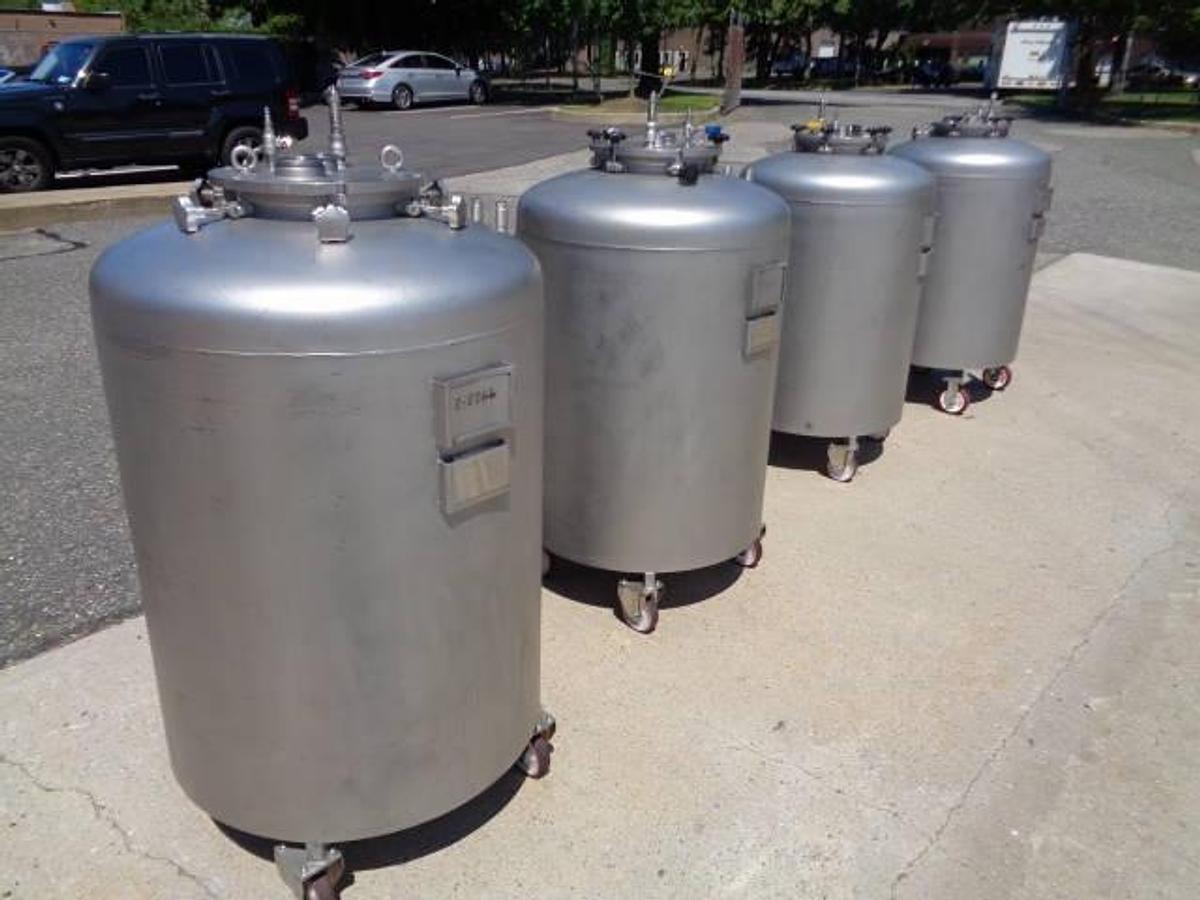
A Bowa jacketed pressure tank is an industrial-grade pressure vessel designed to store or process materials while maintaining precise temperature control. The tank consists of two layers: an inner vessel that holds the product and an outer jacket surrounding it. A heating or cooling medium, typically water, steam, or glycol, circulates through the space between the two layers. This allows operators to heat, cool, or hold product temperatures within tight tolerances without direct contact between the heat transfer medium and the contents.
This jacketed design is especially valuable in processes where temperature consistency directly affects product quality or safety. For example, in pharmaceutical manufacturing, even minor temperature fluctuations during mixing or storage can compromise a batch. In food and beverage production, jacketed tanks allow processors to pasteurize, ferment, or cool ingredients with precision. Bowa tanks are built to handle both the internal pressure of the product and the pressure or temperature of the circulating jacket medium, making them a versatile choice across a wide range of process-intensive industries.
What materials are Bowa jacketed pressure tanks typically constructed from?
Bowa jacketed pressure tanks are most commonly fabricated from stainless steel, with 304 and 316 grades being the most widely used. The choice between the two depends heavily on the application. Grade 304 stainless is suitable for general food-grade and light chemical applications, offering good corrosion resistance and durability at a lower cost. Grade 316 stainless steel contains molybdenum, which gives it significantly better resistance to chlorides and aggressive cleaning agents, making it the preferred choice for pharmaceutical, sanitary, and chemically demanding environments.
The specific listing for used Bowa tanks available through industrial dealers includes 316 stainless steel construction, which reflects the higher sanitary and corrosion-resistance standards that many buyers in regulated industries require. Both the inner vessel and the outer jacket are typically fabricated from the same grade of stainless to ensure compatibility and longevity. When evaluating a used Bowa jacketed pressure tank, buyers should confirm the material grade of both the shell and the jacket, and inspect for any signs of pitting, weld degradation, or corrosion that could affect performance or compliance with food-grade or pharmaceutical standards.
What industries commonly use Bowa jacketed pressure tanks?
Bowa jacketed pressure tanks are used across a broad range of industries where temperature-controlled processing or storage is a core requirement. Food and beverage manufacturers rely on them for cooking, cooling, blending, and holding sauces, dairy products, beverages, and similar products. Pharmaceutical and nutraceutical producers use jacketed pressure tanks for mixing active ingredients, managing reaction temperatures, and storing temperature-sensitive compounds under controlled conditions. Chemical processors use them for reactions that require heat input or cooling to stay within safe operating ranges.
Cosmetics and personal care manufacturers also use jacketed tanks for emulsification and blending processes that require precise temperature management. The combination of pressure capability and thermal control makes these vessels adaptable to nearly any process where maintaining a consistent internal environment is critical. Used Bowa tanks, because of their stainless steel construction and pressure ratings, tend to attract buyers from regulated industries like food processing and pharmaceuticals, where sanitary design and material traceability are important purchasing considerations.
What size Bowa jacketed pressure tanks are available on the used equipment market?
Used Bowa jacketed pressure tanks appear on the market in a range of capacities, with smaller pilot-scale and production units being among the more commonly listed sizes. A frequently seen configuration in the used market is the 200-liter capacity tank, which suits mid-scale batch production in food, pharmaceutical, and chemical applications. These tanks are often self-contained and portable, which adds to their appeal for facilities that need flexibility in plant layout or want to move equipment between production areas.
Larger capacity Bowa tanks do exist and appear periodically on the used market depending on what facilities are decommissioning. Buyers with specific volume requirements should work with a dealer who specializes in process equipment to identify available inventory that matches their production needs. Capacity alone does not tell the full story; buyers should also consider the working pressure rating, jacket volume, and overall dimensions to confirm the tank fits both the process and the physical space where it will be installed.
What does it mean that a Bowa jacketed pressure tank is "electrically self-contained"?
An electrically self-contained jacketed pressure tank includes the electrical components needed to operate the heating or temperature control system without requiring a separate external control panel or utility connection beyond a standard power supply. In practical terms, this typically means the tank comes equipped with its own temperature controller, heating elements, pump for circulating the jacket medium, and associated wiring. This makes the unit easier to deploy and relocate since it does not depend on being hardwired into a facility's central control infrastructure.
For buyers of used equipment, the self-contained designation is a meaningful feature because it reduces the cost and complexity of installation. A plant can place the tank, connect it to power, fill the jacket with the appropriate heat transfer medium, and begin operations without extensive integration work. When inspecting a used self-contained Bowa tank, buyers should verify that all electrical components are present and functional, including the controller, sensors, and any agitation or circulation motors. Electrical components on used equipment can show wear or may need updating to meet current safety codes, so a thorough inspection is important before purchase.
Are used Bowa jacketed pressure tanks ASME certified, and why does that matter?
ASME (American Society of Mechanical Engineers) certification indicates that a pressure vessel was designed, fabricated, and tested in accordance with the ASME Boiler and Pressure Vessel Code, which is the primary safety standard for pressure-containing equipment in North America. For jacketed pressure tanks, ASME certification covers both the inner vessel and the jacket, ensuring that each can safely handle its respective operating pressure. Many facilities, particularly in food processing, pharmaceuticals, and chemicals, require ASME-stamped vessels as a condition of their operating permits or insurance coverage.
For used Bowa jacketed pressure tanks, buyers should ask the seller whether the tank carries an ASME stamp and request documentation if available. The nameplate on the tank typically shows the ASME mark along with the maximum allowable working pressure (MAWP), design temperature, and the year of manufacture. It is worth noting that a tank's ASME stamp reflects its condition at the time of manufacture. Buyers should consult with a qualified pressure vessel inspector to assess whether the tank remains in compliance after years of use, as repairs, modifications, or corrosion can affect a vessel's rating. Some jurisdictions require re-inspection or re-certification of used pressure vessels before they are put back into service.
What should buyers inspect when evaluating a used Bowa jacketed pressure tank?
A thorough inspection of a used Bowa jacketed pressure tank should cover both the mechanical condition of the vessel and the functionality of any integrated components. On the mechanical side, inspectors should look at the condition of the inner vessel walls for pitting, corrosion, or weld repairs, particularly in the areas most exposed to product contact. The jacket should be checked for leaks, scale buildup, or evidence of past damage. Fittings, valves, and ports should be examined for wear, thread damage, or signs of improvised repairs. If the tank has an agitator, the shaft seals and drive mechanism deserve close attention.
Dealers specializing in process equipment typically offer in-person inspections, video walkthroughs, or photo documentation to help buyers evaluate a machine before committing to purchase. Some tanks may still be in active production at a facility, in which case the dealer can often arrange a visit to observe the equipment operating under real conditions. Buyers should also request any available maintenance records or documentation of past repairs. Since used pressure vessels are sold as-is, conducting a detailed inspection before purchase is the primary way buyers protect themselves. Consulting with a pressure vessel engineer or qualified inspector is advisable, especially for tanks intended for use in regulated industries.
What are the typical pressure and temperature ratings for jacketed pressure tanks like those made by Bowa?
Jacketed pressure tanks designed for industrial use typically have working pressure ratings that vary depending on the application and vessel size. For the inner vessel, common MAWP ratings range from around 15 PSI for lighter-duty sanitary applications up to 150 PSI or higher for more demanding chemical or pharmaceutical processes. The jacket, which carries the heating or cooling medium, often has a lower pressure rating than the inner vessel, frequently in the range of 50 to 100 PSI, since it is designed to circulate a fluid rather than contain a high-pressure product.
Temperature ratings depend on the construction materials and the design of the seals and gaskets used in the tank. Stainless steel vessels can generally handle a wide temperature range, but the practical limits are often set by the elastomers used in seals, which may degrade at extreme temperatures. For a used Bowa tank, the nameplate is the authoritative source for the rated MAWP and design temperature for both the shell and the jacket. Buyers should never operate a used pressure vessel beyond the ratings shown on the nameplate, and they should have the vessel inspected by a qualified professional if there is any uncertainty about its current condition relative to those ratings.
What are the typical shipping and logistics considerations when buying a used Bowa jacketed pressure tank?
Shipping a used jacketed pressure tank requires more planning than most standard freight shipments. These vessels are heavy, often have protruding fittings or agitator assemblies, and can be damaged if not properly secured during transit. Dealers will typically palletize or crate the equipment before shipment, and the level of packaging required directly affects the freight cost. Buyers should ask specifically about how the tank will be prepared for shipping and what that preparation costs, since those charges are often separate from the base equipment price.
For larger or heavier tanks, loading and unloading may require a forklift or crane, and rigging services at both the origin and destination can add meaningful cost to the total purchase. Buyers should get a clear picture of the full landed cost, including the equipment price, packaging, rigging, freight, and any fees for delivery to a specific location, before finalizing a purchase. Freight carriers specializing in industrial equipment are generally better equipped to handle pressure vessels than standard LTL carriers. Buyers should also confirm that they have adequate receiving equipment at their facility before the shipment is arranged.
What payment terms should buyers expect when purchasing a used Bowa jacketed pressure tank?
Used industrial equipment dealers generally require full payment before a machine is released for shipment. This is standard practice in the used machinery market and reflects the fact that dealers are often managing inventory on behalf of sellers or have purchased equipment outright and need to recover their investment before assuming the risk of shipping. Wire transfer is the most common payment method for transactions of this size, though some dealers may accept other forms of payment depending on the amount and the relationship with the buyer.
Buyers who have an established history with a particular dealer may occasionally be offered extended payment terms, but this is not the norm for first-time transactions. Before sending any payment, buyers should confirm the total cost including all fees, review any available documentation on the equipment, and complete whatever inspection process they intend to conduct. Since used equipment is sold as-is, payment terms and inspection access are both important points to clarify with the dealer upfront to avoid misunderstandings after the transaction is complete.