Category
Manufacturer
Model
FAQ:
What types of packaging machinery does Bossar manufacture?
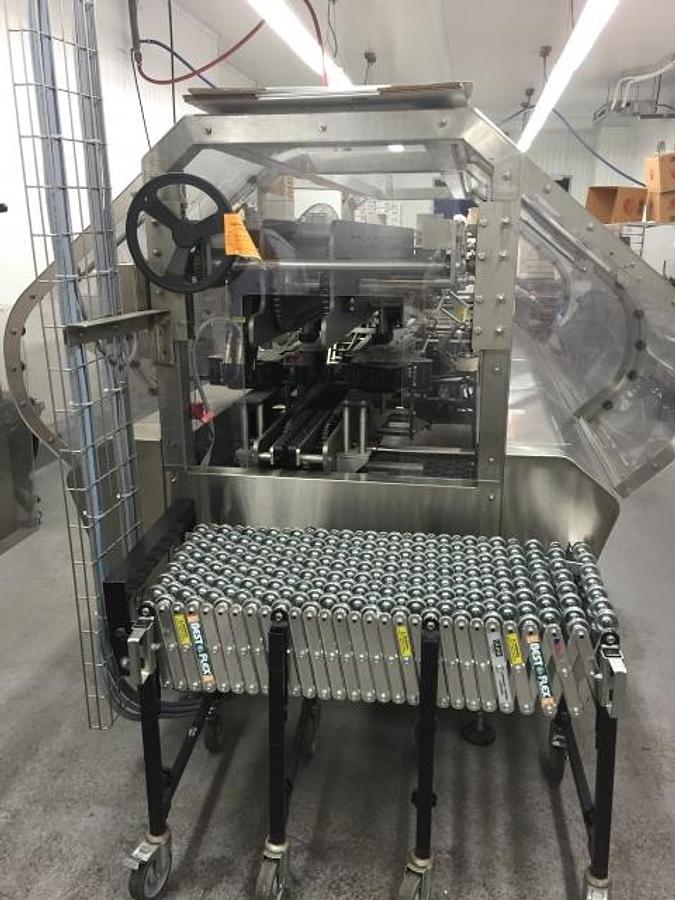
Bossar is a Spanish packaging machinery manufacturer founded in 1988, and the company has built its reputation primarily around horizontal form-fill-seal (HFFS) machines. These machines are designed to form a pouch or bag from a roll of flexible film, fill it with product, and seal it, all in a single continuous process. Beyond standard HFFS equipment, Bossar also produces automatic case packers, such as the BAP-40, which are designed to collate and pack finished pouches or bags into secondary packaging like cartons or cases. This range makes Bossar a fairly complete solution for flexible packaging lines that need both primary and secondary packaging covered.
The breadth of Bossar's machine portfolio is one reason the brand appears frequently in food, pharmaceutical, cosmetic, and chemical production environments. Their equipment handles a wide range of pouch formats, and the servo-driven technology used across many of their models gives operators better control over film handling, sealing, and dosing. For buyers looking at used Bossar machines, understanding which specific model and generation they are evaluating is important, since capabilities and available parts can vary meaningfully from one model series to the next.
What pouch and bag formats can Bossar HFFS machines handle?
Bossar horizontal form-fill-seal machines are known for their flexibility across a wide range of pouch formats. Common formats include stand-up pouches (also called doy packs), flat bottom bags, pillow pouches, stick packs, and sachets. Many Bossar models are designed to accommodate format changeovers without requiring extensive tooling swaps, which is a practical advantage in production environments that run multiple SKUs or product sizes on the same line. The servo-driven architecture on many of their machines contributes to this flexibility by allowing precise control over film indexing and sealing parameters.
For buyers evaluating a used Bossar machine, it is worth confirming which specific pouch formats the machine has been configured and tooled for, since not every format is available on every model without additional changeover parts. Sellers of used equipment can often provide information on what tooling is included with the machine, and in some cases, tooling for additional formats may be available separately. Consulting with Bossar's support network is also a reasonable step to understand what format options a particular model can support and whether any required parts are still available.
What products can Bossar packaging machines fill and seal?
Bossar machines are engineered to handle a broad spectrum of product types, which is a large part of why they appear across so many different industries. Their dosing systems are designed to work with liquids, viscous pastes, free-flowing powders, granules, and solid pieces. Depending on the specific model and the dosing module installed, a single machine can often be configured for more than one product type, though some configurations are purpose-built for a specific application. This versatility makes Bossar equipment particularly common in food processing, nutraceuticals, personal care, and pharmaceutical packaging environments.
For buyers considering a used Bossar machine, the dosing system installed on the machine is one of the most important details to evaluate. A machine configured for liquid filling will have different dosing hardware than one set up for powders or granules. Sellers should be able to provide information on which dosing modules are included, and buyers should factor in whether any modifications or additional components would be needed to run their specific product. Reaching out to Bossar directly to discuss the machine model and its compatibility with a particular product type is a practical step before committing to a purchase.
What industries use Bossar packaging machinery?
Bossar packaging machines are found across a wide range of industries, largely because of the flexibility their HFFS platform offers for different product types and pouch formats. Food and beverage is the most common sector, with applications spanning sauces, condiments, snack foods, coffee, powdered beverages, and dairy products. The pharmaceutical and nutraceutical industries also rely heavily on Bossar equipment for packaging tablets, capsules, powders, and liquid medications in unit-dose or multi-dose flexible pouches. Cosmetic and personal care manufacturers use Bossar machines for products like shampoos, lotions, and single-use sachets.
Chemical and household product manufacturers round out the major user base, particularly for products like detergents, cleaning concentrates, and agricultural chemicals that are sold in flexible pouch formats. The common thread across all these industries is the need for precise, high-speed flexible packaging with consistent seal integrity. Buyers searching for a used Bossar machine should consider whether the machine they are evaluating was previously used in an industry compatible with their own, since prior use in food production, for example, may involve different sanitation standards and material contact considerations than a machine that ran chemical products.
What is the production speed or output capacity of Bossar packaging machines?
Production speed on Bossar machines varies considerably depending on the model, the pouch format being run, the product being filled, and the level of automation involved. On the HFFS side, many Bossar models are capable of producing anywhere from around 30 to over 100 pouches per minute under optimal conditions, with some high-speed configurations pushing beyond that range for smaller formats like stick packs or sachets. Secondary packaging equipment like the Bossar BAP-40 case packer is designed to keep pace with upstream filling lines, handling the collation and case packing of finished pouches at rates that align with typical HFFS output speeds.
For buyers evaluating a used Bossar machine, the rated speed of the machine is a useful starting point, but actual throughput in a production setting depends on factors like film type, seal dwell time, product characteristics, and the condition of the machine. A machine that has been well-maintained and properly serviced can often perform close to its rated capacity, while one that has seen heavy use without consistent maintenance may require servicing before it reaches target speeds. Asking the seller about the machine's production history and requesting a video demonstration of the machine running is a reasonable way to get a more realistic picture of current performance.
What should buyers know about purchasing a used Bossar packaging machine?
Buying a used Bossar machine requires more diligence than sourcing equipment directly from a manufacturer, and the inspection process is the most important part of that due diligence. Used packaging machines are typically sold as-is, meaning the responsibility for evaluating the machine's condition falls on the buyer. Reputable used equipment dealers will accommodate in-person inspections or virtual inspections via video, which gives buyers a chance to assess the mechanical condition, check for missing components, and review the overall state of wear on critical parts like sealing jaws, film guides, and dosing systems. Some machines may still be installed and running at a production facility, which can allow for a more thorough operational review.
Buyers should also contact Bossar directly to understand the level of support available for the specific model and serial number they are considering. Older machines or discontinued model lines may have limited parts availability, which can affect long-term operating costs. Asking the seller for any available documentation, including manuals, prior maintenance records, and a list of included tooling and spare parts, will help buyers understand what they are getting and what additional investment may be needed to bring the machine into production. Selecting a dealer with a long track record of selling packaging machinery, rather than a generalist reseller, typically results in more accurate machine descriptions and more useful pre-sale support.
How does the inspection process work when buying a used Bossar machine?
Inspections for used packaging machinery generally fall into three categories: in-person visits, live video calls, and pre-recorded video walkthroughs. For a machine like a Bossar HFFS unit or case packer, an in-person inspection is the most thorough option since it allows the buyer or their technician to physically examine sealing components, check electrical panels, review the condition of servo drives and film handling systems, and assess overall cleanliness and maintenance history. If the machine is still installed at a production facility, there may even be an opportunity to observe it running product, which provides a much clearer picture of actual condition than a static inspection.
Virtual inspections via video call have become a practical and widely accepted alternative, particularly for international buyers or situations where travel is not feasible. A good video inspection should cover all major mechanical systems, show the machine powered on, and ideally demonstrate some degree of motion or cycling. Pre-recorded videos are useful as a preliminary screening tool but should not replace a live inspection for a significant capital purchase. Buyers should be aware that most used equipment dealers do not have the permitting or infrastructure to run actual product through a machine during an inspection, so the evaluation is focused on mechanical condition and operational readiness rather than a full production trial. Preparing a list of specific questions and requesting footage of particular components before the inspection will make the process more efficient and productive.
What are the typical shipping and logistics considerations for a used Bossar machine?
Shipping a used packaging machine involves more planning than typical freight, and the costs can vary significantly depending on the size of the machine, the destination, and the level of packaging required to protect the equipment in transit. Bossar HFFS machines and case packers are substantial pieces of equipment, and proper crating or palletization is essential to prevent damage during loading, transport, and unloading. Sellers will typically quote shipping based on the packaging method required, and buyers should ask specifically about whether the machine will be crated, skidded, or wrapped, since each approach carries different cost and protection implications. Heavier or larger machines may require specialized rigging for loading and unloading, which adds to the total landed cost.
Buyers should request a fully itemized breakdown of packaging, rigging, freight, and any applicable import or export documentation fees before agreeing to a purchase, so there are no surprises once the transaction is complete. For international shipments, customs duties, import taxes, and compliance documentation for the destination country are additional factors to account for. It is also worth asking the seller whether the machine will be disassembled for shipping, and if so, what reassembly support or documentation is available. Understanding the full landed cost of the equipment, not just the purchase price, is an important part of evaluating whether a particular used Bossar machine makes financial sense for a given application.
What payment terms are typical when buying used packaging machinery?
Used equipment transactions in the packaging machinery market generally operate on fairly straightforward payment terms. Most dealers require full payment before the machine is released for shipping, which is standard practice across the industry. This protects the seller and ensures that logistics and shipping arrangements can proceed without complications. Buyers who are working with a dealer for the first time should expect to pay in full prior to shipment, and should factor that into their cash flow planning when budgeting for a machine purchase.
Some dealers may offer extended payment terms to repeat customers or buyers with an established relationship, but this is not a standard offering and varies by dealer. For larger transactions, buyers sometimes arrange financing through third-party equipment lenders, which can allow them to preserve working capital while still meeting the seller's full-payment requirement at the time of shipping. Wire transfer is the most common payment method for used machinery transactions of this scale, though the specific accepted methods will depend on the dealer. Buyers should clarify payment terms, accepted methods, and any deposit requirements early in the negotiation process to avoid delays once a machine has been identified and priced.
How do servo-driven systems on Bossar machines affect performance and maintenance?
Servo-driven technology is a meaningful differentiator on Bossar machines compared to older cam-driven or pneumatic systems. Servo motors allow for precise, programmable control over film indexing, sealing jaw movement, and dosing cycles, which translates to more consistent seal quality, tighter fill weight accuracy, and faster format changeovers. On a production line running multiple product sizes or pouch formats, the ability to adjust machine parameters through software rather than physical tooling changes can significantly reduce downtime between runs. Servo systems also tend to offer better diagnostics, since many faults can be identified through the machine's control interface rather than requiring manual mechanical investigation.
From a maintenance standpoint, servo-driven machines do require technicians who are familiar with the specific drive systems and control platforms used on Bossar equipment. Buyers of used Bossar machines should ask about the condition of the servo drives and whether any have been replaced or repaired, since servo components can be expensive to replace and availability may vary depending on the age of the machine. It is also worth consulting with Bossar's technical support team to understand what firmware or software versions are running on the machine and whether updates or support are still available for that generation of controls. A machine with well-maintained servo systems and current documentation is generally a lower-risk purchase than one with unknown service history on its drive components.